




Antique Index Drawer Unit
An antique index drawer unit brings sturdy, compartmentalised sorting to a room, offering small-scale storage with distinct period character.
Antique Index Drawer Unit
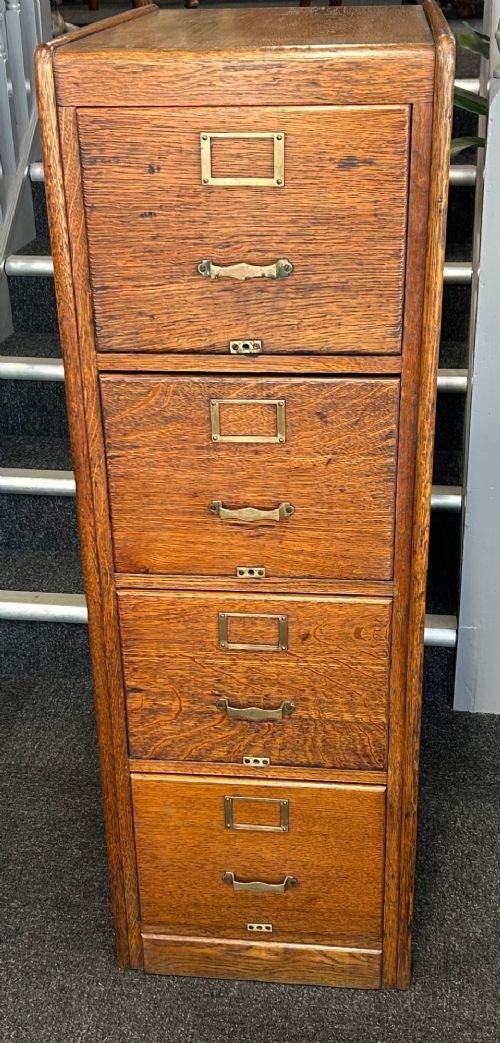
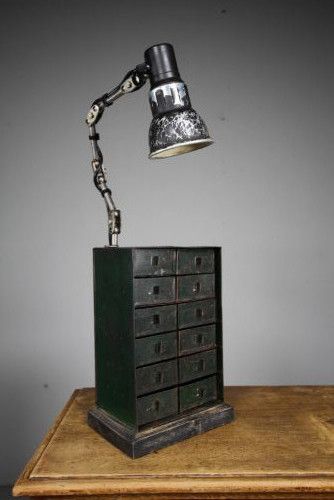
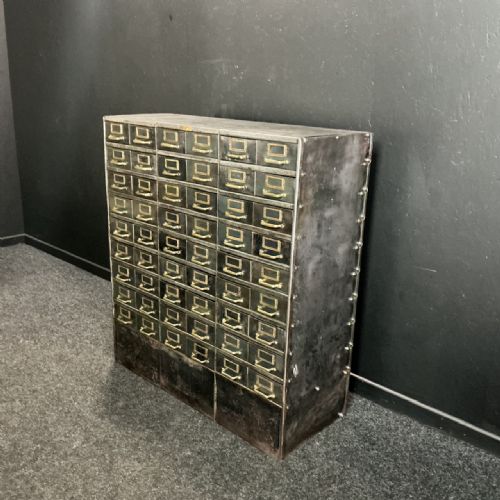
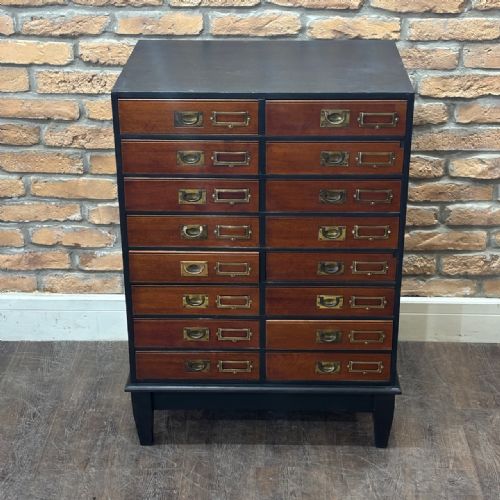
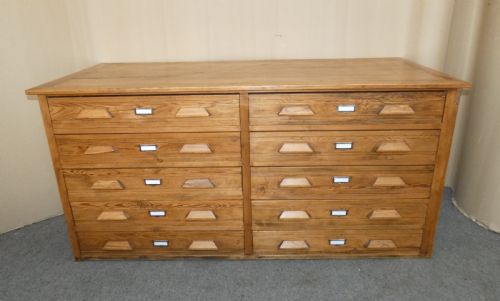
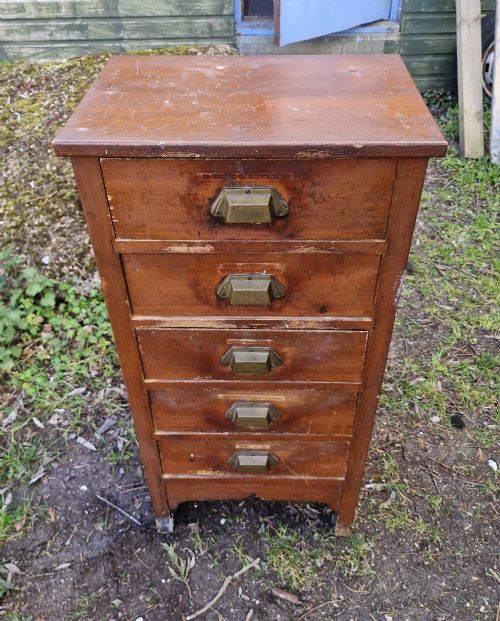
An antique index drawer unit provides multi-drawer storage designed for filing, collections, and small items, appearing in forms such as office filing cabinets, banks of drawers, shop fittings, and haberdashery cabinets. These pieces serve practical sorting needs while adding industrial or period character to a space.
The units emerge from periods spanning the Victorian era through the Edwardian years, the 1900s, 1910s, 1920s, and into the 1930s. Common configurations range from small desktop filing drawers and library card sets to large shop fittings and office filing cabinets.
Makers and patented systems like Amberg and Shannon feature alongside unbranded workshop pieces. Buyers encounter various woods and metals tailored to administrative, commercial, and domestic workspaces of the past.
How they were made
Construction relies heavily on hardwoods and softwoods such as oak, mahogany, pine, satin walnut, and beech, often paired with metal, brass, steel, and iron components. Workshops utilised durable timber frames to withstand daily filing and commercial use.
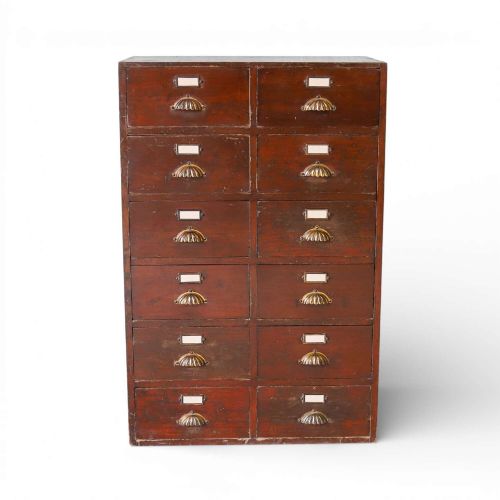
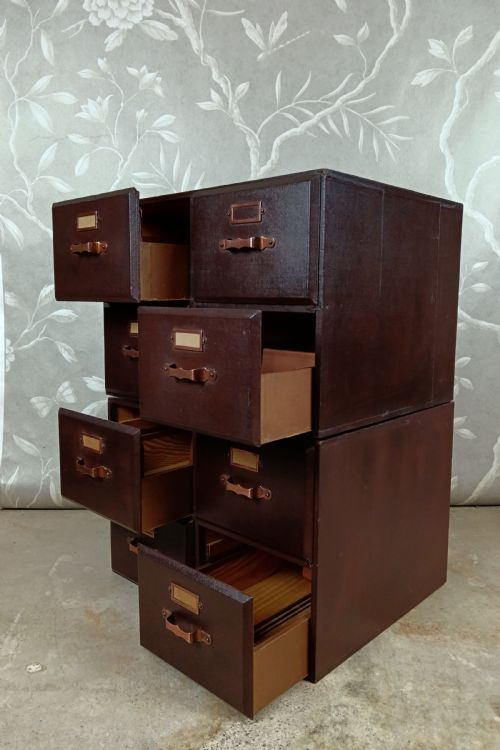
Hardware details include original brass handles, shell pulls, and label holders that aided efficient cataloguing. Patent mechanisms, tambour fronts, and painted finishes appear across specific office and shop fitting examples.
Antique Index Drawer Unit Retail Price Guide 2026
Typical asking prices for index drawer unit among the pieces listed under this phrase on Sellingantiques today, from the lower quarter to the upper quarter. They describe what is for sale here now, not the wider market.
Listings feature oak, mahogany, pine, and satin walnut, alongside iron, steel, and brass hardware from the Victorian period to the 1930s.
What varies in quality
The calibre of a piece depends on the integrity of the timber, the retention of original hardware such as shell pulls and label holders, and the presence of working patent mechanisms. Units retaining their matching brass fittings and functioning tambour fronts demonstrate higher fidelity to their original state.
Provenance and specialised forms, such as patented letter files or large shop fittings, distinguish standard utility items from more intricate archival furniture. The sophistication of the drawer construction and the clarity of period details guide the distinction between simpler office pieces and finer collectors cabinets.
The Antique Index Drawer Unit Glossary
- Shell pull
- A semi-circular metal handle shaped like a seashell, commonly found on early filing and bank of drawer units.
- Label holder
- A small metal frame fixed to a drawer front to insert a categorisation card or index label.
- Tambour front
- A flexible door made of narrow wood strips slats glued to canvas, allowing it to slide in a track around a curve.
- Card filing set
- A compact bank of small drawers specifically dimensioned to hold standard library or index reference cards.
Antique Index Drawer Unit: Frequently Asked Questions
What were antique index drawer units used for?
These units served offices, libraries, shops, and jewellers for organising paperwork, index cards, small goods, and samples.
They kept workplaces orderly before modern digital filing systems replaced physical card indexes and shallow drawers.
How do I identify the period of a filing cabinet?
Dating relies on timber choices, handle styles, and construction methods characteristic of Victorian, Edwardian, or interwar industrial designs.
Patent stamps and maker names also provide precise chronological markers for pieces from the early twentieth century.
Are these cabinets suitable for modern home use?
The compact proportions and numerous shallow drawers make them practical for sorting stationery, craft supplies, or small collections.
Their varied woods and industrial metals fit well into studies, hallways, and living spaces as functional storage.
What is an Amberg patent cabinet?
Amberg systems introduced specialised vertical filing mechanisms with indexed dividers to streamline document storage.
These patented units represent a specific commercial innovation in office organisation from the turn of the century.