




Antique Hunt Horn
An antique hunt horn brings the noise of the chase indoors, shaped from solid metal or natural horn for display or practical use.
Antique Hunt Horn
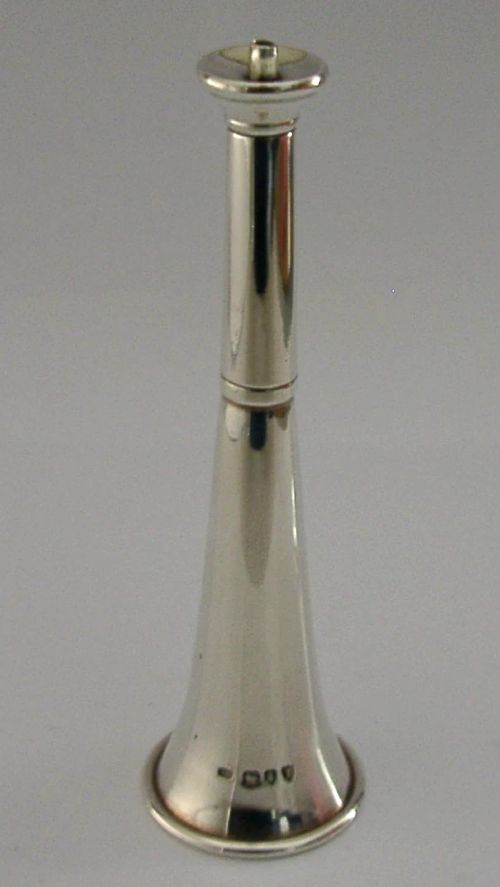
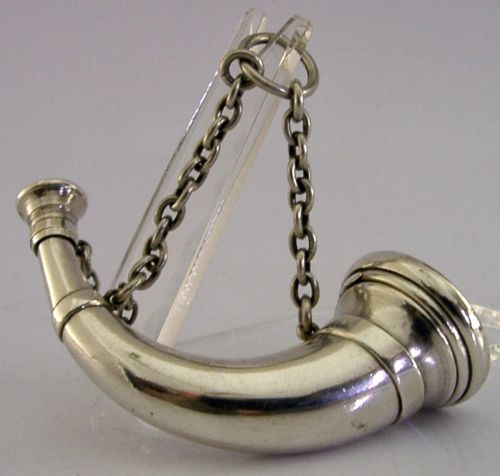
An antique hunt horn encompasses functional copper and brass instruments alongside miniature silver novelties designed as table lighters and vinaigrettes. These items reflect sporting traditions from the nineteenth century and the Edwardian era, often appearing in brass, copper, and sterling silver.
How they were made
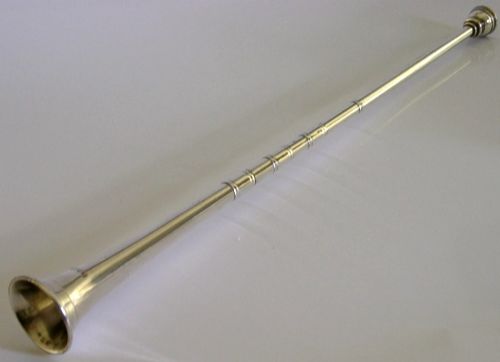
Metalsmiths shaped copper and brass into long, tapered coaching and hunting horns, often adding soldered seams and reinforced rims. Silversmiths cast sterling silver into detailed novelty forms, applying hallmarked mounts and engraved decoration.
Makers carved natural horn and bone, steaming the material to bend it into shape or mounting it with brass fittings, leather, and oak to build practical objects like powder flasks and dinner gongs.
Victorian smokers struck a light from the tip of a silver hunting horn while hounds chased imaginary foxes across the dining table.
What varies in quality
The standard depends on the crispness of the silversmith's casting and the clarity of the hallmarks stamped into the metal. Finer table lighters and novelty horns display sharp hand-chased details rather than soft, worn edges.
In larger copper and brass instruments, quality shows in the weight of the metal and the integrity of the soldered joints. Examples with intact brass mouthpieces and minimal denting represent superior survival from the nineteenth century.
Sampson Mordan·Swaine Adeney·Asprey·John Meek·Braham
The Antique Hunt Horn Glossary
- Hallmark
- An official stamp applied by an assay office to indicate the purity of precious metals like sterling silver and gold. These marks often help date a silver hunting horn to a specific year.
- Coaching horn
- A long brass or copper instrument sounded by coachmen to signal arrival and departure. These differ from shorter hunting horns by their extended length.
- Vinaigrette
- A small ornamental box containing a perforated grille and a sponge soaked in aromatic vinegar. Victorian silversmiths occasionally shaped these novelty containers as hunting horns.
- Powder flask
- A container used to hold gunpowder for muzzle-loading firearms, constructed from horn or brass during the nineteenth century. Many feature adjustable mechanical charges.
- Table lighter
- A decorative object designed to sit on a surface and provide a flame for cigars or pipes. Silversmiths frequently cast these in the form of upright hunting horns.
Antique Hunt Horn: Frequently Asked Questions
How were hunting horns used?
Huntsmen sounded brass and copper horns during mounted chases to communicate with hounds and other riders across open countryside. The distinct calls directed the pack and signaled the progress of the hunt.
Smaller silver versions served entirely different indoor purposes, functioning as novelty table lighters, scent containers, or desk ornaments in Victorian smoking rooms.
How should I clean brass horns?
Preserving the aged patina on nineteenth-century copper and brass requires avoiding harsh chemical dips or abrasive metal polishes. Gentle dusting and occasional light cleaning with a soft cloth protect the historic surface.
Aggressive cleaning removes the natural oxidation built up over decades, which diminishes the character and historical appearance of the metal.
What is the difference between coaching and hunting horns?
Coaching horns are considerably longer and were built for mail coach guards to sound signals along the road. They possess a wider, straight profile designed to project sound over long distances.
Hunting horns are shorter and often curved in a tight circle to fit comfortably around a rider's shoulder or hand during a mounted chase.