




Late 19th Century Brassware
Late 19th century brassware brings heavy cast metalwork, household vessels and decorative objects from the Victorian era into modern rooms.
Late 19th Century Brassware
Late 19th century brassware spans the domestic and decorative metalwork produced during the Victorian and Edwardian periods, including items made around 1880 to 1900. When buyers search for late 19th century brassware, they encounter utilitarian household accessories as well as ornamental display pieces designed for the home.
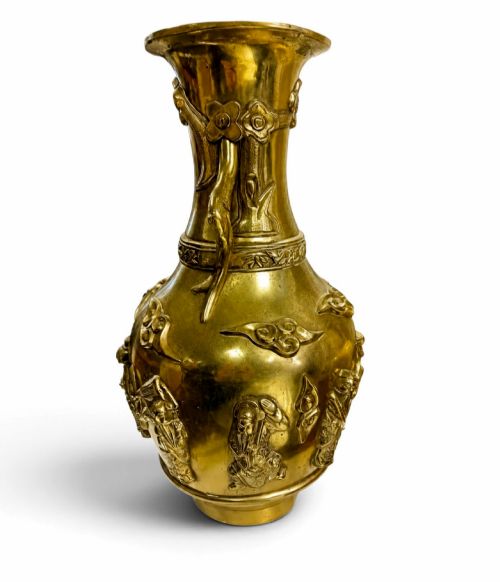
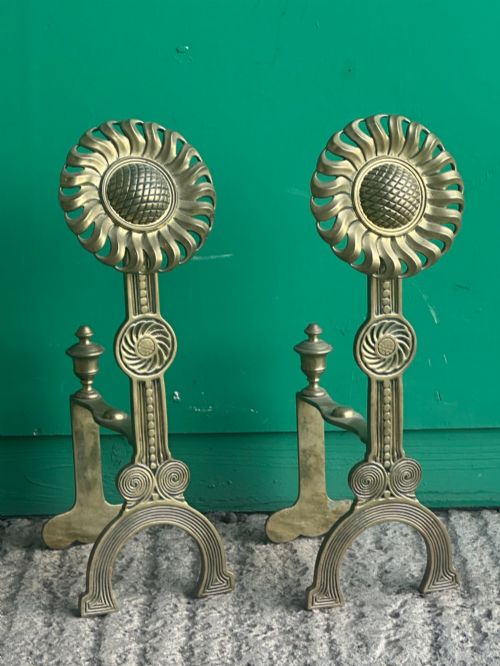
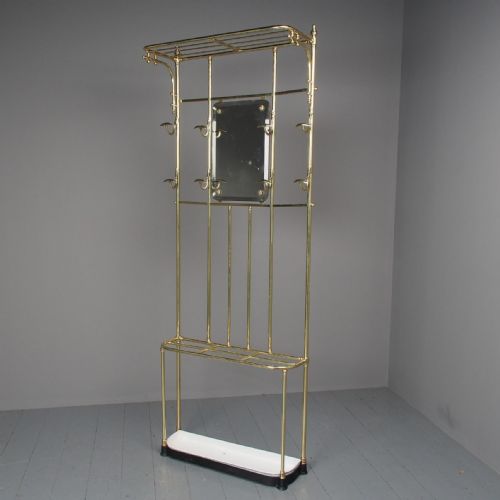
The objects on this page include pairs of candlesticks, vases and urns, fireplace accessories such as andirons, jardinieres, and decorative objects like horns and hall stands. These pieces reflect both British domestic production and international influences from the Qing Dynasty and Anglo-Indian traditions.
Candlesticks represent the most common form on this page, appearing in tall beehive designs, ejector mechanisms, and Aesthetic Movement styles. Alongside these functional lighting items, buyers find substantial vessels such as high-relief baluster vases and hand-engraved jardinieres.
How they were made
Makers of late 19th century brassware utilised casting and hand-engraving techniques to shape copper alloy and brass into intricate domestic objects. Cast brass forms provide the solid weight found in fireplace andirons and hall stands.
Detailing on these pieces ranges from high-relief casting on Chinese baluster vases to precise hand-engraving on Indian Raj period jardinieres. Workshops also combined cast components with turned elements, as seen in traditional beehive and ejector candlesticks.
Late 19th Century Brassware Retail Price Guide 2026
Typical asking prices for late 19th century brassware among the pieces listed under this phrase on Sellingantiques today, from the lower quarter to the upper quarter. They describe what is for sale here now, not the wider market.
At least one brass horn waits on this page, ready to summon unsuspecting household members back to the nineteenth century.
What varies in quality
Quality in late 19th century brassware depends upon the crispness of the casting and the depth of the decorative work. Sharp detailing on relief figures and clean execution of engraved patterns distinguish finer workshops from standard production.
The integrity of the construction and the weight of the metal set individual examples apart. Substantial gauge brass and well-balanced proportions indicate superior manufacturing standards by established makers.
William Tonks·WM Tonks and Sons·Thomas Jeckyll
The Late 19th Century Brassware Glossary
- Cast brass
- Molten metal poured into a mould to create solid, three-dimensional objects. This technique allows for complex shapes like andirons and figural candlesticks.
- Ejector candlesticks
- Domestic lighting devices fitted with an internal spring or slider mechanism to push out the remaining candle stump. They date predominantly from the nineteenth century.
- Aesthetic Movement
- A late nineteenth-century design style emphasising visual beauty over narrative meaning. Pieces in this style often incorporate natural motifs like sunflowers.
- Copper alloy
- A broad category of metal mixtures containing copper, including brass and bronze. These materials provide the durable base for heavy Victorian decorative items.
- Baluster vase
- A vessel featuring a swollen lower body and a slender neck. Examples from this period often display high-relief ornamentation.
Late 19th Century Brassware: Frequently Asked Questions
What items count as late 19th century brassware?
This category includes utilitarian household items and decorative objects produced during the Victorian and Edwardian eras. Common forms range from candlesticks and fireplace andirons to jardinieres and vases.
Items vary from plain domestic brassware to heavily decorated pieces influenced by Aesthetic Movement, Qing Dynasty, and Anglo-Indian styles.
How do I identify Victorian candlesticks?
Victorian candlesticks often feature specific functional mechanisms such as ejector levers or take traditional forms like the tall beehive design. They rely on cast brass construction.
Stylistic markers help date them, with geometric or natural motifs indicating specific periods like the Aesthetic Movement of the late nineteenth century.
Where were these brass objects made?
Production locations include British manufacturing firms alongside international workshops. Some items originate from British industrial centres, while others come from the Indian Raj or China.
This global exchange means buyers find both domestic fireplace accessories and imported high-relief vases under the same heading.
How do I care for antique brass?
Antique brass requires minimal intervention to preserve its historic surface and natural oxidation. Dusting with a soft cloth keeps the metal clean without removing age-related patination.
Avoid abrasive cleaners that strip away the subtle tones accumulated over the decades since these pieces left the workshop.