

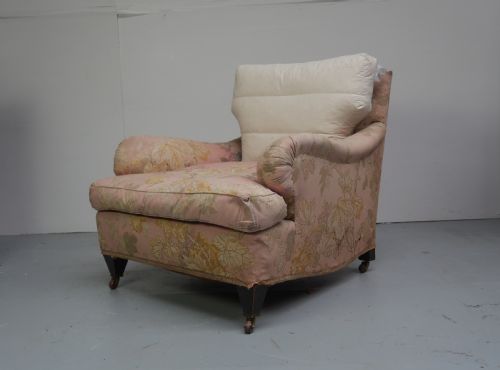
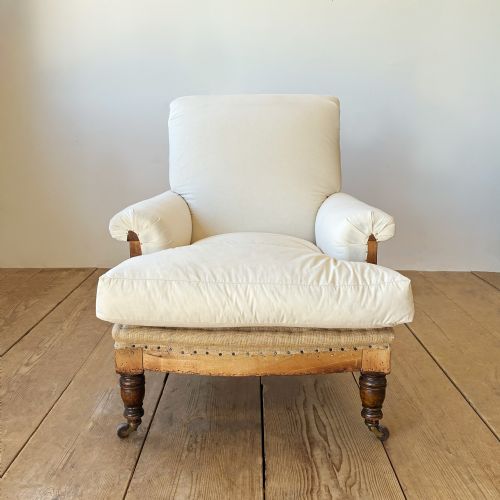

Antique Howard Lounge Chairs
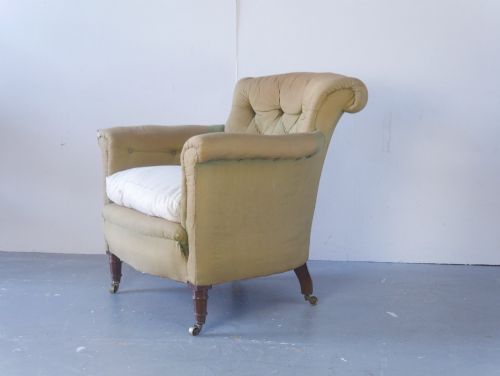
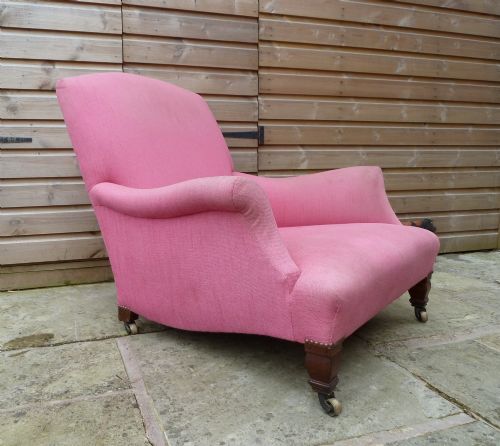
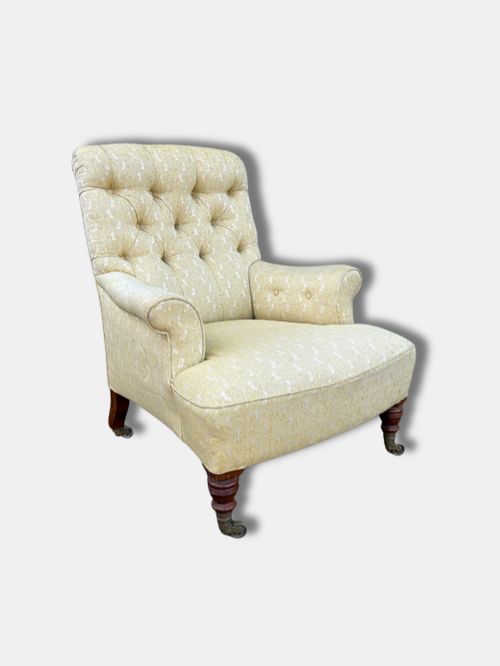
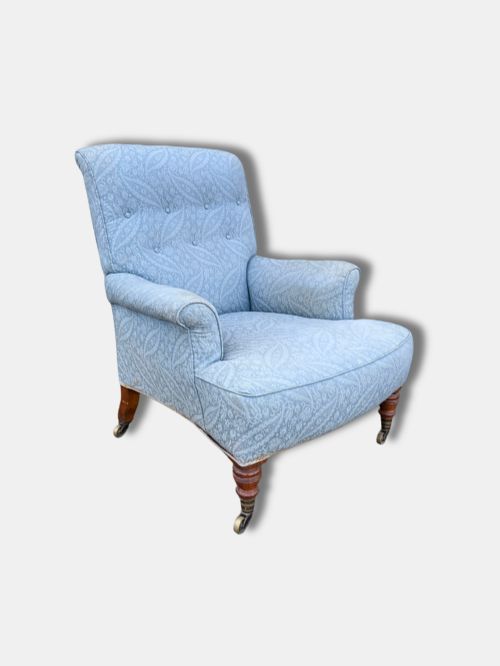
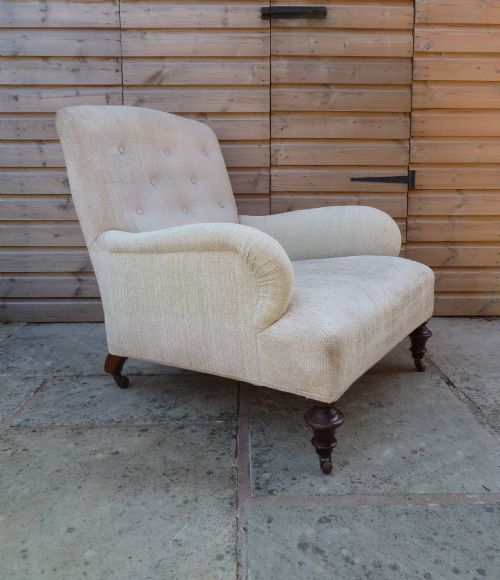
These antique howard lounge chairs bring deep, sprung comfort and English country house style to a room.
Antique Howard Lounge Chairs
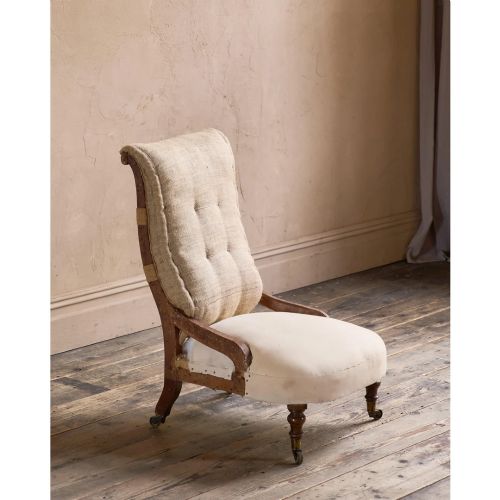
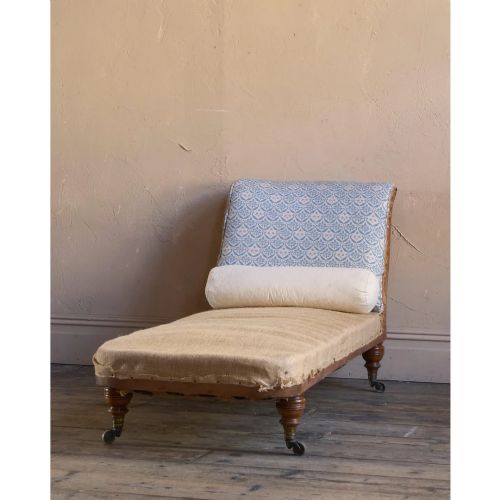
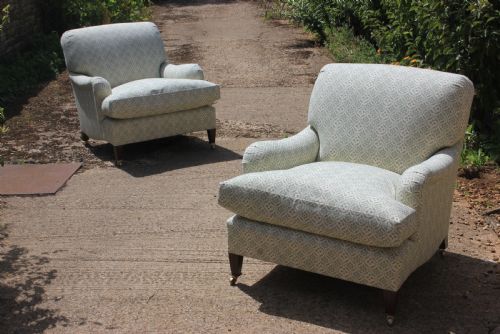
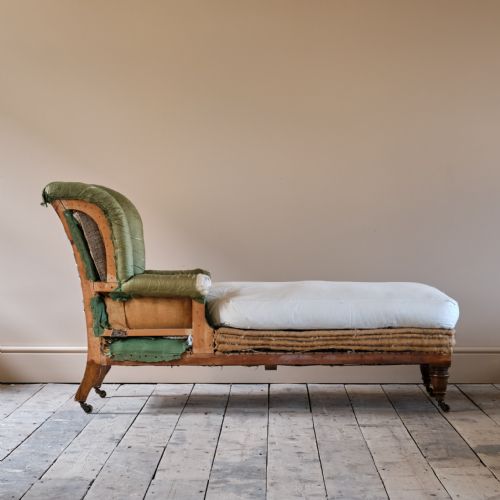
When you search for antique howard lounge chairs, you encounter deep-seated armchairs, club chairs, daybeds, and chaise longues designed for total relaxation. These pieces originate predominantly from the nineteenth century, the Victorian era, and the Edwardian period.
The selections span genuine signed pieces by Howard and Sons alongside excellent examples created in the distinctive Howard style. Specific named models such as the Grafton, Ingleby, Ennismore, Bridgewater, and Woodstock frequently appear across the listings.
Most examples reflect a traditional English country house aesthetic. They serve primarily as primary seating in studies, libraries, and drawing rooms.
How antique howard lounge chairs were made
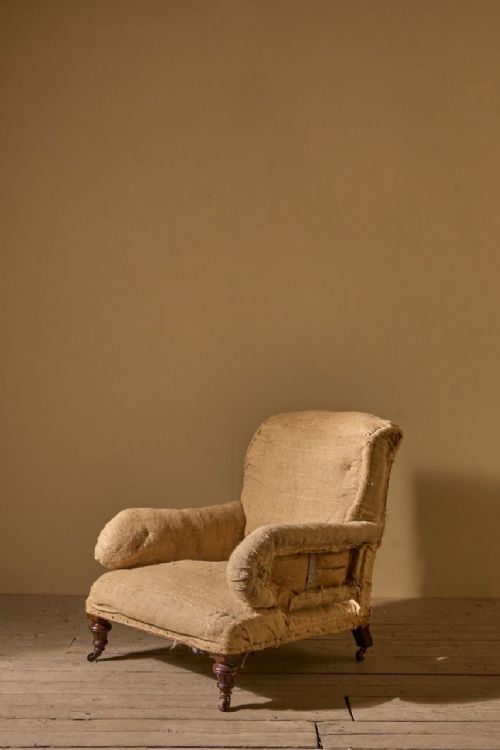
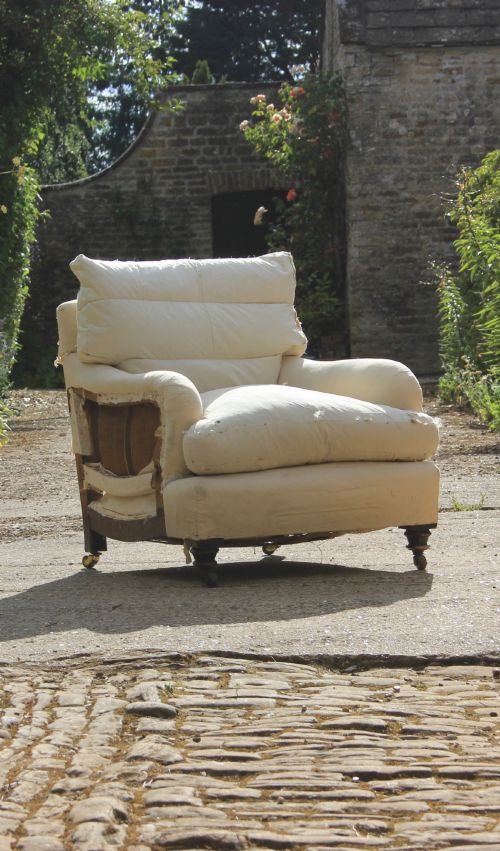
The internal frames utilise sturdy timbers such as walnut, mahogany, and general hardwood to provide a robust skeleton. Traditional upholstery techniques employ hessian as a foundation to support deep coil springs and stuffing.
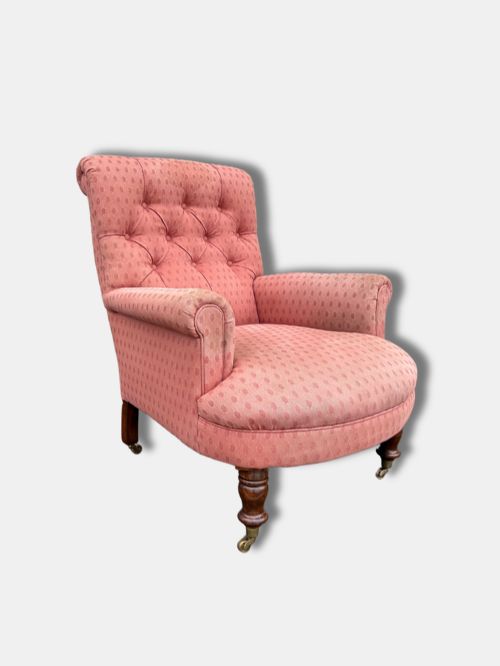
Visible woodwork and structural supports often incorporate brass elements, notably in original castors and occasionally on claw and ball legs. Outer coverings range from heavy woven fabric and patterned upholstery to ivory or blue covers and green leather.
Some chairs are sturdy enough to have survived generations of sleeping hounds and afternoon naps.
What varies in quality
Quality rests significantly on whether a piece bears the authentic stamp of Howard and Sons or belongs to the wider group made in the Howard style. Stamped maker marks, original numbered castors, and intact maker labels elevate historical and collector interest.
The integrity of the internal sprung platform and the retention of original upholstery materials influence the structural standing of each armchair or daybed. Finer proportions and specific named armchair models command stronger recognition among collectors.
Howard and Sons
The Antique Howard Lounge Chairs Glossary
- Howard and Sons
- A prominent nineteenth-century London upholstery firm known for comfortable lounge seating and patented spring systems. Their pieces often feature stamped frames and brass castors.
- Howard style
- A descriptive term for nineteenth-century and Edwardian armchairs that emulate the deep proportions, rolled arms, and comfort associated with Howard and Sons.
- Castor
- A small wheel attached to the base of furniture legs to permit easy movement. Original brass castors are a key feature on verified period lounge chairs.
- Hessian
- A coarse woven fabric typically utilised as internal sacking and webbing in traditional upholstery. It provides the foundational support beneath the stuffing and springs.
- Button back
- An upholstery style where depressions are formed in the padding by stitches or buttons pulled tight. This method secures the filling and creates a patterned surface.
Antique Howard Lounge Chairs: Frequently Asked Questions
What is a howard lounge chair?
A howard lounge chair is a deep-seated upholstered armchair designed for comfort, originating mainly from the nineteenth century and the Edwardian era. These chairs typically feature low scrolled arms and generous proportions.
Many examples were produced by the maker Howard and Sons, while others follow their influential style. They remain quintessential pieces of English country house seating.
How do I identify a Howard and Sons chair?
Genuine pieces by the firm often carry maker stamps on the wooden frame or on the brass castors. Paper labels and specific model names written on the legs also help confirm attribution.
Chairs lacking these marks are generally classed as Howard style. They share the same characteristic comfort and silhouette but lack direct factory signatures.
What are the common styles available?
The selections include club armchairs, low open armchairs, daybeds, and chaise longues. Named models such as the Grafton, Ingleby, Ennismore, and Bridgewater appear frequently.
These forms reflect Victorian and Edwardian manufacturing dates. They utilise traditional materials like walnut, mahogany, brass, and heavy fabric coverings.
Where should I place an antique lounge chair?
These lounge chairs suit sitting rooms, studies, and libraries where deep seating and relaxed proportions are valued. Their traditional aesthetic anchors a room with historic character.
They pair effectively with other nineteenth-century furniture and country house interiors. Adequate space is necessary to accommodate their generous depth and width.