

Antique Howard Chair
When you look for an antique howard chair, you are seeking the benchmark of nineteenth-century English upholstered comfort.
Antique Howard Chair
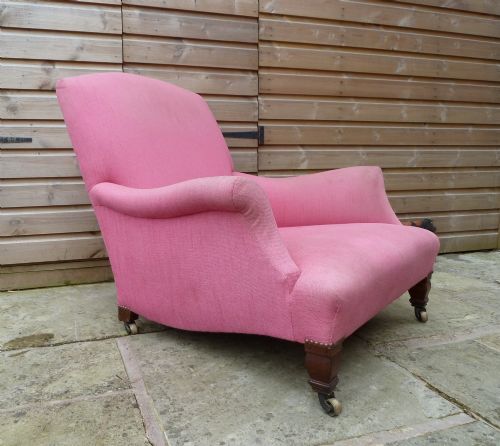
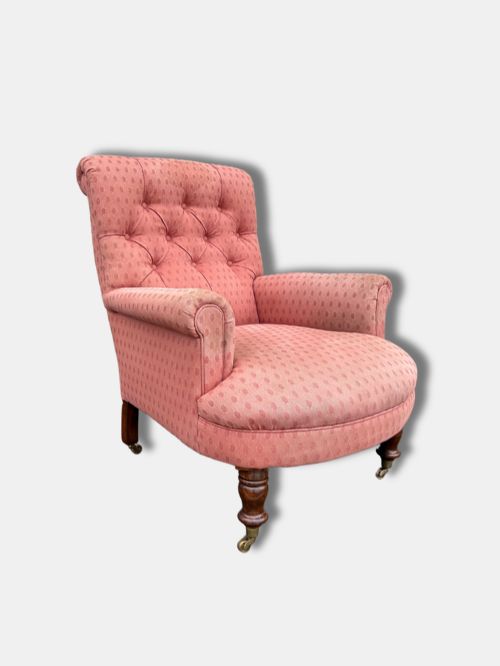
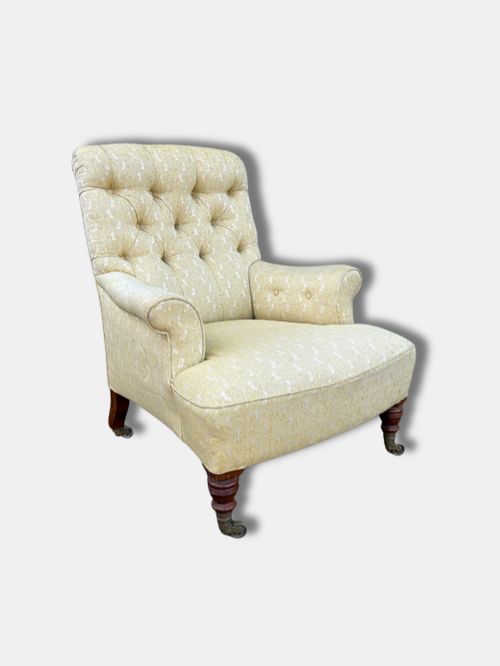
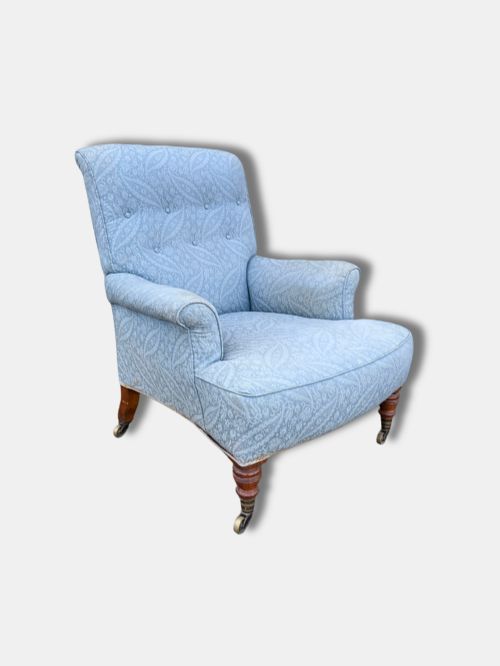
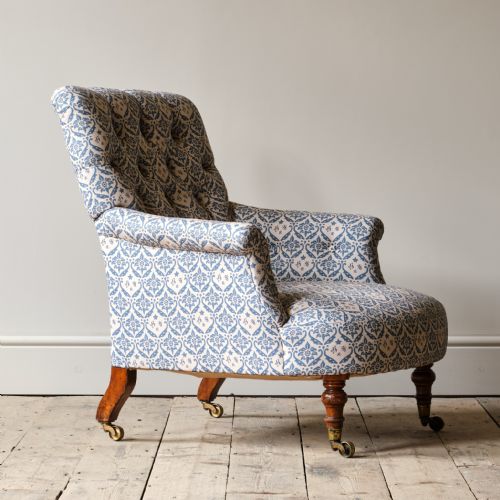
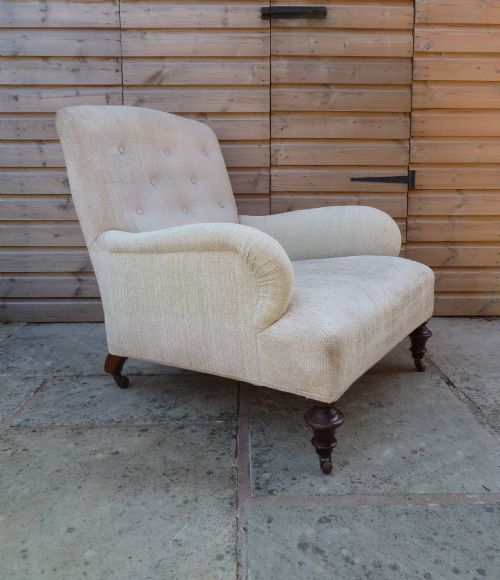
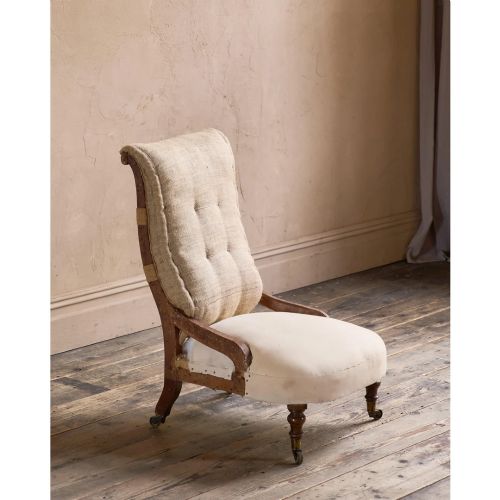
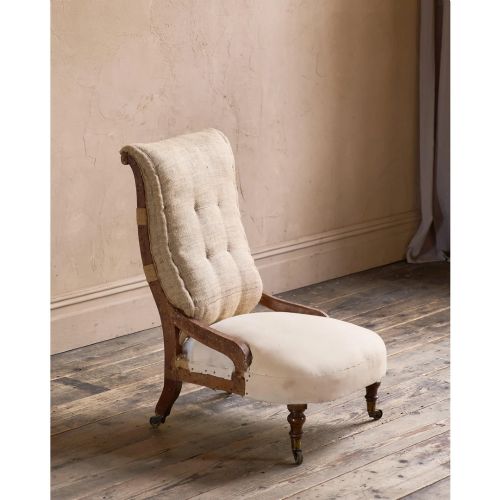
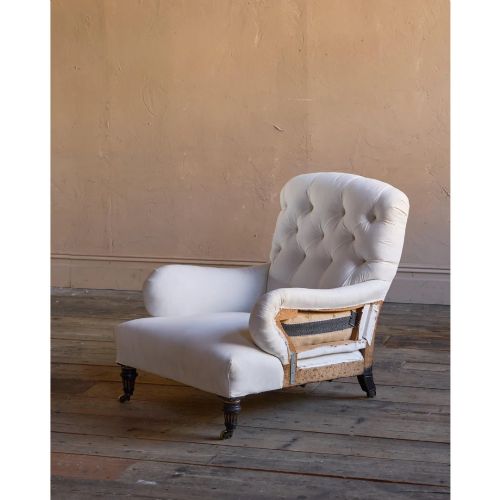
An antique howard chair represents the pinnacle of Victorian and Edwardian seating design, renowned for deep proportions and generous padding. The pieces listed here span the nineteenth century and the early twentieth century, taking the form of low-slung armchairs, club chairs, and occasional seats. Many carry the direct attribution of the celebrated firm, while others display the characteristic lines of the broader Howard style.
Makers such as Howard and Sons defined a standard of domestic luxury that country houses and London townhouses alike adopted. You will encounter models ranging from the classic Bridgewater armchair to button-backed nursing chairs and reclining daybeds. The enduring appeal lies in the way the upholstery cradles the sitter without sacrificing structural poise.
How They Were Made
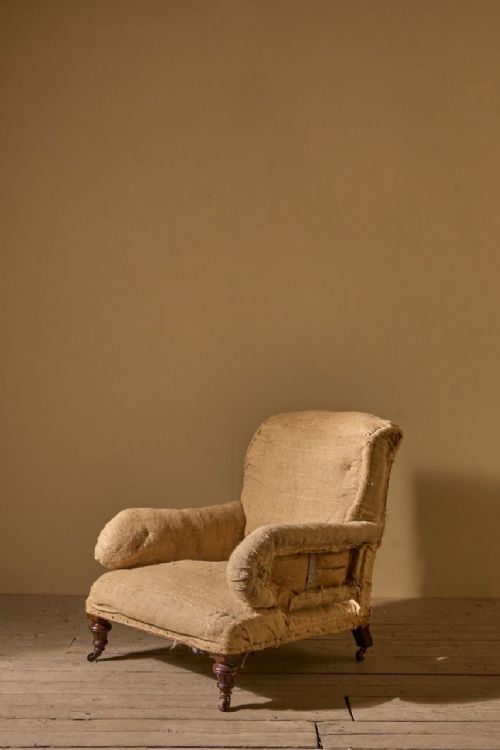
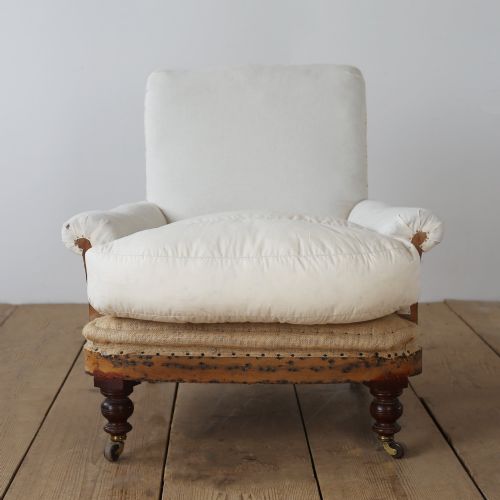
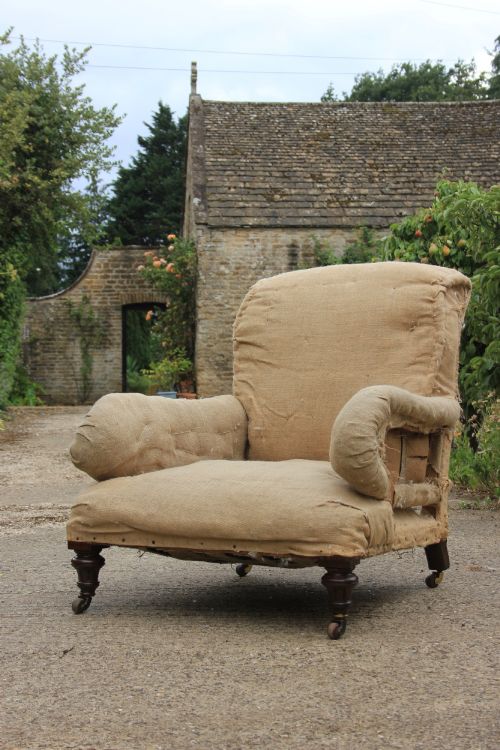
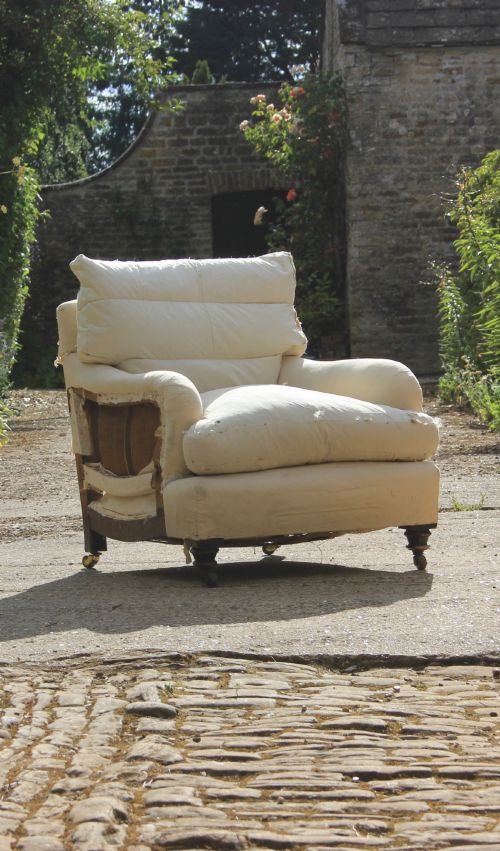
The foundations rely on sturdy timbers like mahogany, walnut, and oak, providing a rigid skeleton for the complex internal padding. Traditional stuffing utilises layers of hessian, cotton, and calico to build up the sprung squabs and deep backs, often finished with brass castors on the legs.
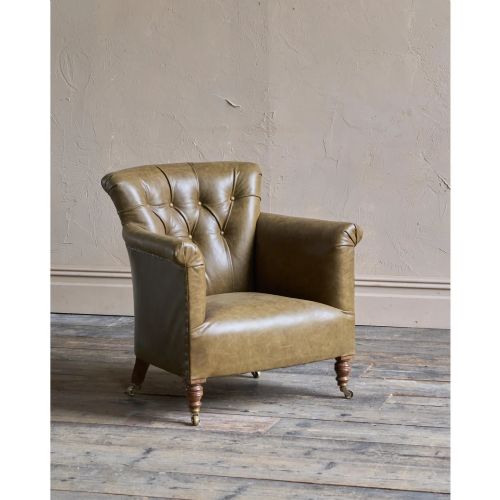
Upholstery techniques combined coiled steel springs with tightly stitched horsehair and webbed bases, ensuring the seat retained its resilience over decades of daily use. Outer covers varied from utilitarian ticking and leather to rich velvet and bespoke printed fabrics.
The inventory records pieces upholstered in calico, hessian, leather, and cotton fabric.
What Varies in Quality
The distinction between an ordinary piece and a masterwork rests on the integrity of the maker's marks and the retention of original internal stuffing. Stamped legs, numbered castors, and intact maker's linings elevate the standing of a chair among collectors.
Proportion and scale also dictate value, with exceptionally deep-seated models or named designs like the Grafton or the Ennismore commanding greater attention. The subtlety of the turned wood supports and the preservation of the primary upholstery frame reveal the caliber of the workshop.
Howard and Sons·SF Cullen·Robert Strahan Dublin·James Shoolbred
The Antique Howard Chair Glossary
- Bridgewater armchair
- A defining Howard design featuring low arms, deep cushioning, and castors that allow easy movement across a room.
- Hessian
- A coarse woven fabric utilised beneath the outer upholstery to contain the internal stuffing and provide a stable base for springing.
- Calico
- A plain-woven cotton cloth employed as the inner lining layer beneath the decorative top cover of nineteenth-century seats.
- Castor
- A small wheel attached to the base of the legs, frequently made of brass and often stamped with serial numbers by leading makers.
Antique Howard Chair: Frequently Asked Questions
How do I identify a genuine Howard chair?
Look for stamped maker marks on the wooden frame or the brass castors, alongside characteristic structural proportions like low rolled arms and deep seats. Many authentic pieces also retain original paper labels or stamped ticking beneath the cushions.
Attributions often rely on the specific quality of the internal springing and webbed construction methods standard to the firm's London workshops.
What is a Bridgewater armchair?
A Bridgewater armchair is a specific nineteenth-century lounge form developed to maximise relaxed seating through low, gently scrolled arms and sumptuous down or hair stuffing. It serves as the quintessential model associated with the Howard aesthetic.
These chairs usually feature turned walnut or mahogany front legs mounted on brass castors for mobility.
Are these chairs comfortable for daily use?
They were engineered precisely for long hours of relaxation in English country houses and libraries, utilising sophisticated multi-layered springing systems. The generous depth and ergonomic rake of the back make them exceptionally supportive for modern sitting.
Traditional stuffing methods allow the upholstery to mould to the body while maintaining structural resilience.
How should I care for antique upholstery?
Protect the fabric from direct sunlight to prevent fading of antique cotton, velvet, or leather covers, and vacuum gently using a low-suction attachment. Professional conservationists should handle any internal repairs to preserve the original webbing and stuffing.
Avoid placing the chairs near direct heat sources to keep the timber frames and traditional glues stable.