
Antique Horse Statue
An antique horse statue brings dynamic motion and classical form into a room, capturing the muscular power and noble bearing of the animal in metal, wood, or ceramic.
Antique Horse Statue
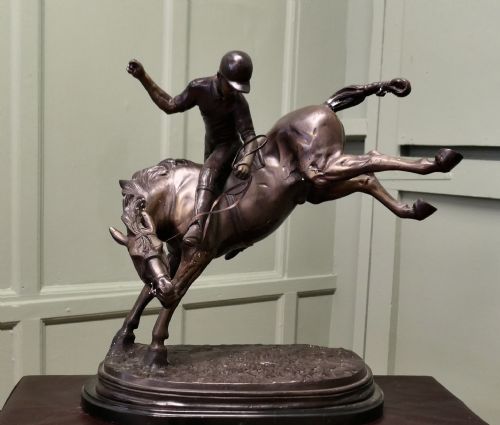
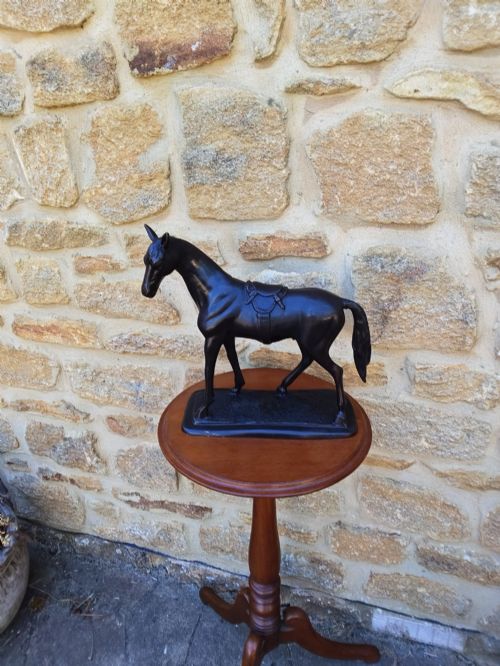
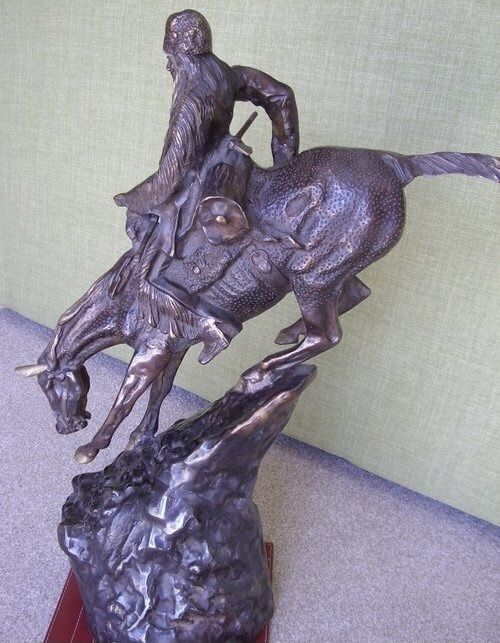
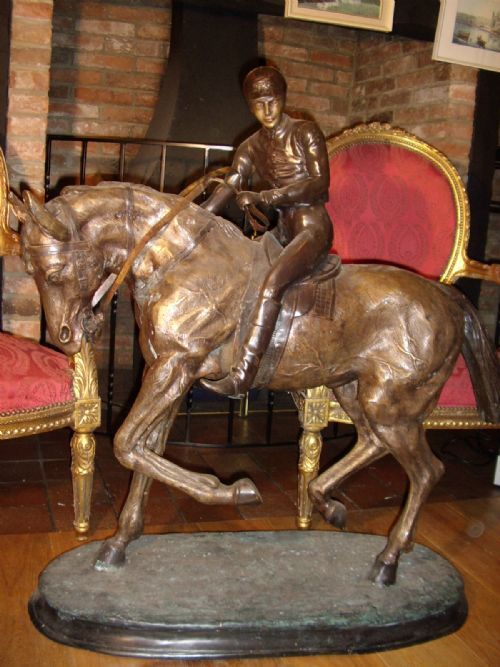
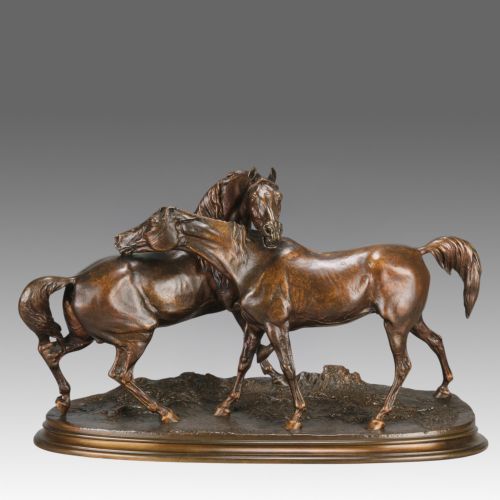
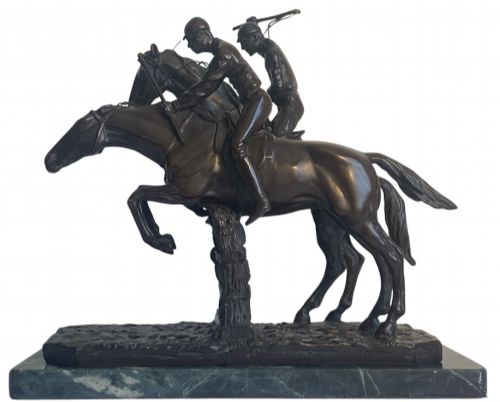
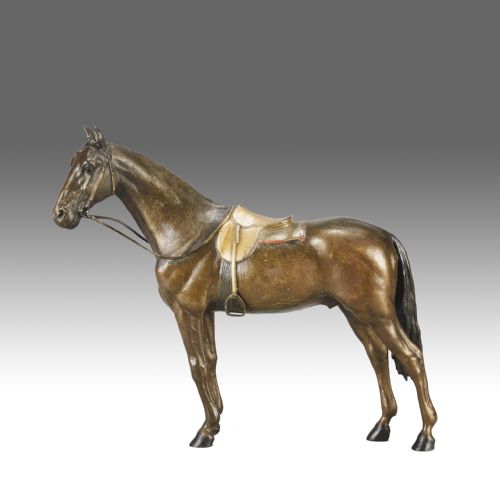
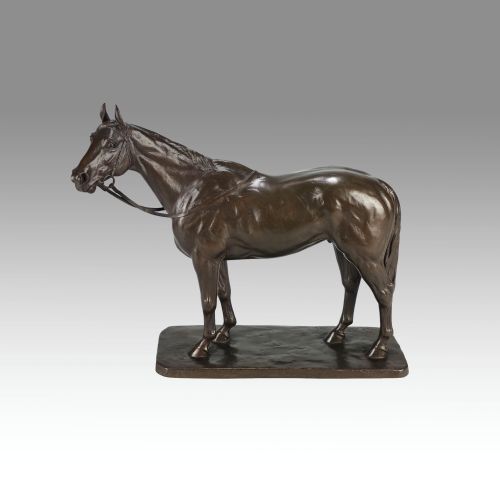
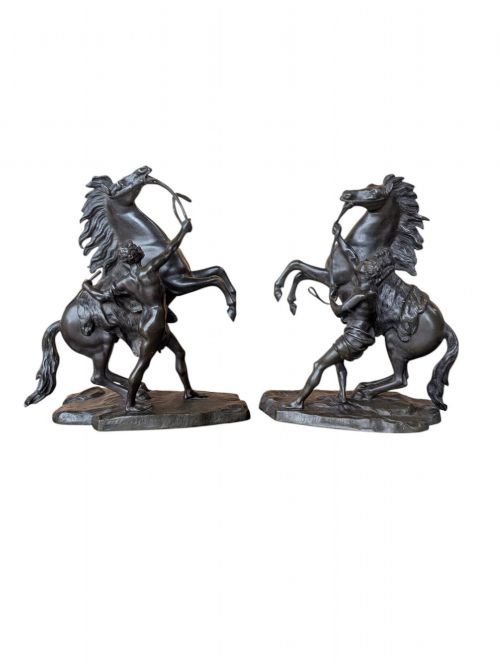
You are most likely to meet mid-to-late nineteenth-century European bronzes and ceramic figures on this page, reflecting the immense popularity of animal sculpture during the Victorian and Edwardian eras. These pieces often depict racehorses, hunters, and draft animals modeled with close anatomical observation.
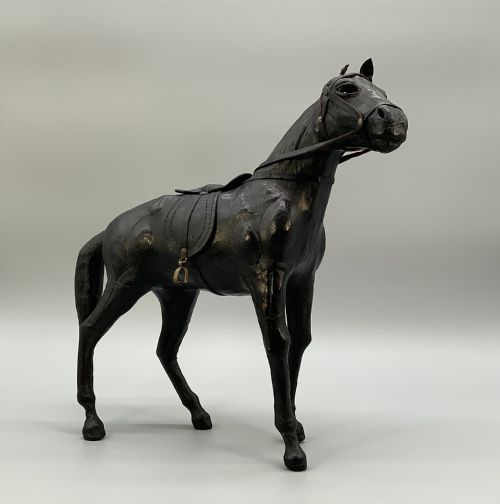
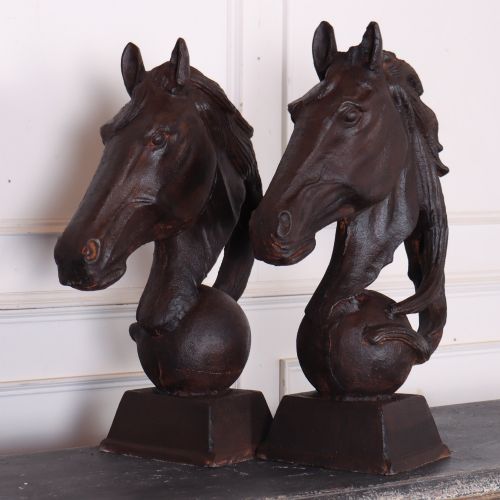
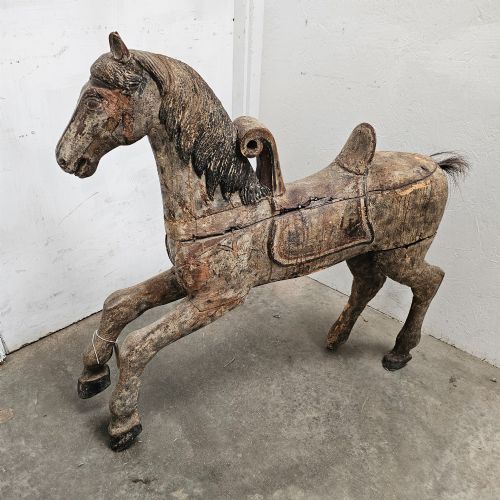
The inventory also accommodates folk art carvings, cast iron hitching posts, and glazed pottery figures from various global traditions. Such works demonstrate how different makers interpreted the equine form across centuries, utilising materials ranging from carved wood to cold-painted metal.
Materials and Working Methods
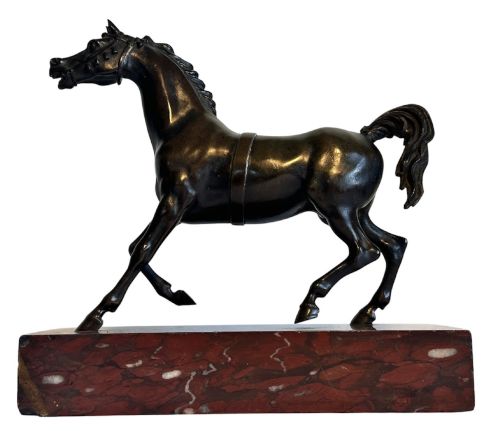
Foundries produced many of the metal pieces through the lost-wax casting method, which allowed sculptors to capture intricate musculature and fine bridle details before finishing the surface with patination or cold-painting.
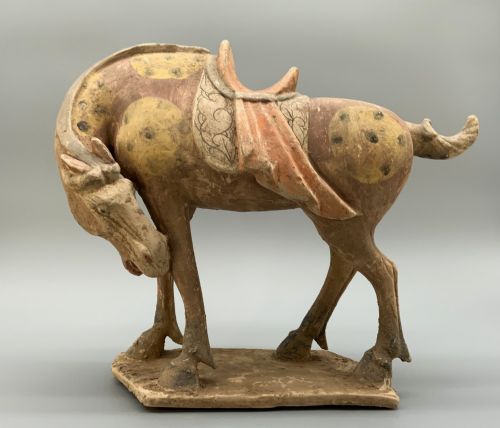
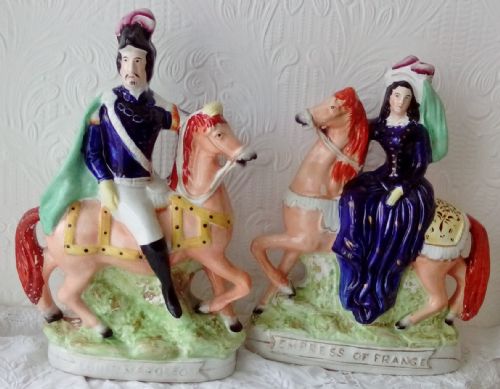
Pottery and ceramic examples combine moulded earthenware bodies with hand-applied glazes, ranging from traditional earthenware finishes to vibrant polychrome decoration.
Carved wooden and cast iron variants rely on direct subtractive shaping or robust mold-pouring, yielding sturdy figures intended for both interior display and outdoor architectural use.
Several statues include tiny bronze bridles and minuscule stirrups cast with astonishing patience by Victorian foundry workers.
Distinctions in Quality
The richness and stability of the original patina or paint layer heavily influence the integrity of a piece, as well-preserved surfaces retain subtle tonal variations applied by the maker.
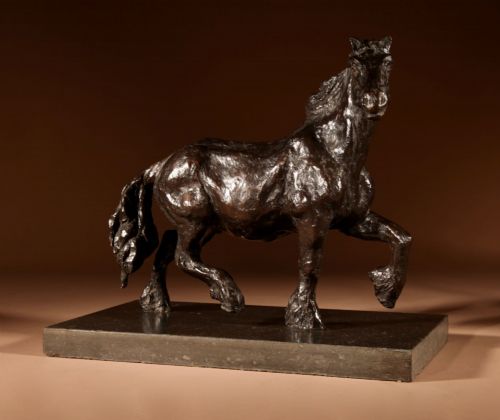
Base construction also separates standard production from finer output, with higher-grade sculptures mounted securely on heavy pedestals of matching marble, slate, or polished hardwood.
Pierre Jules Mêne·Franz Bergman·Kunio Itô·John Willis Good·Luigi Secchi
The Antique Horse Statue Glossary
- Animalier
- A nineteenth-century artistic movement focused on the realistic depiction of animals, particularly horses and hounds in dynamic motion.
- Cold-painted
- A technique where paint is applied to metal sculptures without subsequent kiln-firing, common in Austrian bronze production.
- Lost-wax casting
- A process where a wax model is melted from a mould and replaced with molten metal to create detailed sculptures.
- Patina
- The surface coloration and sheen developed naturally over time or applied chemically by the maker to enhance metal depth.
- Grand Tour
- Souvenir artworks collected by wealthy travellers touring cultural centres of Europe during the eighteenth and nineteenth centuries.
Antique Horse Statue: Frequently Asked Questions
How do I identify a bronze cast?
Examine the weight, temperature, and underside of the piece. Bronze feels cold to the touch and typically weighs substantially more than resin or hollow pot metal.
Look for casting seams, chisel marks, or threaded bolts inside the base that indicate traditional foundry methods rather than modern mass production.
What is an animalier sculpture?
An animalier sculpture is a nineteenth-century artwork focused on realistic depictions of animals in action. Artists studied live subjects closely to capture naturalistic poses.
These pieces range from racing stallions to resting draft horses, prized for their anatomical accuracy and lively execution.
How should I clean antique bronze?
Dust the surface regularly with a soft, dry brush to prevent particulate buildup. Avoid harsh chemical cleaners or abrasive cloths that strip the original patination.
Applying a light coat of microcrystalline wax occasionally helps protect the metal surface from atmospheric moisture without altering its historic finish.
Are cast iron pieces weather-resistant?
Cast iron sculptures and hitching posts tolerate outdoor conditions well due to their heavy metal composition. However, they remain susceptible to rust if the protective paint layer degrades.
Inspect exterior pieces periodically for signs of oxidation, and treat affected areas promptly with appropriate metal primers and paints.