



Antique Horse Carriage Art
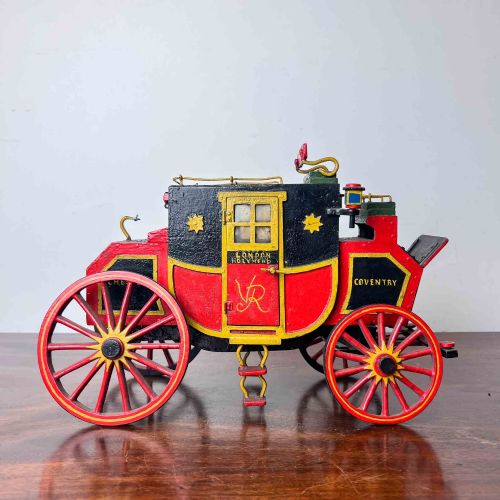
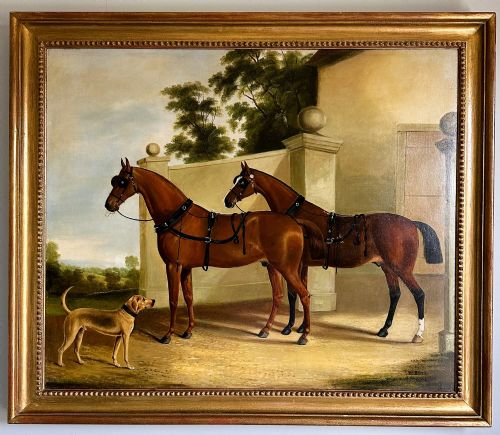
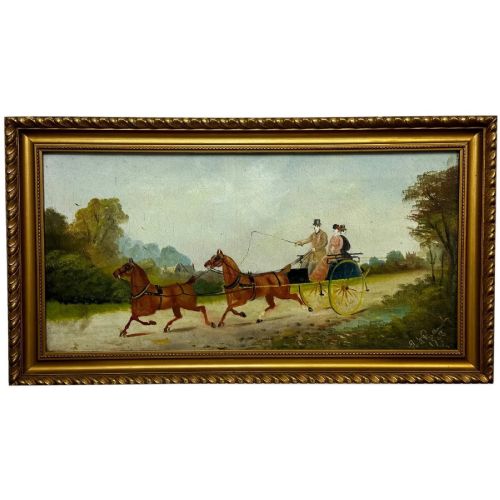
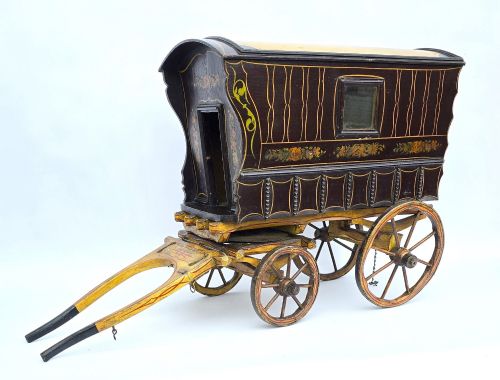
Antique horse carriage art captures the movement of coaches and carts through detailed oil paintings, watercolours and scratch-built wooden models.
Antique Horse Carriage Art
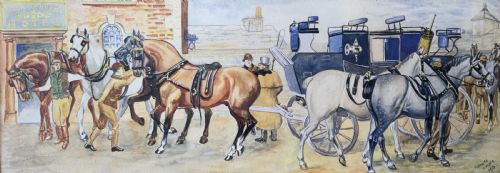
When you search for antique horse carriage art, you encounter visual records of transport from the nineteenth and early twentieth centuries. These works document stagecoaches, mail coaches, traps and Paris chaises navigating urban streets and rural roads.
Many of these representations focus on sporting scenes, winter snowstorms and street life. Traditional British sporting art sits alongside folk art models, reflecting both professional studio output and skilled individual craftsmanship.
Materials and construction methods
Artists relied on oil paint, watercolour, ink and chalk on paper, canvas or wood panels to build their compositions. Framing materials include oak, walnut and giltwood, alongside glass to protect works on paper.
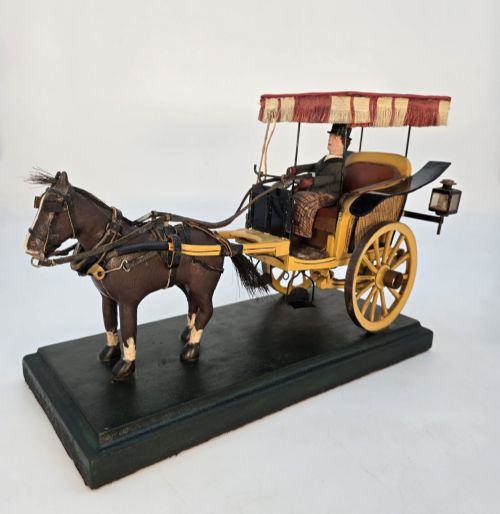
Three-dimensional pieces utilise carved wood, paper and paint to form scale models of caravans and carriages complete with horses and drivers. These makers employed hand tools to shape wood and assemble intricate miniature vehicles.
Antique Horse Carriage Art Retail Price Guide 2026
Typical asking prices for horse carriage art among the pieces listed under this phrase on Sellingantiques today, from the lower quarter to the upper quarter. They describe what is for sale here now, not the wider market.
One meticulous maker signed and dated a wooden Paris chaise model complete with its tiny horse and driver.
Distinctions in craftsmanship and execution
Quality rests on the precision of the drawing and the handling of the medium, whether oils or watercolours. Finer works capture the tension of harnessed horses and the atmospheric effects of snow or moonlight with assured brushwork.
In three-dimensional models, excellence appears in the scale accuracy and the level of detail given to the carriage wheels, harness fittings and driver figures. Signed and dated works by known hands command greater attention.
Philip H Rideout·R.D. Roberts·Albert Ludovici Jnr·Cecil Charles Windsor Aldin·George Wright·Charles James Lauder·Samuel Henry Alken·Eduard Leon Cortes·John Charles Maggs·John Richard Worsdale·H. Alken·James Pollard
The Antique Horse Carriage Art Glossary
- Watercolour
- A paint consisting of pigment suspended in a water-based solution. It is typically applied to paper to create translucent washes of colour.
- Giltwood
- Wood that has been treated with a thin layer of gold leaf or gold paint. It frequently appears on traditional frames.
- Folk art
- Artistic work created by untrained or self-taught individuals working within a community tradition. Models in this category show personal interpretations of standard vehicle types.
- Lithograph
- A print produced by a printing process in which a flat stone or metal plate is treated to retain ink only in desired areas. These allowed the reproduction of popular coaching scenes.
- Arts and Crafts
- A design movement valuing traditional craftsmanship and simple forms. Copper wall mirrors and related decorative items reflect this aesthetic.
Antique Horse Carriage Art: Frequently Asked Questions
What periods do these pieces date from?
The works originate primarily from the nineteenth and early twentieth centuries, spanning the Victorian and Edwardian eras. Dates extend from the 1850s through to the 1930s.
Most items concentrate around the turn of the twentieth century, reflecting a period when horse transport remained familiar yet was gradually being superseded.
What mediums were used by the artists?
Artists worked in oil paint on canvas, watercolour on paper, ink, and chalk. Many works are framed in period woods such as oak and walnut.
Print formats such as colour lithographs also appear, capturing popular coaching scenes and club meets for domestic display.
How do I care for framed watercolours?
Works on paper require protection from direct sunlight to prevent the watercolours from fading over time. Maintaining stable indoor humidity prevents warping in the paper and the surrounding frame.
Displaying them away from direct heat sources ensures the paper and historic framing materials remain preserved.