





Antique Horse and Hound Picture
An antique horse and hound picture captures the drama of the chase, bringing historic sporting fields directly onto your wall.
Antique Horse and Hound Picture
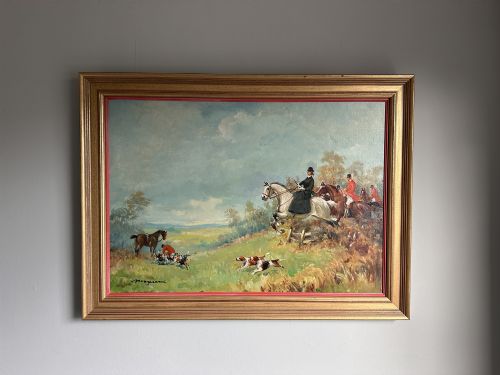
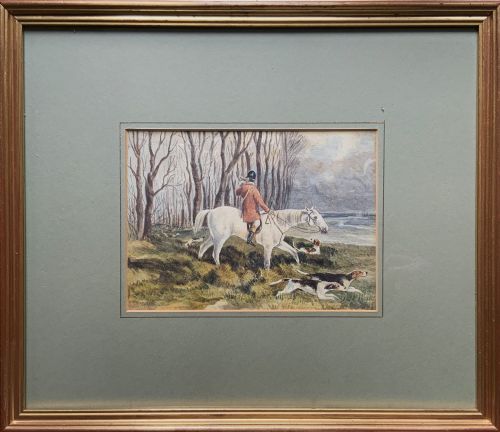
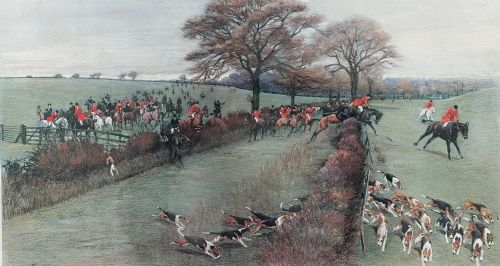
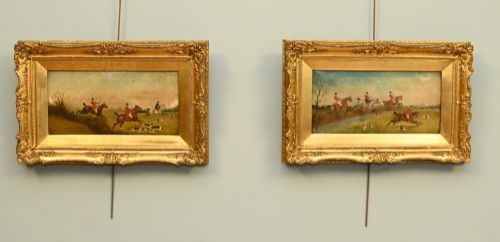
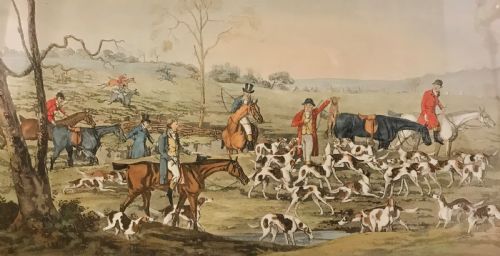
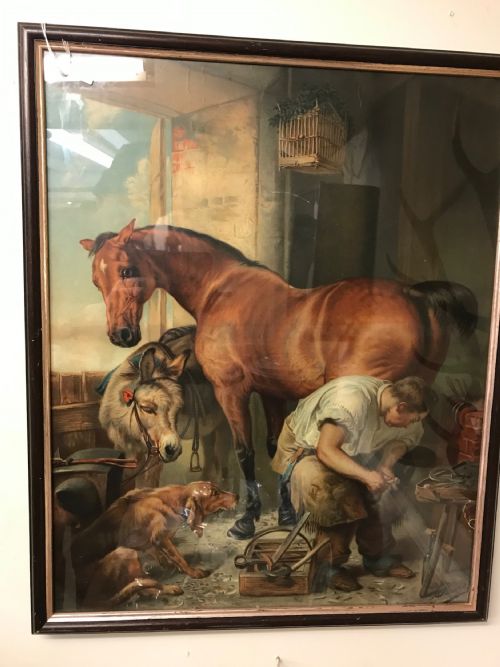
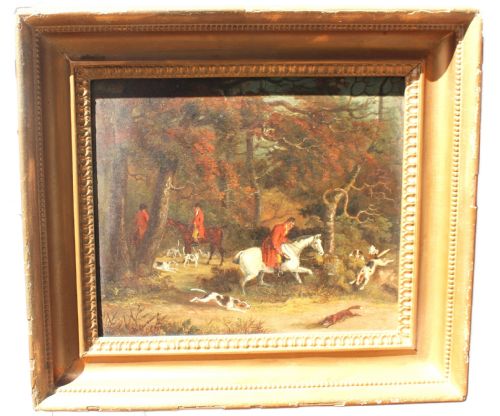
An antique horse and hound picture brings together the classic subjects of equestrian sport and hunting hounds, executed across a range of mediums. When you search for this phrase, you encounter works spanning from the early nineteenth century through to the mid-twentieth century.
The pieces on this page lean heavily into British sporting art and Victorian styles, taking the form of oil paintings, watercolours, hand-coloured engravings, and lithographs. You are most likely to meet framed oil paintings on canvas alongside nineteenth-century prints depicting huntsmen and packs in pursuit.
Makers and artists represented include figures like John Sanderson-Wells, Heywood Hardy, and George Goodwin Kilburne, working within established traditions of British and French realism. These works capture specific moments of the hunt, from quiet stable scenes to the high-energy view halloo.
Materials and technique
Makers utilised traditional oil on canvas and watercolour on paper, framed in wood and giltwood or gilt wood. Engravings and lithographs often received hand-colouring with ink to enhance the depth of the horses, riders, and hounds.
The construction of these pieces relies on durable canvas stretched over wooden frames, or heavy paper protected beneath glass. Original mountings often incorporate carved giltwood frames that reflect the aesthetic standards of the Victorian and Georgian periods.
Antique Horse and Hound Picture Retail Price Guide 2026
Typical asking prices for horse and hound picture among the pieces listed under this phrase on Sellingantiques today, from the lower quarter to the upper quarter. They describe what is for sale here now, not the wider market.
Listings feature paper, oil on canvas, wood, glass, gilt wood, canvas, giltwood, and ink across the nineteenth and twentieth centuries.
Markers of distinction
The distinction between standard prints and original painted works rests on the hand of the artist and the medium employed. An original oil painting by a recorded painter demonstrates precise brushwork in the rendering of equine muscle and hound anatomy that mass-produced prints cannot match.
The integrity of the supporting materials, such as period giltwood frames and well-preserved canvas or paper under glass, separates pieces that retain their historical presence from those that have suffered degradation over the centuries.
John Sanderson-Wells·Heywood Hardy·Guillaume Urban Régamey·George Goodwin Kilburne·Wilfred Bailey
The Antique Horse and Hound Picture Glossary
- Giltwood
- Wood carved and coated with a thin layer of gold leaf or gold paint. This material is commonly found framing nineteenth-century paintings and large prints.
- Lithograph
- A print made from a design drawn on a flat stone or metal plate. This technique allowed for the mass production of popular sporting scenes during the Victorian era.
- Engraving
- An image cut into a hard plate, which is then inked and pressed onto paper. Hand-coloured examples feature pigment applied by hand after the printing process.
- Sporting Art
- Artwork depicting field sports, horses, hunting, and hounds. This genre flourished in Britain throughout the eighteenth and nineteenth centuries.
- Watercolour
- A painting method where fine pigment is suspended in a water-based solution on paper. These works require careful protection behind glass to prevent fading.
Antique Horse and Hound Picture: Frequently Asked Questions
What periods do these pictures come from?
The works listed span from the early nineteenth century through to the mid-twentieth century, with a strong representation of Victorian and Georgian aesthetics.
Dates range across specific years like eighteen-twenty-one, eighteen-eighty, and nineteen-ten, capturing various stylistic shifts in British sporting art.
How do I care for an oil painting?
Oil paintings on canvas require stable indoor environments away from direct sunlight and excessive moisture. Dusting should be done gently with a dry, soft brush without applying pressure to the canvas.
Avoid using liquid cleaners on the paint surface or the giltwood frame to prevent damaging the historic materials.
Are these works original or prints?
The selection includes a mix of original oil paintings, original watercolours, hand-coloured engravings, lithographs, and period photographs. Each listing specifies the exact medium, distinguishing unique painted works from published prints.
Prints often feature after-artist credits, such as works published after Aiken or Landseer.
How were these scenes used originally?
Sporting pictures were traditionally hung in country houses, libraries, and estate reception rooms to celebrate local hunts and favoured riding horses. They served as both decorative art and records of notable packs and hounds.
Owners often commissioned works to commemorate specific hunts, such as the Berkeley Hunt.
What is a view halloo?
The term view halloo refers to the shout raised by a huntsman upon sighting the fox, signaling the pack to give chase. It represents the most dynamic moment of the hunt.
Artists frequently chose this exact climax for their canvases to maximise tension and movement.