


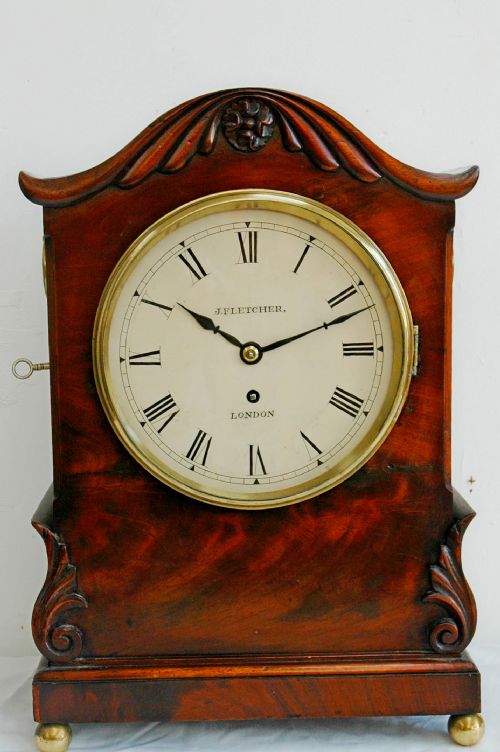


Antique Horology Desk Timepiece
An antique horology desk timepiece brings precision mechanical movement to a tabletop, offering heavy brass frames and enamel dials.
Antique Horology Desk Timepiece
When searching for an antique horology desk timepiece, you encounter portable mechanical clocks designed for travel or surface placement. These pieces range from carriage clocks housed in brass and glass cases to larger mantel clocks and table clocks.
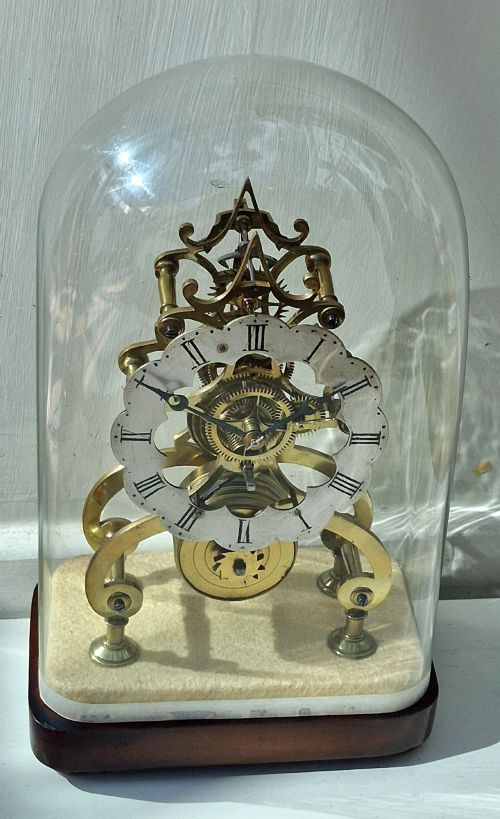
The most common examples on this page are French carriage clocks and Victorian brass designs featuring visible escapements and enamel dials. Domestic mantel clocks in mahogany, rosewood, and red marble also appear alongside smaller travel pieces.
Periods represented stretch from the Regency and Georgian eras through the Victorian and Edwardian decades up to nineteen hundred. Styles span French Neoclassical, Arts and Crafts, and nineteenth-century domestic designs.
Materials and construction methods
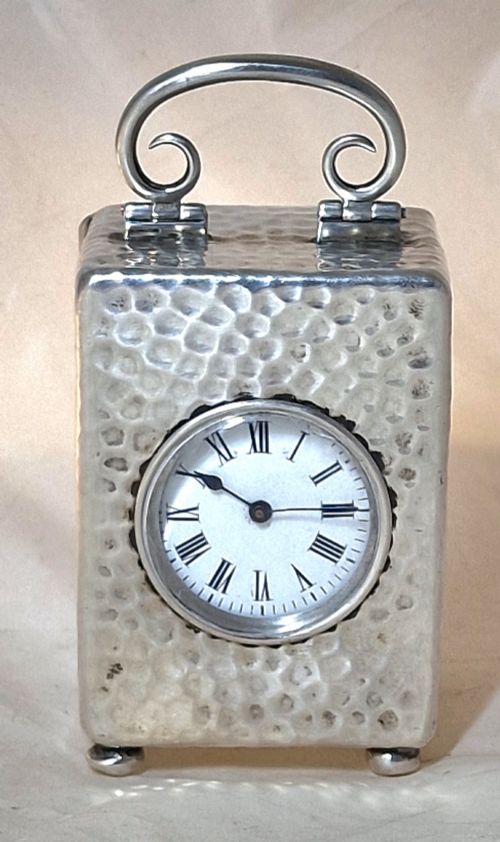
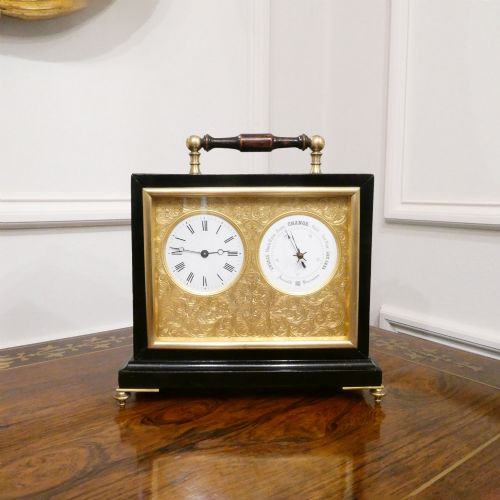
Makers constructed these timepieces using heavy cast brass, gilt bronze, and silver for structural frames, incorporating bevelled glass panels to display the internal escapement and gear trains. Dials feature white enamel with painted Roman or Arabic numerals.
Movements rely on steel pinions, brass wheels, and spring barrels, often providing eight-day operation or complex striking capabilities. Cabinets and travel cases utilise mahogany, rosewood, red marble, and leather alongside pewter and enamel work.
One travel clock arrives shaped entirely like a prayer book, ready to keep divine hours on the road.
Distinctions in manufacture and finish
Quality rests in the precision of the movement and the weight of the metal case, with better examples employing heavy gorge or corniche brass frames and finely engraved gilt work. Superior pieces include multi-train movements that execute repeat striking or alarm functions.
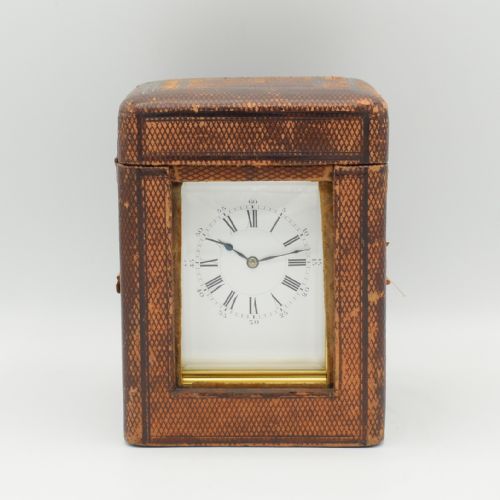
The standard of the enamel dial and the presence of original leather travel cases or maker signatures elevate the standing of a piece. Subtleties in hand-finishing, such as polished screw heads and jewelled escapements, separate standard production clocks from masterwork timepieces.
Henri Jacot·Drocourt Paris·Antoine Redier of Paris·David Veasey for Liberty·J Batson and Son·Mappin and Webb·Henry Marc·Paul Garnier·Dwerrihouse and Bell·Grey of Edinburgh
The Antique Horology Desk Timepiece Glossary
- Carriage clock
- A small, spring-driven portable clock with a carrying handle, originally designed for officers and travellers. These pieces are enclosed in brass and glass cases.
- Gorge case
- A stepped brass carriage clock case design with characteristic mouldings at the top and bottom. This frame style is typical of fine nineteenth-century French makers.
- Platform escapement
- The tiny horizontal assembly containing the balance wheel and hairspring, visible through the top glass of a carriage clock. It regulates the timekeeping accuracy of the movement.
- Petite sonnerie
- A striking mechanism that sounds the hours and quarters automatically as the quarters pass. This complex complication requires additional gear trains within the clock.
- Ormolu
- Gilt bronze ornamentation applied to clock cases and decorative mounts. The technique involves binding finely ground gold to a bronze base using mercury.
Antique Horology Desk Timepiece: Frequently Asked Questions
What is an antique carriage clock?
A carriage clock is a portable spring-driven timepiece fitted with a carrying handle and glass panels on all sides. They were originally built for travel in horse-drawn carriages.
Inside, a platform escapement regulates the movement, allowing the mechanism to keep time despite motion. Most examples sit in brass or gilt bronze frames.
How do eight day movements work?
An eight-day movement utilises a mainspring wound with a key that requires tensioning approximately once a week. This setup provides a reliable power reserve for domestic and travel clocks.
Gear trains distribute this power through the escapement to drive the hands and any additional striking or alarm complications.
Where were these desk clocks made?
Many of these pieces originated in French workshops, particularly in Paris, during the nineteenth century. Makers exported quantities of carriage and mantel clocks to the British market.
British makers and retailers also produced and cased timepieces, utilising domestic woods like mahogany and silver hallmarks for London and provincial standards.