

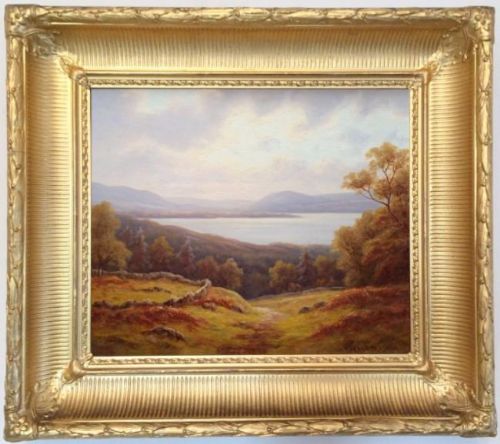


Antique Highland Scenery Painting
An antique highland scenery painting brings remote Scottish glens, lochs and cattle directly to the interior wall.
Antique Highland Scenery Painting
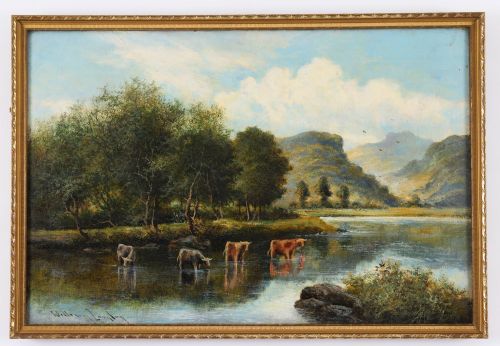
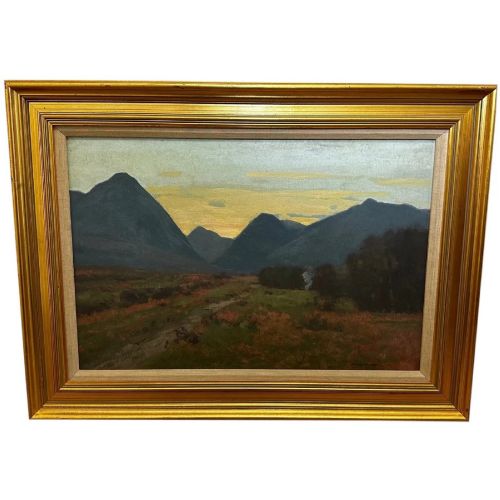
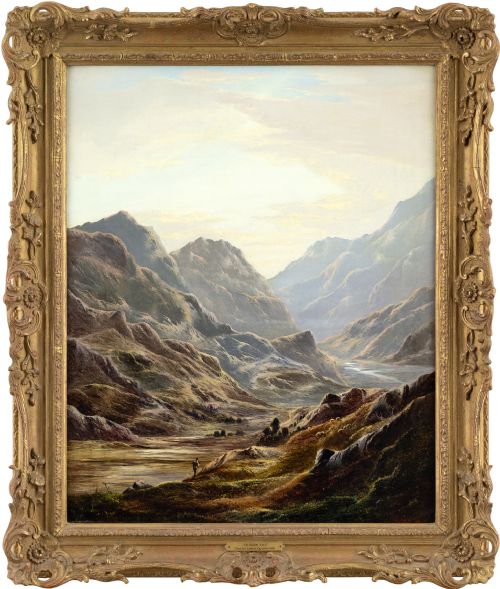
An antique highland scenery painting captures the rugged topography of Scotland, featuring rolling hills, calm lochs and roaming cattle. Buyers seeking these works will find nineteenth-century representations executed in oil, often depicting specific locations such as Glen Tilt, Loch Lomond and Glen Tay.
The pieces on this page span the Victorian era up to nineteen-twenty, encompassing both traditional realism and Scottish impressionism. Common formats include oil on canvas and wood panel, framed in gilt wood and gesso.
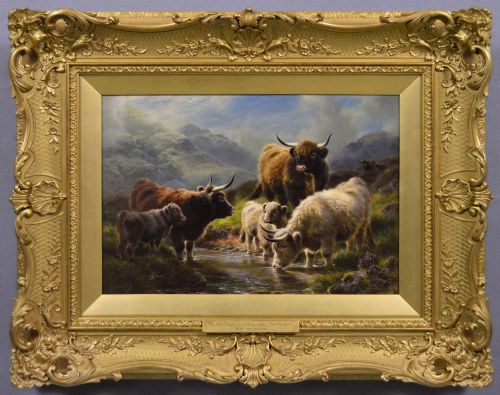
The subjects range from quiet stone bridges in pastoral settings to atmospheric highland cattle scenes painted by known artists of the period. Each work records nineteenth-century British artistic interpretations of the northern landscape.
How they were made
Artists built these works using oil paint applied to prepared canvas supports or wood panels. The brushwork captures the changing light across water and hills, relying on the pigment properties of oil to achieve depth in sky and foliage.
Frames play an integral structural and aesthetic role, constructed from wood and finished with gesso and gold leaf or gilt. These gilded surrounds define the perimeter of the landscape and reflect the interior illumination of the Victorian parlour.
Antique Highland Scenery Painting Retail Price Guide 2026
Typical asking prices for highland scenery painting among the pieces listed under this phrase on Sellingantiques today, from the lower quarter to the upper quarter. They describe what is for sale here now, not the wider market.
Highland cattle stare out from these canvases with a stoic patience that has outlasted several Prime Ministers.
What varies in quality
Quality rests upon the handling of light, atmosphere and topography by the painter, distinguishing routine topographical records from masterly works of mood and place. The precision of detail in animal anatomy, particularly highland cattle, and the naturalism of water surfaces separate the finest canvases from simpler decorative efforts.
The preservation of the original gilt wood and gesso frames influences the overall integrity of the piece. Frames with intact ornamentation complement the oil painting and maintain the historical context established by the nineteenth-century maker.
George Houston RSA RSW·William Watson Jnr·Charles Leslie·Everett Watson Mellor·Alfred de Breanski·John W Morris
The Antique Highland Scenery Painting Glossary
- Oil on Canvas
- A painting medium where pigments suspended in drying oil are applied to a stretched woven fabric support. This combination allowed nineteenth-century artists to achieve rich tonal gradations.
- Gesso
- A plaster-like mixture applied to wood frames before gilding to create a smooth surface for gold leaf. It provides the foundation for ornate Victorian frame mouldings.
- Gilt Wood
- Timber coated with a thin layer of gold leaf or metallic gilt paint. This finish frames the landscape with a warm, reflective border.
- Scottish Impressionism
- A regional painting style characterised by looser brushwork and a focus on atmospheric light rather than tight academic realism. It developed during the late nineteenth and early twentieth centuries.
- Wood Panel
- A rigid flat wooden support used as an alternative to canvas for oil paintings. Panels provided a stable surface for smaller nineteenth-century landscape works.
Antique Highland Scenery Painting: Frequently Asked Questions
What subjects appear in these paintings?
The works depict Scottish landscapes, lochs, rivers and pastoral scenes. Highland cattle and stone bridges frequently serve as focal points within the wider terrain.
Views are often tied to specific geographic locations, including Loch Lomond, Glen Tilt and Lake Windermere, rendered by nineteenth-century artists.
How do I date a highland painting?
Dating relies on stylistic clues, framing materials and artist signatures documented from the nineteenth century to nineteen-twenty. Victorian works often display traditional realism, while later examples show touches of Scottish impressionism.
Inscribed titles on the reverse or stretcher bars frequently name the specific Scottish locale depicted by the painter.
Are original frames important?
Original gilt wood and gesso frames contribute significantly to the historical context of a nineteenth-century painting. They are designed to complement the palette and scale of the canvas.
Matching the frame style to the period of the oil painting helps confirm the integrity of the piece as a whole.
Where should I hang these works?
These landscapes suit traditional interiors, libraries or dining rooms where rich oil pigments and gilded frames can interact with natural light. Avoid hanging them in areas with excessive moisture or direct sunlight.
Pairing a landscape with period furniture from the nineteenth century enhances the historic atmosphere of the room.