


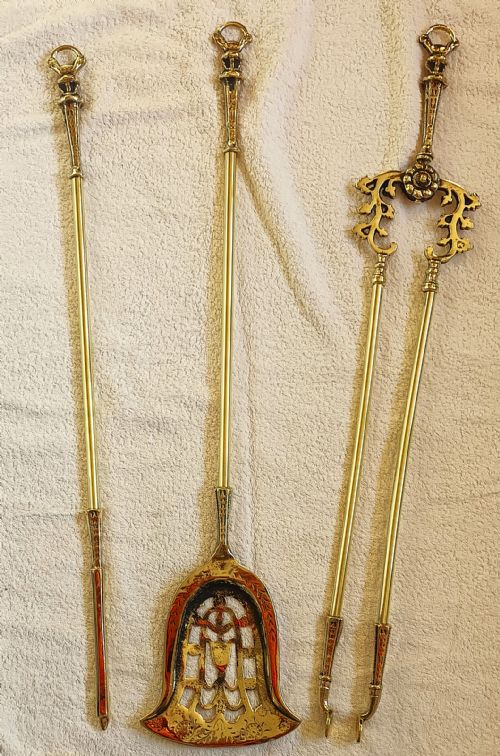


Antique Hearth Tongs
Antique hearth tongs form an essential component of historical fireside sets, offering both practical control and refined metallic detail for period hearths.
Antique Hearth Tongs
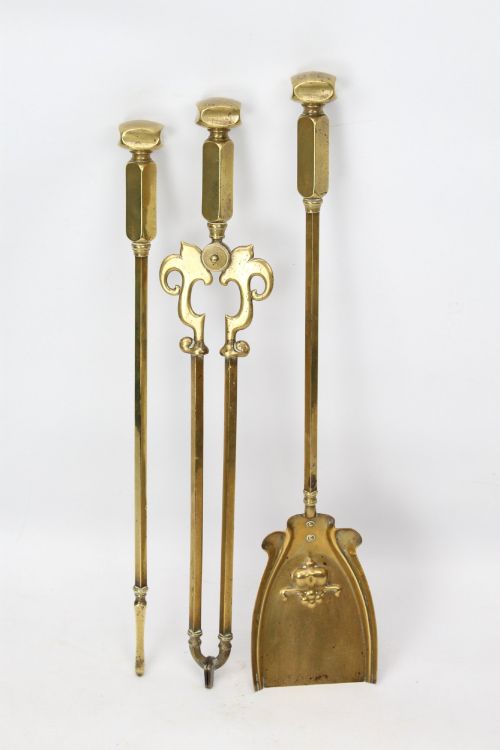
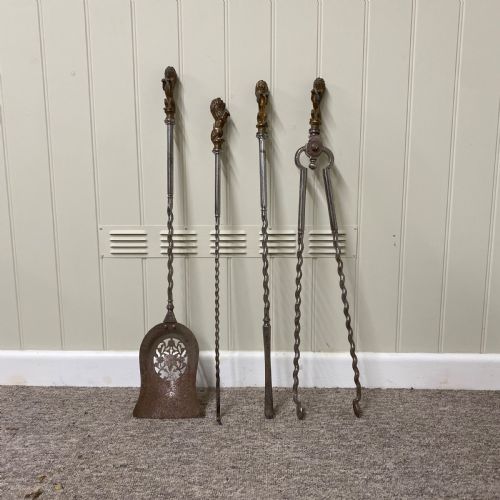
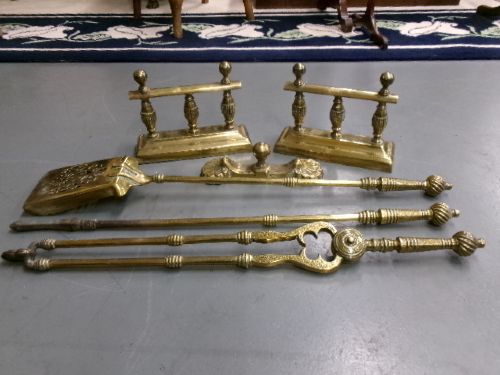
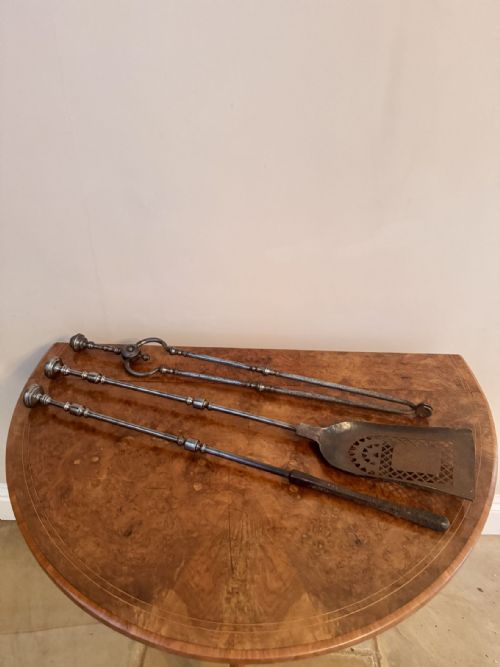
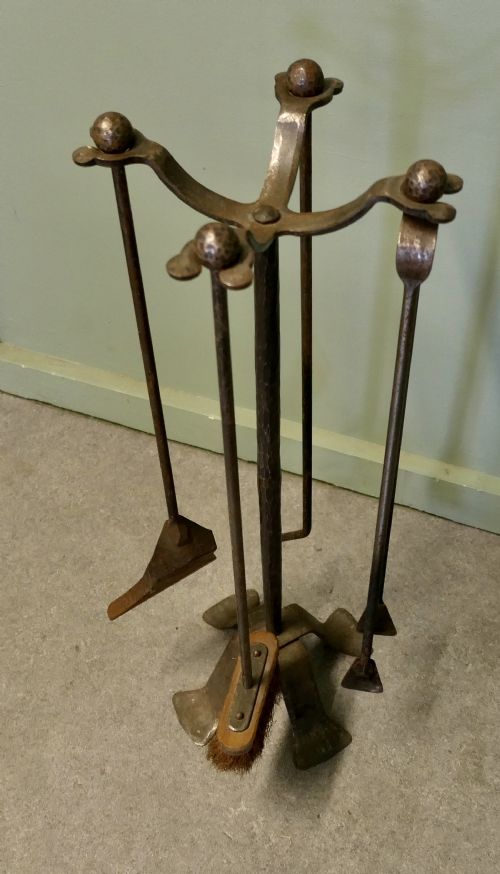
Antique hearth tongs appear within this selection as components of multi-piece fireside sets, companion suites, and fire iron collections. Buyers seeking these items encounter them grouped alongside pokers and shovels rather than as isolated implements.
The pieces on this page span the Georgian, Regency, Victorian, and Edwardian periods, stretching from the eighteenth century into the early twentieth century. English and French examples dominate the selection, reflecting domestic hearth traditions of those regions.
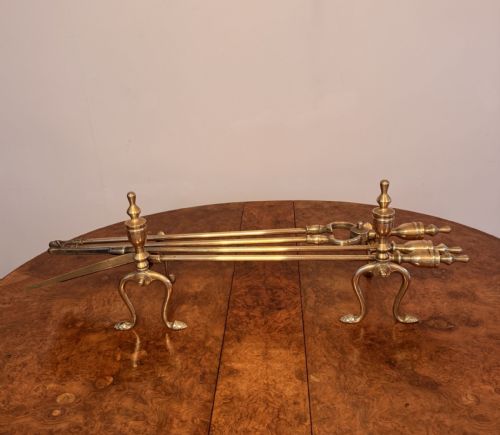
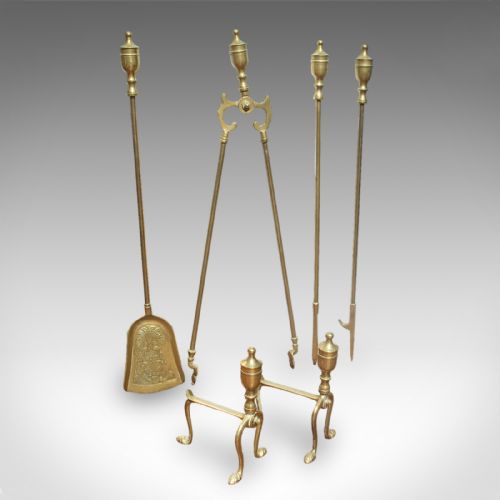
Victorian and nineteenth-century versions emerge most frequently in the current listings, typically formed in brass, steel, or combinations of both metals. These tools range from plain utilitarian iron designs to decorative brass sets featuring matched fire dogs.
Materials and construction methods
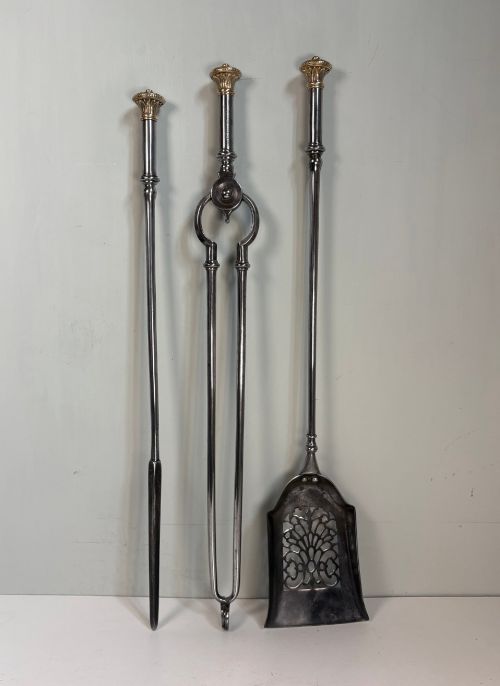
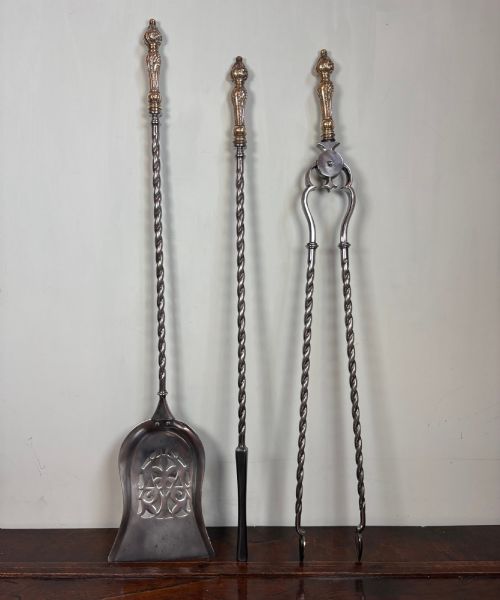
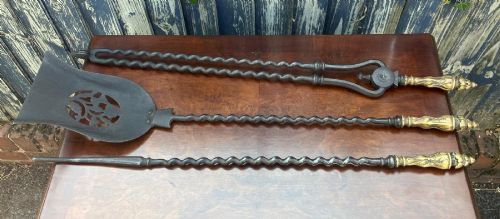
Makers utilised durable metals such as brass, wrought iron, and polished steel to withstand intense hearth temperatures while maintaining structural integrity. Combinations of steel shafts paired with brass handles appear regularly across the inventories.
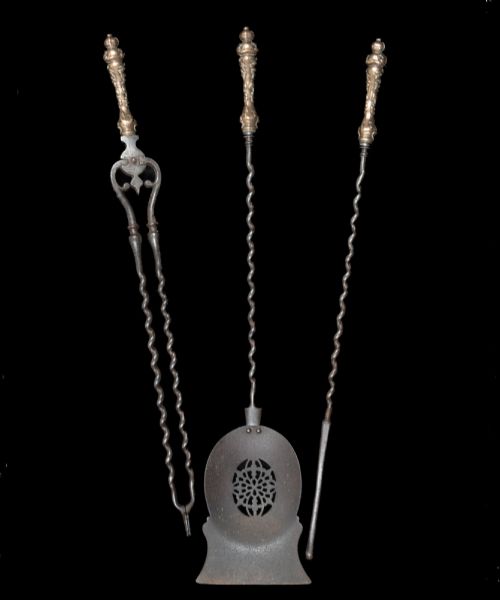
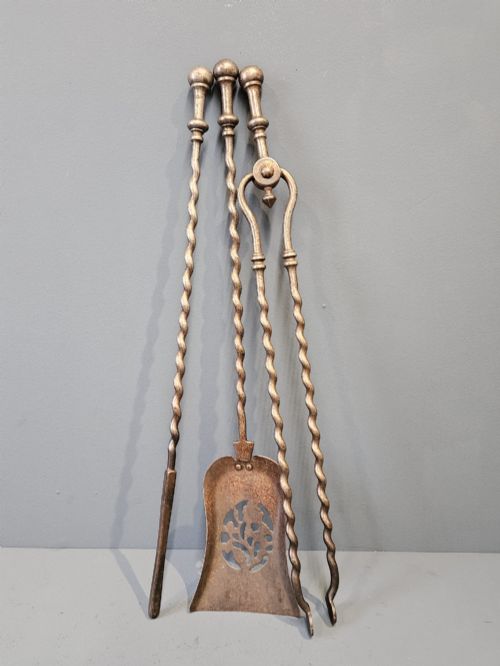
Craftsmen applied specialised techniques including polished steel finishes, gilt brass detailing, and detailed rope twist handles to elevate standard utilitarian ironmongery into decorative interior furnishings.
Antique Hearth Tongs Retail Price Guide 2026
Typical asking prices for hearth tongs among the pieces listed under this phrase on Sellingantiques today, from the lower quarter to the upper quarter. They describe what is for sale here now, not the wider market.
The listings span from the eighteenth century through the Edwardian era, incorporating brass, wrought iron, gunmetal, and polished steel.
Markers of distinction in fireside metalwork
Quality in these implements rests upon the weight of the metal and the firmness of the joints governing the movement of the tongs. Superior sets demonstrate substantial heft in the steel or brass components rather than hollow or thin gauge construction.
The refinement of surface finishing separates standard production from finer work, seen in crisp turning on handles, careful alignment of closing arms, and harmonious matching across the complete companion set.
The Antique Hearth Tongs Glossary
- Companion set
- A matched collection of fireplace tools typically comprising tongs, a poker, and a shovel, often displayed together on a stand or with fire dogs.
- Fire irons
- The collective term for metal implements used to manage a coal or wood fire, including tongs, pokers, and shovels.
- Gilt brass
- Brass treated with a thin layer of gold or gold-coloured finish to enhance decorative brilliance.
- Polished steel
- Iron alloy treated to create a bright, reflective surface finish common on nineteenth-century hearth implements.
- Rope twist
- A spiral decorative pattern carved or moulded into metal handles or shafts.
Antique Hearth Tongs: Frequently Asked Questions
What pieces come in a set?
These sets typically include hearth tongs alongside a poker and a shovel, forming the core triad of manual fire management tools.
Many listings also incorporate matching fire dogs or companion stands to complete the fireside arrangement.
How do I date a set?
Dating relies upon stylistic markers, material combinations, and manufacturing techniques recorded across the specific periods represented.
Georgian and Regency pieces often show restrained steel work, while Victorian and Edwardian examples frequently utilise brighter brass and decorative handles.
Were these made for daily use?
Historical hearth tools were manufactured to handle heavy coal and wood fires in domestic sitting rooms and manor houses alike.
Sturdy materials like wrought iron and thick gauge brass ensured they endured regular interaction with burning fuel.
How should I clean them?
Maintenance depends upon the primary metal, distinguishing between polished steel surfaces and brass components.
Gentle dusting and appropriate metal care preserve the historical finish without removing the earned patina of age.