

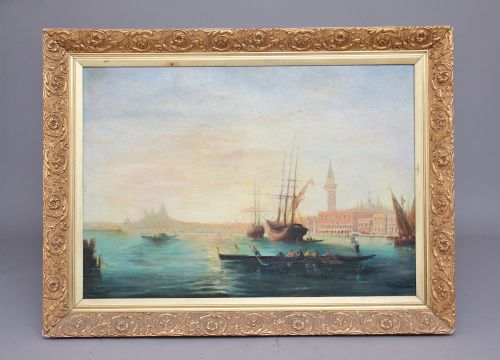
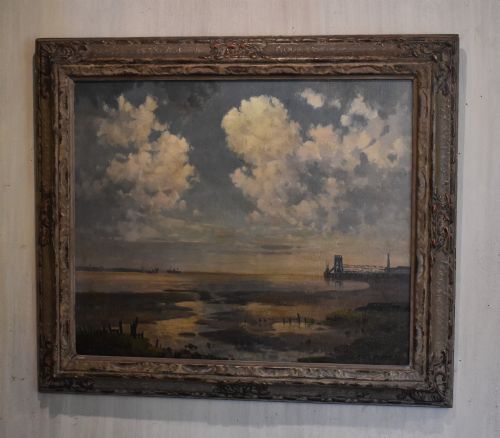
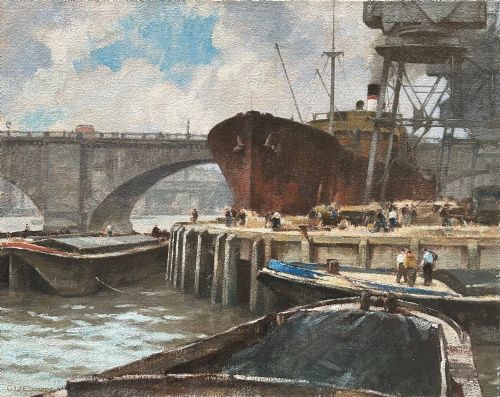
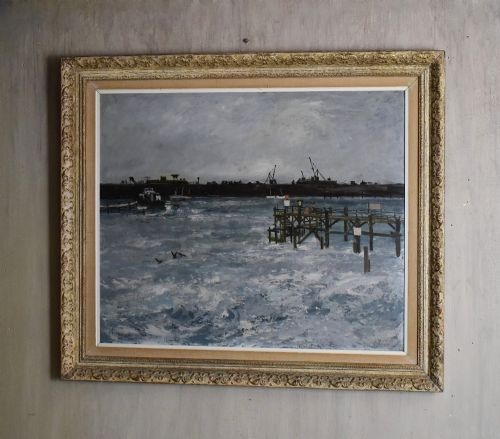
Antique Harbour Landscape Canvas
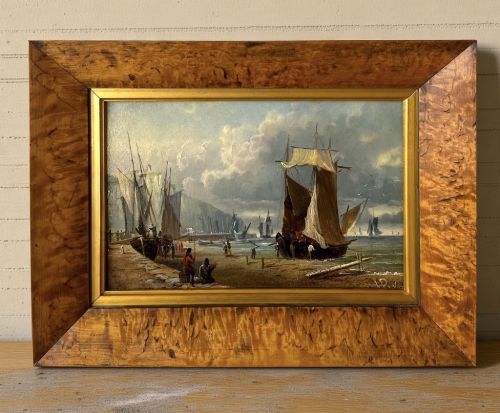
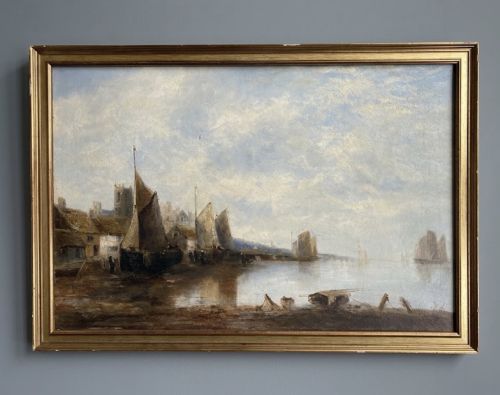
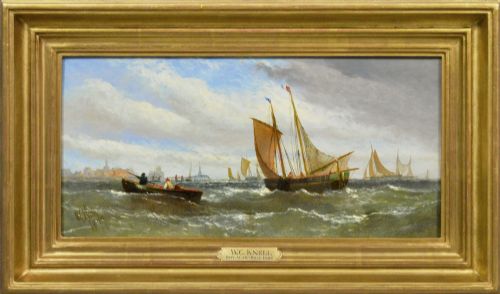
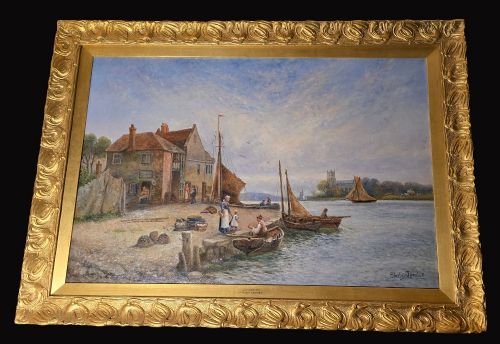
When you search for an antique harbour landscape canvas, you find oil paintings of coastal waters, ports, and shipping lanes.
Antique Harbour Landscape Canvas
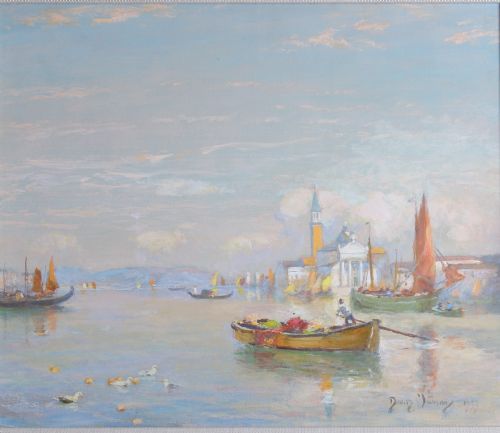
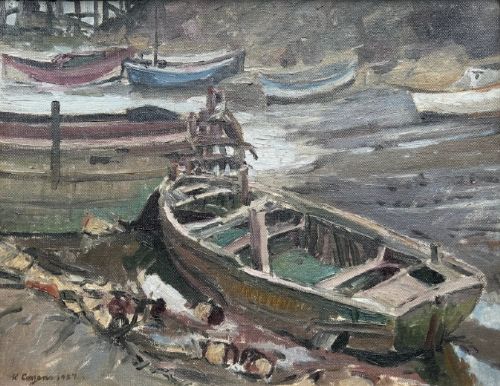
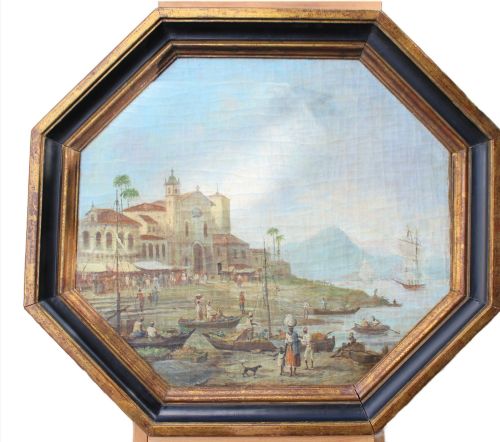
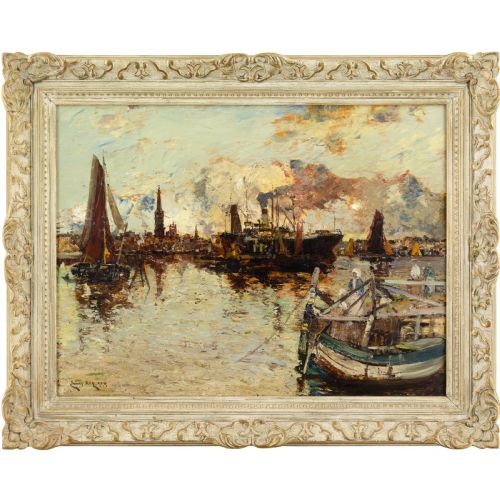
An antique harbour landscape canvas captures coastal views, maritime shipping, and busy ports through oil paint on stretched fabric. When you explore this selection, you encounter works stretching from the early nineteenth century through to the mid-twentieth century.
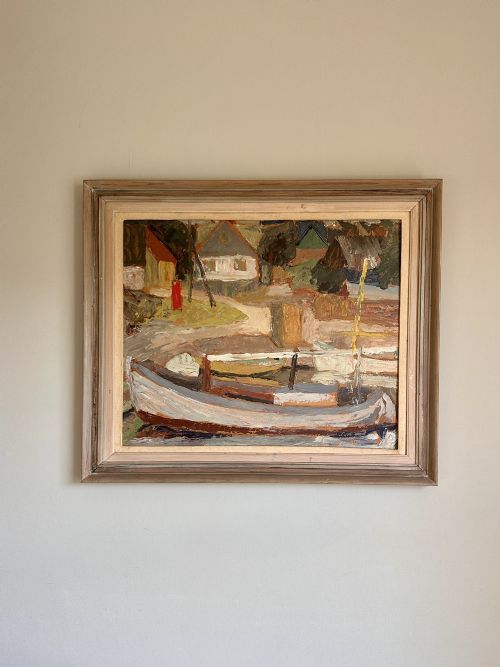
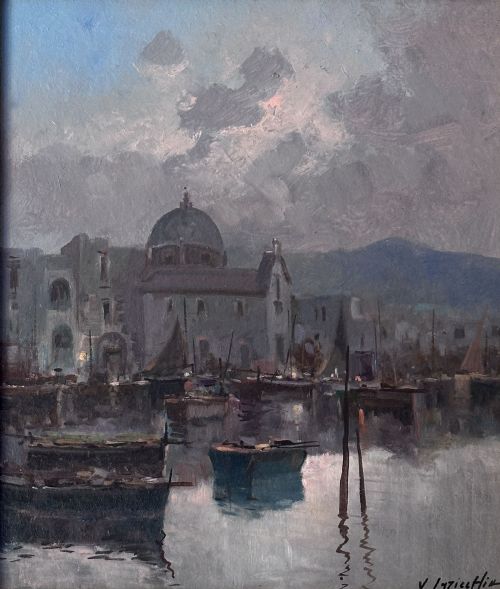
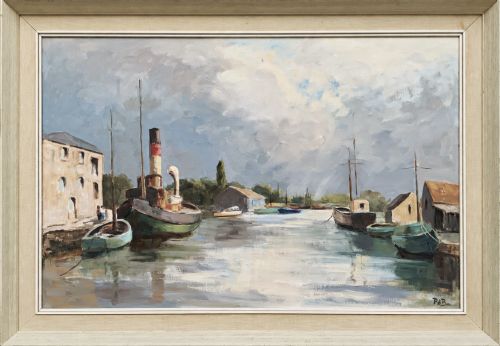
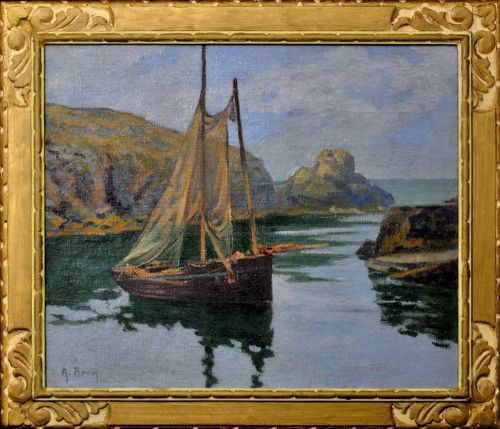
The visual records span British, French, and Dutch locations, featuring Cornish fishing villages, Venetian lagoons, and bustling river pools. Painters of these scenes document changing light upon the water, anchored vessels, and stone quaysides.
Victorian and Edwardian maritime traditions dominate the selection, alongside early modernist interpretations from the interwar decades. Each composition preserves a specific historical coastal workspace or tranquil estuary inlet.
How they were made
Artists built these works using oil paint applied directly to woven canvas, often supported by wooden stretchers. The medium allowed makers to capture translucent water effects and shifting atmospheric conditions across the sea and sky.
Many canvases sit inside period wood frames finished with gold leaf or giltwood, which complement the maritime subject matter. Master painters layered pigments to build depth in the water, whilst impressionist practitioners utilised rapid brushstrokes to suggest movement.
Antique Harbour Landscape Canvas Retail Price Guide 2026
Typical asking prices for harbour landscape canvas among the pieces listed under this phrase on Sellingantiques today, from the lower quarter to the upper quarter. They describe what is for sale here now, not the wider market.
Listings feature oil paintings on canvas across the nineteenth and twentieth centuries, including works by the St Ives School.
What varies in quality
Quality rests in the handling of light, atmospheric perspective, and the structural accuracy of the shipping vessels depicted. Superior examples demonstrate confident brushwork that defines the weight of water and the architecture of the port without stiff outlines.
The integrity of the canvas surface, minimal retouching, and the presence of an original period gilt frame elevate the stature of a painting. Softer, more observant studies of coastal atmosphere separate master output from repetitive commercial studio production.
Johann Moritz Rugendas·James Kay·Augusto Alberici·Thomas Creswick·Willem Bos·Charles Euphraisie Kuasseg·Thomas Hodgson Liddell·Charles William Wyllie·William Edward Webb·Edward Matthew Elliott·Jean-Baptiste Olive·George Turland Goosey·Adrian Van Porten·Stanley Leader·Claude Lorrain·T.S. Wallis·Pauwels·Vickers·James Webb·Alfred Henry Vickers·William Lambert Bell·James Torrington Bell·Gustave de Breanski·Owen Bowen·Herbert Royle
The Antique Harbour Landscape Canvas Glossary
- Canvas
- A heavy woven fabric stretched across a wooden frame to provide the foundation for oil paintings. It absorbs ground layers and holds thick applications of pigment.
- Giltwood
- Wood carved and coated with a thin layer of gold leaf or metallic powder to create a decorative frame. These surrounds frequently accompany nineteenth-century maritime canvases.
- Post-Impressionism
- An art movement extending beyond impressionist colour theory by emphasising geometric forms and expressive emotional responses. Works in this style often feature simplified harbour shapes and distinct pigment applications.
- Estuary
- The tidal mouth of a large river where the tide meets the stream, forming a frequent subject for maritime landscape artists. Painters utilise these wide horizons to explore reflections and shipping traffic.
Antique Harbour Landscape Canvas: Frequently Asked Questions
What periods do these paintings cover?
The available selection spans from the early nineteenth century through the Edwardian era and into the mid-twentieth century. Painters during these decades documented both traditional sailing vessels and the rise of industrial steam shipping.
Each period brings distinct stylistic approaches, moving from romantic coastal precision towards freer impressionist and post-impressionist interpretations of light and water.
How were these coastal scenes originally displayed?
Makers housed these oil paintings in substantial wooden frames, frequently enhanced with gold leaf or intricate giltwood mouldings. These surrounds were designed to project the artwork forward on domestic walls and protect the canvas edges.
Many surviving pieces retain their original period frames, which help date the artwork and provide historical context for how the piece was first exhibited.
Where are the depicted locations usually found?
The canvases record ports, estuaries, and coastal settlements across Britain, France, Italy, and the Netherlands. Familiar British fishing harbours sit alongside Mediterranean lagoons and Dutch canalscapes.
Artists frequently travelled to active maritime centres like St Ives, Venice, or Marseille to capture local shipping fleets and coastal life directly from the quayside.
How do impressionist and Victorian styles differ?
Victorian maritime works tend to focus on narrative clarity, detailed rigging, and topographical accuracy within the harbour. Impressionist and post-impressionist canvases prioritize light reflection, broken brushwork, and overall atmosphere over exact linear detail.
Both approaches offer a window into historic maritime trades, though the later styles emphasise the subjective experience of weather and water colour.