



Antique Haberdashery Shop Counter
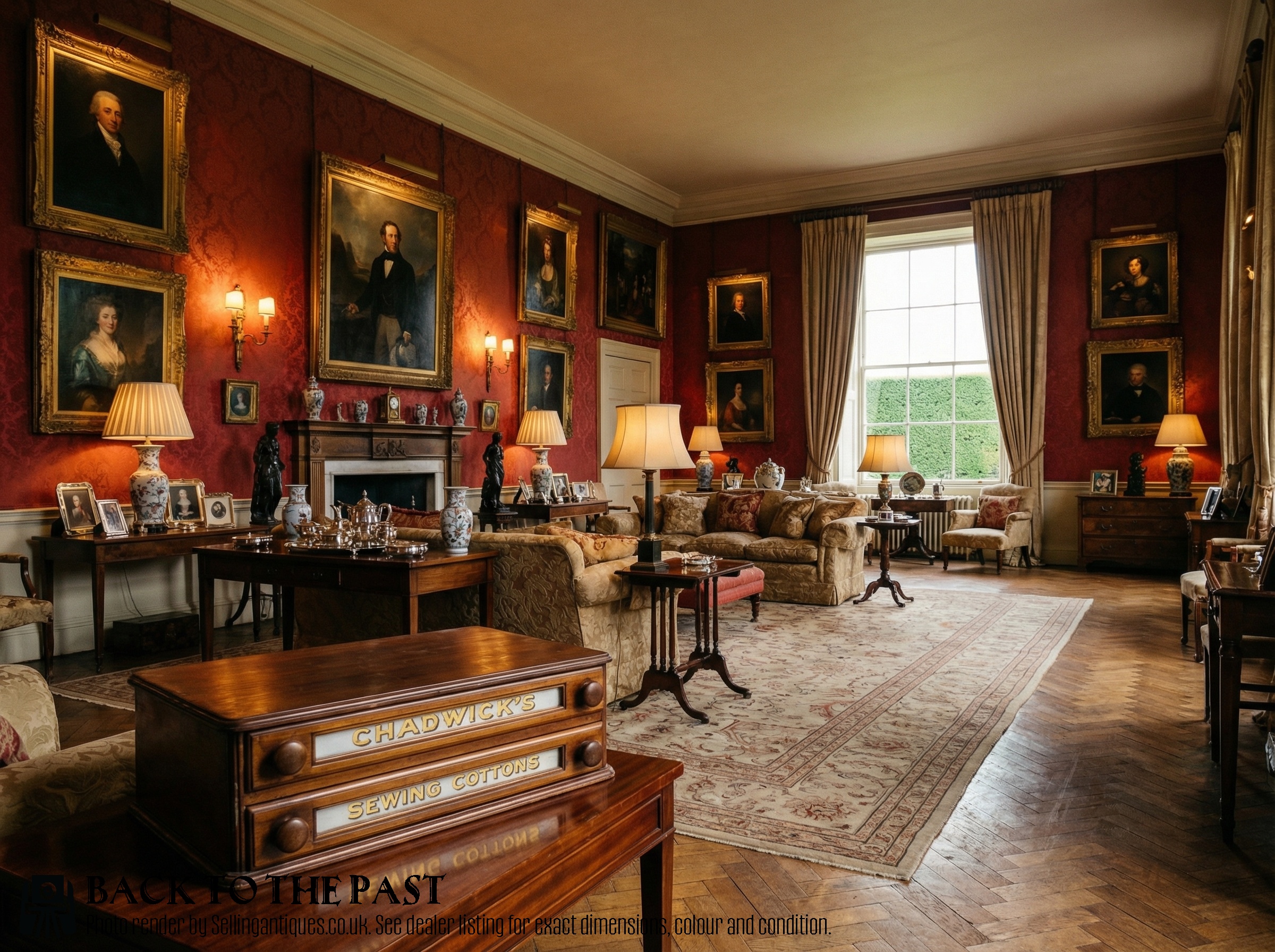
An antique haberdashery shop counter brings commercial presence and deep storage drawers into domestic rooms.
Antique Haberdashery Shop Counter
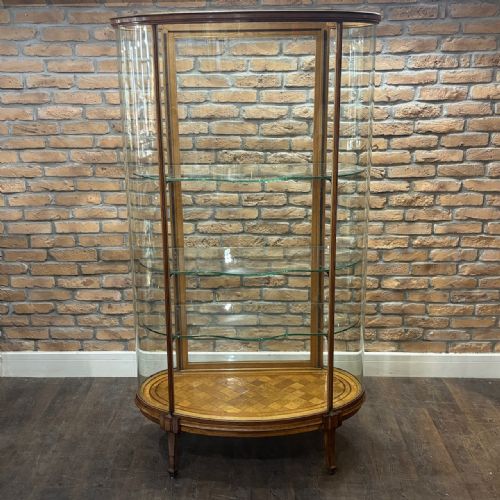
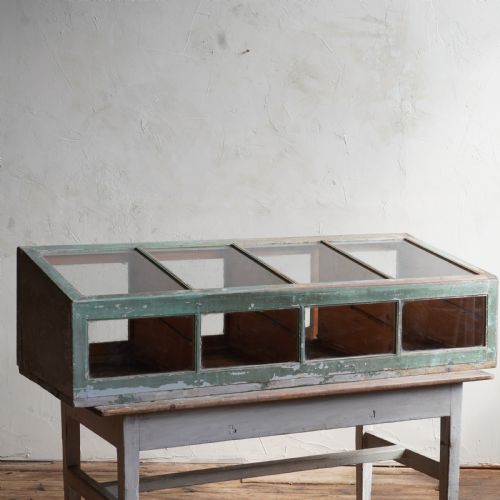
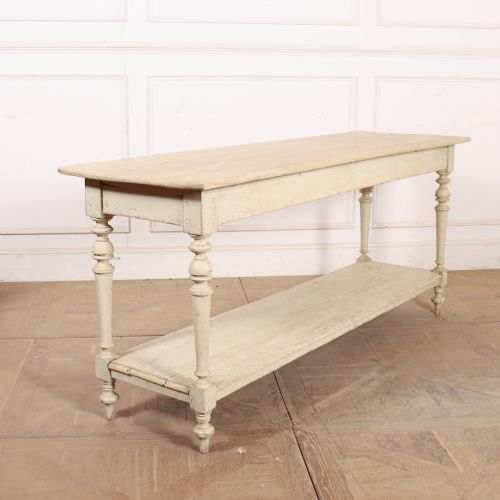
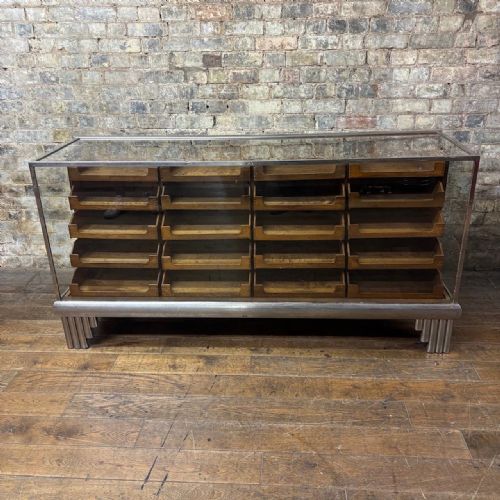
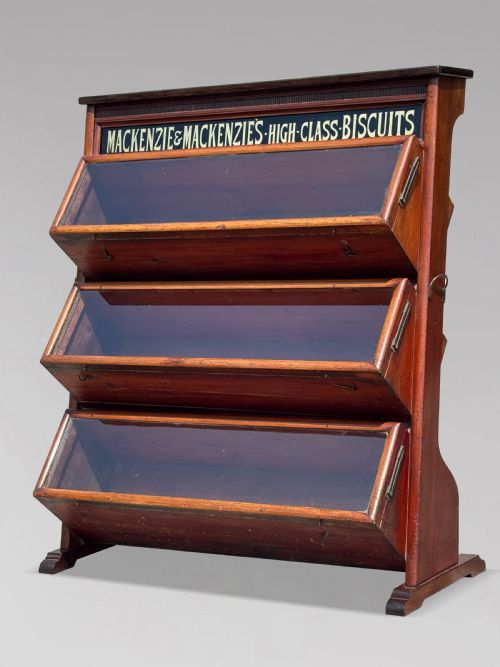
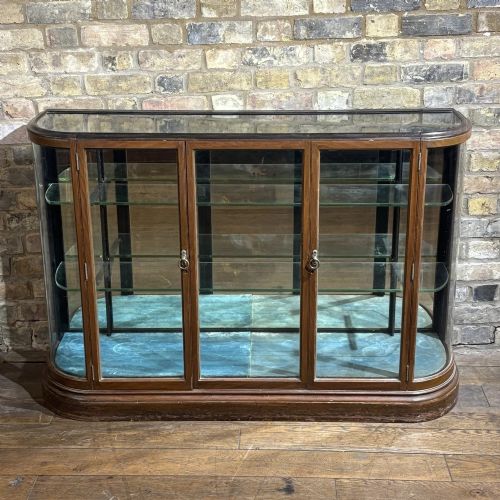
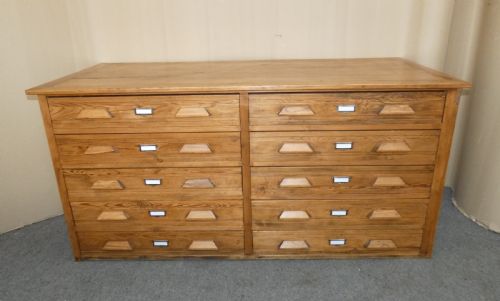
An antique haberdashery shop counter encompasses deep banks of drawers, glazed display cabinets, and long timber tables designed for retail trade. These commercial fittings survive from the Victorian, Edwardian, and 1920s or 1930s commercial eras, originating in English and French shops.
Buyers seeking this phrase encounter multi-drawer pine shop fittings, mahogany display counters with glass tops, and oak cabinets built by prominent shopfitters. These pieces served drapers, tailors, and general merchants before finding new life in modern interiors.
How They Were Made
Timbers such as oak, mahogany, and pine form the robust carcasses of these counters, joined to withstand heavy daily retail use. Glass panels, brass fixtures, and cast iron details complete the display sections and support heavy drawer loads.
Makers applied painted finishes in white, cream, green, or distressed textures directly onto pine shop fittings, while hardwood counters relied on polished mahogany and oak surfaces to project mercantile substance.
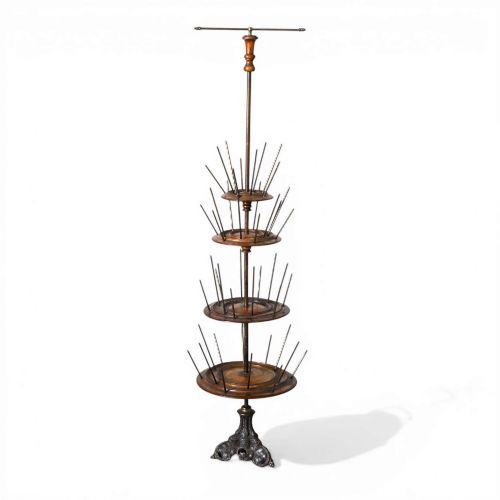
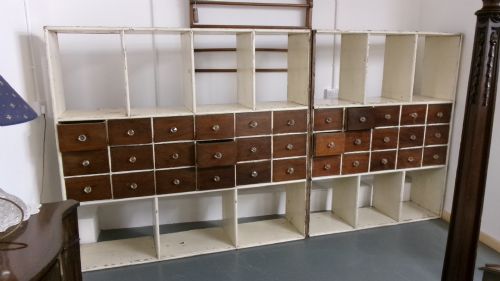
Object types include bank of drawers, display cabinets, drapers tables, and cotton reel display trees.
What Varies in Quality
The distinction between ordinary utility counters and superior pieces rests on original maker attribution, timber selection, and intact hardware. Cabinets bearing maker plates from established shopfitters command greater regard than anonymous workshop alternatives.
The survival of original painted finishes, bevelled glass panels, and working brass pulls separates standard utilitarian survivors from exceptional display furniture.
F. Sage & Co·Dudley & Co·John Stow Ltd
The Antique Haberdashery Shop Counter Glossary
- Haberdashery cabinet
- A multi-drawer retail unit originally designed to sort small sewing items like cotton reels, ribbons, and buttons.
- Draper's table
- A long wooden table utilised in cloth merchant shops for measuring and cutting fabrics.
- Shop fitting
- A permanent or semi-permanent fixture built specifically for commercial retail premises.
- Display counter
- A shop fixture featuring a glazed top or front section intended to showcase merchandise to customers.
- Countertop cabinet
- A smaller glazed showcase designed to sit atop a main retail counter for high-value goods.
Antique Haberdashery Shop Counter: Frequently Asked Questions
What is an antique haberdashery shop counter?
These are heavy commercial furniture pieces built for nineteenth and early twentieth-century shops, combining glazed display areas with banks of shallow drawers.
They were engineered to organise small retail goods while presenting stock clearly to customers across the counter.
How were these counters used originally?
Merchants used them in drapers, tailors, and general shops to store fabrics, threads, ribbons, and small wares.
The top surface acted as a workspace for cutting cloth, while the glass sections displayed items to encourage counter sales.
How do I date a shop counter?
Dating relies on materials, hardware styles, and construction methods, moving from heavy Victorian pine to 1920s mahogany and 1930s chrome or aluminium frames.
Maker plates and specific design motifs like Art Deco lines or Edwardian bow ends also clarify the period.
Are these counters suitable for home use?
Their substantial depth and divided drawer layouts make them practical for modern storage in kitchens, hallways, or living spaces.
Glazed display top versions allow collectors to exhibit small objects securely within a domestic room.