

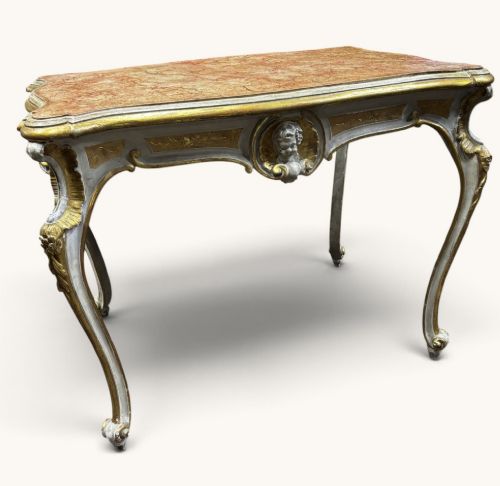
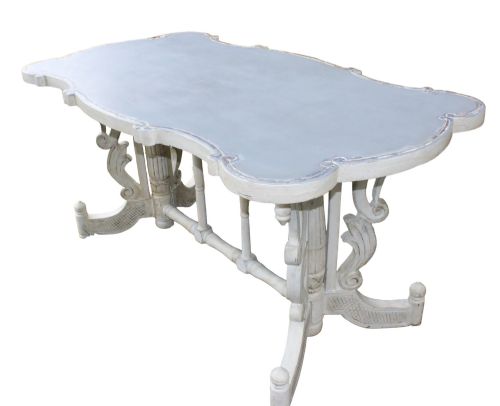
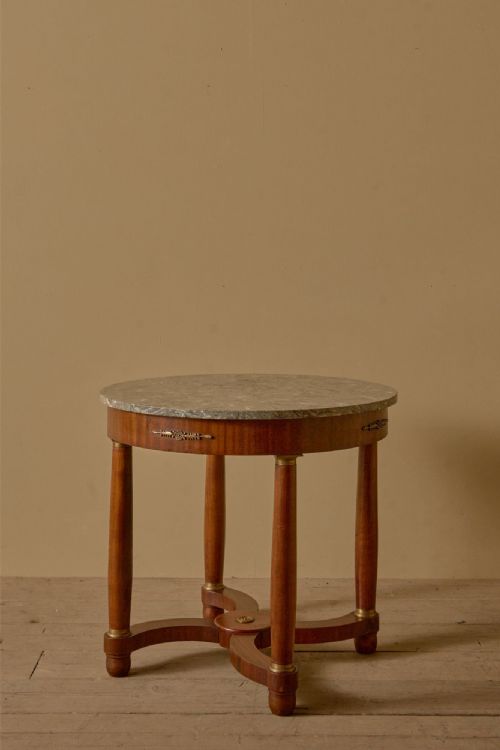
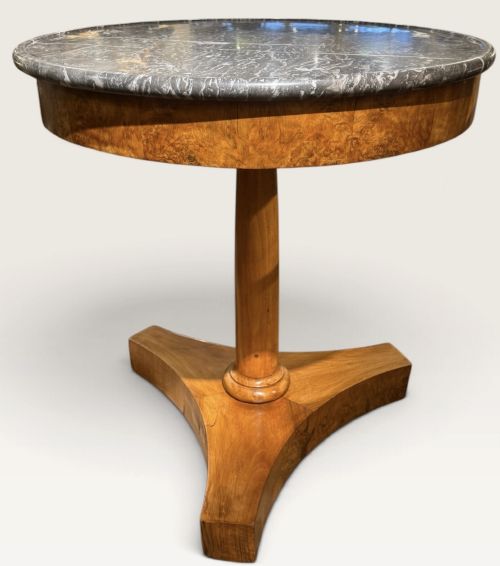
Antique Grey Center Table
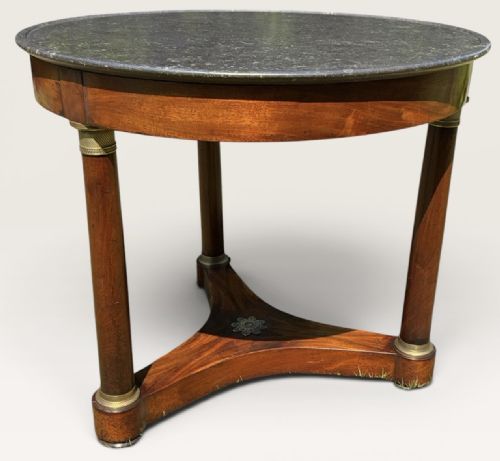
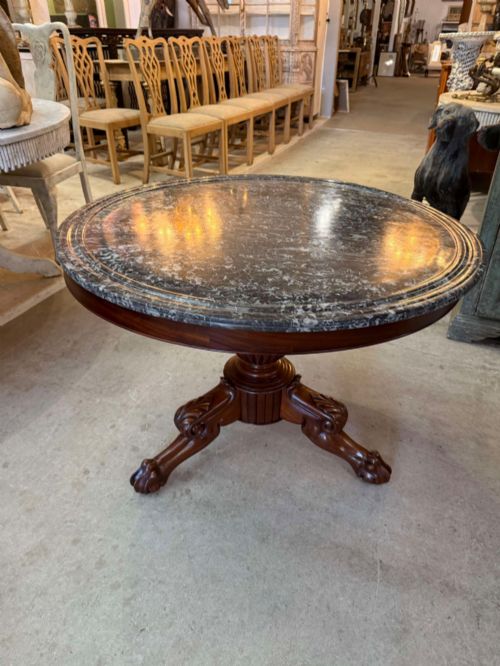
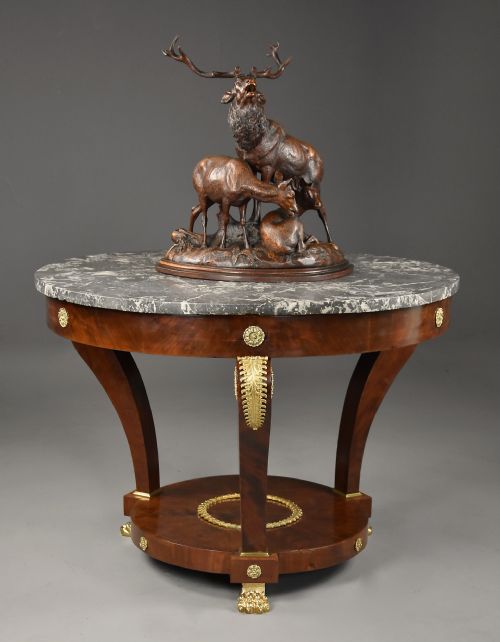
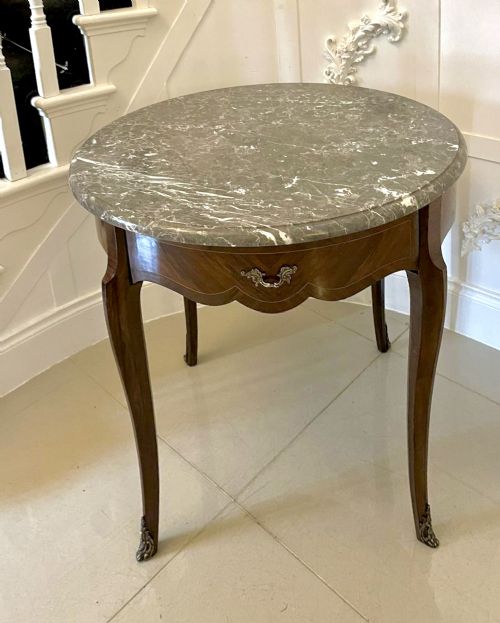
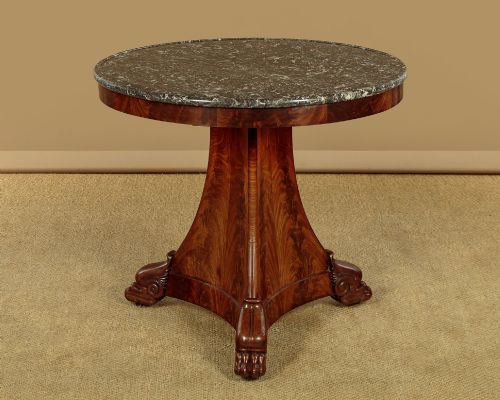
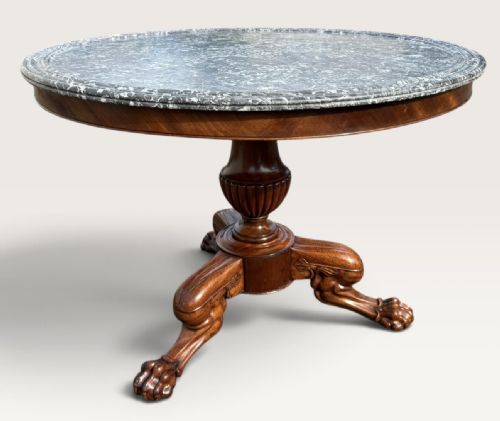
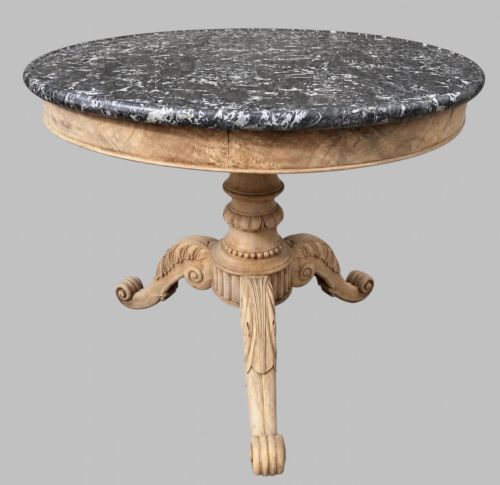
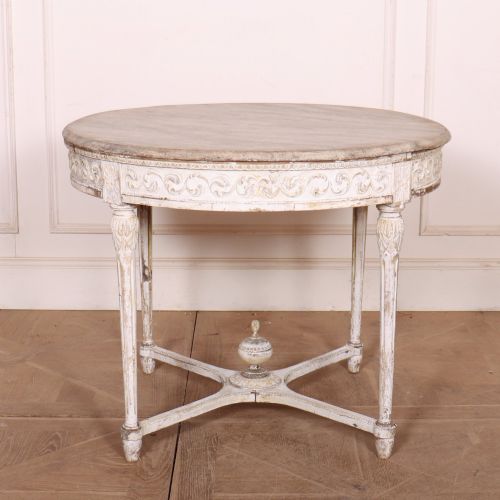
An antique grey centre table brings sculptural presence to a room, functioning as a freestanding centrepiece with a circular marble top.
Antique Grey Center Table
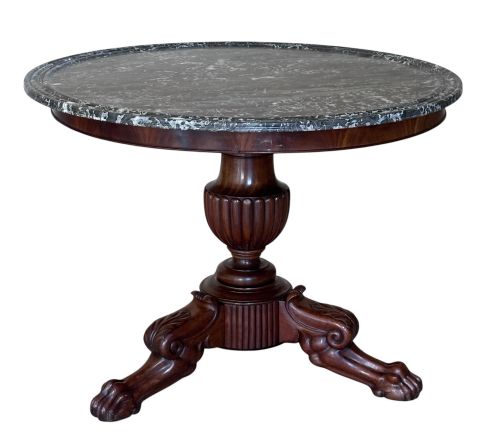
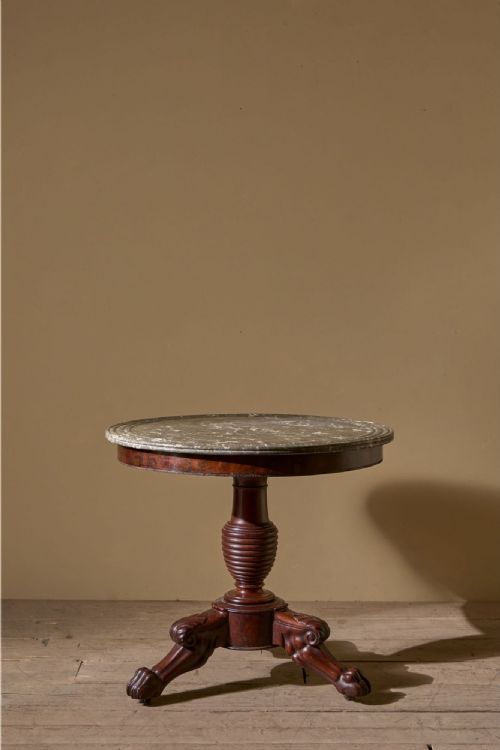
An antique grey centre table typically takes the form of a Gueridon, a round freestanding pedestal table designed to stand in the middle of a room rather than against a wall. The pieces listed now span the nineteenth century, drawing heavily on French Empire, Gustavian, and Neoclassical design vocabularies.
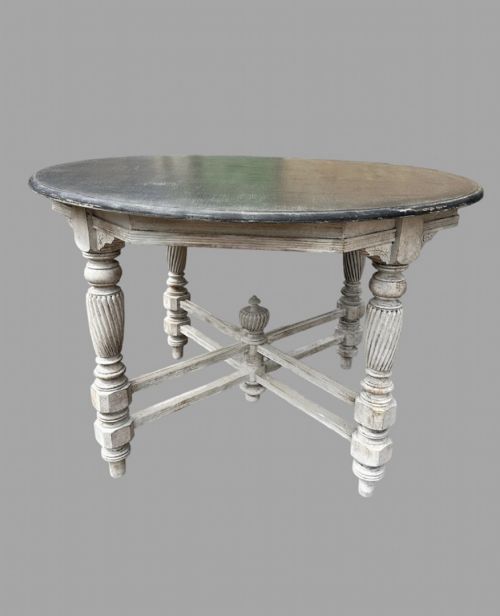
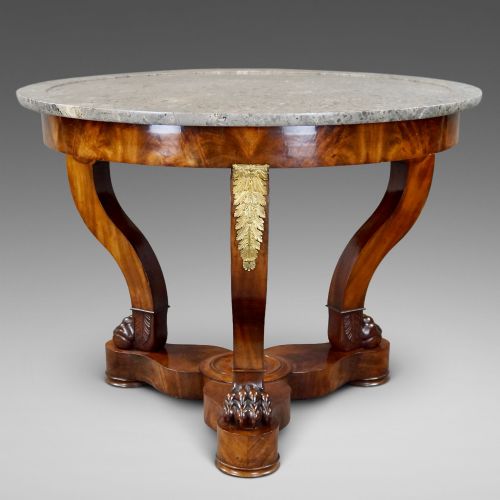
Buyers looking for this phrase meet round occasional and lamp tables featuring painted wooden finishes in off-white, distressed grey, or bleached walnut. Many examples incorporate inset marble tops in shades of grey, supported by central pedestals or tripod bases.
Originating predominantly from French and Swedish workshops, these tables balance decorative stone surfaces with carved or painted wooden frames. They serve practical roles as coffee tables, lamp tables, or dramatic focal points in entrance halls and reception rooms.
How they were made
Cabinetmakers constructed these tables using a foundation of solid woods such as mahogany, walnut, pine, or kingwood, often applying decorative paint layers or distressed grey washes to the timber surfaces. Ormolu, gilt-bronze, and brass mounts were cast and chased to embellish the friezes and pedestals of French Empire examples.
Heavy stone tops, particularly grey marble and Derbyshire fossil marble, were precisely cut and polished to fit recessed wooden platforms, providing a durable and cool-surfaced display area. Central columns rested upon tripod or platform bases, frequently reinforced with internal iron rods to support the weight of the stone.
Antique Grey Center Table Retail Price Guide 2026
Typical asking prices for grey center table among the pieces listed under this phrase on Sellingantiques today, from the lower quarter to the upper quarter. They describe what is for sale here now, not the wider market.
The listings show nineteenth-century pieces utilising materials such as mahogany, walnut, ormolu, and Derbyshire fossil marble across French Empire and Gustavian styles.
What varies in quality
The sophistication of the carved or cast ornamentation dictates the standing of a piece, separating straightforward utilitarian furniture from high-style workshop production. Crisp chasing on gilt-bronze mounts and finely detailed woodwork, such as carved rams' heads, mark out superior examples.
The integrity and weight of the marble insert also influence quality, with thick, figured grey slabs fitted flush to the wooden rim representing higher craftsmanship. The stability of the central pedestal and the quality of the timber grain beneath the painted finishes complete the distinction between standard and exceptional pieces.
Jean-Jacques Werner·Paul Sormani·Zwiener Jansen Sucesseur
The Antique Grey Center Table Glossary
- Gueridon
- A small French round table supported by a central pillar, frequently topped with marble. This form dominates the nineteenth-century selections.
- Ormolu
- Gilt-bronze mounts applied to furniture to accent corners and pedestals. It appears frequently on French Empire models.
- Guéridon
- The alternate French spelling for a round pedestal table designed for freestanding placement in a room. These pieces often feature tripod supports.
- Derbyshire Fossil marble
- A distinctive dark stone embedded with ancient marine fossils, used for decorative table tops in the nineteenth century. It offers a patterned grey surface.
- Kingwood
- A dense exotic timber with rich brown and violet figuring used as a veneer on high-status nineteenth-century tables. It provides a dark contrast to lighter stone tops.
Antique Grey Center Table: Frequently Asked Questions
Where do I put a centre table?
A centre table stands freely in the middle of a room, making it ideal for large entrance halls, open reception spaces, or drawing rooms where it can be viewed from all sides.
Because these pieces feature finished sides and robust pedestals, they hold spatial independence and do not require placement against a wall.
How do I care for a marble top?
Marble surfaces require regular dusting with a soft dry cloth and immediate wiping of liquid spills to prevent staining on porous stone. Avoid harsh acidic cleaners, utilising mild soap and water when deeper cleaning is necessary.
Applying a specialist stone wax periodically helps protect the polish and depth of the grey veining.
What is a Gueridon table?
A Gueridon is a circular pedestal table originating in seventeenth-century France and evolving through nineteenth-century Empire and Neoclassical revivals. These tables were traditionally used for holding candlesticks, lamps, or decorative ornaments.
Their compact round footprint and central support allow chairs to be arranged easily around them.
How do I date a nineteenth-century table?
Dating relies on identifying stylistic markers such as the heavy mounts of French Empire design, the restrained painted finishes of Swedish Gustavian pieces, or the proportions typical of the Victorian era. Examining construction methods, timber choice, and the type of marble insert provides further chronological clues.
Maker signatures or stamps, when present on the underside or framework, offer precise attribution.