

Antique Green Necklace
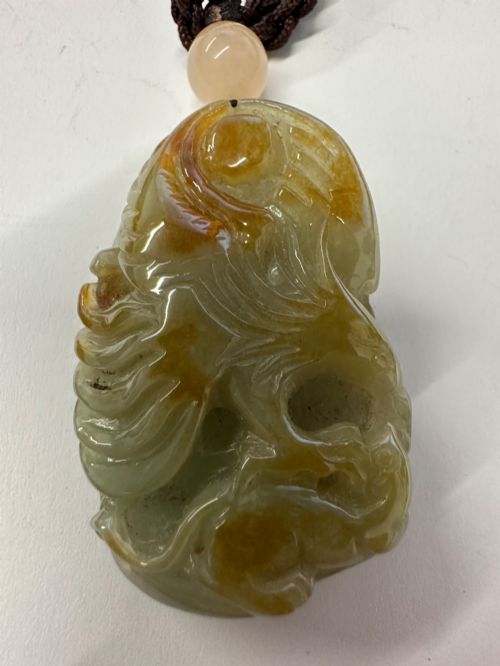
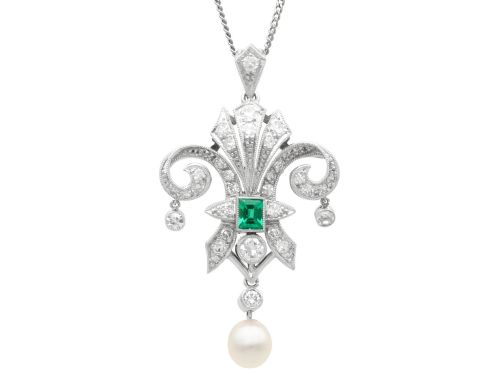
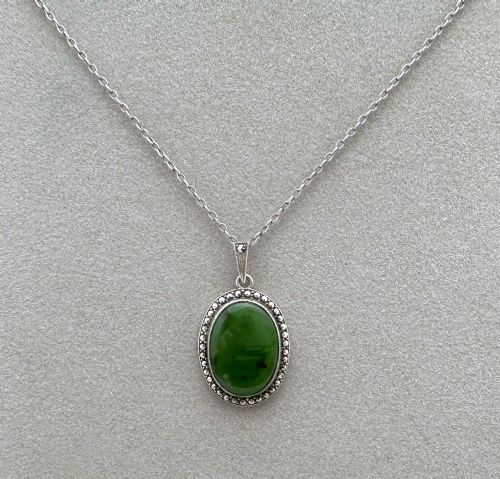
An antique green necklace brings together vivid peridot, deep emerald and carved jade in gold and silver settings spanning the Victorian to Art Deco periods.
Antique Green Necklace
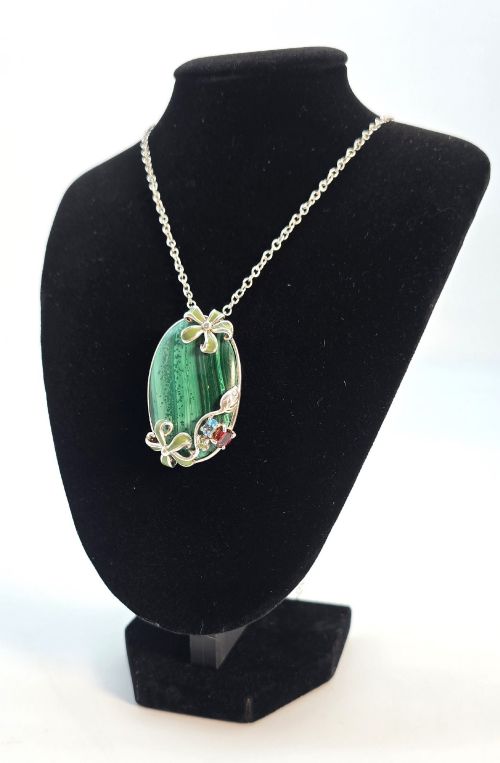
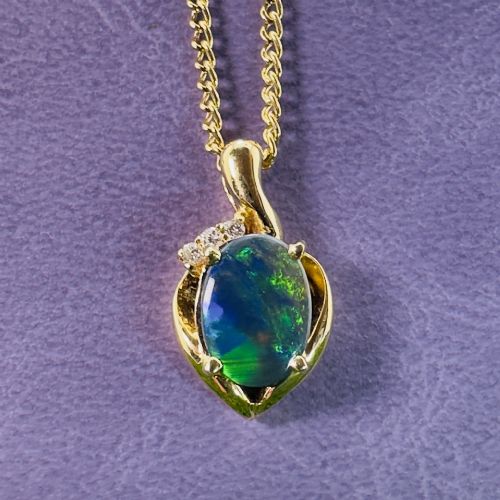
When you search for an antique green necklace, you encounter pieces dominated by vibrant green gemstones and vitreous enamels set into gold, silver and platinum mountings.
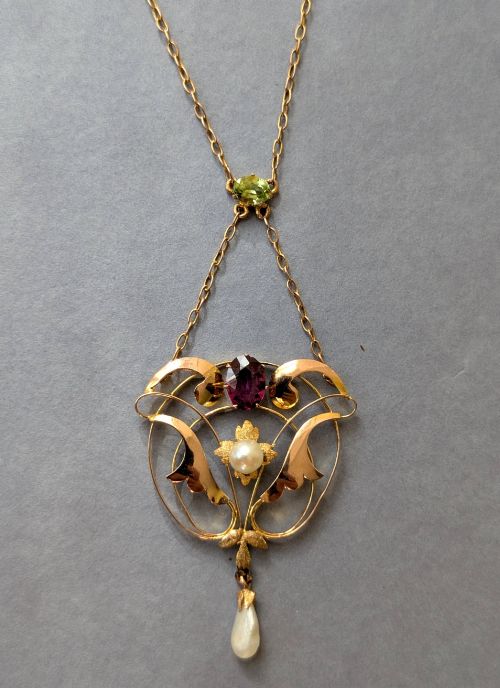
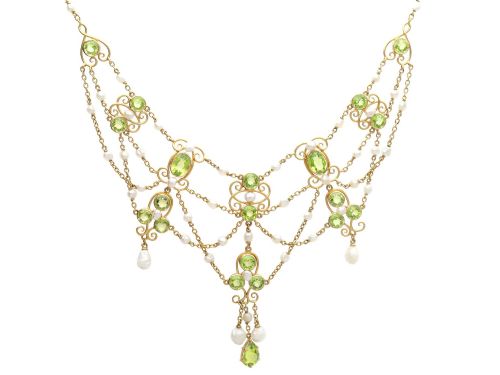
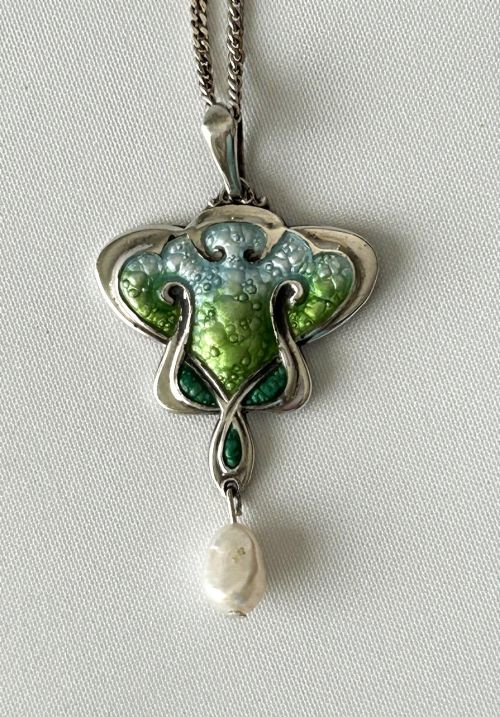
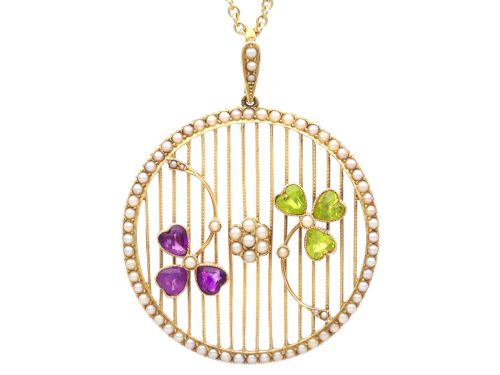
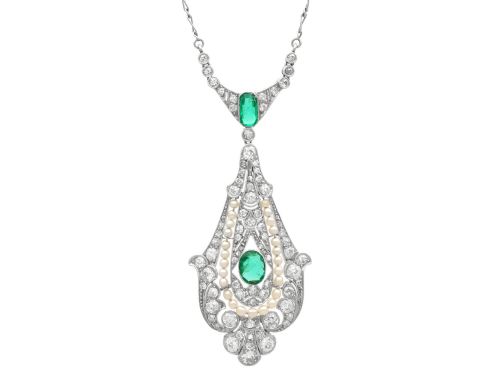
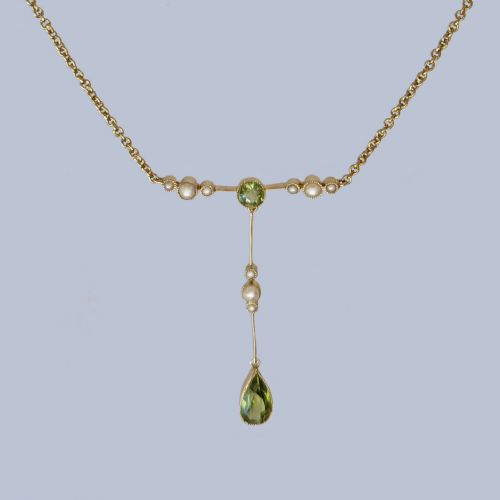
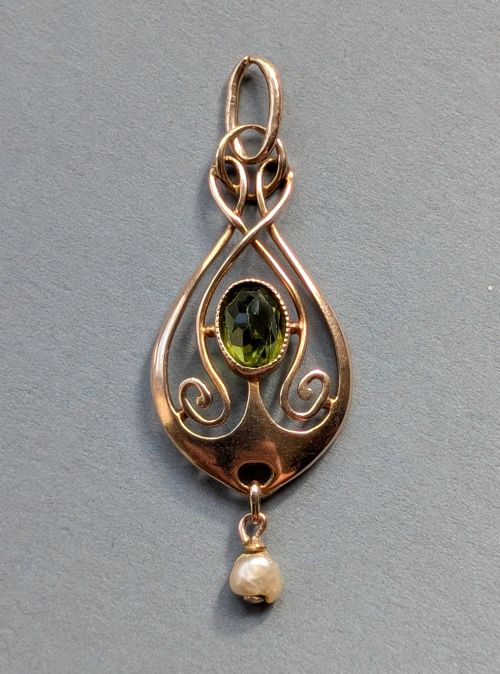
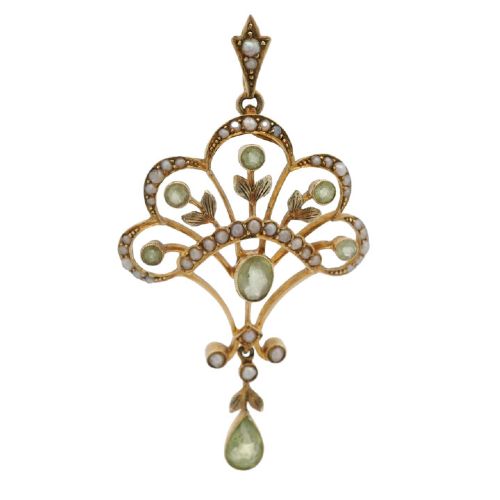
The versions you are most likely to meet on this page are Edwardian and Art Nouveau pendants and necklaces featuring peridot and seed pearls suspended from fine gold chains.
How they were made
Goldsmiths and silversmiths utilised yellow gold, rose gold, platinum and sterling silver to fabricate intricate wirework, bezels and claw settings that secure the central green stones.
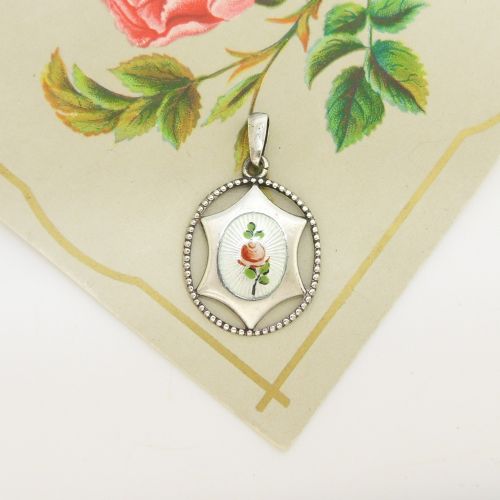
Techniques such as plique-à-jour enamel allow translucent coloured glass to catch the light without a backing, mirroring the fluid vegetal motifs typical of the Arts and Crafts movement.
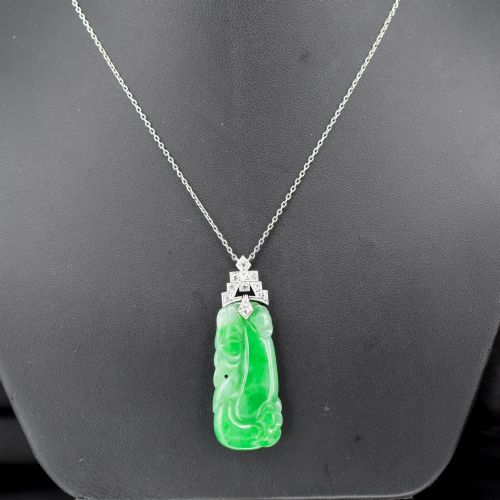
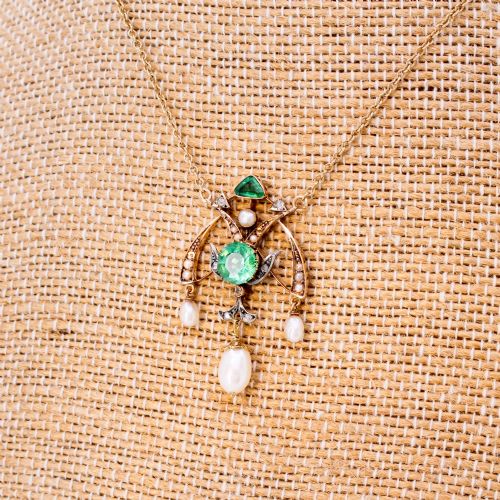
Peridots, emeralds, jade and demantoid garnets are paired with seed pearls and diamonds, often shaped into delicate garland drops or structured geometric plaques.
Antique Green Necklace Retail Price Guide 2026
Typical asking prices for green necklace among the pieces listed under this phrase on Sellingantiques today, from the lower quarter to the upper quarter. They describe what is for sale here now, not the wider market.
The listings span the Victorian, Edwardian, Arts and Crafts, Art Nouveau and Art Deco periods, featuring gold, silver and platinum.
What varies in quality
The distinction between standard workshop output and exceptional maker-attributed jewellery lies in the crispness of the piercing, the saturation of the peridot or emerald, and the delicacy of the seed pearl work.
Signed pieces by notable makers and designers demonstrate superior metallurgy and refined gemstone selection that elevates them far above uncredited commercial items of the same decade.
Charles Horner·Murrle Bennett·Archibald Knox·Liberty and Co·Argy Rousseau
The Antique Green Necklace Glossary
- Peridot
- A yellowish-green silicate mineral favoured in Edwardian and Art Nouveau cluster pendants. Its characteristic olive hue defines many early twentieth-century necklace designs.
- Plique-à-jour
- An enamelling technique where the enamel is applied within a cellular framework without a backing, resembling miniature stained glass. This method produces translucent coloured wings and floral petals.
- Seed pearl
- A very small natural or cultured pearl, often drilled and strung on silk to accent central pendants in garland and lavalier necklaces. These tiny pearls add a soft luminous border to green gemstones.
- Lavalier
- A pendant necklace featuring a central gemstone drop suspended from a finer chain or smaller drop section. This style gained immense popularity during the Edwardian period.
Antique Green Necklace: Frequently Asked Questions
How do I date a green stone pendant?
Examine the metal purity marks, stone cuts, and overall design motifs to determine the era of manufacture. Edwardian pieces often feature peridots in garland platinum-topped gold settings, whilst Art Deco examples favour geometric jade and emerald arrangements.
Assay office stamps and maker signatures also help narrow down the production decade between the late nineteenth century and the nineteen-thirties.
Are these natural emeralds and peridots?
The listings comprise genuine mined gemstones typical of antique jewellery production, including Colombian emeralds, peridots, jade and demantoid garnets. Natural pearls and seed pearls frequently accompany these green stones.
Craftsmen selected these materials for their natural colour and clarity during the Victorian, Edwardian and Art Deco eras.
How should I care for antique gold necklaces?
Store your antique necklace flat in a lined jewellery box to prevent delicate chains from tangling or kinking. Keep soft organic gems like pearls away from harsh chemicals, perfumes and ultrasonic cleaners.
Clean the metal and durable green stones gently with a soft cloth and lukewarm soapy water when necessary.
What is the difference between an Art Nouveau and Art Deco necklace?
Art Nouveau green necklaces display flowing, asymmetrical lines inspired by natural plant forms, often utilising plique-à-jour enamel and soft peridots. Art Deco pieces embrace rigid symmetry, geometric jadeite plaques and structured platinum settings.
Both styles utilise green elements but express completely distinct aesthetic philosophies from adjacent eras.