
Antique Gothic Oak Seating
These antique gothic oak seating pieces bring architectural heft and ecclesiastical drama to a room, offering sturdy utility paired with medieval revival design.
Antique Gothic Oak Seating
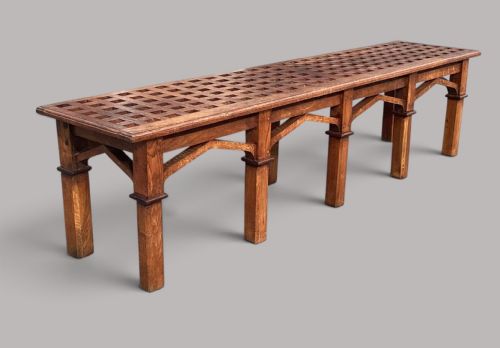
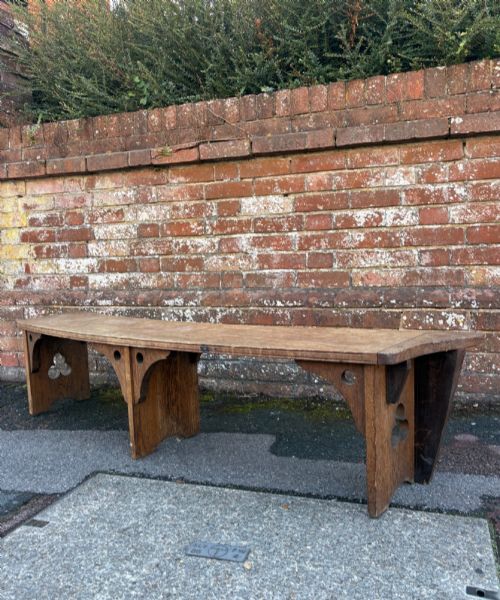
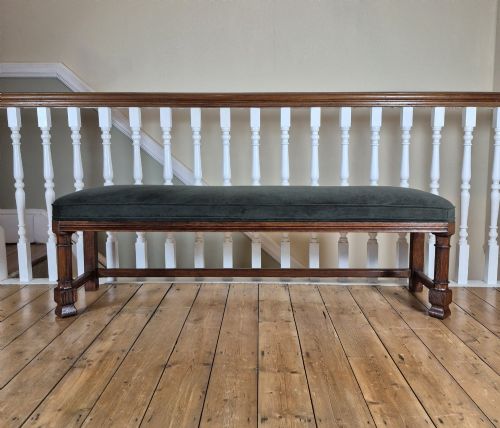
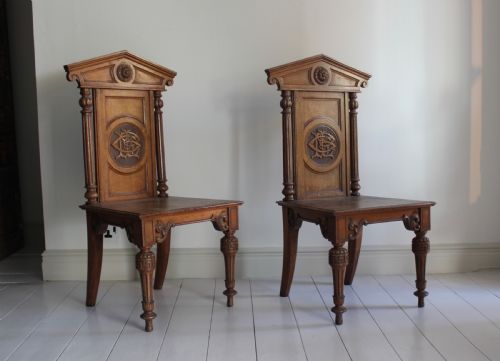
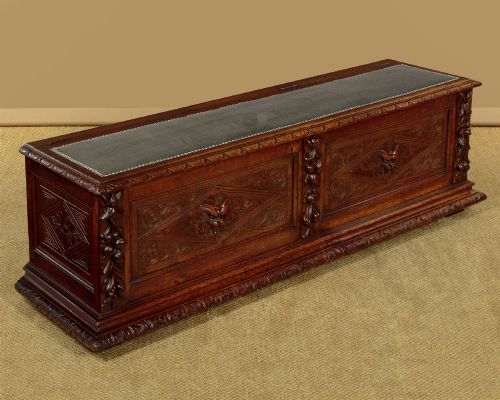
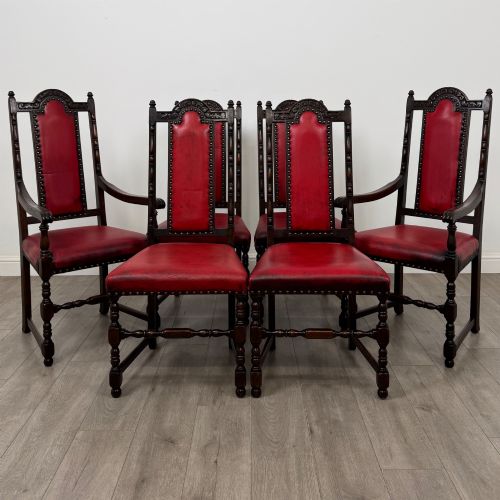
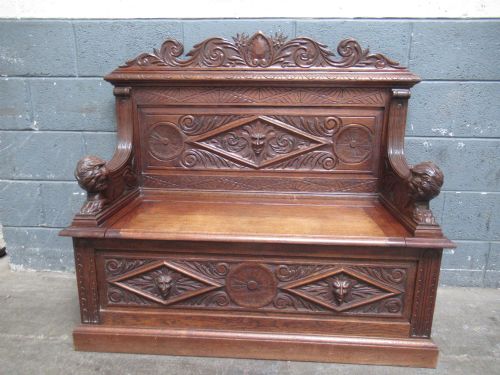
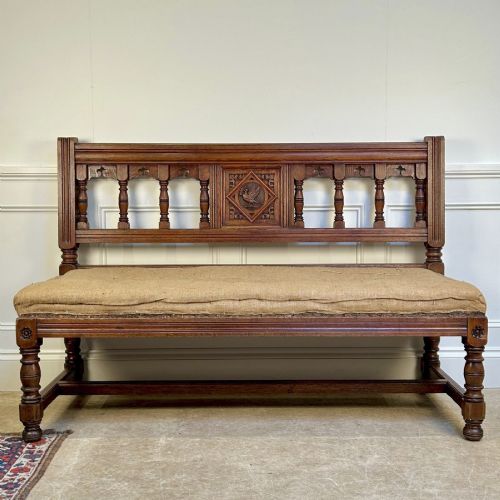
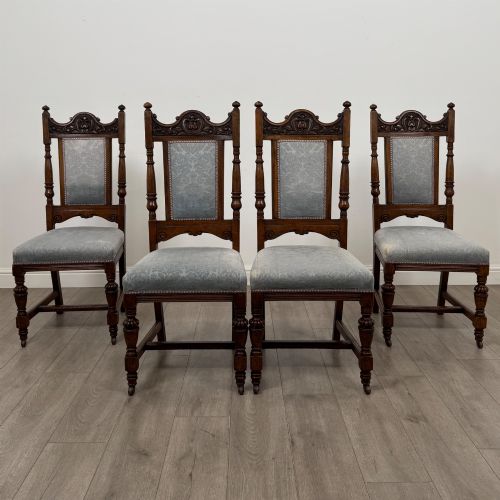
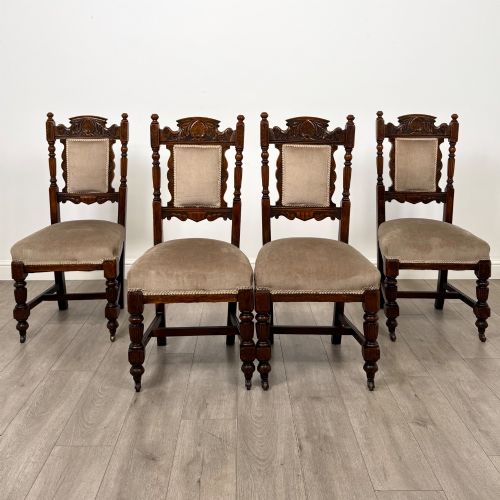
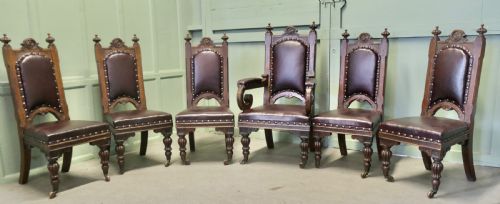
Antique gothic oak seating encompasses heavy architectural benches, high-backed dining chairs, and hall seats produced predominantly during the nineteenth century and the Edwardian era. You will frequently encounter Victorian Gothic Revival dining chairs and oak hall benches bearing trefoil carved supports or heraldic shield backs.
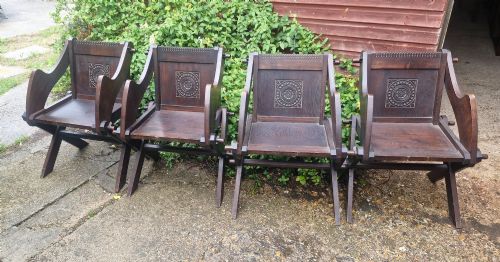
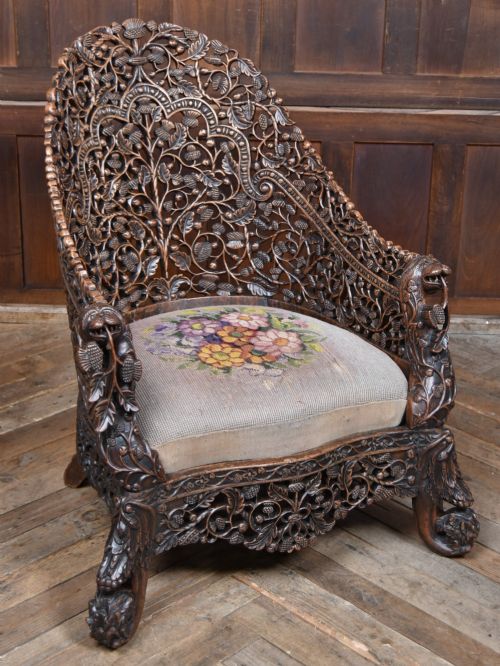
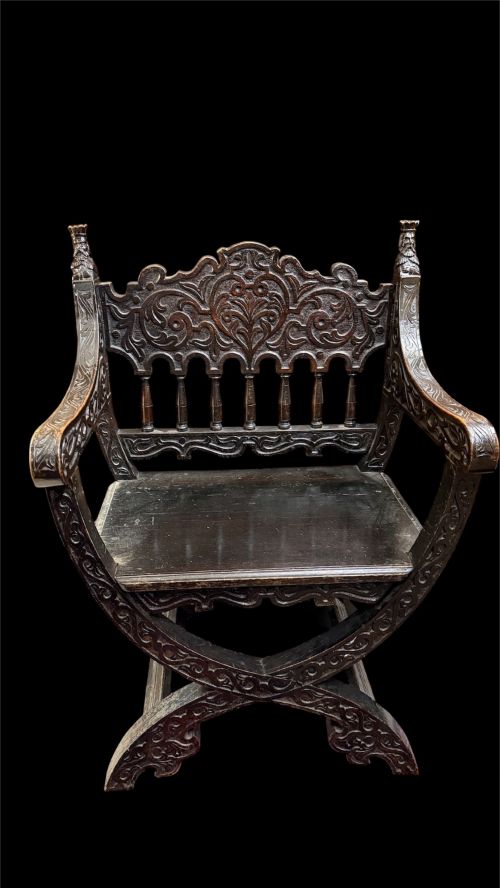
The selection ranges from church seating and heavy pews to domestic armchairs, window seats, and Glastonbury chairs. Pieces span stylistic revivals including Jacobean, Arts and Crafts, and Renaissance Revival, reflecting the nineteenth-century fascination with medieval design.
Makers and workshops supplied these solid oak forms for domestic reception halls, libraries, and ecclesiastical settings. Architectural bench forms and architectural hall chairs dominate the material record on this page.
Materials and construction
Makers constructed these pieces from solid oak, utilising traditional joinery methods to support heavy architectural forms and high backs. Frames often incorporate detailed hand carving, linenfold panels, and geometric tracery.
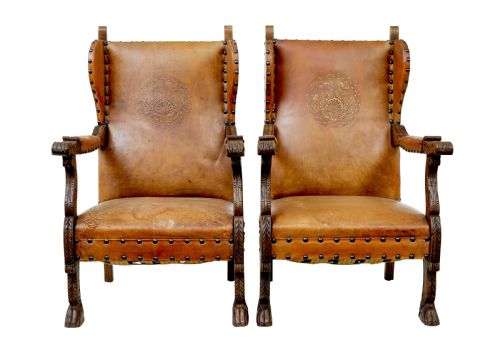
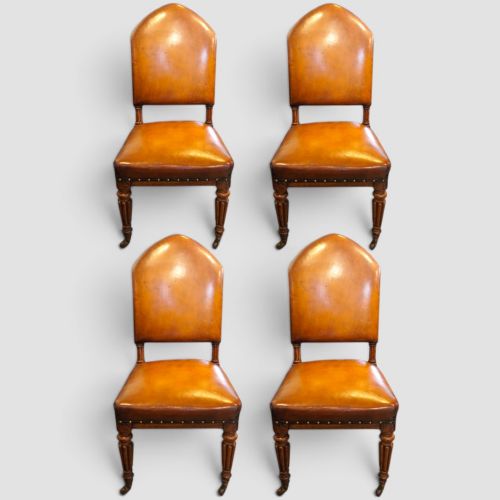
Upholstery materials such as embossed leather, heavy fabric, velvet, tapestry, and hessian are fastened with brass studs to seat pads and padded backrests. Metal brackets and brass fittings occasionally reinforce structural joints on larger benches and pews.
Listings span the nineteenth century through the Edwardian period, featuring oak paired with brass, leather, velvet, and tapestry.
Craftsmanship and integrity
Quality rests in the crispness of the hand carving and the structural integrity of the solid oak frame. Superior examples display deeply chiselled tracery, well-defined trefoil supports, and balanced proportions.
The choice of upholstery materials and the retention of original finish contribute significantly to a piece's integrity. Matching sets demonstrate greater consistency in timber selection and decorative detail than assembled pairs or single chairs.
GIllows·Bruce James Talbert
The Antique Gothic Oak Seating Glossary
- Gothic Revival
- An architectural and decorative style drawing inspiration from medieval design, featuring pointed arches, trefoils, and heavy carved woodwork. This aesthetic dominates the nineteenth-century seating listed here.
- Glastonbury chair
- A type of ecclesiastical armchair with an X-framed base and a sloping panel back, often constructed from oak. These sturdy seats derive from medieval prototypes.
- Trefoil
- A graphic ornament composed of three overlapping rings or lobes, commonly pierced through wooden chair backs and bench supports. It serves as a signature motif in Gothic joinery.
- Hall bench
- A long wooden seat designed for an entrance hallway, frequently incorporating high architectural backs and storage boxes beneath the seat. They provide substantial weight and presence.
- Jacobean Revival
- A nineteenth-century style emulating early seventeenth-century English furniture, characterised by turned legs, rectilinear framing, and strapwork carving. Pieces often combine these elements with Gothic details.
Antique Gothic Oak Seating: Frequently Asked Questions
How do I identify Gothic Revival chairs?
Look for architectural motifs such as pointed arches, trefoil cut-outs, high backs, and heavy linenfold or geometric carving executed in solid oak.
These design elements echo medieval church architecture and structural forms popularised during the nineteenth century.
Where were hall benches placed?
Hall benches stood in entrance halls and reception rooms of grand homes, functioning as imposing seating for visitors awaiting admission.
Their heavy timber construction and architectural panels matched the public character of Victorian and Edwardian hallways.
Are these chairs comfortable for daily dining?
Many nineteenth-century dining chairs and armchairs feature upright wooden backs and solid oak seats designed for formal posture rather than lounging.
Examples fitted with original embossed leather or upholstered pads offer a softer seat for modern dining use.
How do I care for antique oak furniture?
Maintain solid oak pieces by keeping them away from direct heat sources and sudden humidity changes to prevent timber splitting.
Apply a microcrystalline wax periodically to nourish the wood and preserve the surface sheen without building up heavy residues.