

Antique Gothic Credenza
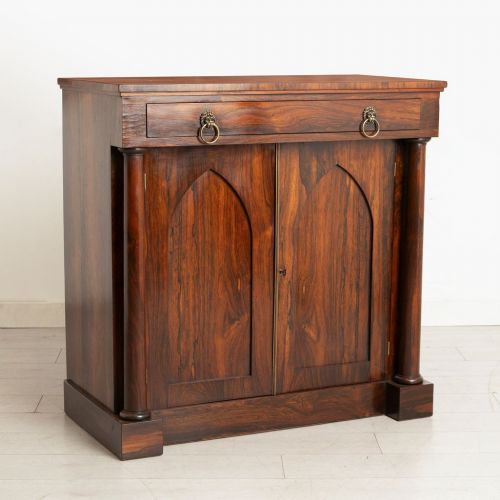
An antique gothic credenza brings architectural drama to a room, combining heavy timber with pointed arches and tracery.
Antique Gothic Credenza
When buyers search for an antique gothic credenza, they encounter substantial storage furniture rooted in the Victorian era and the broader nineteenth century. These pieces encompass sideboards, dressers, cupboards, and cabinets built under the influence of Gothic Revival and Jacobean Revival styles.
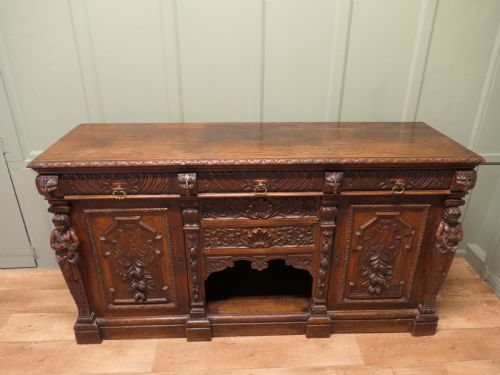
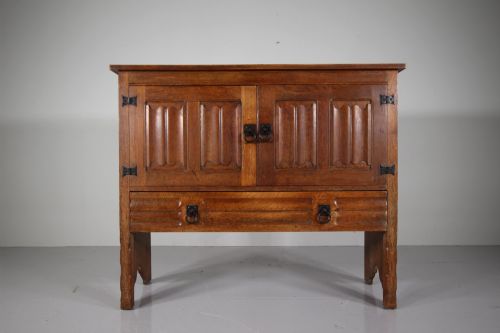
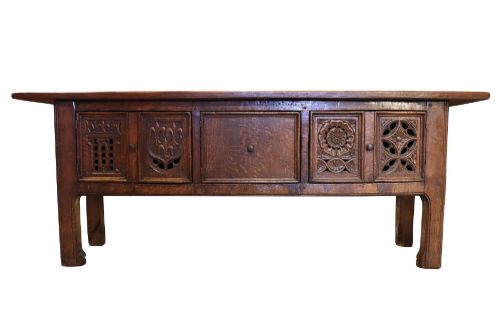
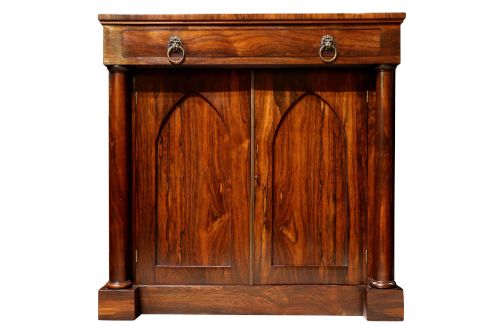
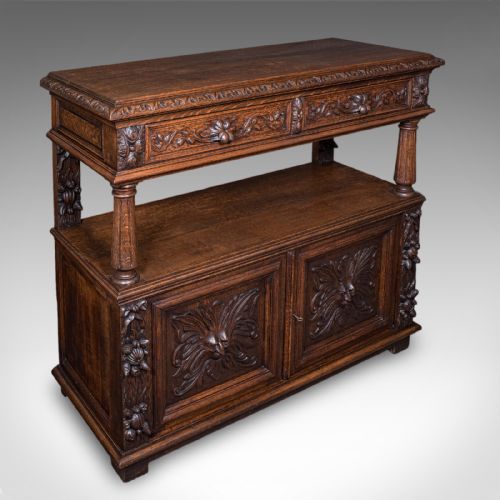
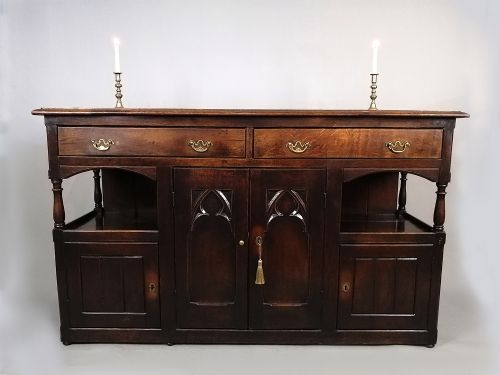
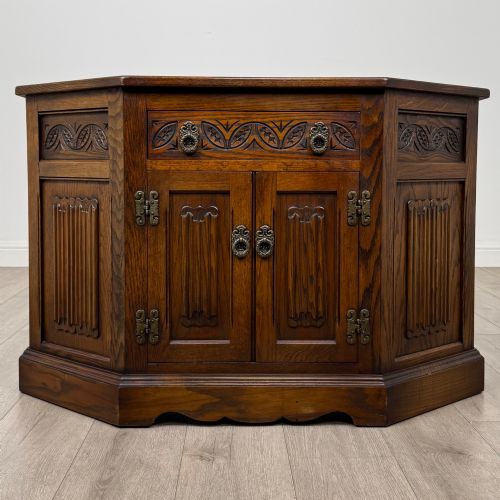
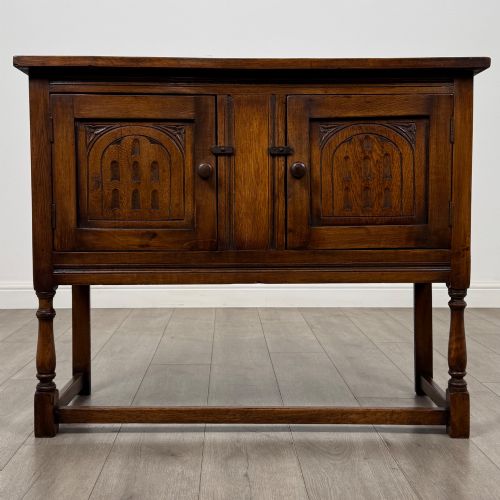
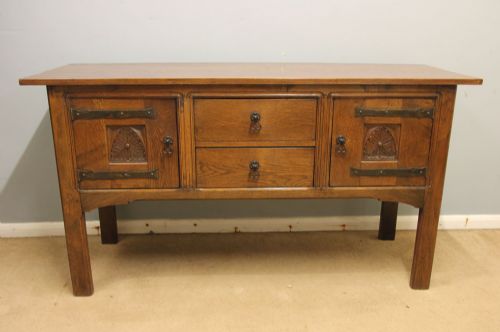
The dominant material on this page is oak, often carved heavily with linenfold panels, pointed archways, and occasional green man motifs. Makers drew inspiration from medieval architecture, translating stone cathedrals and monastic furniture into domestic storage.
How they were made
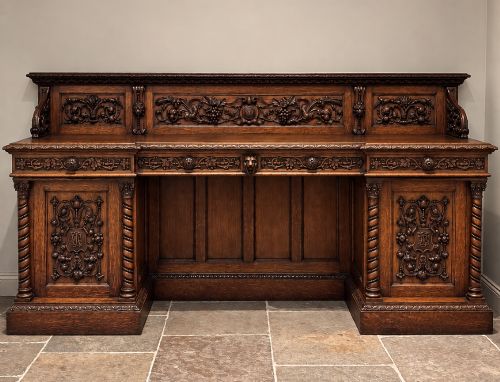
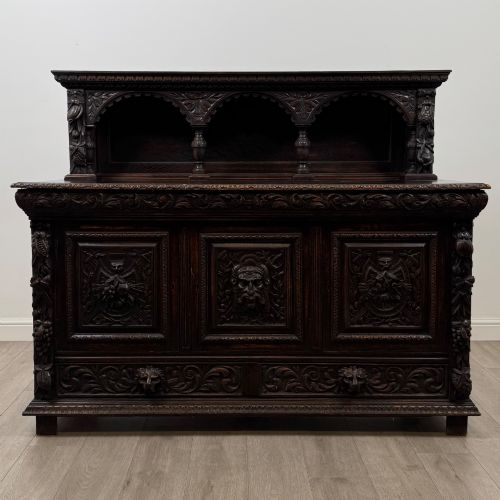
Carpenters built these cabinets predominantly from solid oak, walnut, and rosewood, relying on traditional frame and panel construction to accommodate seasonal wood movement. Surfaces received deep relief carving by hand, depicting tracery, foliage, and geometric patterns derived from medieval stonework.
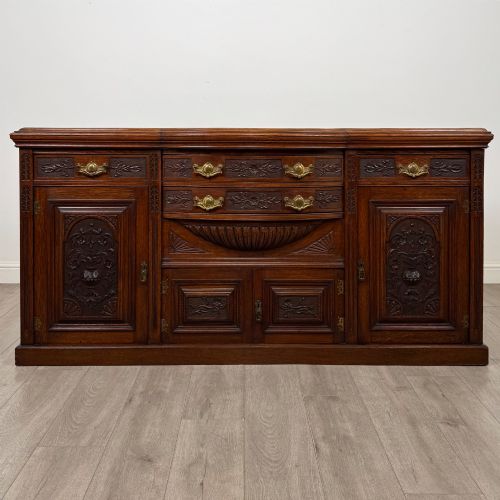
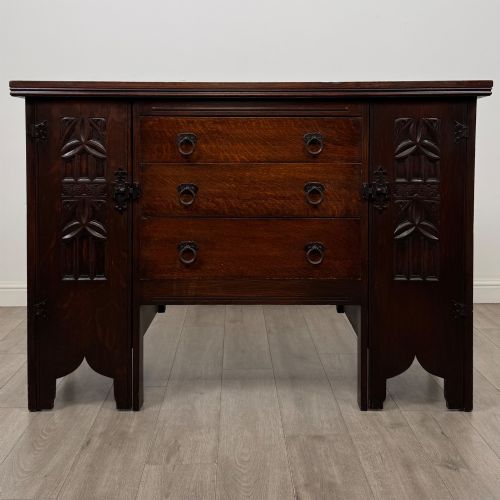
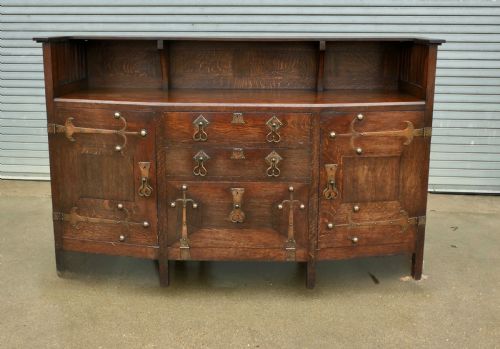
Metalwork played a functional and decorative role, with heavy brass and wrought iron hinges, drop handles, and escutcheons securing doors and drawers. Glass panels appeared in upper display sections and bookcase doors, while occasional inlaid woods added subtle contrast to dark timber frames.
Several cupboards hide leafy green men amongst their carvings, keeping a watchful woodland eye on the dining room.
What varies in quality
Quality in these dark timber cabinets rests upon the crispness and depth of the architectural carving. Superior examples display sharp, undercut details in the foliage and linenfold panels, whereas lesser pieces rely on shallow machine stamping or simple applied mouldings.
The choice of timber and structural joinery also dictates the standing of a piece. Dense, well-figured oak with neatly dovetailed drawer linings and original heavy iron or brass hardware separates standard production items from workshop pieces designed by notable firms.
Leonard Wyburd
The Antique Gothic Credenza Glossary
- Credenza
- A sideboard or cabinet originally used for displaying plate. In later periods, the term applies broadly to low sideboards and serving cabinets.
- Linenfold
- A style of wood carving representing folded linen or parchment. It is frequently seen on the panels of 19th-century oak cupboards.
- Tracery
- Openwork intersecting patterns in stone or wood, mimicking the Gothic window arches seen on these cabinets. It defines the aesthetic of the revival style.
- Green Man
- A sculptural motif of a human face surrounded by or sprouting foliage. It frequently appears on heavily carved Victorian sideboards.
Antique Gothic Credenza: Frequently Asked Questions
What periods do these pieces date from?
The listings span the nineteenth and early twentieth centuries, with a strong concentration of Victorian Gothic Revival pieces from the eighteen-eighties. Earlier examples from the eighteenth century appear alongside later Edwardian and twentieth-century interpretations.
Makers utilised revival styles throughout the Victorian era, drawing heavily on medieval and sixteenth-century architectural motifs to create substantial furniture for contemporary homes.
Which woods were used for construction?
Oak is the primary timber found across these listings, ranging from light golden oak to heavily carved dark varieties. Other materials include walnut, rosewood, mahogany, and padouk.
Metal components in brass and wrought iron support the heavy timber doors, while glass panels appear on glazed cabinets and breakfront bookcases.
How do I identify Gothic Revival furniture?
Gothic Revival pieces display architectural elements borrowed from medieval churches, such as pointed arches, quatrefoils, and traceried panels. Deep relief carvings of foliage and mythical figures also point directly to this aesthetic.
Makers combined these ecclesiastical details with practical domestic forms like sideboards, dressers, and enclosed cupboards intended for dining rooms and halls.
Where were these cabinets used originally?
These substantial pieces served as dining room sideboards, serving tables, and hall cupboards in grand nineteenth-century homes. They provided ample storage for table linen, cutlery, and china behind heavily panelled doors.
Today, collectors place them in hallways, living rooms, and dining spaces where their architectural presence anchors the interior design.