


Antique Gold Pearl Lavalier
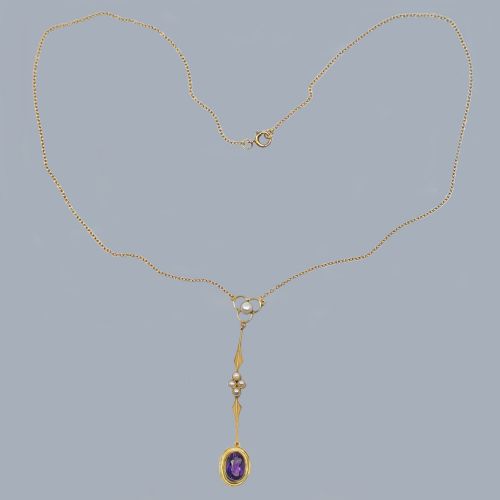
An antique gold pearl lavalier is a delicate pendant suspended from a fine chain, prized for its fluid drop design.
Antique Gold Pearl Lavalier
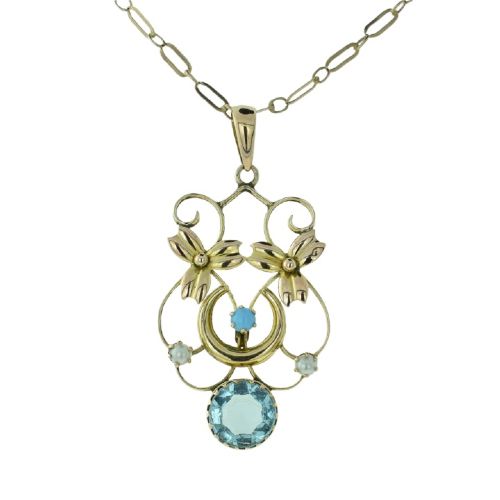
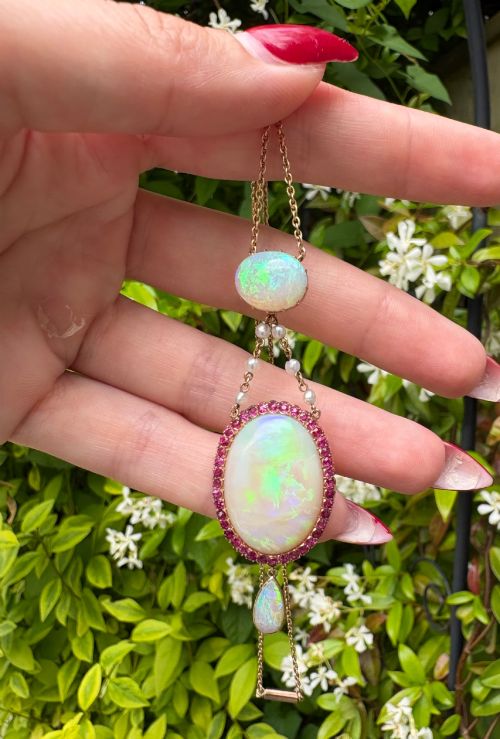
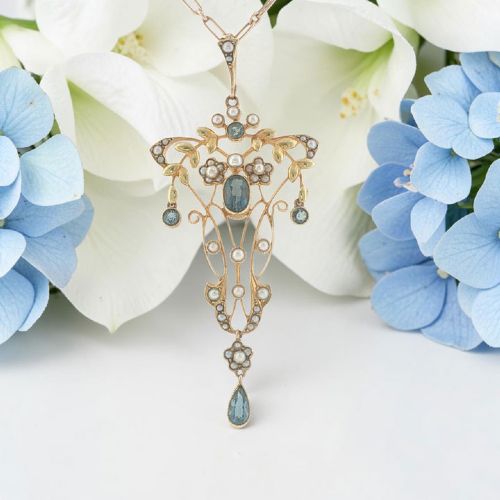
When you search for an antique gold pearl lavalier, you are looking at pendant necklaces created primarily during the Edwardian, Victorian, and Art Nouveau periods, alongside occasional later pieces. These items combine a central gemstone drop with seed pearls, hanging gracefully from delicate gold chains.
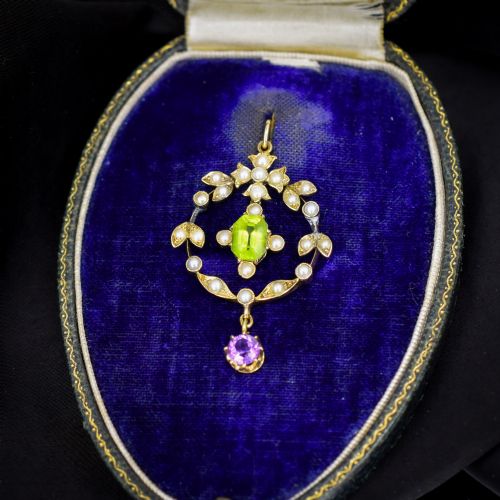
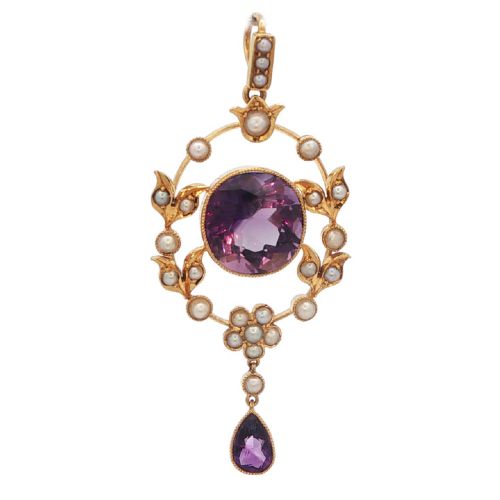
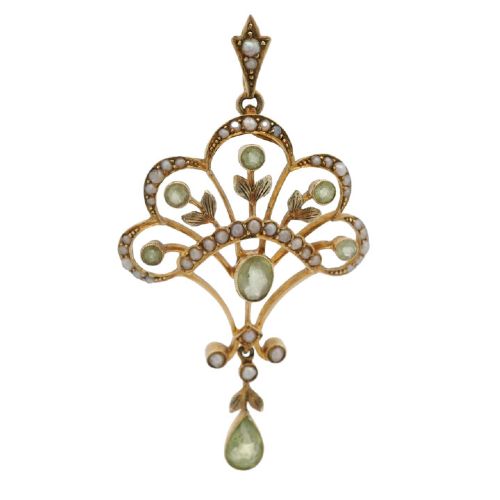
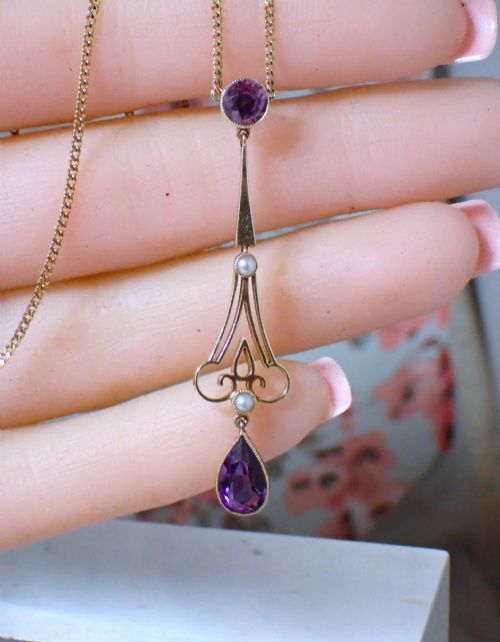
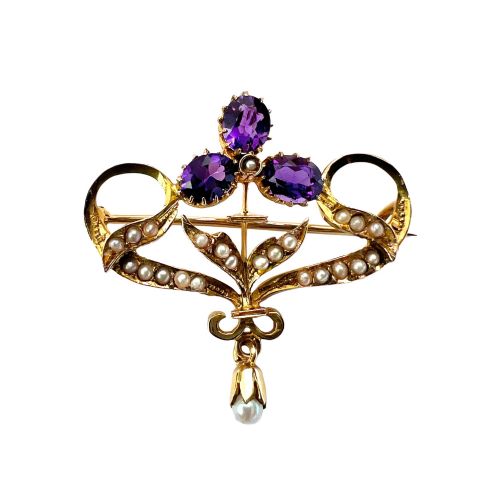
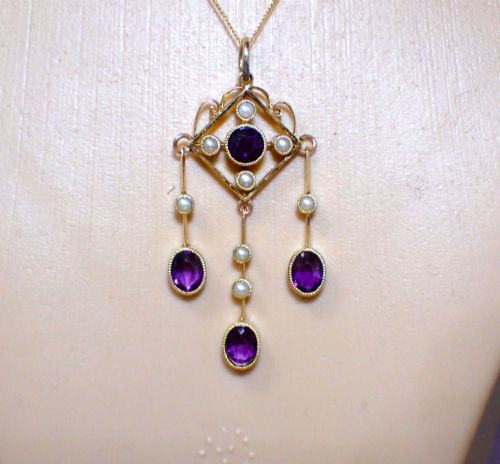
You are most likely to meet Edwardian and Art Nouveau examples on this page, often featuring peridot or amethyst paired with seed pearls in 9ct or 15ct gold settings. The form typically includes a central bezel-set stone with a swaying pearl drop suspended below.
Pieces frequently merge pendant and brooch functions, reflecting the versatility demanded by makers in the late nineteenth and early twentieth centuries. Surviving items demonstrate a clear preference for symmetrical floral motifs or flowing, organic lines.
Materials and construction methods
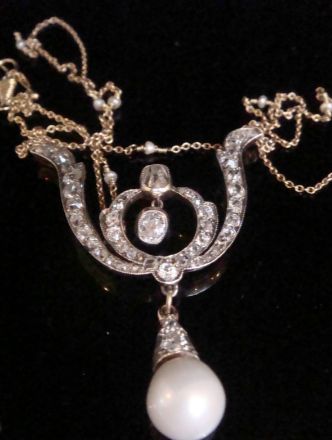
Makers constructed these pendants using 9ct and 15ct yellow and rose gold, occasionally incorporating platinum highlights or 18ct settings for diamond elements. Seed pearls were individually drilled and secured onto fine pins or wires, forming the shimmering borders characteristic of the style.
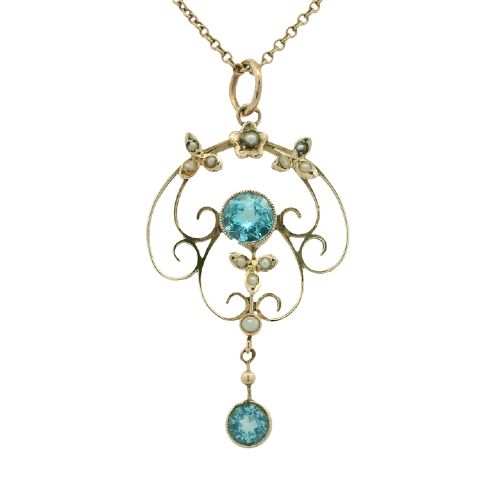
Gemstones such as amethyst, peridot, aquamarine, and turquoise were hand-cut and collet-set into open-backed gold mounts to maximise light transmission through the stones. Delicate wirework and granulation techniques created the characteristic dangling drops and articulated joints.
Several pieces double ingeniously as brooches, ready to abandon the neck at a moment's notice for a lapel.
Distinctions in craftsmanship
Quality rests on the precision of the metalwork and the uniformity of the seed pearls employed in the design. Superior examples display meticulous hand-piercing and secure setting work that holds every tiny pearl without excess adhesive.
The choice of accompanying gemstones also dictates the tier of the piece, with richly coloured amethysts and vibrant peridots paired with higher-purity 15ct gold. Original boxes and intact, matching gold chains elevate the standing of a pendant significantly.
S. Blanckensee & Son·Murrle Bennett·Hamilton & Co
The Antique Gold Pearl Lavalier Glossary
- Lavalier
- A pendant necklace featuring a central gemstone with one or more dangling drops suspended below. This style gained immense popularity during the Edwardian and Art Nouveau eras.
- Seed Pearl
- A tiny, naturally small pearl, often perfectly round or slightly baroque, used in clusters or borders across jewellery from the Victorian period onward.
- Collet Setting
- A collar of metal that encircles the edge of a gemstone to hold it securely in place. This method was widely utilised in antique gold settings.
- Art Nouveau
- A design style characterised by flowing, organic lines and natural motifs, heavily represented in jewellery from the turn of the twentieth century.
- Suffragette
- Jewellery incorporating green, white, and violet stones, such as peridot, seed pearl, and amethyst, reflecting the colours of the women's suffrage movement.
Antique Gold Pearl Lavalier: Frequently Asked Questions
What is a lavalier necklace?
A lavalier is a drop pendant necklace featuring a central stone with one or more dangling elements hanging underneath. They became fashionable in the late nineteenth century and remained popular through the Edwardian era.
Unlike standard pendants that stay fixed on a chain, lavaliers emphasise movement and delicate, flowing asymmetry. They are most commonly found paired with seed pearls and coloured gemstones.
How do I date an Edwardian pendant?
Edwardian pendants are typically dated by their characteristic materials, such as platinum-topped gold, fine seed pearls, and pastel gemstones like peridot and aquamarine. The presence of delicate openwork and Garland style motifs also points to this era.
Examining the clasp and the purity hallmarks stamped on the reverse provides further chronological evidence. Hallmarks for 9ct and 15ct gold are standard for pieces from this specific timeframe.
Were these worn as brooches too?
Many pieces from this era were manufactured with dual-purpose fittings, featuring a hinged pin and a hidden loop on the reverse. This allowed the owner to wear the item either as a pendant on a chain or pinned directly to clothing as a brooch.
This versatility was common in Victorian and Edwardian jewellery design. You can often spot the hinge or catch behind the main setting on surviving pieces.
What gold purity should I expect?
Antique pendants from the Victorian and Edwardian periods are frequently found in 9ct and 15ct yellow or rose gold. The 15ct standard was widely used in Britain before being replaced by 14ct and 18ct standards later in the twentieth century.
Lower-purity 9ct items were also common and offered a durable alternative for everyday wear. Platinum was occasionally introduced for the front faces of Edwardian settings to enhance the brilliance of diamonds.