
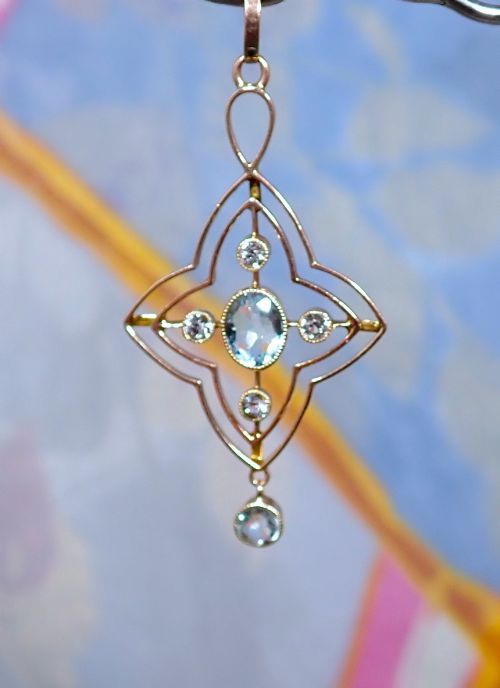


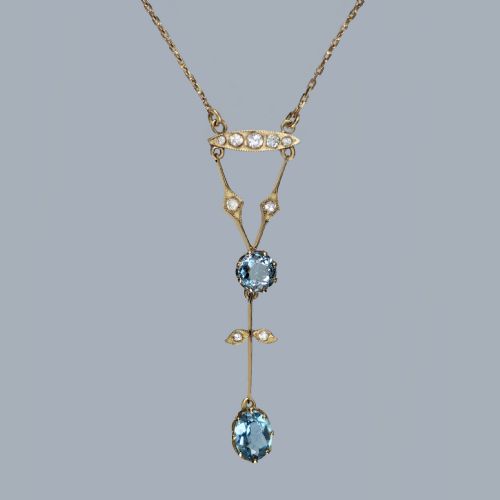


Vintage Aquamarine Drop Pendant
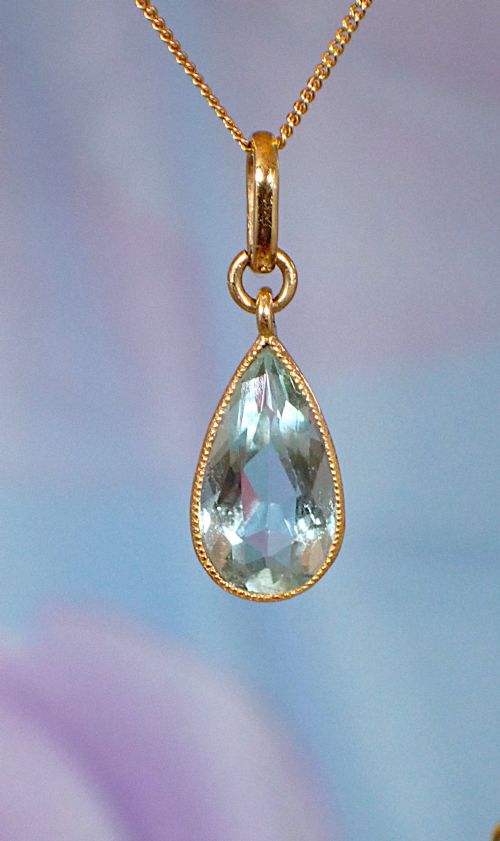
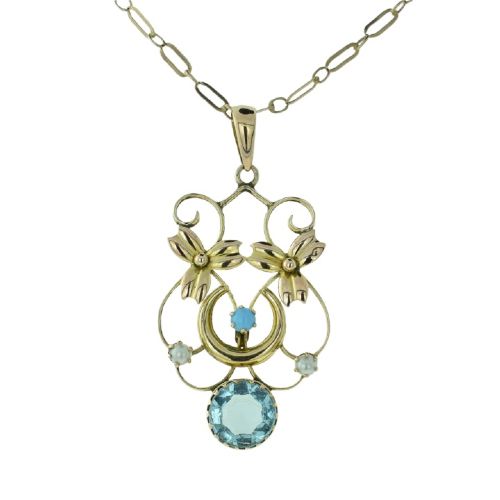
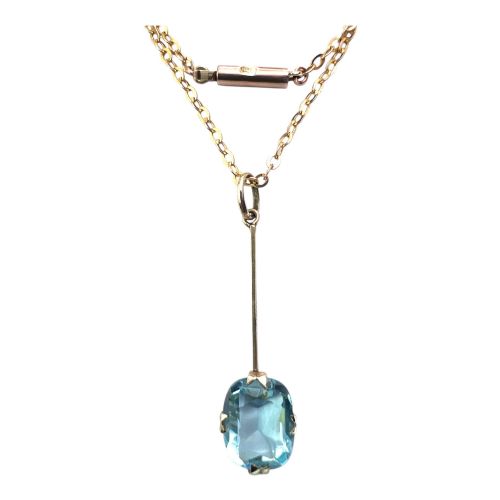
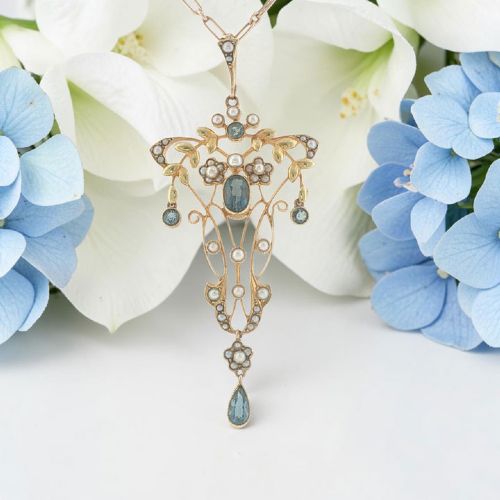
A vintage aquamarine drop pendant brings pale blue light to the throat, moving easily from Edwardian delicacy to Art Deco geometry.
Vintage Aquamarine Drop Pendant
When you search for a vintage aquamarine drop pendant, you encounter jewels suspended from chains or collars designed to draw the eye downward. These pieces span from the late nineteenth century through the Edwardian era, Art Deco period, and into mid-century designs.
The most frequent examples on this page date from the Edwardian period and the nineteen-thirties, often pairing pale beryl stones with yellow gold, rose gold, or platinum.
Makers utilised distinct forms ranging from delicate seed pearl lavalier clusters to substantial geometric diamond frames enclosing large central beryls.
Materials and construction methods
Goldsmiths set aquamarines into mounts of nine carat, fifteen carat, or eighteen carat yellow and white gold, alongside durable platinum which dominated later Edwardian and Art Deco work.
Gemstones are frequently accented with small brilliant cut diamonds, white sapphires, or seed pearls threaded delicately to frame the central pale blue crystal.
Drop mechanisms rely on articulated joints and fine jump rings that allow the lower cluster to sway independently from the upper chain suspension.
Listings include pieces spanning from the late nineteenth century through the Edwardian era, nineteen-thirties Art Deco, and nineteen-fifties mid-century designs.
Judging the quality of the work
Quality rests upon the saturation and clarity of the central aquamarine, where deeper crystal transparency and crisp table facets separate superior stones from cloudy examples.
The delicacy of the surrounding metalwork dictates the tier of the piece, particularly in Edwardian scrollwork and millegrain platinum edges executed by skilled hands.
Original matching chains and secure integrated bails elevate an antique jewel, preserving the integrity of the design from top to bottom.
The Vintage Aquamarine Drop Pendant Glossary
- Aquamarine
- A transparent blue-green variety of beryl named for seawater. It forms the primary drop element in these historic necklaces.
- Millegrain
- A decorative technique involving tiny raised metal beads along the edges of a setting. This border work is typical of Edwardian and platinum jewellery.
- Lavalier
- A pendant style featuring a central gemstone with a smaller stone suspended below it. These necklace forms gained popularity during the early twentieth century.
- Beryl
- The mineral family that includes emerald and aquamarine. It provides the hard crystalline structure required for intricate gemstone cutting.
- Drop
- A pendant configuration where the ornament hangs vertically below the main chain attachment point. It creates movement when worn against the skin.
Vintage Aquamarine Drop Pendant: Frequently Asked Questions
How do I clean a vintage aquamarine?
Wash the pendant gently in warm soapy water using a soft brush to remove dust from behind the stone. Avoid harsh chemical dips that might damage delicate seed pearls or older gold alloys.
Dry the jewel thoroughly with a soft cloth before storing it away from other pieces to prevent scratching.
Can I wear my pendant every day?
Aquamarine has good hardness, making daily wear acceptable if you treat antique settings with care. Take the necklace off before swimming, exercising, or sleeping to protect fragile chains and claw settings.
Inspect the jump rings and claw tips periodically to ensure the stones remain secure in their original mounts.
How do I date an Edwardian pendant?
Look for characteristic Edwardian motifs such as garlands, bows, and intricate openwork platinum mounted over yellow gold. The presence of seed pearls combined with aquamarine often points toward the nineteen-tens.
Chain styles and clasp types can also offer clues, though many older pendants were paired with replacement chains later in life.
What is the difference between Art Deco and Edwardian pieces?
Edwardian jewellery favours soft curves, organic floral motifs, yellow gold, and delicate millegrain wirework. Art Deco design shifts toward bold geometric lines, symmetrical platinum settings, and stark contrasts.
Aquamarines in Art Deco pieces are frequently emerald cut or asscher cut, whereas Edwardian stones often feature softer oval or pear shapes.