





Antique Gold Half Hoop
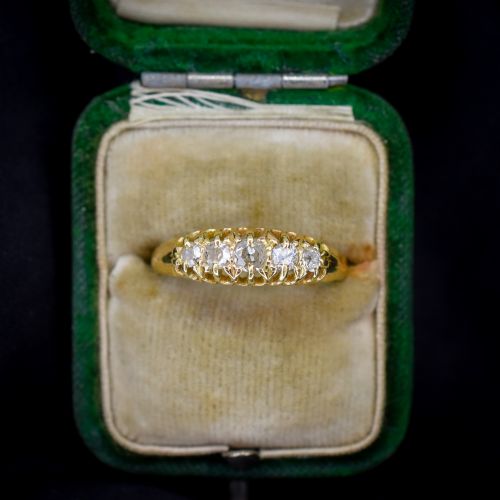
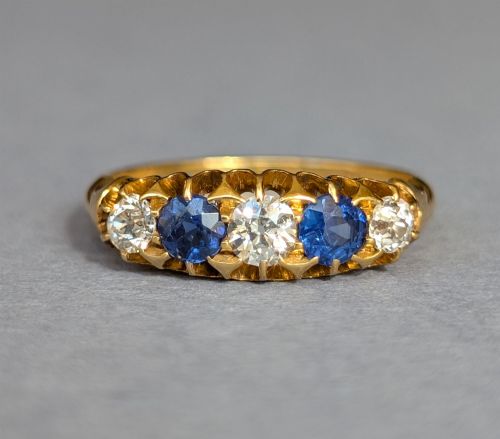
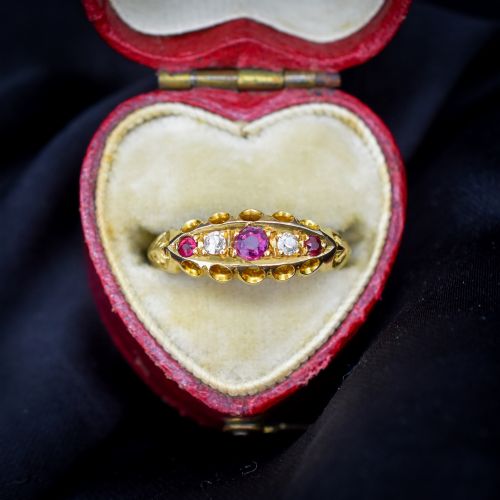
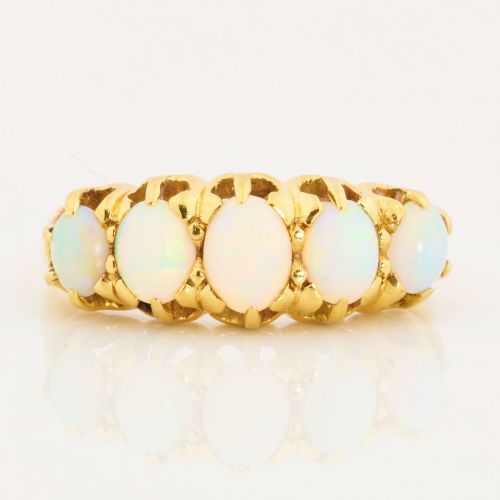
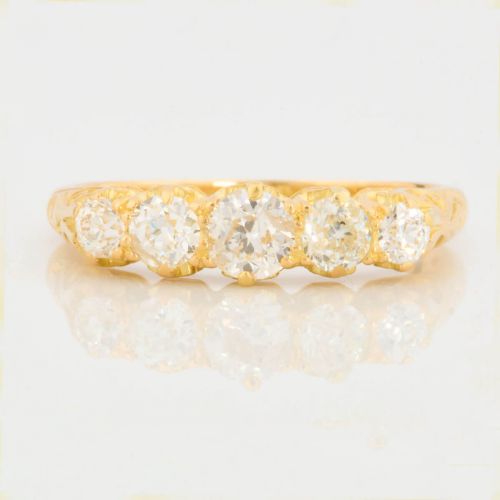
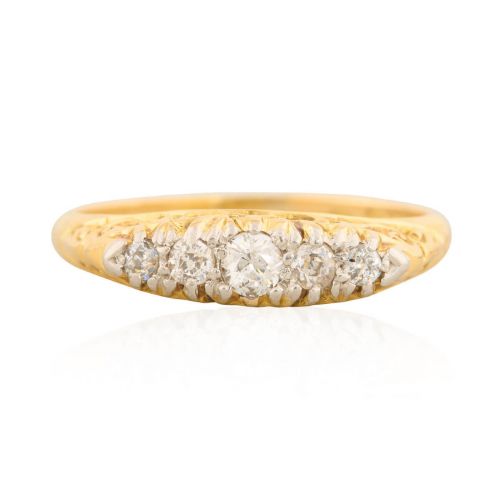
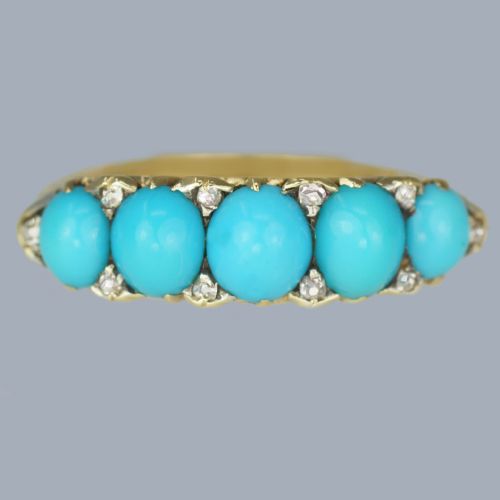
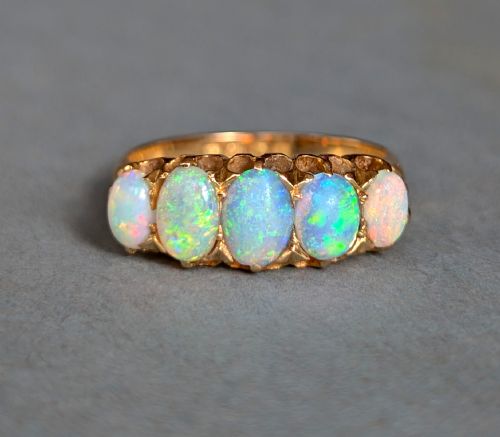
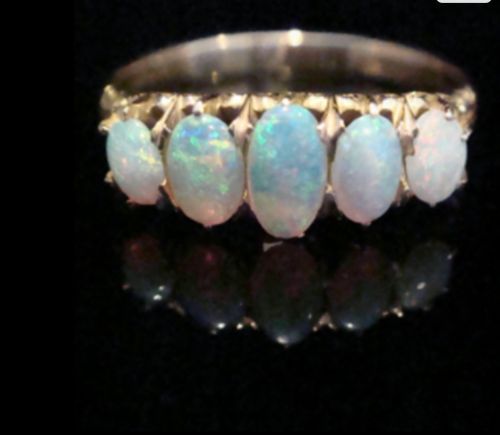
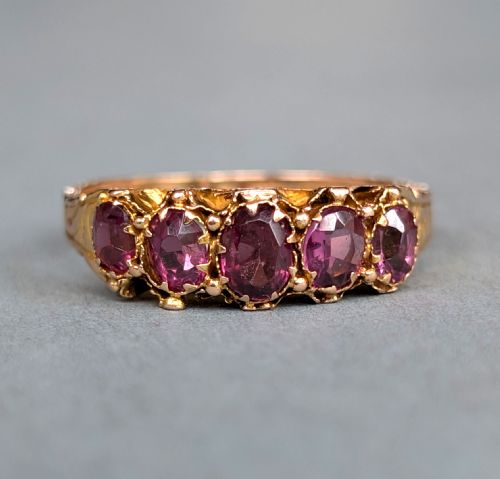
An antique gold half hoop brings together a line of matched gems set flush along the finger in enduring yellow gold.
Antique Gold Half Hoop
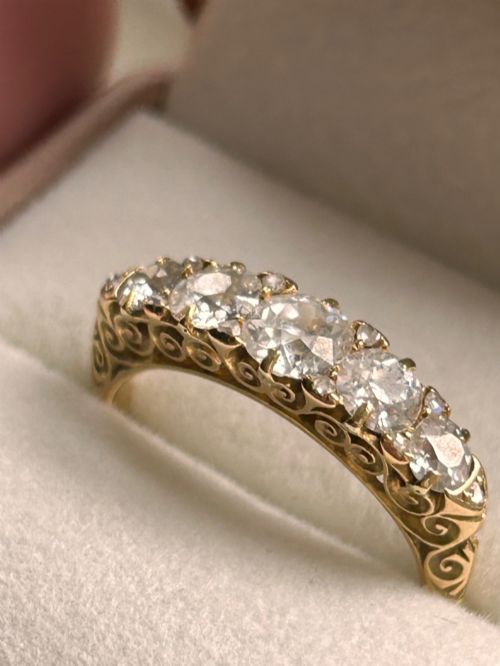
Makers often shaped the precious metal into carved half hoop profiles or boat settings, allowing light to enter the stones from the sides. The enduring appeal lies in the clean alignment of gems, which ranges from simple turquoise clusters to brilliant old cut diamonds.
Materials and construction
Goldsmiths worked chiefly with eighteen carat yellow gold, occasionally employing fifteen carat or lower alloys to form the sturdy shanks and supportive settings. Stones were hand set by artisans who utilised claw, gypsy, or boat mountings to secure diamonds, opals, and sapphires in a neat linear arrangement.
Gems such as old cut diamonds and natural rubies were hand faceted, displaying individual proportions that reflect the hand of the cutter rather than modern laser precision. Metalwork often includes subtle chased details along the shoulders, anchoring the stone row securely to the hoop.
The archive and active inventory demonstrate a strong prevalence of five stone arrangements alongside boat and cluster formations.
Factors of quality
The distinction between standard examples and the finest pieces rests upon the matching and liveliness of the gems. A superior antique gold half hoop possesses stones selected for consistent colour, depth, and brilliance, whereas lesser pieces display mismatched sizes or dull material.
Structural integrity also separates the grades, visible in the crispness of the claw work and the thickness of the original gold shank. Pieces that retain their full hallmarks and untouched stone settings command greater appreciation among collectors.
The Antique Gold Half Hoop Glossary
- Half hoop
- A ring design where gemstones span the upper arc of the band rather than encircling the entire finger. This arrangement became a staple of nineteenth century jewellery design.
- Old cut
- A diamond facet style hand polished before modern machinery, characterised by a smaller table, higher crown, and open culet. These stones catch candlelight with a distinct warm glow.
- Boat ring
- A setting style featuring a curved, pointed outline resembling a boat hull, popular during the Georgian and Victorian eras. It lifts the central stones higher off the finger.
- Gypsy setting
- A mounting style where the gemstone is flush set directly into the thick gold band, leaving the metal surface smooth around the stone. This technique offers robust daily wear.
- Carved half hoop
- A variation featuring sculpted gold work around the mounting of the stones, adding texture and architectural detail to the band. These motifs often incorporate scrolls or leaves.
Antique Gold Half Hoop: Frequently Asked Questions
How do I wear a half hoop ring safely?
These rings pair easily with plain wedding bands because the flat profile of the stone row sits neatly alongside other jewellery.
Care should be taken with softer gems like opals and turquoise, which benefit from removal during heavy manual tasks.
What periods do these rings come from?
The selection spans the Victorian, Edwardian, and Art Deco eras, with occasional pieces stretching into the mid-twentieth century.
Victorian examples often feature rich yellow gold and gypsy settings, while Edwardian pieces lean towards lighter platinum topped mounts or refined diamond rows.
Were these used as engagement rings?
Many of these pieces served as traditional Victorian and Edwardian engagement rings, particularly the five stone diamond and ruby variations.
The linear design made them practical for daily wear while remaining visually striking.
How can I tell the gold purity?
British pieces commonly carry hallmarks stamped inside the shank indicating eighteen carat gold alongside assay office marks and date letters.
These stamps provide a reliable method for dating the manufacture of the ring.