



18ct Gold Pearl Band
An 18ct gold pearl band combines lustrous gems with precious metal, offering refined elegance for daily wear.
18ct Gold Pearl Band
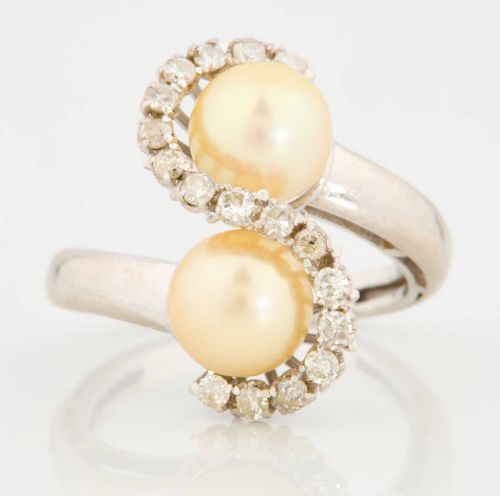
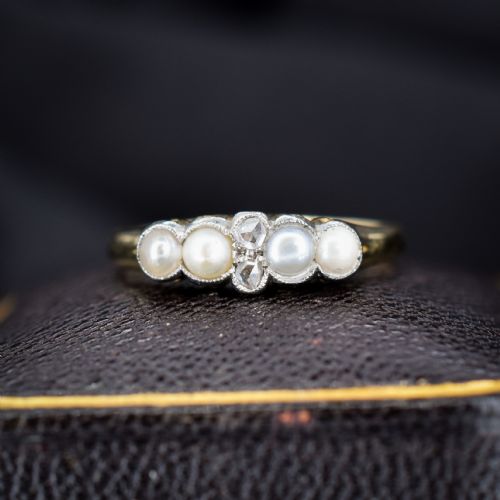
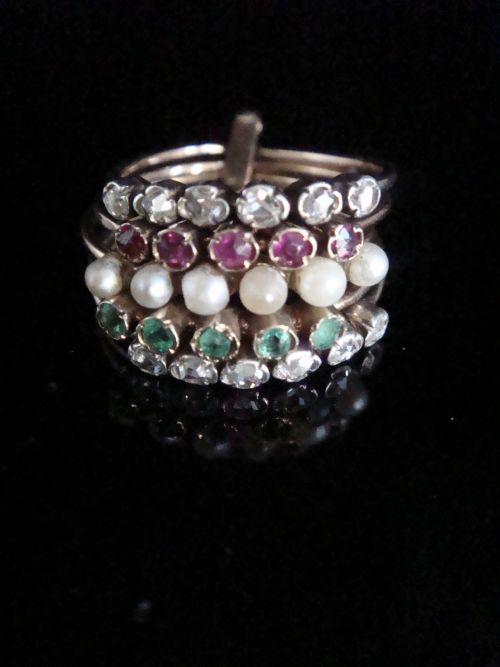
An 18ct gold pearl band represents a sophisticated category of antique and vintage jewellery, typically discovered in Victorian, Edwardian, and mid-century designs. These rings range from simple five-stone settings to elaborate multi-row stacking bands and clusters.
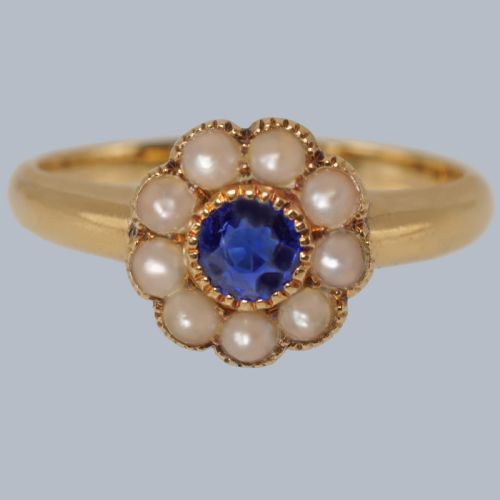
The versions most frequently encountered on this page feature rich yellow or rose gold paired with luminous pearls, frequently accompanied by diamonds, turquoise, rubies, or sapphires. They serve as enduring tokens of sentiment and style originating from the nineteenth and twentieth centuries.
How they were made
Goldsmiths shaped high-purity 18ct yellow, white, and rose gold to form sturdy yet delicate band structures, securing gemstones via traditional claw, flush, and cluster settings. The integration of split pearls, cultured pearls, and natural pearls demonstrates precise placement alongside hand-cut diamonds.
Master artisans incorporated decorative motifs including buckles, swirls, and multi-row configurations, utilising traditional hand-finishing techniques that mark the craftsmanship of the Victorian and Edwardian eras.
Listings feature 18ct yellow gold, 18ct white gold, and 18ct rose gold alongside platinum-free settings from Victorian and Edwardian periods.
What varies in quality
The hierarchy of quality rests upon the uniformity and lustre of the pearls, alongside the clarity and cut of supporting diamonds and coloured gemstones. Superior examples display intact, matching pearls with minimal surface wear and secure, robust precious metal settings.
Execution of design detail separates standard workshop production from finer pieces, where intricate multi-row construction and balanced gemstone arrangements remain crisp and well-preserved across decades.
The 18ct Gold Pearl Band Glossary
- Split pearl
- A natural pearl sliced in half and flattened at the back to allow close setting into a low-profile ring mount. This technique was widely utilised in Victorian jewellery design.
- Old cut diamond
- A hand-faceted diamond shape popular before modern brilliant cuts were standardised. These stones exhibit smaller tables and open culets that catch candlelight warmly.
- Trilogy ring
- A ring featuring a composition of three principal gemstones arranged in a row. It typically symbolises the past, present, and future in sentimental Victorian and Edwardian pieces.
- Half hoop ring
- A band featuring a row of gemstones across the upper face rather than encircling the entire finger. This design maximised comfort while displaying fine stones prominently.
- Harem ring
- A multi-row stacking band engineered to appear as several interconnected rings worn together. Victorian makers constructed these using contrasting stones and gold colours.
18ct Gold Pearl Band: Frequently Asked Questions
Can I wear an antique pearl band daily?
Pearls possess a softer composition than diamonds, requiring gentle care and occasional removal during rigorous manual tasks.
Storing the ring separately from harder metals prevents scratching and preserves the lustrous nacre over years of enjoyment.
How do I identify a Victorian pearl ring?
Victorian examples often incorporate rich yellow or rose gold hues, closed-back settings, and intimate gemstone combinations like turquoise and split pearls.
Stylistic cues such as buckle motifs and organic cluster arrangements further distinguish nineteenth-century craftsmanship from later decades.
What is the difference between split pearls and cultured pearls?
Split pearls are natural pearls halved for flat mounting in historical jewellery settings, whereas cultured pearls form with human intervention around an implanted nucleus.
Both varieties appear across different periods represented here, reflecting the evolution of pearl sourcing and setting techniques.
How should I clean my 18ct gold and pearl ring?
Pearls react poorly to harsh chemical dips, ultrasonic cleaners, and abrasive brushes which damage their delicate organic outer layers.
Cleaning requires only a soft, damp cloth to wipe away surface oils, followed by thorough drying before storage.