



Vintage Pearl Band Ring
A vintage pearl band ring combines lustrous pearls with precious metals across periods ranging from Georgian times to the mid twentieth century.
Vintage Pearl Band Ring
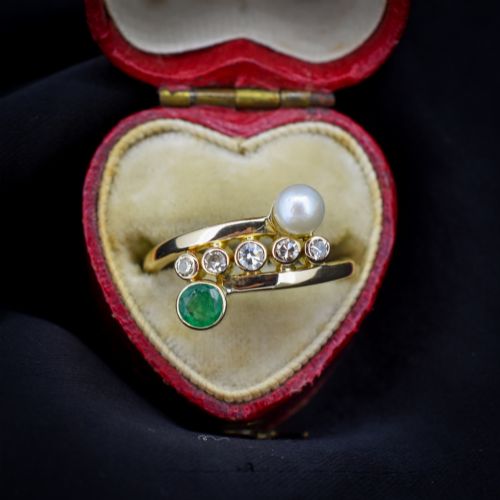
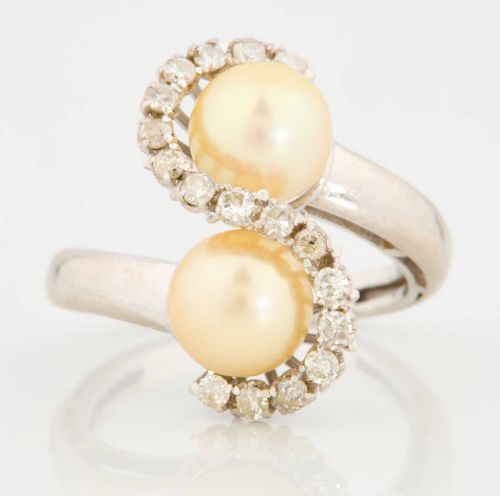
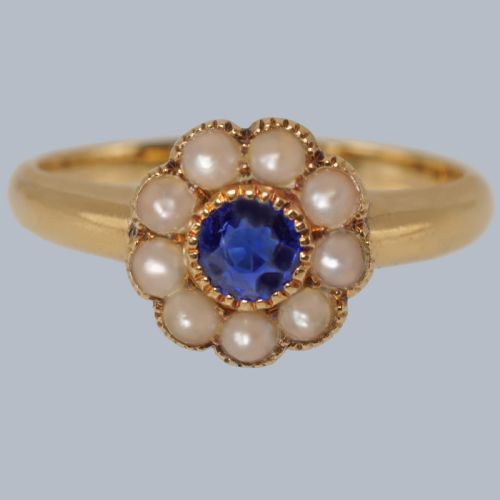
A vintage pearl band ring encompasses historic finger ornaments set with pearls alongside diamonds, rubies, turquoise, and other gems. Collectors searching for a vintage pearl band ring encounter various iterations including multi-stone bands, cluster designs, and decorative stacking rings.
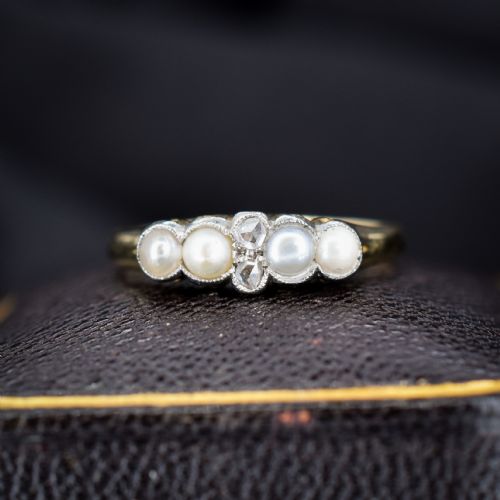
Most pieces present on this page derive from the Victorian and Edwardian eras, showcasing period specific metalwork and gemstone pairings. Buyers frequently encounter combinations of split pearls paired with old cut diamonds or turquoise cabochons set within fifteen carat or eighteen carat gold.
Materials and construction methods
Goldsmiths constructed these bands primarily using yellow, rose, and white gold in varying purities including nine carat, fifteen carat, and eighteen carat weights, alongside platinum and silver settings. Pearls and split pearls integrate with old cut diamonds, natural rubies, sapphires, emeralds, and turquoise stones.
Craftsmen utilised techniques suited to each specific era, from hand-set cluster formations and delicate milgrain detailing in Edwardian workshops to robust bezel and prong settings in Victorian jewellery. Mourning rings incorporated specialised internal compartments and hairwork beneath crystal lenses alongside seed pearls.
Listings feature items spanning the Georgian, Victorian, Edwardian, Art Deco, and mid-century periods, utilising gold, platinum, and silver alongside pearls.
Factors influencing quality and craftsmanship
Quality in these rings rests on the integrity of the pearl nacre, the symmetry of the gem settings, and the preservation of original metalwork. Finer examples retain matched pearls with strong orient and minimal surface blemishes.
Superior pieces display crisp hand-carved or pierced details in the gold or platinum shank, ensuring the structural mountings securely hold each stone without excessive thinning of the band over decades of wear.
The Vintage Pearl Band Ring Glossary
- Split pearl
- A natural pearl cut in half and used specifically in closed-back or flush settings to sit flat against the finger. This technique was popular in Victorian jewellery design.
- Old cut diamond
- A hand-faceted diamond cut before modern machine precision, typically featuring a smaller table, higher crown, and open culet. These stones exhibit a softer, warmer candlelit sparkle.
- Harem ring
- A multi-row stacking band designed so several interlocking rings appear as a single wide piece on the hand. These often combine varied gemstones including pearls, rubies, and turquoise.
- Trilogy ring
- A ring set with three main gemstones representing the past, present, and future. In these listings, the configuration usually pairs central pearls with flanking diamonds.
Vintage Pearl Band Ring: Frequently Asked Questions
How do I clean a vintage pearl ring?
Pearls are organic gems that require gentle care, meaning you should avoid harsh chemical dips, ultrasonic cleaners, and abrasive cloths.
Use a soft, damp cloth to wipe the pearl after wearing, and ensure the ring is completely dry before storing it away from harder jewellery.
Are these pearls natural or cultured?
The listings feature both natural pearls formed organically in saltwater or freshwater molluscs and cultured pearls grown with human intervention.
Victorian and Edwardian examples frequently incorporate natural seed pearls or split pearls, while mid-century designs often utilise cultured varieties.
Can a vintage gold band ring be resized?
Many gold band rings can be resized by a skilled jeweller, though the complexity depends on the specific design of the shoulders and band.
Styles featuring continuous stones like five-stone rows or multi-row harem bands present greater challenges and require careful assessment by a professional.
How do I distinguish Victorian from Edwardian styles?
Victorian rings often display heavier gold weights, warmer yellow or rose tones, and romantic motifs like buckle designs or turquoise clusters.
Edwardian pieces typically shift towards lighter platinum and white gold settings, intricate filigree work, and airy diamond and pearl combinations.