





Antique Gold Fish
These pieces brought together under antique gold fish span maritime paintings, convex mirrors, and painted plates from the Georgian, Regency, and Victorian periods.
Antique Gold Fish
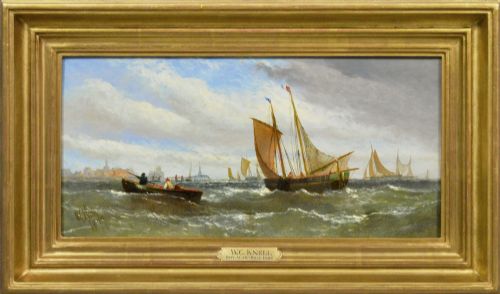
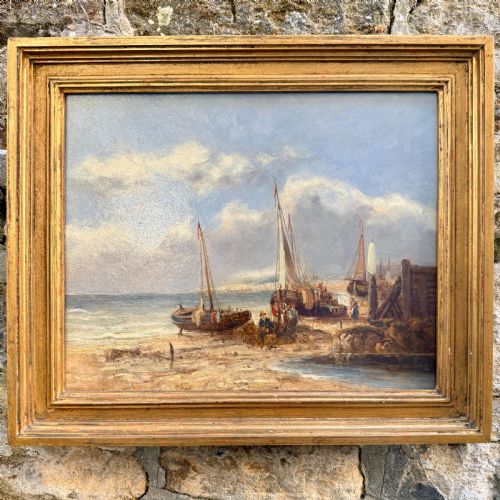
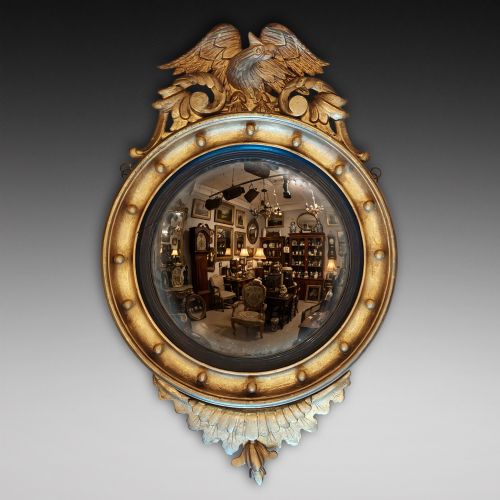
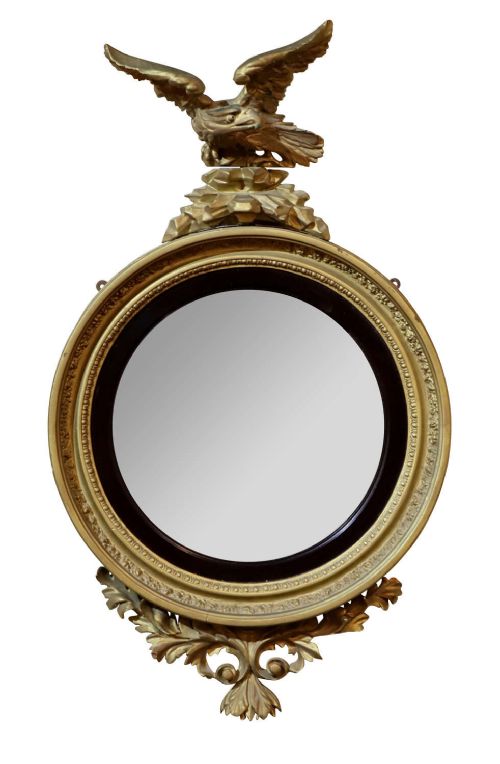
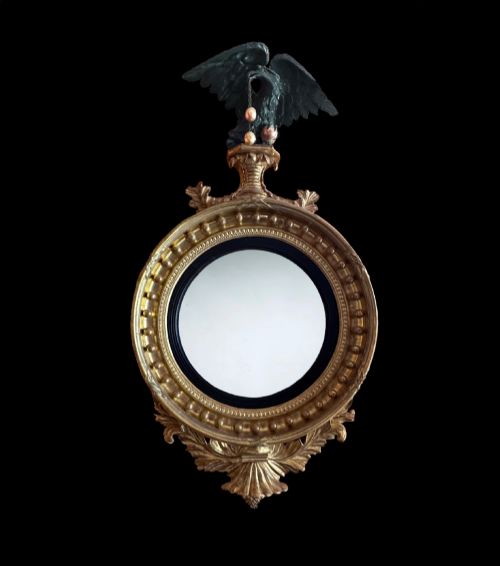
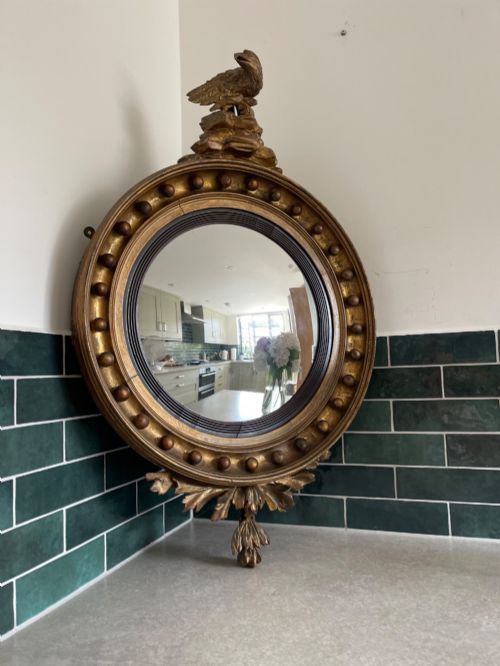
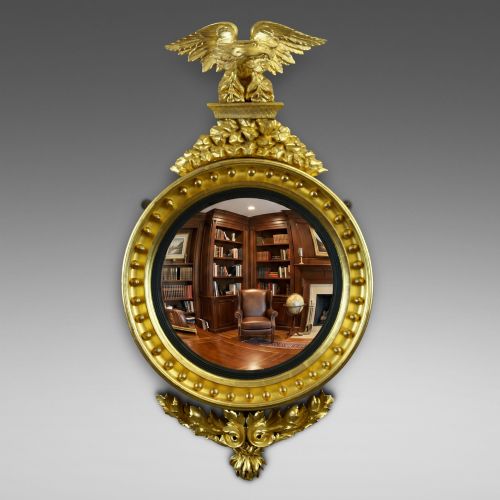
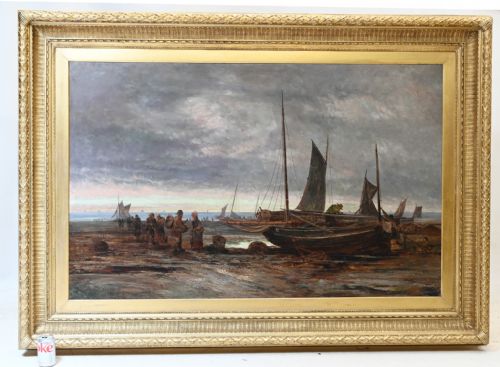
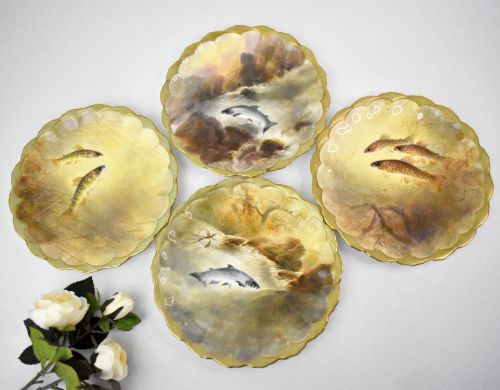
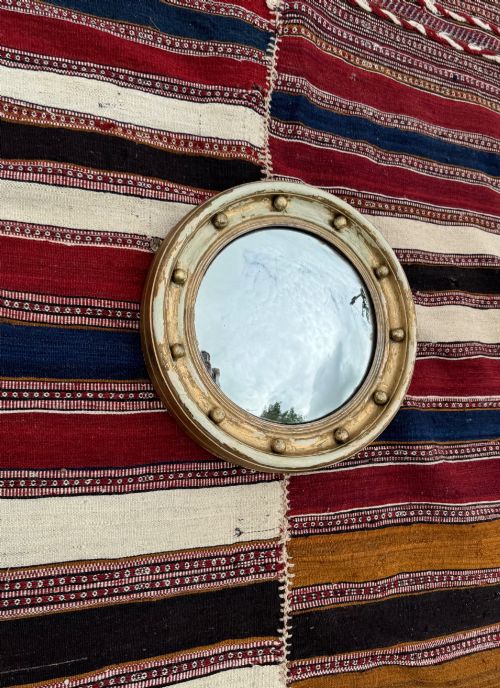
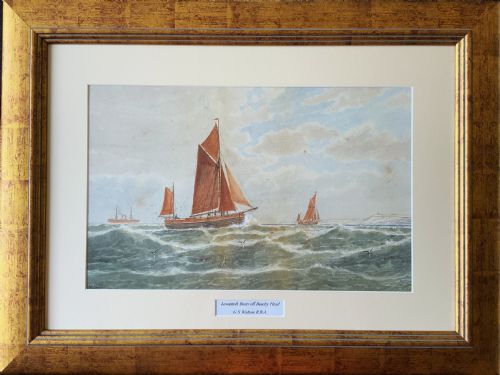
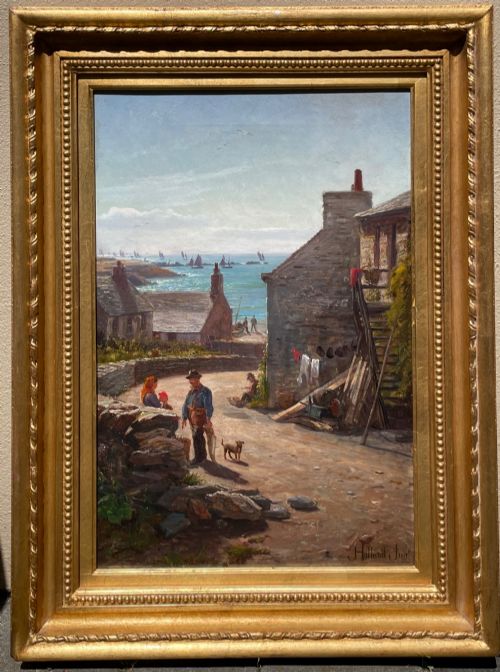
When you search for antique gold fish, you encounter oil paintings of coastal scenes, marine art depicting fishing boats, circular giltwood convex mirrors, and painted cabinet plates. The selection draws primarily from nineteenth-century British school oil paintings, Regency and Victorian wall mirrors, and early twentieth-century porcelain.
The oil paintings capture harbours, stormy seas, and coastal villages executed by named artists and regional British painters. Alongside these canvases, the giltwood convex mirrors provide the characteristic golden spherical reflection associated with the term, while ceramic plates feature hand-painted aquatic subjects.
How they were made
The paintings utilise oil paint applied to canvas, panel, or card, capturing maritime subjects with detailed brushwork and atmospheric glazing. Frames and wall mirrors are constructed from wood finished with gesso and giltwood, achieving their metallic surface through traditional gilding techniques.
Ceramic pieces such as cabinet plates employ fired porcelain surfaces decorated with hand-painted enamel details depicting fish and marine scenes. Metal items like candlesticks are formed in brass, while jewellery items combine gold with natural coral and baroque pearls.
Antique Gold Fish Retail Price Guide 2026
Typical asking prices for gold fish among the pieces listed under this phrase on Sellingantiques today, from the lower quarter to the upper quarter. They describe what is for sale here now, not the wider market.
Materials recorded across current items include giltwood, ebonised wood, canvas, oil paint, glass, and brass.
What varies in quality
Quality in the oil paintings rests upon the expressive handling of light on water, the clarity of maritime detail, and the reputation of the artist. Stronger works display confident brushwork and well-preserved pigment depth across coastal and harbour compositions.
For the giltwood convex mirrors, excellence is judged by the crispness of the carved wood and gesso ornamentation, the retention of original gilding, and the absence of distortion in the spherical glass. Cabinet plates show quality through the precision and artistry of the hand-painted fish motifs.
William Shayer·William Henry Williamson·John Holland·George Stanfield Walters·Joseph Birbeck Senior·Charles Napier Hemy·Gustave De Bréanski·Pieter Cornelis Dommersen·James Kyd·George SHAW·T.S. Wallis·George Gregory·Frank Hyde·John Bell·George Henry Knight·Royal Doulton·Royal Worcester
The Antique Gold Fish Glossary
- Convex mirror
- A round wall glass with a spherical surface that reflects a wide, curved view of the room. These mirrors often feature giltwood frames with eagle surmounts or candle arms.
- Giltwood
- Wood carved and coated with a thin layer of gold leaf or gold paint. This finish defines the ornate frames of Regency and Victorian convex mirrors.
- Gesso
- A plaster-like mixture applied to wood frames to provide a smooth base for gilding. Skilled artisans model intricate relief details into this layer before applying gold leaf.
- Marine art
- Paintings and watercolours focused on the sea, ships, and coastal life. These works record nineteenth-century fishing vessels, harbours, and coastal weather.
- Cabinet plate
- A decorative ceramic dish intended for display rather than dining. They often feature hand-painted scenes of fish or fruit by notable ceramic artists.
Antique Gold Fish: Frequently Asked Questions
What subjects appear in these paintings?
The canvas works depict coastal landscapes, stormy seas, and fishing boats working off British shores. Artists record harbour scenes, Brixham trawlers, and coastal villages.
These maritime subjects reflect nineteenth-century and early twentieth-century interest in seafaring life and coastal trade.
How do convex mirrors function in a room?
Convex mirrors bounce a wide-angle, curved reflection across the interior space. Their spherical glass gathers light from all directions to brighten darker corners.
Historically placed in parlours and dining rooms, they allowed occupants to monitor activity across the entire apartment.
How do I date a giltwood mirror?
Dating relies upon the construction of the wooden frame, the composition of the gesso, and the style of ornamentation. Regency examples often incorporate ebonised reeded inner bezels and carved eagle surmounts.
Later Victorian and Edwardian iterations simplify these decorative elements while retaining the characteristic round gilt profile.
What distinguishes cabinet plates from tableware?
Cabinet plates are created solely for visual display on walls or stands rather than everyday dining use. They feature detailed hand-painted studies of fish, fruit, or coastal scenes by specialist porcelain artists.
Maker marks on the reverse often indicate factory production dates and individual decorator signatures.