





Antique Gold Corbels
Antique gold corbels are architectural supports and wall brackets built to hold weight or frame a space, bringing sculptural brilliance to any room.
Antique Gold Corbels
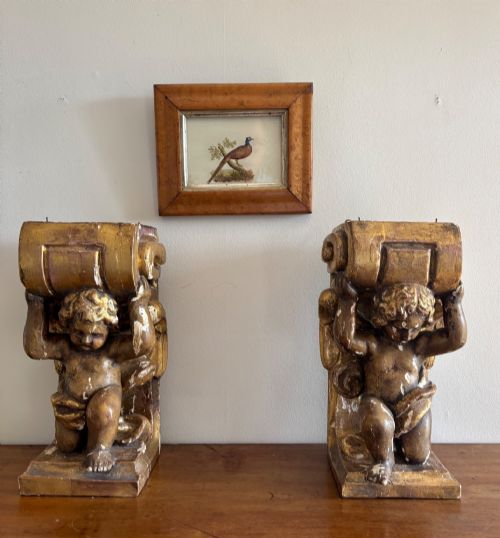
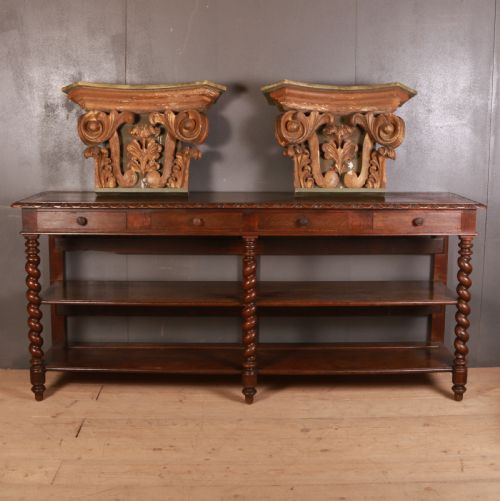
When you search for antique gold corbels, you are looking at architectural ornaments and wall brackets designed to project from a vertical surface. These decorative supports range from eighteenth-century Italian capitals to nineteenth-century carved pieces intended to hold busts, urns, or lamps.
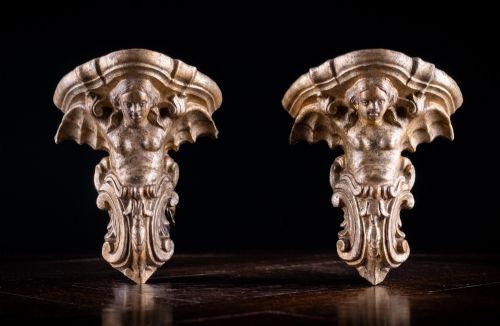
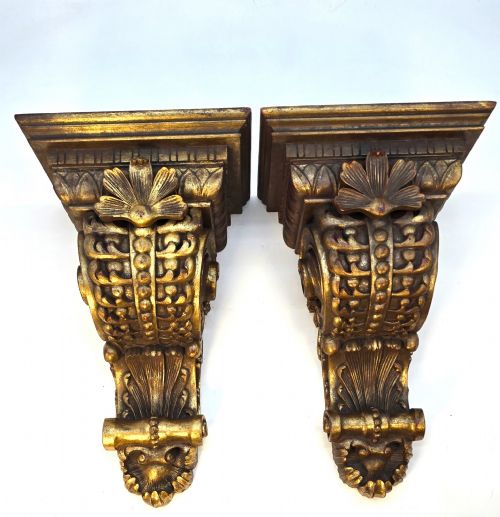
The versions you are most likely to meet on this page include pairs of carved wooden wall brackets finished in gold leaf or gesso. You will also encounter architectural salvage such as terracotta winged siren wall brackets and ebonised pieces mounted with ormolu.
Origin and period vary significantly across the selection, drawing on Italian Baroque, Rococo, and Victorian styles. Eighteenth-century examples sit alongside twentieth-century revivals, offering diverse decorative options for traditional and eclectic interiors.
How they were made
Master craftsmen shaped these supports from carved wood, terracotta, and ebonised wood, applying traditional joinery and sculptural techniques to build robust architectural elements. Wood carvers worked by hand to render intricate foliage, scrolls, and figural details before applying the surface finishes.
Gilding was achieved by laying thin sheets of gold leaf over a prepared base of gesso, creating a luminous metallic surface that caught the candle or window light. Ormolu mounts were cast in bronze and fire-gilded, then fixed to ebonised wooden structures to provide sharp textural contrast.
Antique Gold Corbels Retail Price Guide 2026
Typical asking prices for gold corbels among the pieces listed under this phrase on Sellingantiques today, from the lower quarter to the upper quarter. They describe what is for sale here now, not the wider market.
Materials recorded across the inventory include carved wood, giltwood, gesso, terracotta, ebonised wood, and ormolu.
What varies in quality
The depth and clarity of the hand carving dictate the aesthetic success of each piece, distinguishing lively sculptural work from mechanical repetition. Crisp undercutting in the wooden scrollwork and naturalistic rendering in figures or capitals reveal the hand of a skilled artisan.
The integrity of the original gold leaf and gesso surface determines how gracefully the piece has aged over the centuries. Rich patination and subtle burnishing on the gold show superior original craftsmanship, whereas flat or heavy-handed modern regilding obscures the underlying historical character.
Henri Dasson
The Antique Gold Corbels Glossary
- Corbel
- A structural member projecting from a wall to carry a heavy weight. These architectural supports often terminate in carved scrolls or figurative motifs.
- Giltwood
- Wood that has been thinly coated with gold leaf or gold paint. This finish provides a durable metallic sheen while protecting the carved wooden substrate underneath.
- Gesso
- A plaster-like mixture used as a smooth base for gilding on wood. Artisans applied multiple layers before laying down gold leaf to ensure a brilliant reflective surface.
- Ormolu
- Finely chased and gilt bronze used for decorative mounts on furniture and brackets. The technique involves applying an amalgam of gold and mercury to a bronze base.
- Capitals
- The uppermost member of a column or pilaster, serving to concentrate the load from the structure above. In decorative interiors, these are often adapted as standalone wall brackets.
Antique Gold Corbels: Frequently Asked Questions
What were antique gold corbels used for?
These decorative supports were built into or mounted onto interior walls to bear the weight of heavy cornices, beams, or lintels. They also served as ornamental brackets for displaying clocks, porcelain, busts, or lighting.
In grand architectural schemes, pairs of brackets framed doorways or fireplaces, adding sculptural rhythm to a room. Their dual purpose combined structural utility with rich visual display.
How do I hang wall brackets safely?
Mounting antique gold corbels securely requires locating solid wall studs or using heavy-duty wall anchors rated for the weight of the piece. Because many brackets are heavy carved wood or terracotta, standard picture hooks are unsuitable.
Professional installation ensures the bracket bears weight properly without damaging the antique material or pulling away from the plaster.
How do I tell eighteenth-century pieces apart?
Eighteenth-century examples often exhibit deeper hand-carved details, heavier timber construction, and older gesso foundations that show organic shrinkage cracking. The styling tends to reflect authentic Baroque or Rococo proportions rather than later revival movements.
Examining the back and fixing points reveals the hand-tooled marks of early joinery, distinguishing genuine period work from twentieth-century copies.