


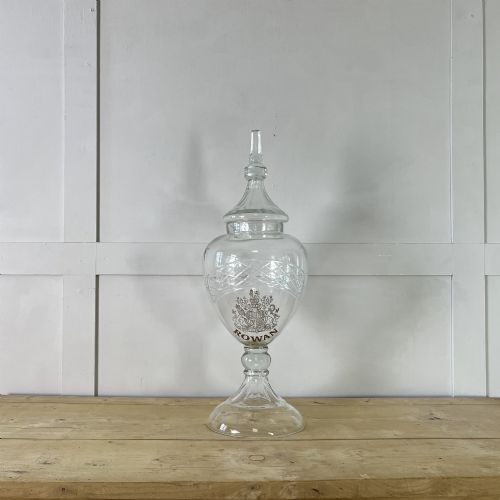


Antique Glassware Jar
An antique glassware jar brings utility and colour to a room, ranging from utilitarian storage to decorative display.
Antique Glassware Jar
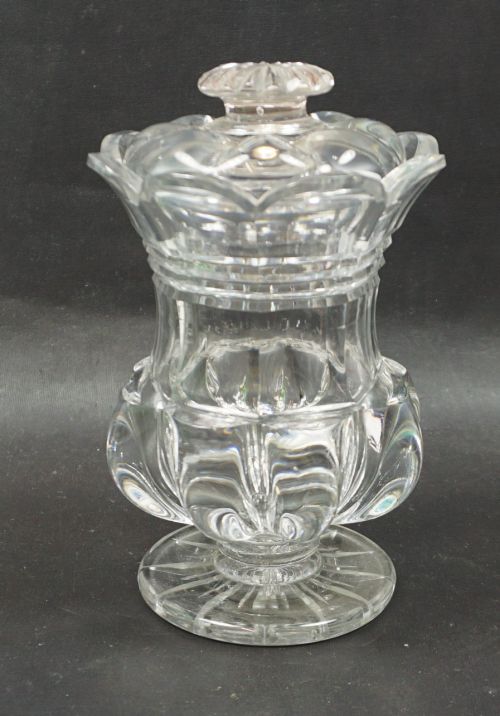
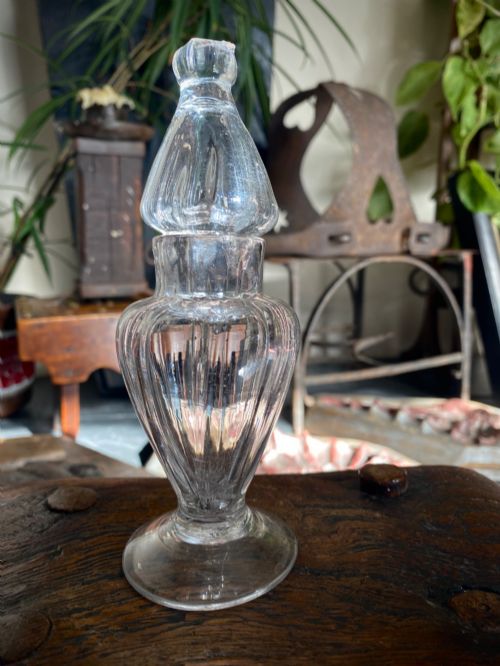
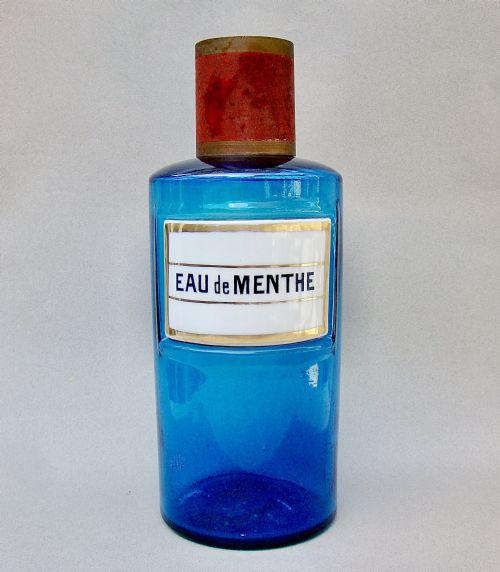
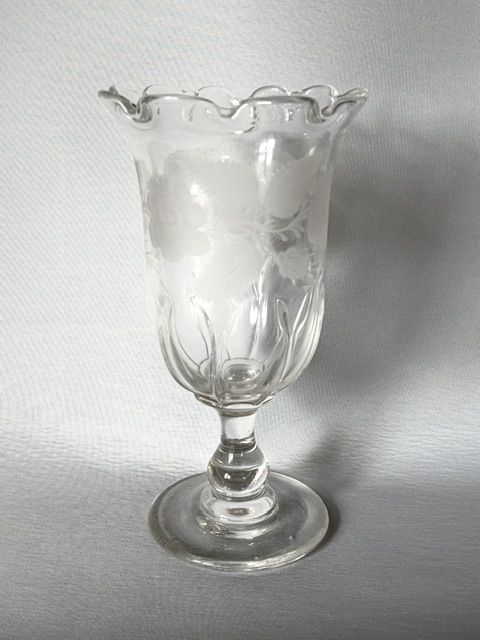
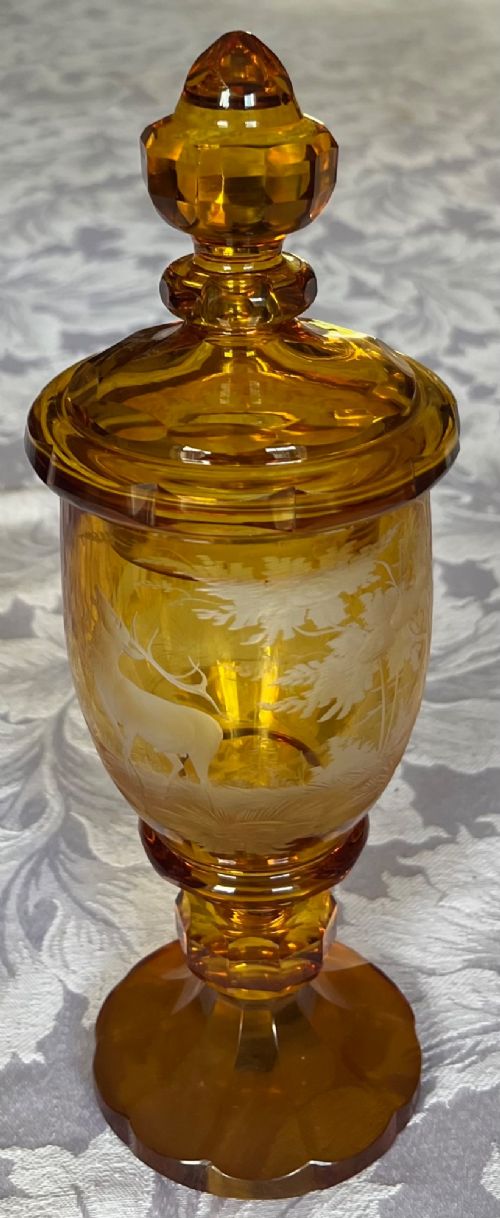
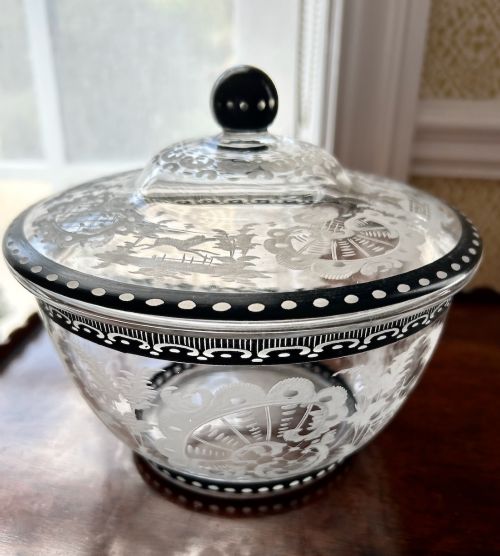
An antique glassware jar encompasses a diverse array of vessels, from practical apothecary bottles and chemist jars to decorative biscuit barrels and powder boxes. Buyers seeking this phrase encounter items spanning the Georgian, Victorian, and Edwardian eras, alongside early twentieth-century examples.
The utilitarian origins of these pieces are evident in chemist carboys, pickling jars, and tincture bottles designed for storage. Meanwhile, domestic forms such as lidded biscuit barrels and dressing table sets highlight the decorative ambitions of nineteenth and early twentieth-century glassmakers.
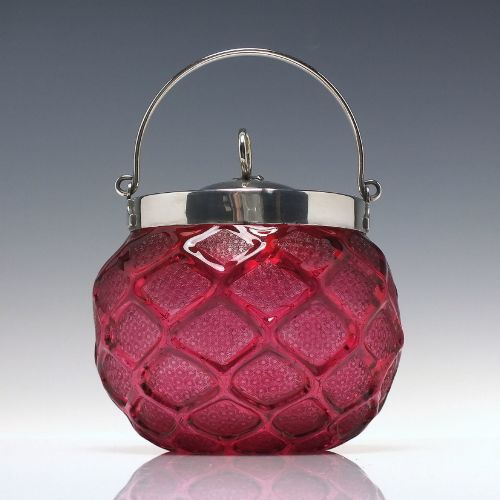
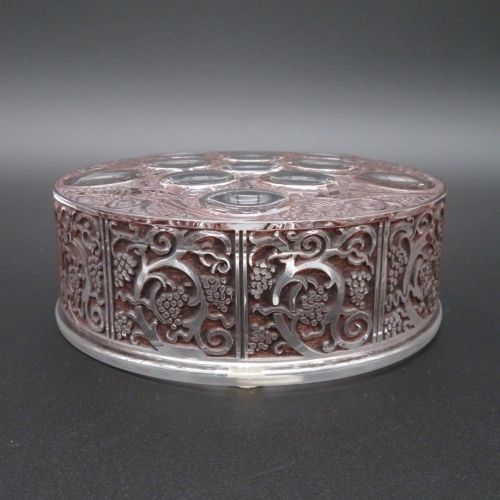
Victorian and Edwardian iterations dominate the selection, often presenting cut glass, enamel decoration, or characteristic cranberry glass. Alongside these, French green glass pickling jars and Art Deco powder boxes offer varied regional styles and functional capacities.
Materials and methods of production
Makers utilised clear glass, crystal, and coloured glass such as cranberry and opaline to shape these vessels. Techniques ranged from free-blowing and mould-blowing to elaborate wheel-cutting, engraving, and etching.
Surface ornamentation frequently involved enamel decoration, gold leaf, and cameo work, as seen on pieces associated with Gallé. Mounts in silver plate further supplemented the glass bodies of domestic biscuit barrels and jars.
Antique Glassware Jar Retail Price Guide 2026
Typical asking prices for glassware jar among the pieces listed under this phrase on Sellingantiques today, from the lower quarter to the upper quarter. They describe what is for sale here now, not the wider market.
Early twentieth-century pumpkin-shaped punch bowls offer a seasonal touch to historical glassware.
Assessing quality in historical glass
Quality in an antique glassware jar rests on the clarity of the material and the precision of the workmanship. Heavy cut glass and deep wheel engraving demonstrate a higher degree of artisan skill than simpler moulded counterparts.
The refinement of secondary elements, such as silver-plated mounts or delicate enamel and cameo detailing, elevates a piece. Maker attribution, particularly to known houses or artists like Lalique and Gallé, distinguishes exceptional items from standard domestic wares.
Lalique·Mary Gregory·Galle
The Antique Glassware Jar Glossary
- Apothecary jar
- A vessel originally used by chemists and pharmacists to store dry drugs, herbs, or preparations. These jars typically feature wide mouths and tight-fitting glass covers.
- Cranberry glass
- A rich red-pink transparent glass produced by adding gold chloride to the molten batch. It gained popularity during the Victorian era for tableware and decorative items.
- Cut glass
- Glassware ornamented by cutting facets or patterns into the surface using a rotating wheel. Deep geometric cuts are characteristic of quality nineteenth-century production.
- Biscuit barrel
- A covered ceramic or glass jar designed to hold biscuits on the dining table. They frequently incorporate metal mounts and lids.
- Carboy
- A large, rigid glass bottle used for holding liquids, often encased in a protective basket or standing independently as a decorative floor vessel.
Antique Glassware Jar: Frequently Asked Questions
What were apothecary jars used for?
Apothecary jars stored dry ingredients, chemicals, and medicinal herbs in pharmacies and dispensaries. Their tight-fitting lids kept contents dry and protected from contamination.
Over time, many of these utilitarian containers transitioned into domestic interiors as decorative display pieces or storage jars.
What is cranberry glass?
Cranberry glass is a transparent, pinkish-red glass created through the introduction of gold into the molten glass mixture. It became a staple of Victorian decorative arts, frequently paired with silver-plated mounts.
Items in this material range from small dressing table jars to lidded biscuit barrels.
How should I clean antique glass?
Antique glass requires gentle cleaning with warm water and mild soap to preserve its surface. Avoid harsh abrasives, especially on pieces featuring enamel decoration or gold leaf.
Submerging fragile items with metal mounts should be avoided to prevent corrosion of the hardware.