


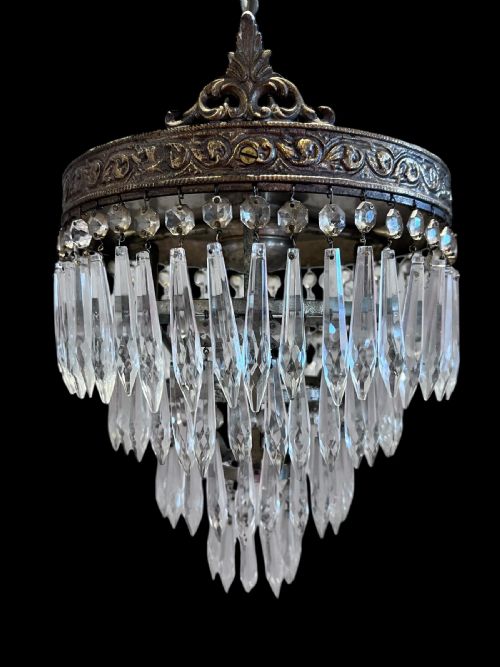


Antique Glass Flush Light
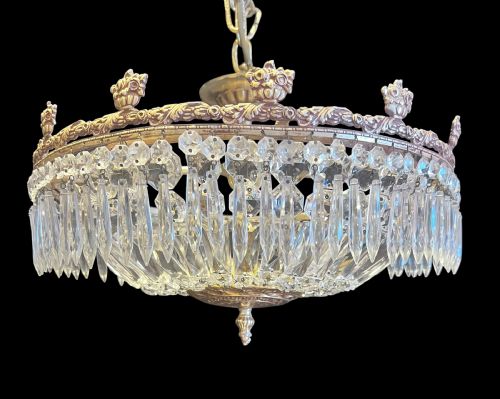
These antique glass flush light fixtures sit close to the ceiling, bringing pressed, frosted, and cut crystal into rooms with lower head height.
Antique Glass Flush Light
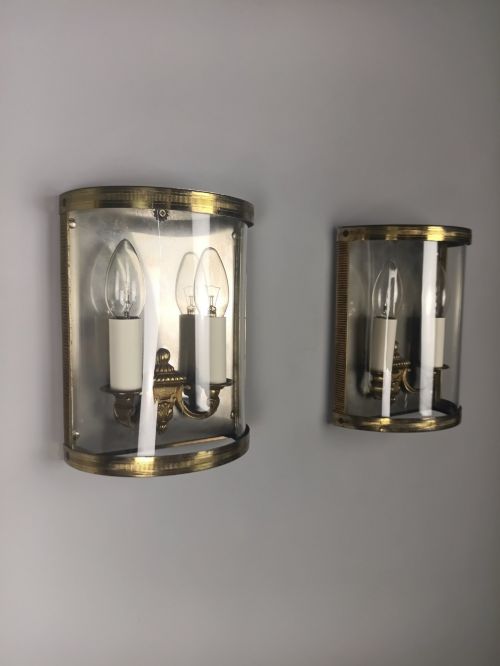
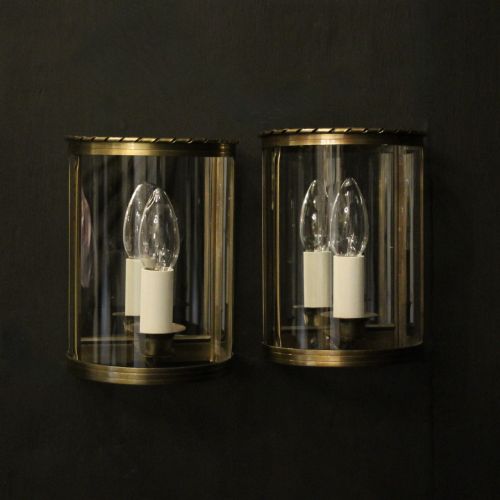
When searching for an antique glass flush light, you encounter ceiling fixtures and plafonniers that hug the ceiling rather than hanging on long drops. The selections range from early twentieth-century slip shade pieces to Edwardian glass shades and ornate French fixtures.
The dominant style on this page is the Art Deco flush light from the 1930s, often featuring pressed satin glass or geometric shades held by metal mounts. Alongside these sit Victorian and Edwardian cut glass fittings alongside French empire designs.
The forms span simple domed ceiling lights, opaline dish lights, and tiered crystal assemblies. Buyers select these pieces to combine period character with practical illumination in spaces where hanging drops prove too intrusive.
Materials and construction
The physical build relies on a combination of glass and metal framing, utilising brass, gilt brass, bronze, copper, or chrome mounts to secure the shades. Glass elements are formed through pressing, cutting, or moulding into specific profiles such as slip shades, beads, and domes.
Makers shaped the glass using techniques like acid etching for frosted surfaces or heavy pressing for Art Deco motifs like grape and drip decoration. Metal components are cast or spun to support the weight of the glass safely against the ceiling structure.
Listings feature brass, bronze, and copper paired with frosted, opaline, and cut crystal glass across Edwardian and Art Deco periods.
Quality variations
Quality rests in the weight and clarity of the glass, where heavy pressed satin or deeply cut crystal displays sharper details and superior light refraction than thinner pressed panes. The crispness of the moulding on items like slip shades or floral plafonniers marks the distinction between standard production and finer studio work.
Metalwork construction further separates the tiers, with solid cast bronze, ormolu, and heavy brass mounts offering greater durability and finish integrity than lighter stamped metal alternatives. Original matched sets and signed pieces also demonstrate higher craftsmanship through consistent patination and integrated structural design.
René Lalique·Jean Gauthier
The Antique Glass Flush Light Glossary
- Plafonnier
- A ceiling light fixture designed to fit flush or semi-flush against the ceiling surface. These often feature a large glass bowl or shade held by metal or brass mounts.
- Slip Shade
- A type of moulded glass shade used extensively in Art Deco lighting fixtures. Several individual glass panels slot into a metal frame to form a cohesive bowl or basket.
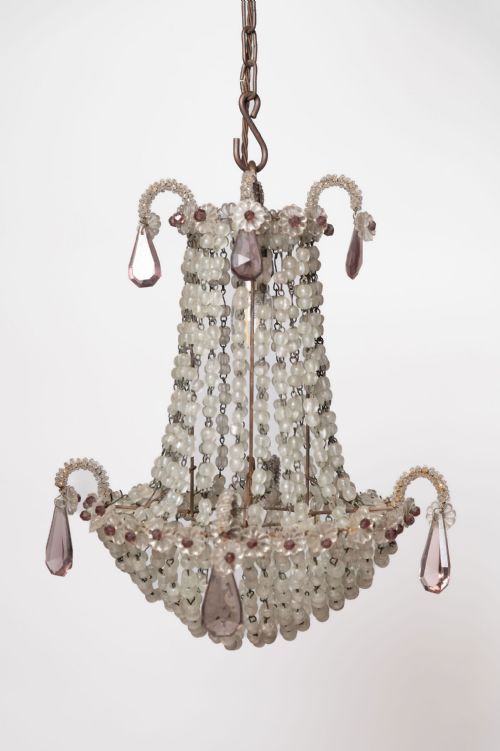
- Bag Chandelier
- A light fixture where numerous crystal beads or drops are strung into the shape of an inverted bag or cone over a concealed internal frame. This design concentrates sparkle close to the ceiling.
- Opaline Glass
- A translucent white or tinted glass developed during the nineteenth century. It diffuses light softly and evenly without harsh glares.
- Cut Glass
- Glass decorated by grinding facets or patterns into the surface using a rotating wheel. This technique creates sharp edges that catch and reflect room illumination.
Antique Glass Flush Light: Frequently Asked Questions
How do I install a heavy glass flush light?
These fixtures require secure fixing directly into ceiling joists or heavy-duty pattresses because the combined weight of thick glass and metal mounts demands robust support.
Electrical connections should be handled by a qualified professional to ensure the internal wiring safely accommodates modern bulb wattages without overheating the enclosed glass shades.
How do I clean antique glass shades?
Remove the glass elements from the metal frame whenever possible to wash them gently in lukewarm water using a mild, non-abrasive detergent. Avoid harsh scrubbing on frosted or acid-etched surfaces to preserve the original satin texture.
Dry each piece thoroughly with a soft lint-free cloth before reassembling to prevent water spots from forming on the interior surfaces.
Are these lights suitable for low ceilings?
Flush and semi-flush mounts are specifically designed for rooms with restricted head height where a traditional hanging chandelier would hang too low. They provide bright overhead illumination while keeping the vertical space clear.
Compact dome lights and shallow plafonniers work particularly well in hallways, bedrooms, and period properties with modest ceiling clearances.
How do I date an Art Deco glass light?
Examine the geometric styling, the use of pressed satin glass, and the presence of typical period motifs like stylized florals or stepped tiers. These design cues point towards production during the interwar decades.
The metal alloys used for the mounts, such as copper, chrome, or patinated bronze, also correspond to the manufacturing methods prevalent during that era.