




Antique Glass Drinkware Set
These antique glass drinkware sets bring period elegance to the table, spanning Georgian wine glasses to Art Deco cocktail suites.
Antique Glass Drinkware Set
An antique glass drinkware set encompasses matched groupings for serving alcohol and beverages, ranging from cordial and port glasses to large punch bowl suites and cocktail sets. When buyers search this phrase, they meet service groupings fashioned in diverse regional traditions across multiple decades.
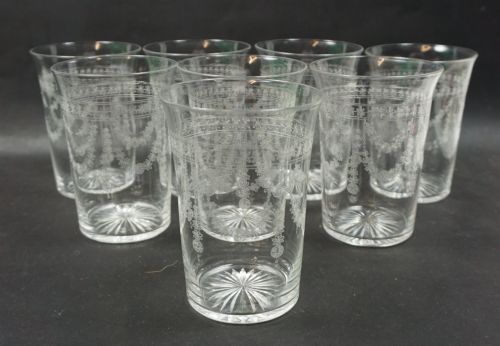
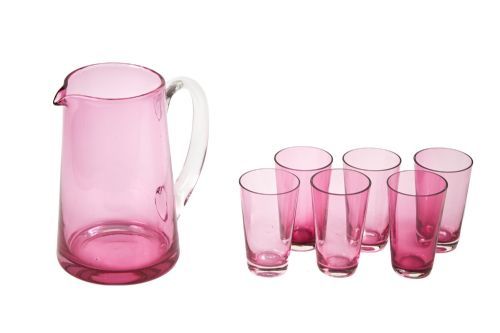
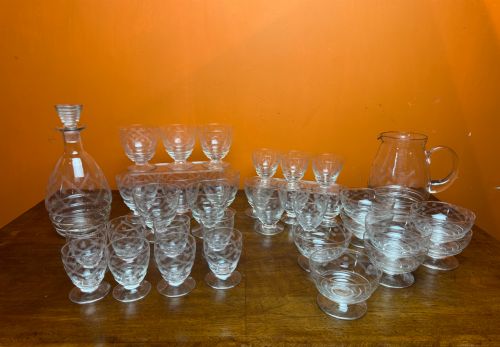
The selections on this page most frequently present Edwardian crystal tumblers, Victorian cranberry wine glasses, and Art Deco services from France and Czechoslovakia. Forms include decanter sets, punch sets, and specialised wine glasses that reflect the entertaining customs of their respective eras.
Materials and methods
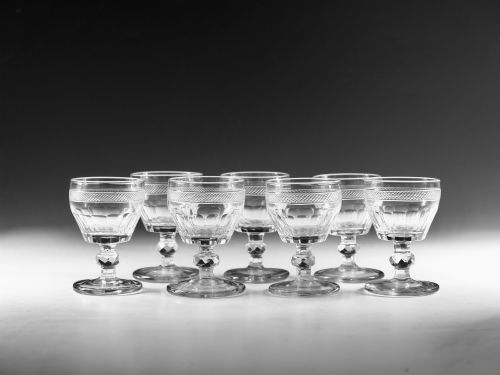
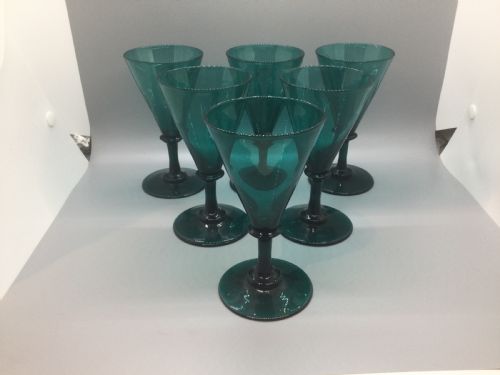
The pieces rely primarily on clear glass, lead crystal, and crystal glass, often enhanced by rich coloration such as cranberry and Bristol green. Artisans employed techniques including acid etching, deep cutting, and engraving to ornament the surfaces.
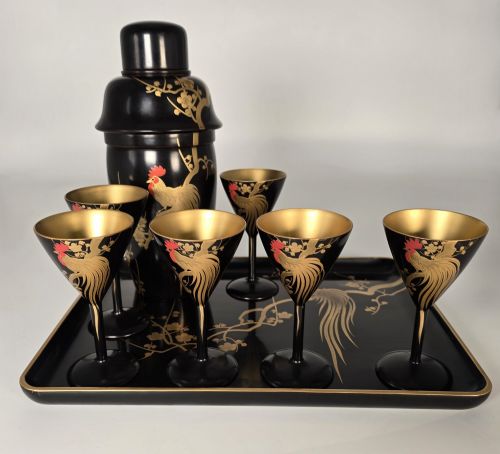
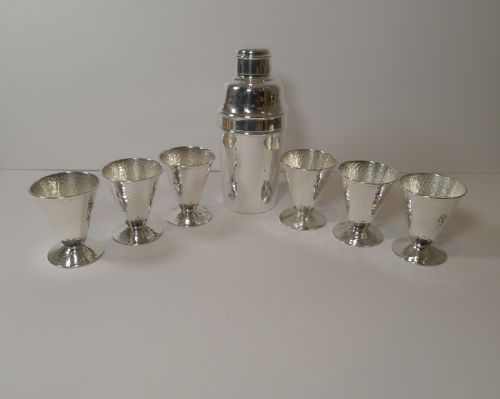
Some specialised services incorporate complementary elements of lacquer, wood, and gold leaf, or partner with silver and silver plate for shakers, cups, and mountings. Production spans traditional European glasshouses from England, France, Bohemia, Austria, and Russia.
Listings feature items from the Georgian period through the 1930s, utilising glass, crystal, lacquer, and silver plate.
Factors of quality
Quality rests upon the clarity and weight of the glass, alongside the precision and depth of any cut, engraved, or acid-etched decoration. Heavier lead crystal and crisply articulated wheel-cutting demonstrate superior craftsmanship compared to simpler moulded alternatives.
Completeness dictates the distinction of a service, as surviving multi-piece suites with matching components command greater interest. The fineness of hand-painted details or specialised applied elements further elevates individual pieces within a grouping.
The Antique Glass Drinkware Set Glossary
- Acid etching
- A decoration technique where a pattern is applied using acid to bite into the glass surface. This method creates fine, frosted designs.
- Cranberry glass
- A transparent pink-red glass produced by adding gold chloride to the molten batch. It is frequently seen in Victorian tableware.
- Lead crystal
- Glass containing metal oxide that increases weight, brilliance, and workability for deep cutting. It rings when struck gently.
- Punch set
- A matching vessel and cup grouping intended for communal beverage service. These often feature large bowls with accompanying smaller glassware.
- Tumbler
- A flat-bottomed drinking glass without a stem or handle. Examples range from heavy cut crystal to cocktail versions.
Antique Glass Drinkware Set: Frequently Asked Questions
How do I care for antique glass drinkware?
Wash pieces by hand in warm water using mild soap, avoiding harsh detergents or sudden temperature changes. Dry them immediately with a soft lint-free cloth to preserve the surface finish.
Store the items securely on stable shelving where the rims do not touch. Avoid stacking delicate wine glasses or tumblers without proper padding between them.
Can I use these glasses for daily dining?
Many sturdy crystal and glass sets remain entirely functional for regular use during meals or gatherings. Hand-washing is mandatory to protect historic materials from modern dishwashers.
Consider the delicacy of the specific form before serving, as thin Edwardian cordials require more care than heavy whiskey tumblers. Treat each piece with respect for its age.
What defines an Art Deco drinkware set?
Art Deco sets from the nineteen-thirties showcase geometric patterns, streamlined silhouettes, and often bold coloration or metallic contrasts. French and Czech makers produced distinctive decanters and matching glasses during this period.
These pieces reflect modern design movements away from Victorian ornamentation. They frequently pair with silver plate or hammered metal components.
How are Georgian glasses different from Victorian ones?
Georgian wine and port glasses often display characteristic pontil marks on the base and simpler, heavier hand-formed proportions. They originate from the late eighteenth and early nineteenth centuries.
Victorian pieces introduce vibrant colours like cranberry and more widespread mechanical cutting techniques. The forms align with changing social rituals and expanding industrial manufacturing methods.