


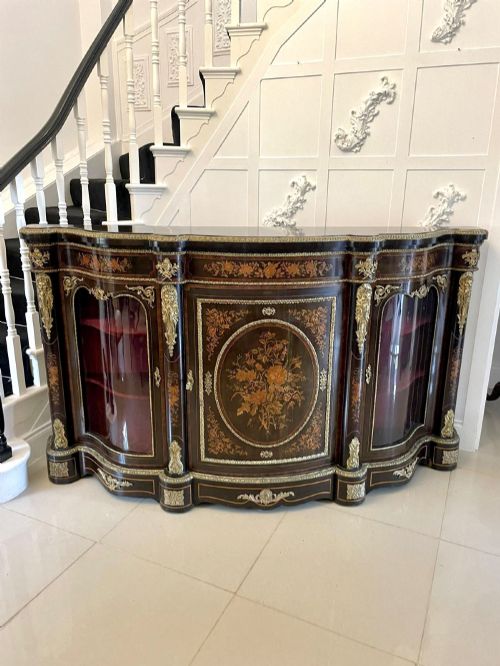
Antique Glass Display Credenza
An antique glass display credenza brings architectural presence and visible storage into a room, joining timber, glass and metal with nineteenth-century confidence.
Antique Glass Display Credenza
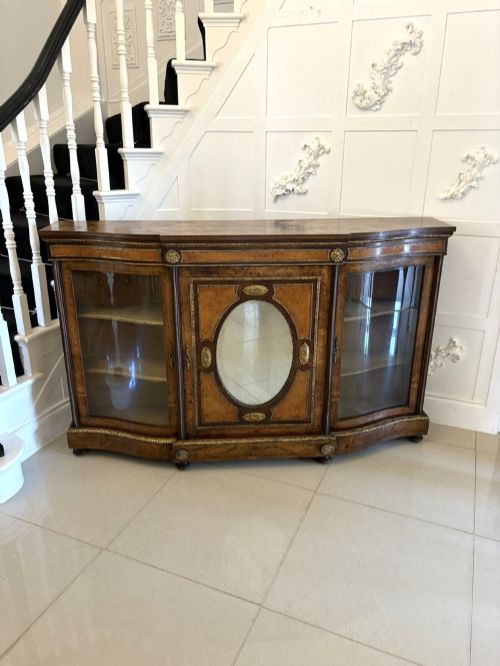
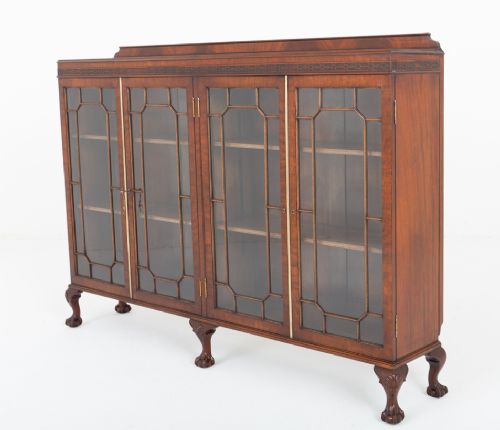
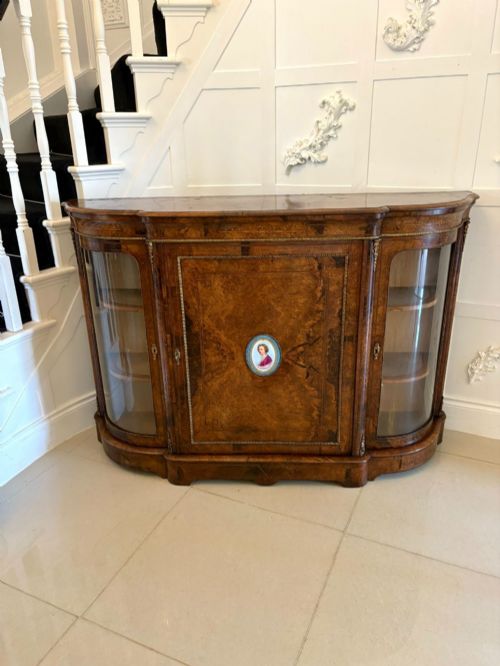
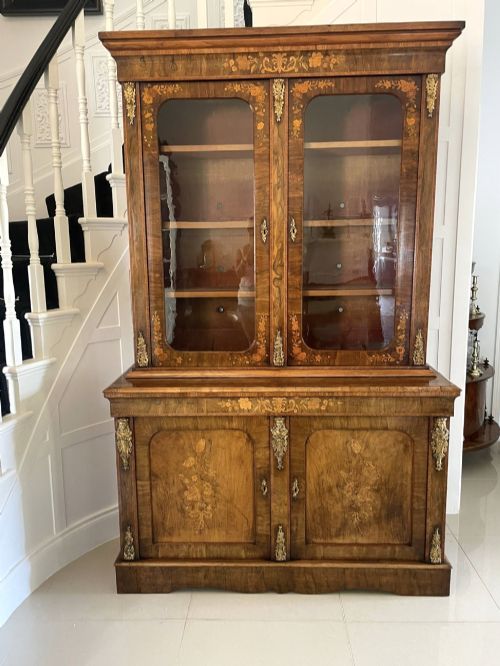
An antique glass display credenza combines enclosed lower cabinetry with glazed central or side compartments designed to show off porcelain and decorative objects. These low-profile storage pieces emerge most frequently from the Victorian period, alongside Edwardian examples and nineteenth-century revivals.
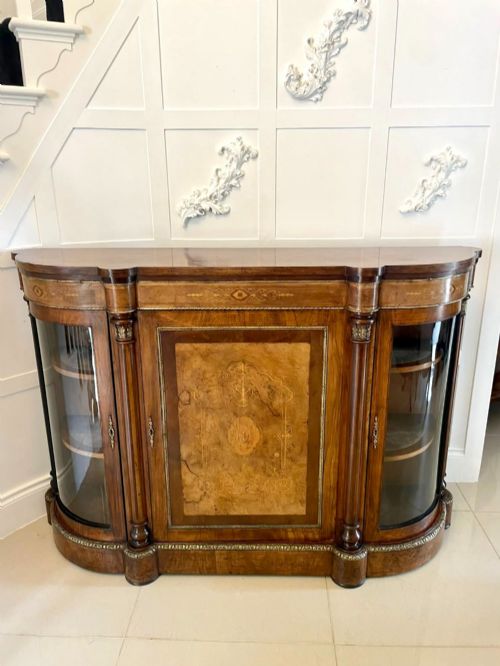
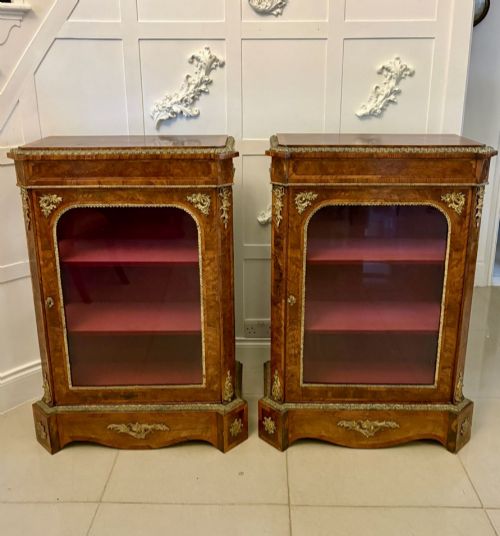
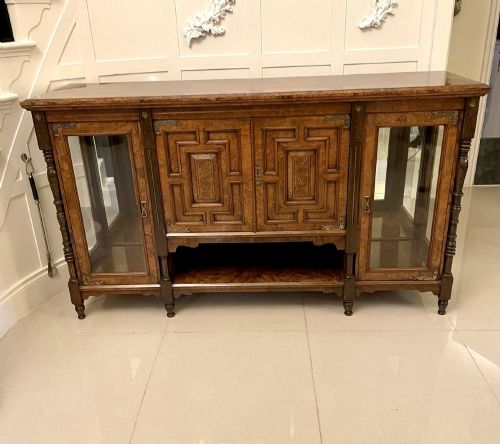
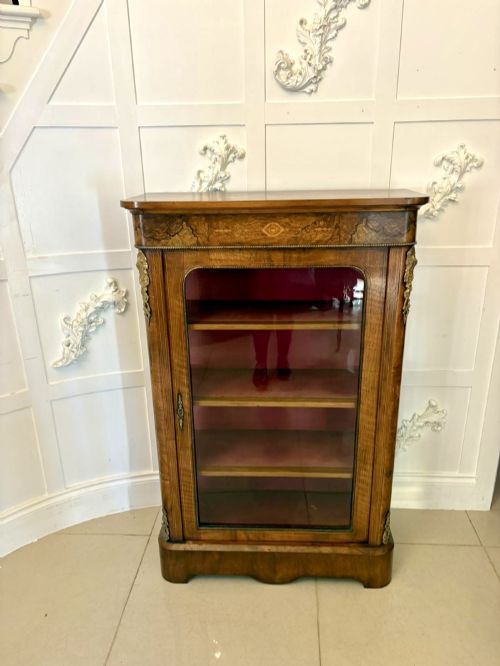
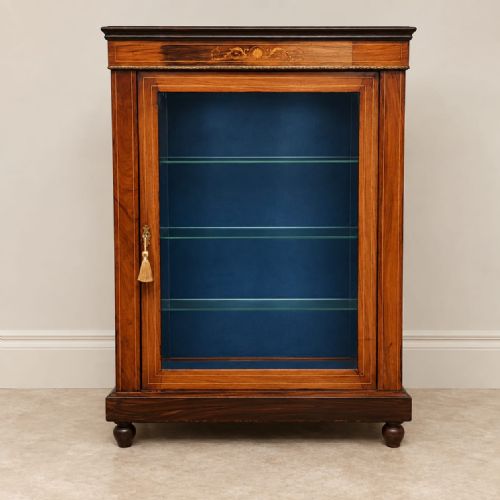
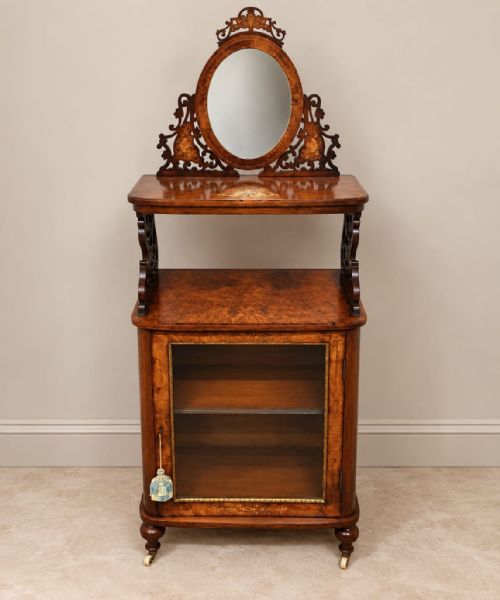
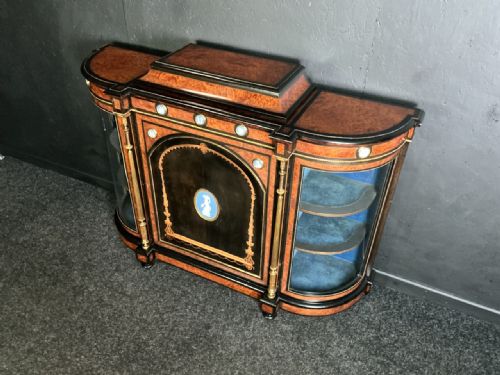
Makers fashioned these cabinets as credenzas, sideboards, pier cabinets and glazed bookcases, utilising serpentine or straight timber carcasses. The form sits low to the floor, often incorporating curved glass doors and velvet-lined interiors intended for drawing rooms and formal reception spaces.
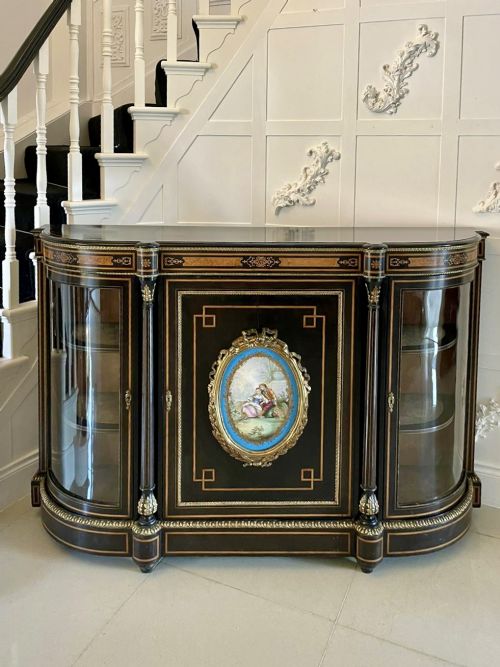
Victorian burr walnut dominates the selection, frequently paired with mahogany, ebonised wood, rosewood and amboyna. Buyers encounter pieces spanning the mid-nineteenth century through to the early twentieth century, reflecting French Revival, Aesthetic Movement and classical revival tastes.
How they were made
Cabinet makers built these pieces using solid timber carcasses veneered with burr walnut, mahogany, satinwood or kingwood to create rich grain patterns across wide surfaces. Marquetry inlay in lighter woods and floral motifs enriched the primary facades, while ebonised elements provided sharp linear contrast.
Gilded bronze and ormolu mounts punctuated the corners, friezes and door borders, secured with brass fixings. Glass panels were hand-set into wooden or metal frames, often curving at the flanks of serpentine credenzas and pier cabinets.
Nineteenth-century velvet linings inside these glass cabinets were chosen specifically to make white porcelain tea sets look more dramatic.
What varies in quality
Quality rests in the selection of wood veneers and the precision of the marquetry inlay, where finer examples display intricate, crisp floral and geometric patterns without lifting or shrinkage. The weight and chasing of the ormolu mounts also separate standard workshop output from exhibition pieces, with better hardware showing distinct hand-finished detail rather than flat casting.
Structural integrity reveals itself in the alignment of the curved glass doors and the smoothness of the locking mechanisms. Superior cabinets maintain tight joints in their serpentine shapes and utilise dense, well-figured burr walnut across the entire carcase rather than just the primary doors.
Maison Gagneau·James Hicks
The Antique Glass Display Credenza Glossary
- Credenza
- A low cabinet for domestic storage and display, originating in Italy and adapted by nineteenth-century British cabinet makers for formal reception rooms. These pieces typically feature glazed central doors flanked by curved side cabinets.
- Ormolu
- Gilded bronze mounts applied to furniture edges and mounts to add decorative contrast. The technique involves applying a mercury and gold amalgam to bronze before firing.
- Marquetry
- Inlaid patterns of wood veneer assembled on a paper backing before being glued to the cabinet carcase. Craftsmen used various tinted and natural timbers to create floral and geometric pictures.
- Pier Cabinet
- A narrow upright display cabinet designed to fit against the wall space between windows. These tall, single-door glazed units often feature extensive inlay and ormolu mounts.
Antique Glass Display Credenza: Frequently Asked Questions
Where did people place these credenzas?
Owners positioned these low cabinets against drawing room walls or beneath large mirrors where natural light could strike the glazed doors and mounted metalwork. Their low profile allowed rooms to retain an open feel while offering substantial surface and interior display space.
In larger Victorian homes, matching pier cabinets flanked the fireplace or filled narrow wall piers between floor-to-ceiling windows, creating a balanced decorative scheme across the reception rooms.
How do I clean the velvet interiors?
Interior linings require gentle maintenance using a soft-bristled brush or a low-suction vacuum attachment to remove dust without disturbing the aged fabric fibres. Avoid liquid cleaners or chemical sprays, which can stain fragile nineteenth-century textiles and damage the underlying wooden backing boards.
If the fabric shows severe wear, specialist textile conservators can replace the lining with period-appropriate silk velvet matching the original specifications of the cabinet.
How do I date a burr walnut credenza?
Dating relies on examining the carcass construction, timber choice and decorative motifs, with mid-nineteenth-century examples favouring heavy ormolu mounts and rich burr walnut veneers. The transition from strict Victorian revival styles to lighter Edwardian or Arts and Crafts influences helps narrow down the decade of manufacture.
Secondary woods used inside drawers and back panels, such as pine or mahogany, provide further clues alongside any surviving maker stamps or registration marks.
Can these cabinets hold heavy books?
Glazed display credenzas and pier cabinets were engineered primarily for displaying porcelain, glassware and decorative ornaments rather than housing heavy libraries. The internal wooden shelves are relatively thin and supported by fixed or adjustable wooden brackets suited to lighter display items.
Storing dense rows of books risks bowing the shelves and placing undue stress on the veneered internal uprights and glass doors.