


Antique Glass Corner Case
These antique glass corner case pieces make clever use of awkward angles, turning empty room junctions into refined displays.
Antique Glass Corner Case
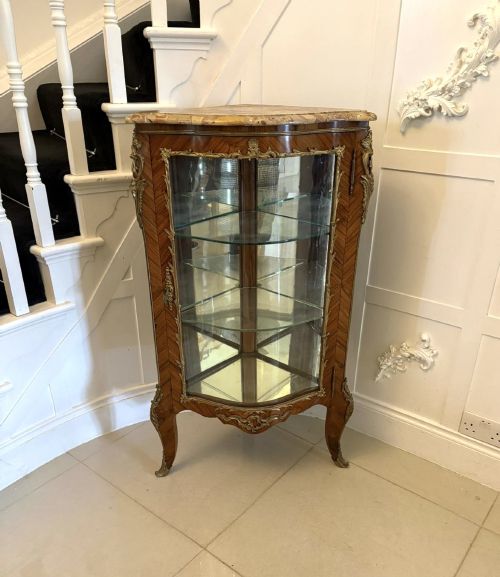
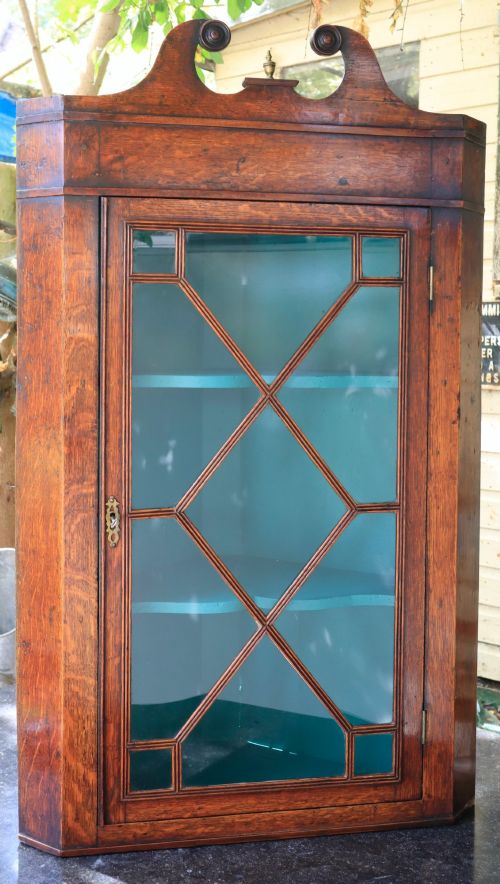
When you search for an antique glass corner case, you are looking at fitted and freestanding furniture designed to occupy room intersections while displaying objects behind glass panels. These range from wall hanging iterations to double height standing cupboards spanning several historical periods.
The pieces you will most frequently encounter on this page date from the Georgian era through to the Edwardian period, often constructed in mahogany, oak, or kingwood. Forms vary between bow fronted silhouettes, serpentine shapes, and simple triangular wall units.
Many examples incorporate glazed doors to protect contents, while others include lower wooden cupboards or drawers beneath the display section. Some items reflect specific movements such as Arts and Crafts, Louis XV Revival, and Art Deco.
Materials and construction
Makers utilised solid timbers like oak and mahogany for structural integrity, often applying veneers of satinwood or kingwood alongside marquetry inlay for decorative surface effect. Brass hardware, including hinges, locks, and keys, provides functional contrast to the dark wood grains.
Glazing relies on timber framing to hold single or multiple panes of glass, forming curved bow fronts or flat panels. Ormolu mounts and marble tops appear on select French revival pieces, adding weight and decorative detail to the carcass.
Some retail shop counters repurposed themselves into domestic display cases, allowing shopkeepers to admire haberdashery from the comfort of the parlour.
What distinguishes finer examples
Quality in an antique glass corner case lies in the ambition of its form and the precision of its timber work, such as serpentine or bombe shaping rather than plain flat sides. Elaborate marquetry inlay, gilt or ormolu mounts, and fine glazing bar arrangements separate standard utility cupboards from exceptional reception room furniture.
Edwards And Roberts·John Stow Ltd·Sage And Co
The Antique Glass Corner Case Glossary
- Bow front
- A convex curved cabinet front that swells outwards. This shape softens room angles and provides panoramic viewing for displayed items.
- Serpentine
- A shaped furniture front featuring a concave centre flanked by convex curves. It requires advanced woodworking skill to execute correctly.
- Ormolu
- Gilt bronze mounted ornamentation applied to furniture. It is characteristic of French revival pieces and adds metallic contrast.
- Marquetry
- Decorative veneer work forming pictures or patterns using various coloured woods. It decorates the flat surfaces of finer cabinets.
- Vitrine
- A glass fronted display cabinet designed for porcelain and curiosities. The term originates from the French word for glass.
- Bombe
- An outward bulging swollen furniture profile. This curved shape appears on elaborate Victorian display pieces.
Antique Glass Corner Case: Frequently Asked Questions
How do I hang a wall cabinet?
Wall hanging models require secure fixings into wall studs or masonry to support the combined weight of the timber and glass. Professional installation ensures the cabinet remains level and stable.
Because these units concentrate weight at the corners, proper load bearing brackets prevent the piece from pulling away from the wall over time.
Are these cabinets secure?
Many period examples feature functional locks with original keys to secure valuable contents behind the glazed doors. Drawers beneath the main display section also offer enclosed storage.
While period locks provide basic security, collectors should verify the mechanism operates smoothly with the supplied key before storing items.
How do I date a corner cabinet?
Dating relies on timber choice, construction methods, and prevailing stylistic influences such as Georgian proportions or Edwardian inlay. Secondary woods at the back and interior surfaces often reveal the manufacturing era.
Cabinet hardware like brass hinges and escutcheons also offer clues to the period of origin when compared against known manufacturing standards.
Can these fit in modern rooms?
Corner cases make efficient use of unutilised wall intersections, making them suitable for smaller modern spaces without consuming floor area. Their vertical proportions draw the eye upward.
They function effectively in dining rooms or living spaces for displaying glassware, books, or collections while preserving open floor circulation.