




Antique Glass Corner Cabinet
An antique glass corner cabinet turns an awkward room junction into a display space for china or glassware.
Antique Glass Corner Cabinet
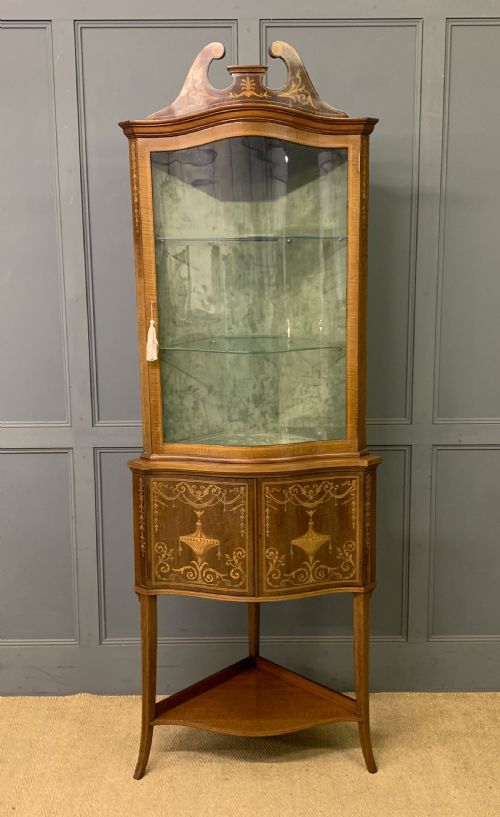
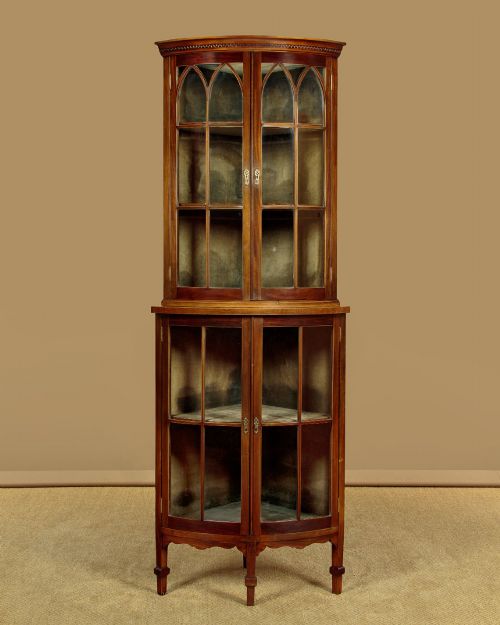
When you search for an antique glass corner cabinet, you encounter forms designed to fit domestic angles, spanning wall-hanging units, standing two-part cupboards, and taller display structures.
The pieces on this page draw from periods ranging through the Georgian era, the Victorian decades, and the Edwardian years up to the nineteen-thirties.
Makers utilised woods such as mahogany, oak, walnut, and satinwood, frequently enclosing the interior shelves behind glazed doors.
Materials and construction methods
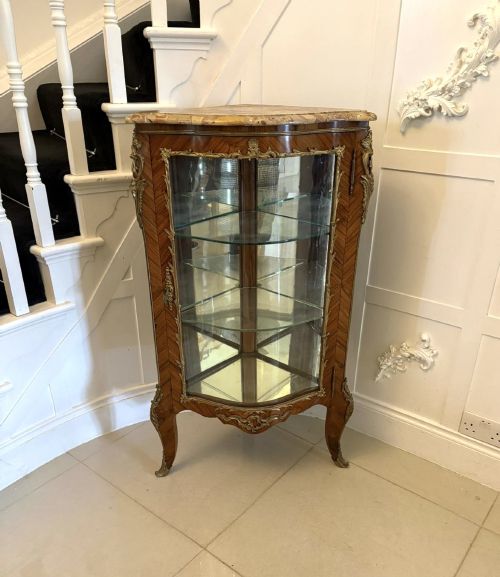
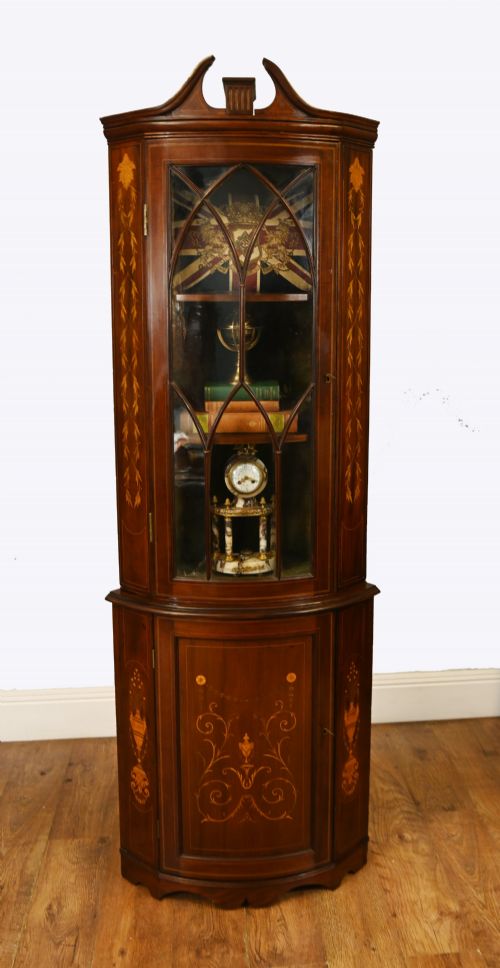
Cabinetmakers constructed the carcase of an antique glass corner cabinet using timbers like mahogany, oak, and walnut, sometimes applying satinwood inlay, marquetry, or brass mounts for decoration.
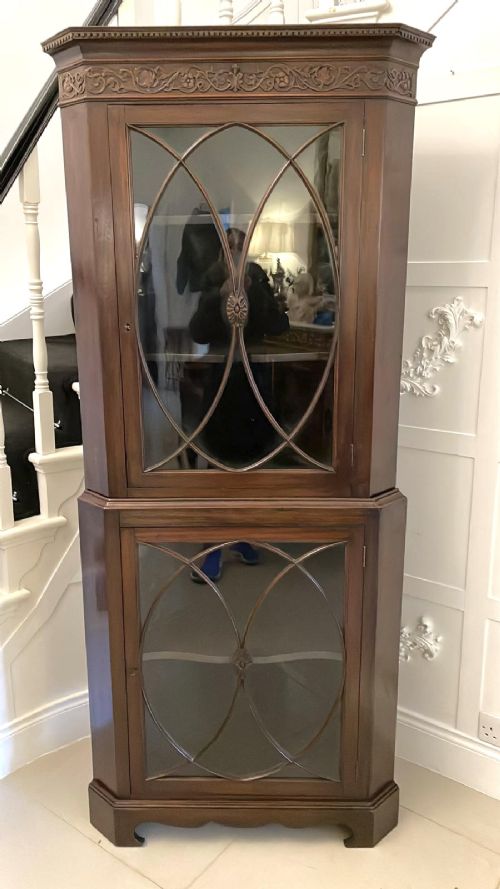
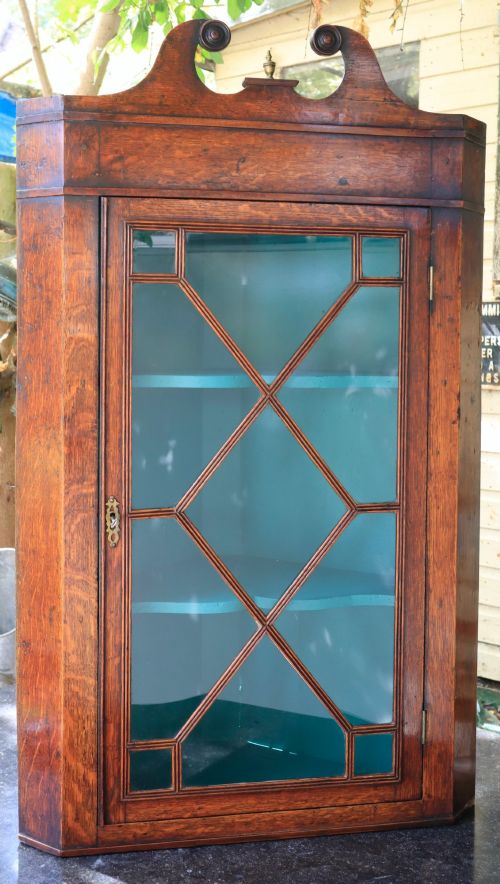
Glazing takes the form of astragal bars dividing glass panes or curved bow-front glass doors that require specialised glass-bending techniques.
Units are built as single hanging cupboards or tall standing double-height pieces, frequently incorporating locking doors, keys, and internal drawers.
Some corner cabinets include locking mechanisms with original keys, keeping your vintage spirits safe from inquisitive house guests.
What separates the finest examples
Quality in an antique glass corner cabinet rests upon the selection of timber veneers, the precision of inlaid details, and the finesse of the carved mouldings.
Finer workshops employed sophisticated glazing bars, substantial brass hardware, and intricate marquetry work that elevate standard storage into decorative furniture.
Maurice Adams·John Stow Ltd of Bradford·Edwards And Roberts·Sage And Co
The Antique Glass Corner Cabinet Glossary
- Astragal glazed
- A method of framing glass windows with wooden bars that divide the pane into smaller geometric sections. This technique creates a traditional grid pattern across the cabinet door.
- Bow front
- A convex curved cabinet front that projects outward in a smooth arc. This shape requires specialised glass and bentwood joinery.
- Marquetry
- Decorative veneer patterns formed by fitting together small pieces of different coloured woods. Craftsmen use this technique to create floral or geometric designs on cabinet doors.
- Serpentine
- A curved front edge featuring a convex centre flanked by concave sides. This flowing line appears on finer standing display cabinets.
Antique Glass Corner Cabinet: Frequently Asked Questions
How do I install a wall hanging corner cabinet?
Wall hanging versions require secure fixing into solid masonry or direct attachment to wall studs using appropriate brackets.
Because these units hold heavy glass and china, checking the structural support before mounting is essential.
Were these cabinets made for dining rooms?
These units provided convenient storage for porcelain, glassware, and bottled beverages in domestic interiors.
Their triangular footprint allowed them to utilise dead space in corners without obstructing room traffic.
How do I date an antique corner cabinet?
Dating relies on examining the timber species, construction joints, glass characteristics, and decorative styles such as Georgian astragal bars or Edwardian inlay.
Cabinet hardware like locks and hinges also offer clues to the period of manufacture.
What is the difference between standing and hanging models?
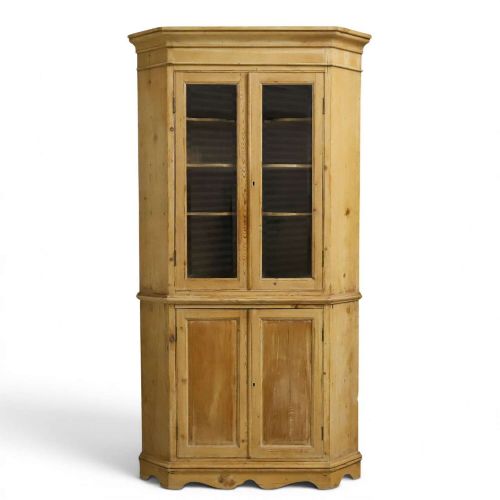
Standing models rest directly on the floor and often feature double-height storage with lower cupboards beneath the glazed display section.
Hanging models fix directly to the wall at eye level and generally offer a single glazed door.