




Antique Girandole Wall Lights
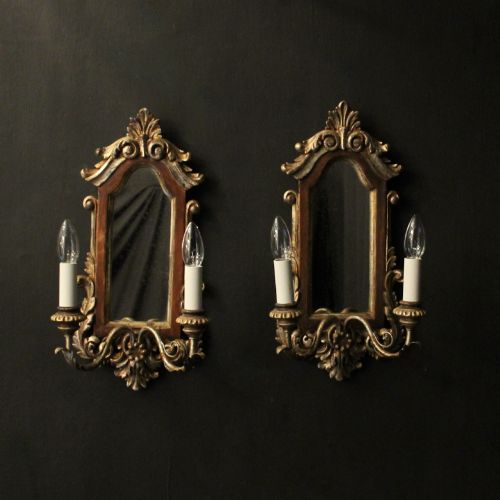
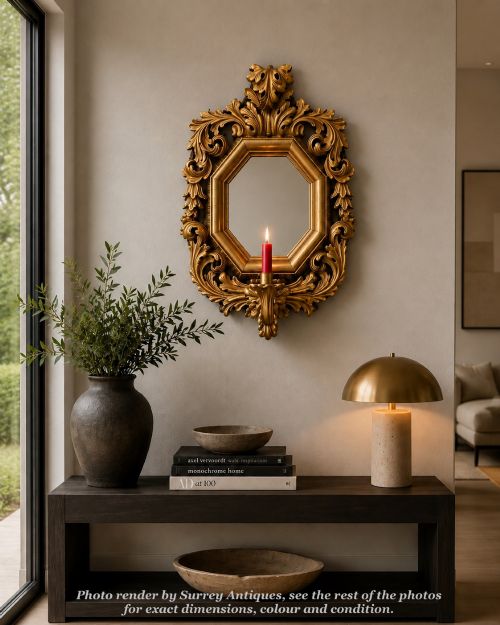
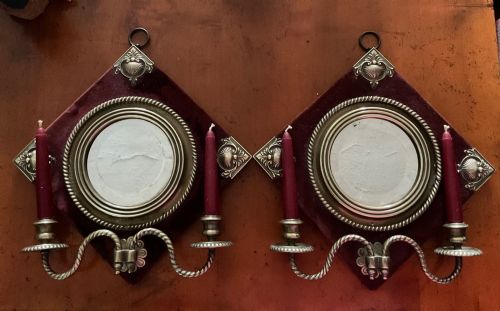
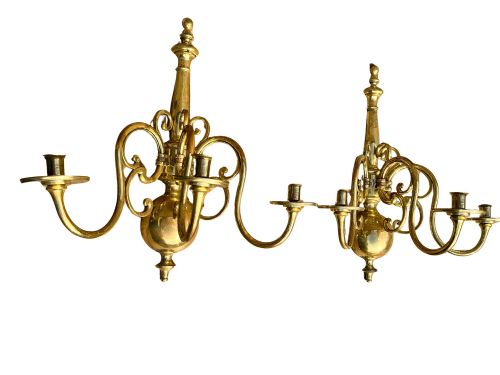
These antique girandole wall lights combine reflecting mirror glass with branching candle arms to cast layered light across a room.
Antique Girandole Wall Lights
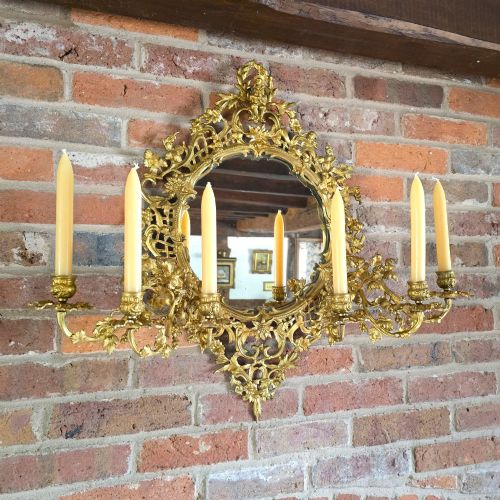
When searching for antique girandole wall lights, collectors encounter wall-mounted lighting fixtures that integrate a looking glass with one or more candle branches. The reflective surface multiplies the flicker of the candles, a design principle originating in earlier centuries to maximise illumination before electric lighting.
The selections available here span the nineteenth and early twentieth centuries, featuring Victorian, Edwardian, and various revival aesthetics. Pairs predominate, alongside occasional single sconces and larger mirrored brackets designed to serve as focal points in reception rooms.
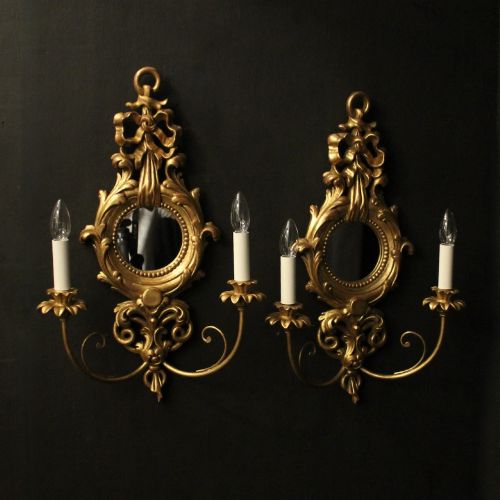
Geographic origins cluster around France and Italy, with numerous examples displaying Rococo Revival curves or Florentine carving. Workshops in Paris and Florence produced many of these pieces, adapting historical vocabulary for period drawing rooms and boudoirs.
How They Were Made
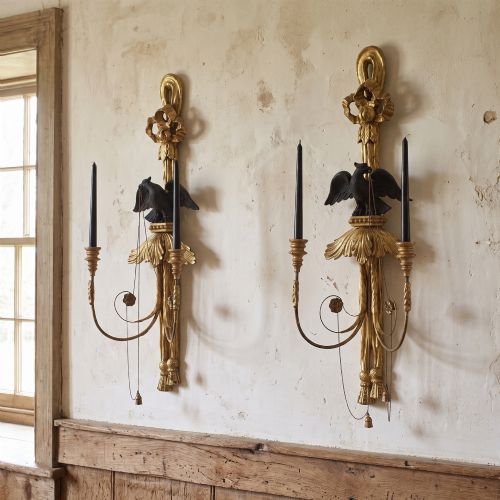
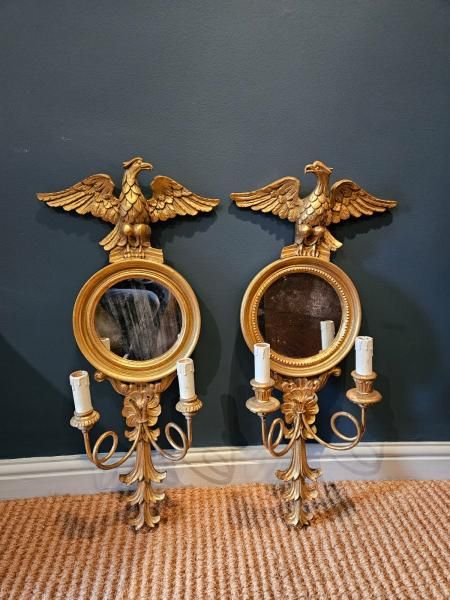
Carpenters and carvers shaped frames from timber such as giltwood, applying gesso layers before burnishing gold leaf onto the surfaces. Metal components relied on cast brass, ormolu, and bronze, often chased by hand to define scrollwork and foliage around the candle nozzles.
Mirror plates were silvered by hand, resulting in subtle imperfections and oxidation that distinguish older glass from modern replacements. Candelabra arms were pinned or screwed securely into the wooden or metal backplates to support the weight of multiple branches.
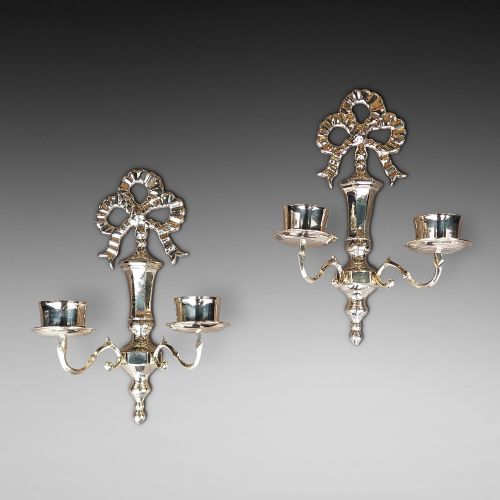
Detailed mermaid candle holders appear among the Edwardian brass selections, offering a mythical touch to wall illumination.
What Varies in Quality
The depth and crispness of the carving or casting set individual pieces apart, separating mass-produced items from superior workshop output. Hand-chased bronze mounts and deeply undercut giltwood foliage exhibit a sharpness of detail that flat, machine-stamped alternatives lack.
The retention of original mercury or early silvered mirror glass contributes to desirability, as does the completeness of matching arms, drip pans, and crystal drops. Pieces retaining their original gilding without heavy modern overpainting command greater interest among purists.
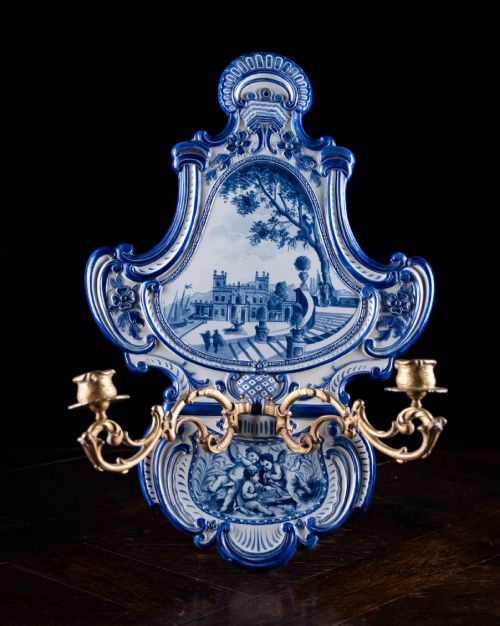
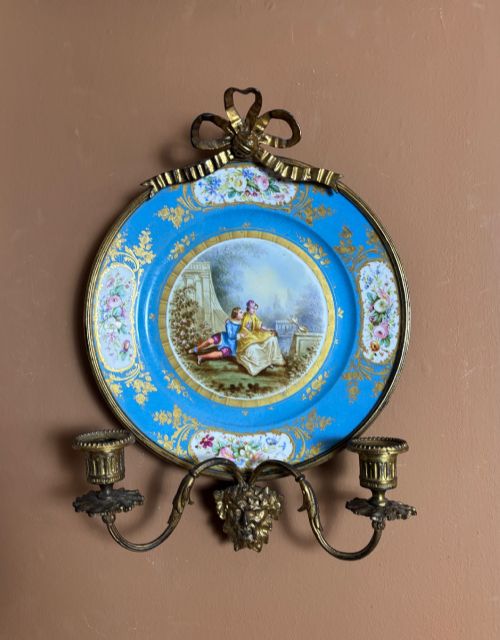
Villeroy and Boch·E.G Paris
The Antique Girandole Wall Lights Glossary
- Girandole
- A branched wall light or candelabra, frequently incorporating a mirror to reflect the flame. These fixtures hang in pairs or single arrangements.
- Ormolu
- Gilded bronze, where finely ground gold is applied to a base metal using a mercury amalgamation technique or electroplating. This finish resists tarnish and yields a warm golden glow.
- Gesso
- A plaster-like mixture applied to wood frames as a smooth base for gilding. Carvers cut intricate patterns directly into this hardened surface.
- Sconce
- A wall-mounted bracket holding one or more candles or lamps. They direct illumination outward into the surrounding space.
- Chasing
- The art of refining metal castings by hand using small hammers and punches. This tool work sharpens surface details on brass and bronze.
Antique Girandole Wall Lights: Frequently Asked Questions
How do I hang heavy antique girandole wall lights securely?
These fixtures require direct attachment to wall studs or the use of heavy-duty wall anchors suitable for plaster and masonry. The weight of cast bronze or carved wood frames demands robust fixings.
Position them at eye level or slightly above to ensure proper light distribution from the candles while keeping the mirrored surfaces at an optimal viewing angle.
Can antique girandole wall lights be wired for electricity?
Many examples are converted to electricity by running discreet internal wiring through the backplate and up into the candle tubes. Professional electricians perform this modification without altering the visible exterior structure.
Retaining the original candle sockets or adding dummy wax sleeves preserves the visual character of the piece while accommodating modern bulbs.
How do I clean antique giltwood and bronze frames?
Dusting requires a soft, dry brush to remove particles from delicate carved crevices and gilt surfaces. Liquid cleaners damage fragile gold leaf and historical finishes.
Bronze and brass components respond to gentle wiping with a lint-free cloth, avoiding harsh metal polishes that strip away patination accumulated over decades.
How do I distinguish a Victorian revival piece from an 18th-century original?
Examination of the construction materials, backboards, and screw types reveals the true manufacturing period. Machine-cut screws and modern backing indicate nineteenth-century revival work rather than earlier production.
Revival pieces often display heavier casting and brighter gilding compared to the softer patination and hand-wrought ironwork found on older examples.