

Antique Gilt Pendulum Clock
An antique gilt pendulum clock brings 19th-century French metalwork and precision timekeeping into a room with bright metallic lustre.
Antique Gilt Pendulum Clock
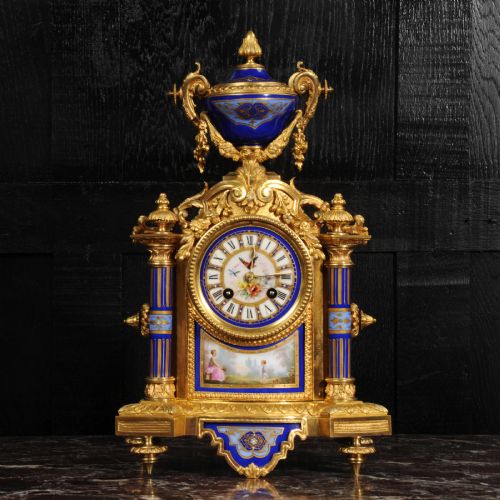
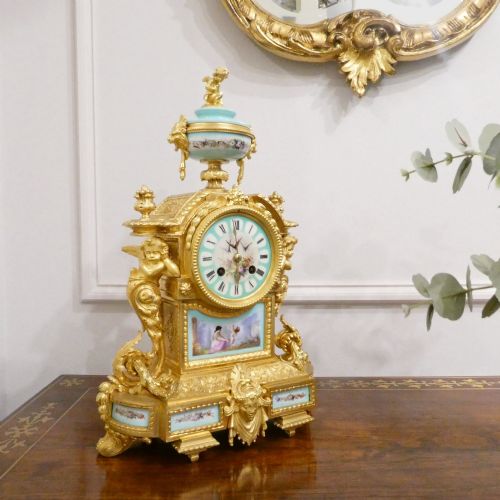
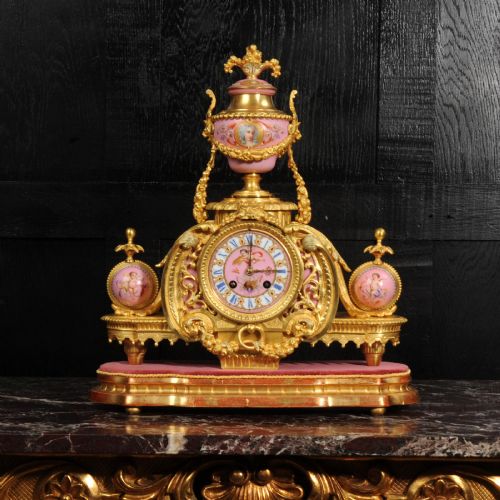
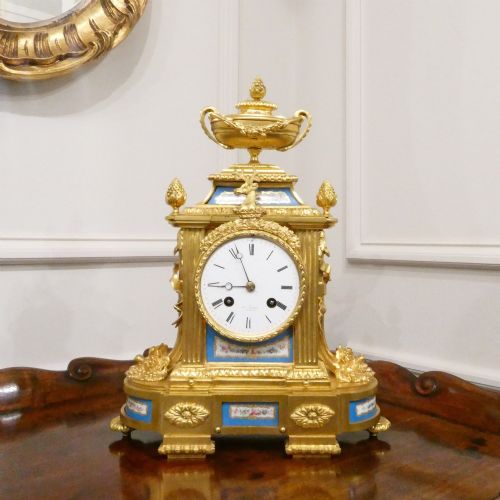
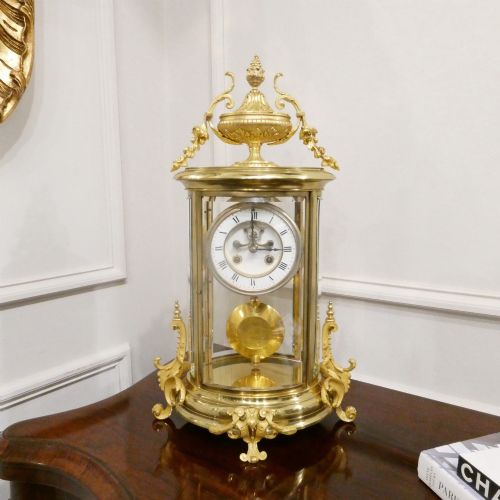
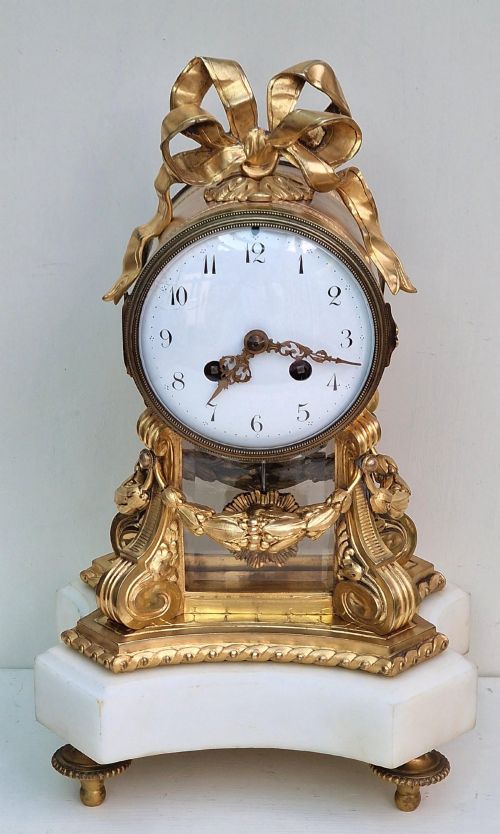
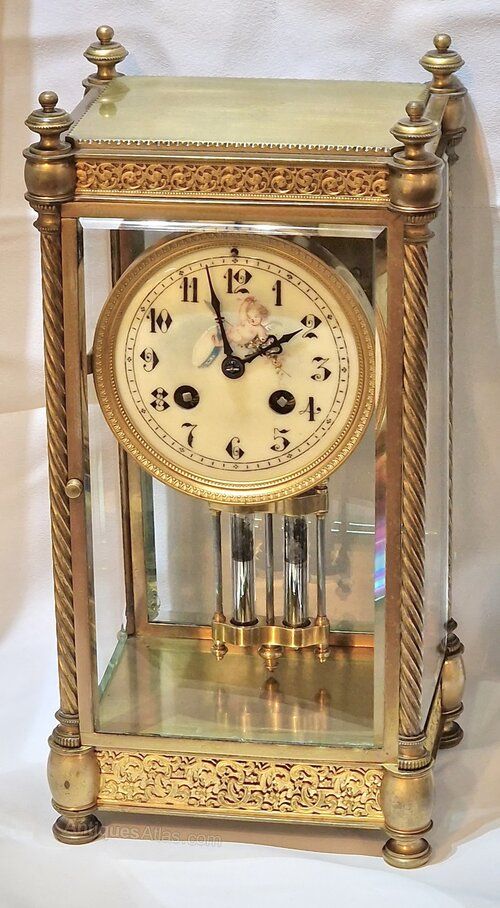
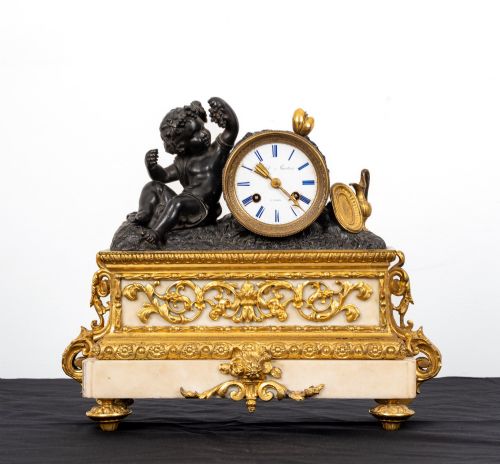
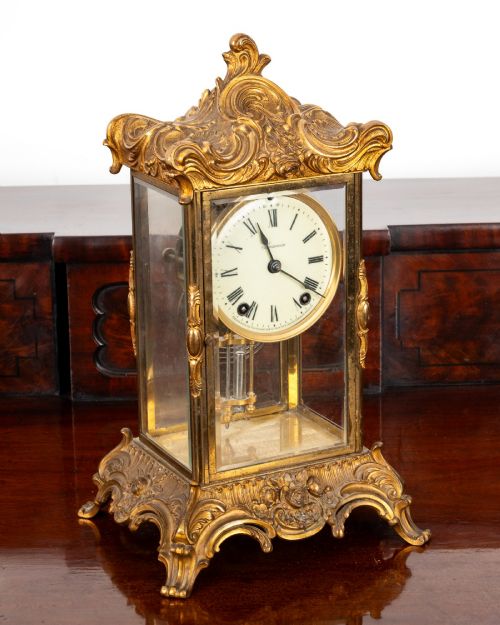
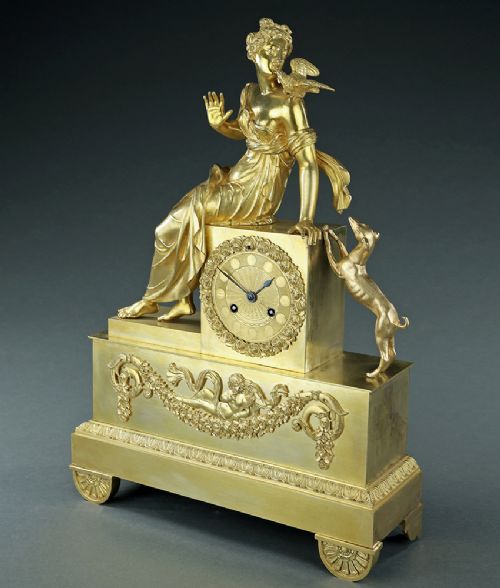
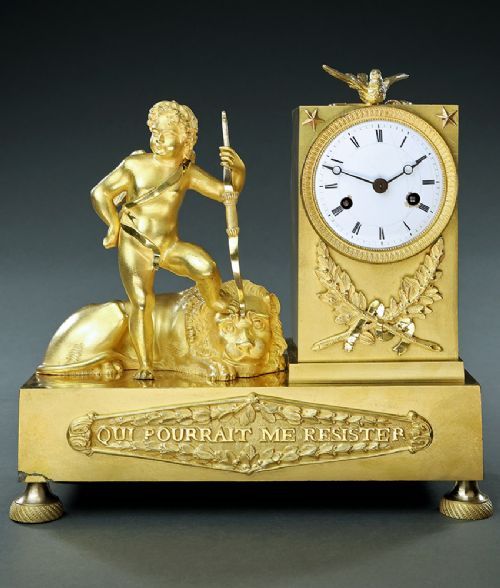
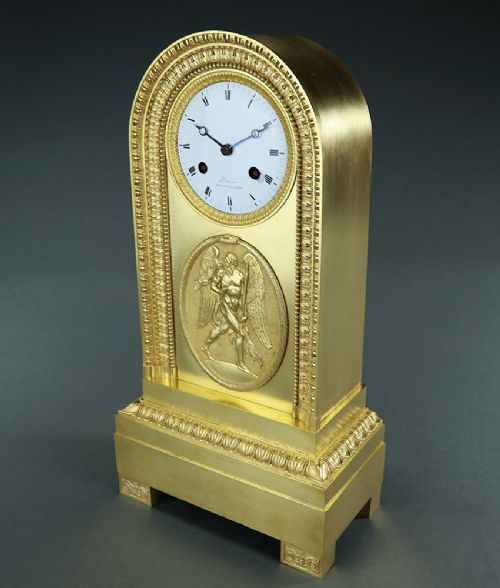
An antique gilt pendulum clock takes the form of mantel clocks, portico clocks, and four-glass pieces originating primarily from nineteenth-century France during the Victorian era and periods such as the Second Empire, Charles X, and Louis XVI revivals.
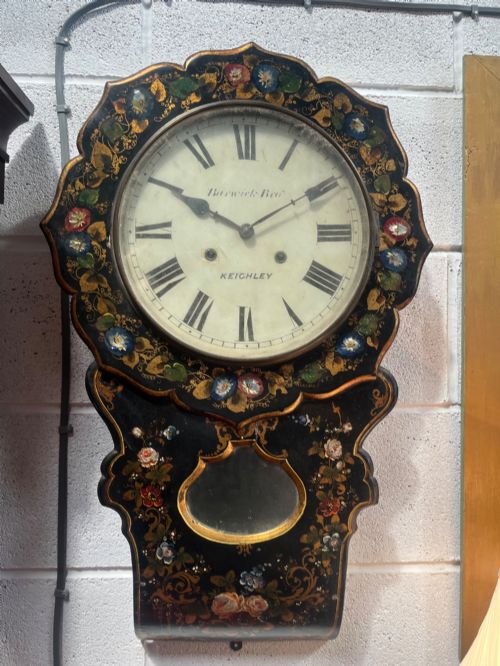
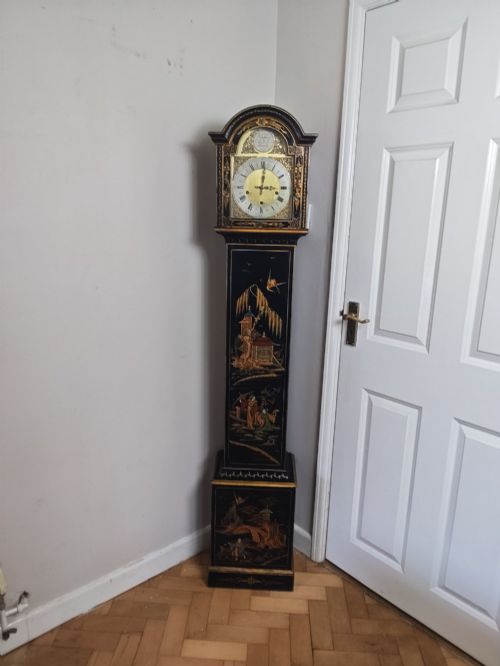
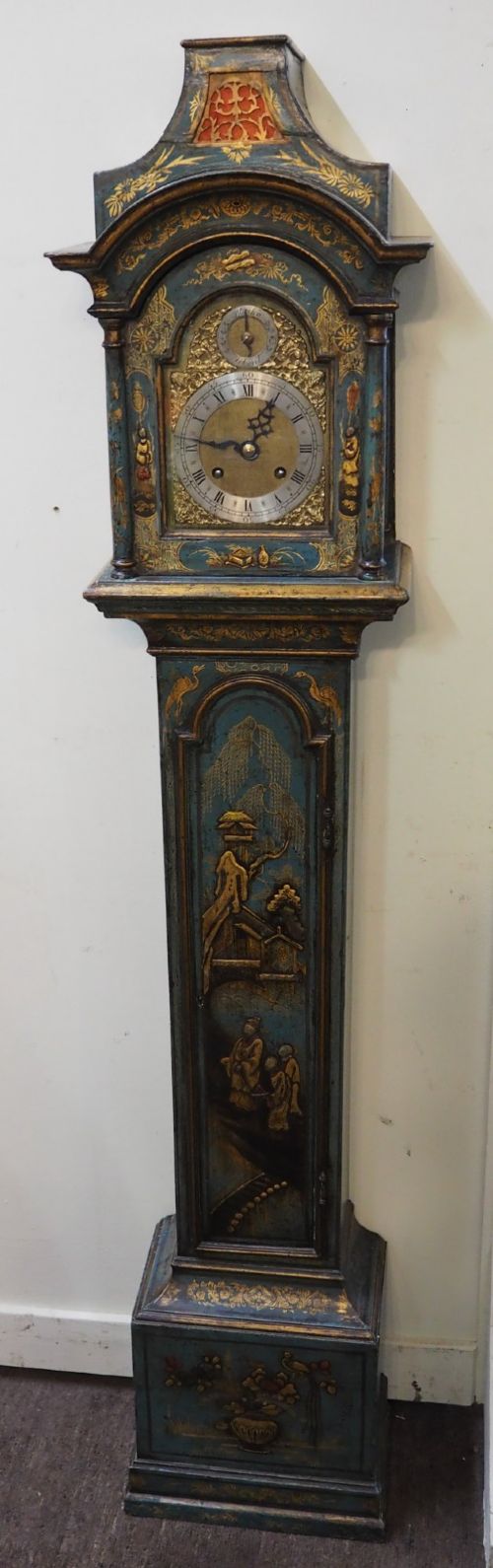
Buyers encounter mantel clocks set with porcelain dials, marble garnitures, and visible pendulums alongside wall-hanging variants and musical longcase forms.
The aesthetic draws heavily on French Rococo, Baroque, and Empire styles, translating classical motifs and allegorical subjects into gilded bronze, brass, and ormolu.
Materials and Construction
The construction relies on cast bronze, brass, and ormolu paired with glass panels, enamel dials, and occasional porcelain or marble elements.
Metal components receive fire-gilding or applied surface treatments to achieve the characteristic bright golden sheen, while movements incorporate brass gears and precision steel pendulums.
Cabinets and cases combine metal castings with wooden frames, ebonised finishes, and hand-painted porcelain or miniature details.
Listings demonstrate a strong concentration of 19th-century French production, utilising gilt bronze, ormolu, brass, and porcelain.
Differentiating Quality
The standard of the casting work separates standard production pieces from exceptional items, with finer examples displaying crisp, deeply chased ornamentation rather than softened surface details.
Movement assembly and maker attribution heavily influence standing, as signed mechanisms from renowned Parisian workshops demonstrate superior mechanical precision and durability.
The integration of secondary materials, such as genuine Sèvres porcelain plaques, hand-painted miniatures, and substantial marble or ormolu mounts, dictates the overall execution level.
Achille Brocot·Henry Marc·Samuel Marti·Siffel and Cartier·Ansonia New York·Japy Freres·Delettrez
The Antique Gilt Pendulum Clock Glossary
- Ormolu
- A gold-coloured bronze alloy used for decorative mounts and clock cases. It provides a rich metallic finish through mercury gilding.
- Portico clock
- A clock design featuring a architectural frame supported by four columns. This style gained popularity during the Empire and Charles X periods.
- Garniture
- A set comprising a central clock accompanied by matching side ornaments or candelabra. These matched sets were designed to sit together on a mantelpiece.
- Four glass clock
- A clock enclosed within glass panels on all four sides to expose the mechanical movement. Pendulums in these pieces often swing visibly within the transparent housing.
- Enamel dial
- A clock face made by fusing powdered glass to a metal base at high temperatures. These dials feature painted numerals and remain resistant to discolouration.
Antique Gilt Pendulum Clock: Frequently Asked Questions
How do these clocks function?
These timepieces operate using a spring-driven or weight-driven mechanical movement controlled by an oscillating pendulum. Energy is stored in the mainspring and released in regulated increments through the escapement.
Owners wind the movement periodically using a matching key inserted into winding holes on the dial. The pendulum regulates the speed to ensure accurate timekeeping.
Where should a portico clock be placed?
A portico clock requires a stable, level surface such as a mantelpiece, sideboard, or console table to maintain proper pendulum beat. Placing the clock away from draughts and direct sunlight protects the delicate gilt surfaces.
Because many examples feature glass panels or tall architectural frames, positioning them out of high-traffic areas prevents accidental bumps.
How are different French periods told apart?
Periods reveal themselves through distinct decorative motifs and architectural proportions. Empire and Charles X pieces lean toward classical symmetry, columns, and martial or mythological themes.
Later Victorian and Second Empire pieces favour elaborate Rococo asymmetry, heavier scrolling foliage, and rich combinations of porcelain and gilt bronze.
What is a clock garniture?
A clock garniture is a matching decorative set designed to be displayed together on a mantelpiece. It typically pairs a central clock with two matching sidepieces such as vases, urns, or candelabra.
These sets use identical materials, such as red marble or ormolu, to create a unified focal point in a formal room.