





Antique Gilt Footstool
An antique gilt footstool brings nineteenth-century drawing-room polish to a corner, offering carved timber and gilded surfaces.
Antique Gilt Footstool
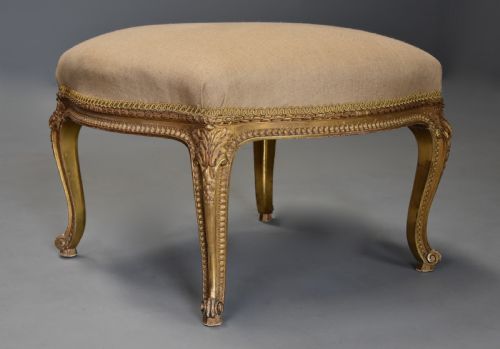
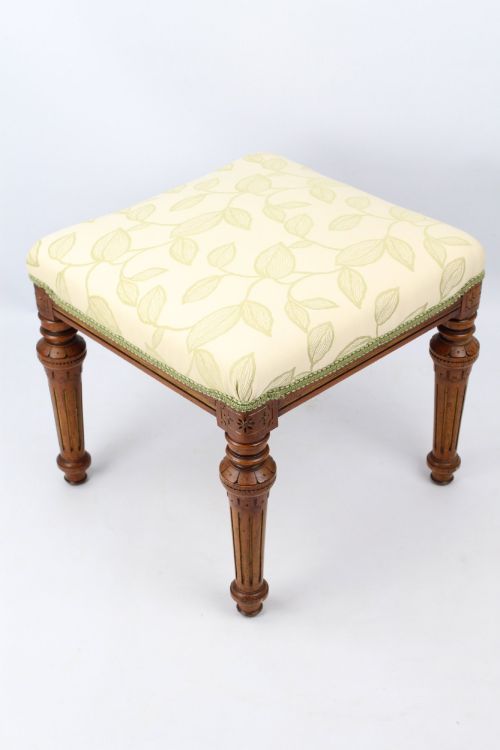
An antique gilt footstool is a low seating piece finished in gold leaf, paint, or parcel gilt, designed to support the feet or serve as a small seat. These pieces appear primarily across the nineteenth century, stretching from the Regency and William IV eras through the Victorian period and into the early twentieth century.
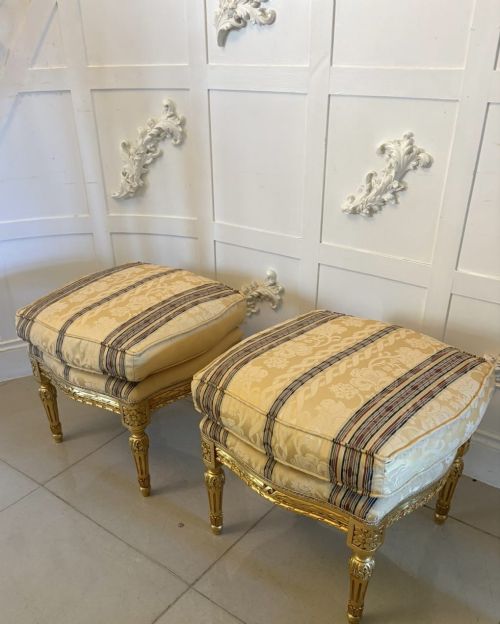
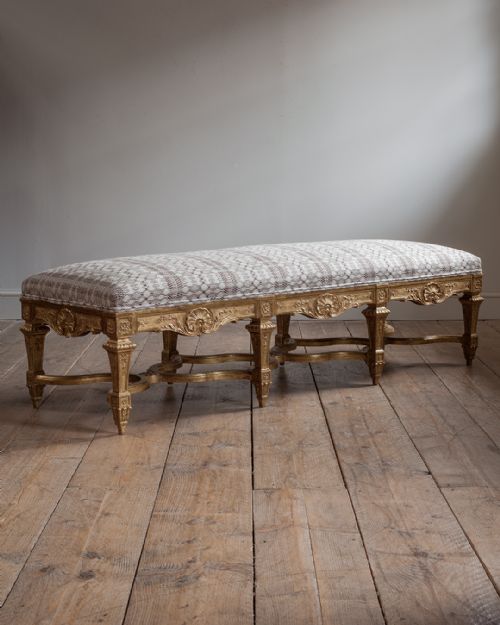
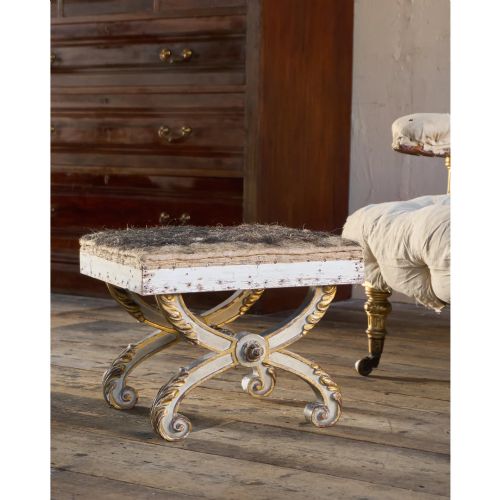
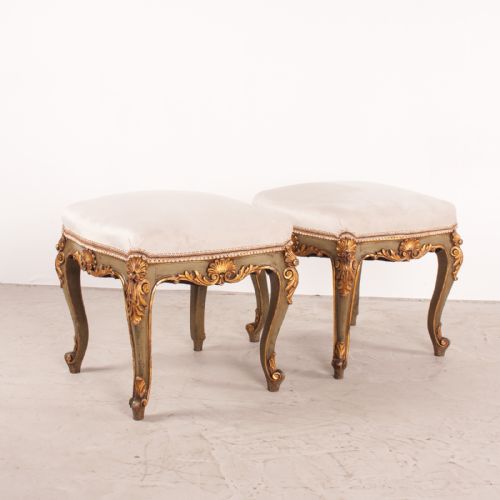
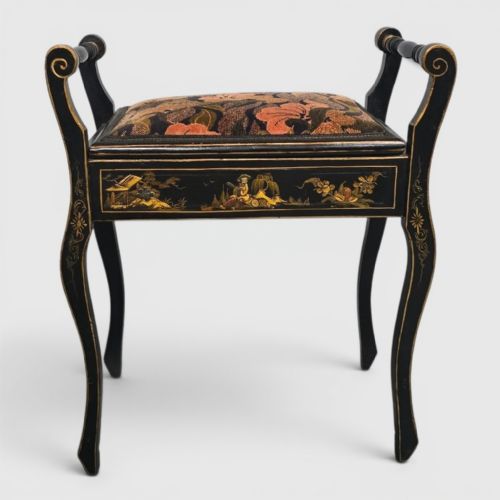
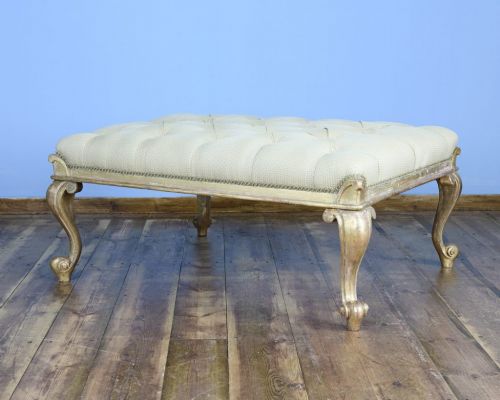
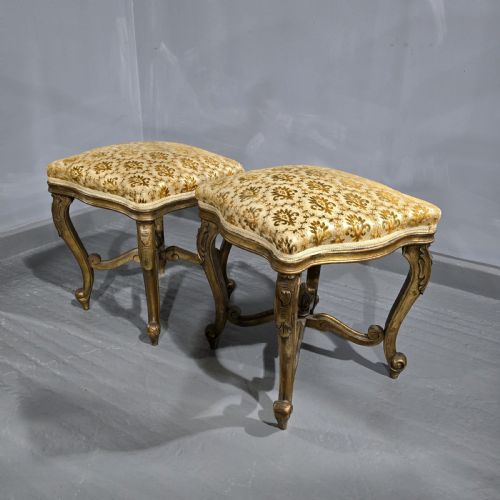
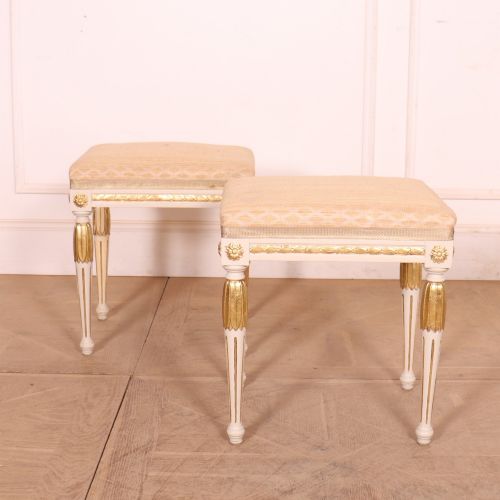
The version most commonly met on this page is the nineteenth-century French or English carved giltwood stool, often styled after Louis periods, the Baroque revival, or the aesthetic movement. Alongside conventional stools, listings include piano stools, X-frame curule designs, and occasional pairs from Swedish or continental workshops.
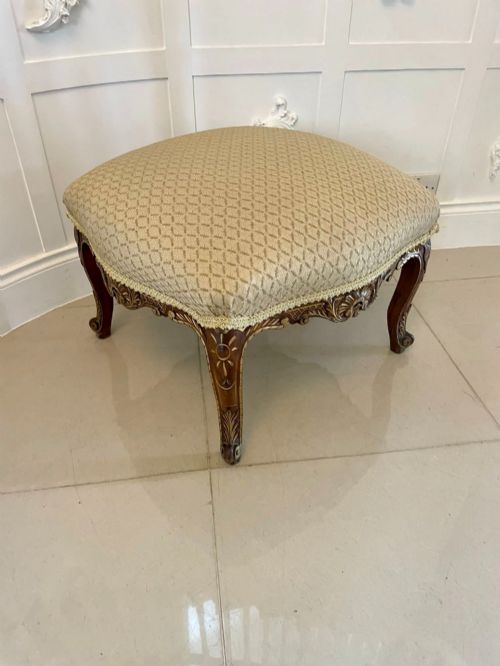
Makers and designers working in these styles ranged from London cabinet makers to Parisian ateliers, utilising giltwood, ebonised timber, and walnut. The upholstery varies from deep-buttoned red silk to embroidered textiles, velvet, and plain fabric.
Materials and construction methods
Construction relies on solid timbers such as walnut, oak, and beech, shaped by hand carving into curved cabriole legs, X-frames, or rectilinear frames. Wood surfaces were prepared for gilding by applying layers of gesso before laying down gold leaf or gold paint.
Parcel gilt treatments combine painted or ebonised black wood with exposed gilded highlights, creating contrast on mouldings and carved details. Upholstered tops employ traditional webbing, stuffing, and textile covers fixed with tacks or decorative braid.
Antique Gilt Footstool Retail Price Guide 2026
Typical asking prices for gilt footstool among the pieces listed under this phrase on Sellingantiques today, from the lower quarter to the upper quarter. They describe what is for sale here now, not the wider market.
Listings feature nineteenth-century pieces spanning the Victorian, Regency, and Edwardian eras, constructed in giltwood, ebonised wood, and brass.
Distinctions in quality and execution
Quality rests upon the crispness of the hand carving in the timber and the depth of the gilding technique. Pieces formed from solid giltwood with finely chased or burnished leaf display a different standard of craftsmanship compared to simple painted softwood frames.
The integrity of the frame construction and the original execution of maker stamps or attributed designs elevate certain examples. Subtleties in stylistic adherence - such as the proportions of a Louis XV revival frame or the detailing on an aesthetic movement ebonised stool - distinguish workshop pieces from standard commercial production.
Miles & Edwards·Loidrault Freres Paris·Whytock and Reid·A.M.E. Fournier
The Antique Gilt Footstool Glossary
- Giltwood
- Timber that has been gilded with gold leaf applied over a prepared gesso ground. This finish defines the primary visual characteristic of these stools.
- Curule
- An X-shaped form derived from ancient Roman magistrate seats. This structural style appears frequently in nineteenth-century footstools.
- Parcel gilt
- A decoration method where only specific carved details, edges, or raised ornaments are gilded against a painted or ebonised background. It creates a striking two-tone effect on Victorian and Regency frames.
- Gustavian
- The Swedish neoclassical style characterised by restrained carving, light painted finishes, and balanced proportions. Swedish pieces on this page often reflect this aesthetic.
- Ebonised
- Timber finished with a dark stain or black polish to imitate ebony. This treatment was favoured during the Victorian and aesthetic periods for contrast against gold leaf.
Antique Gilt Footstool: Frequently Asked Questions
How do I date an antique gilt footstool?
Dating relies on the combination of timber species, framing style, and gilding technique visible on the piece. Nineteenth-century examples often display specific revival characteristics linked to French Louis periods or the Victorian aesthetic movement.
The underlying construction methods, such as hand-cut joints and early upholstery webbing, provide further clues to place a piece within the 1800s or early 1900s.
Were these stools used only for feet?
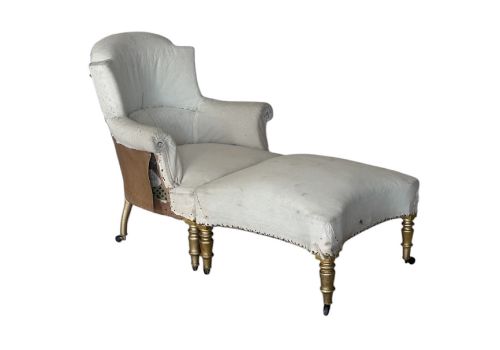
While many were built specifically as footstools to accompany armchairs and chaise longues, others served as low seating for dressing tables or music rooms. Piano stools and centre stools offered primary seating rather than foot support.
Their sturdy timber frames accommodated regular use in nineteenth-century drawing rooms and parlours, functioning flexibly across different domestic spaces.
How do I care for antique gilding?
Gold leaf requires gentle maintenance to preserve the fragile metallic surface over time. Dusting should be done lightly with a soft, dry brush without applying chemical cleaners or polishing agents.
Keep these stools away from direct sunlight and excessive moisture to prevent the gesso and leaf from lifting or cracking.