
Antique Gilt Candlesticks
Antique gilt candlesticks bring warmth and formal presence to a room, cast in bronze, brass and ormolu across centuries of European design.
Antique Gilt Candlesticks
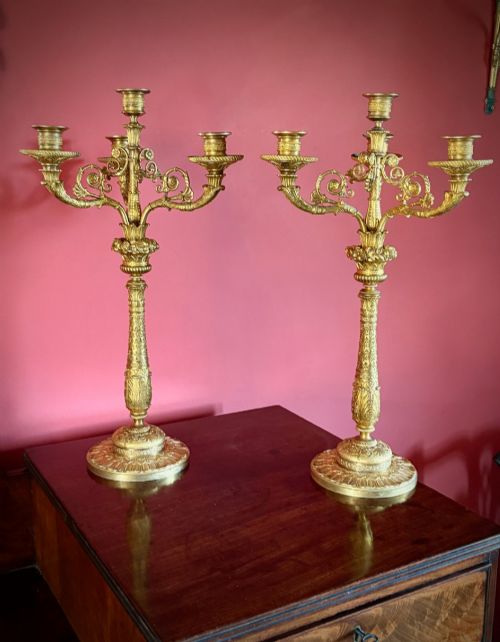
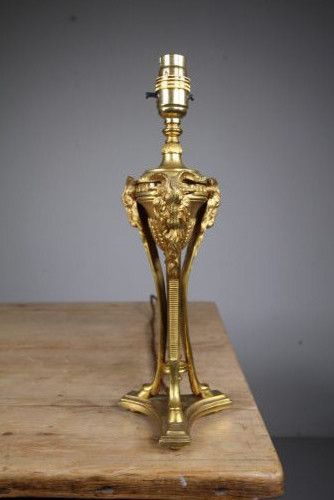
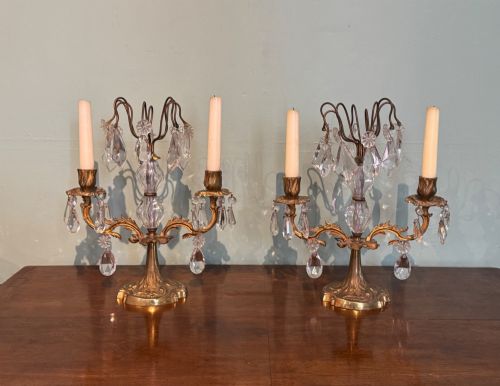
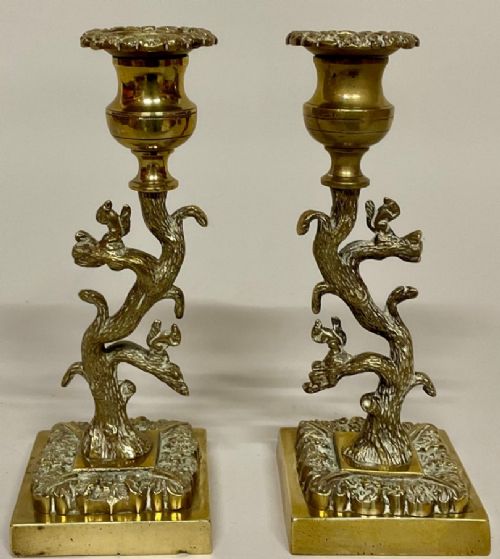
When searching for antique gilt candlesticks, buyers encounter lighting pieces ranging from single candle supports to multi-branch candelabra and converted table lamps. The selection spans the eighteenth, nineteenth, and early twentieth centuries, drawing heavily on French styles including Louis XVI, Empire, and Rococo Revival.
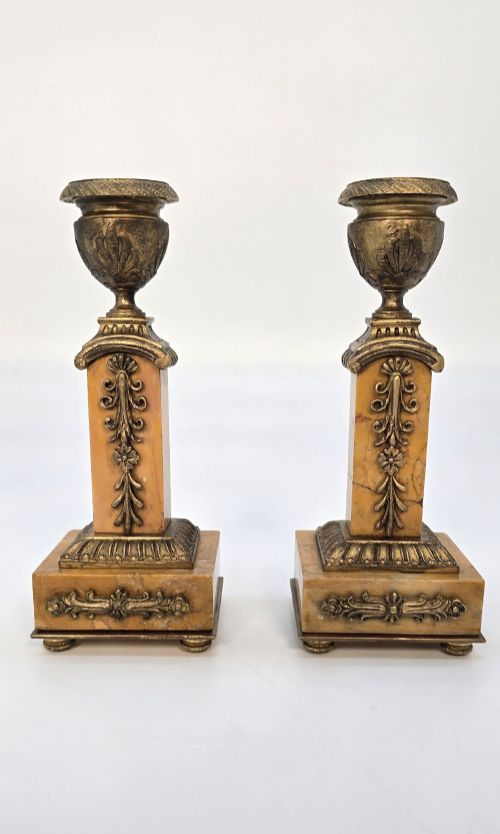
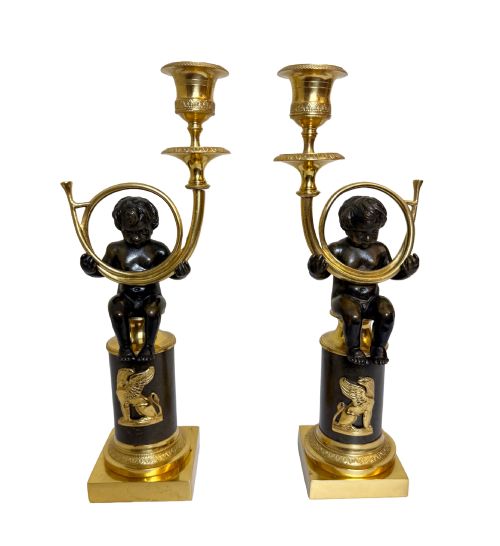
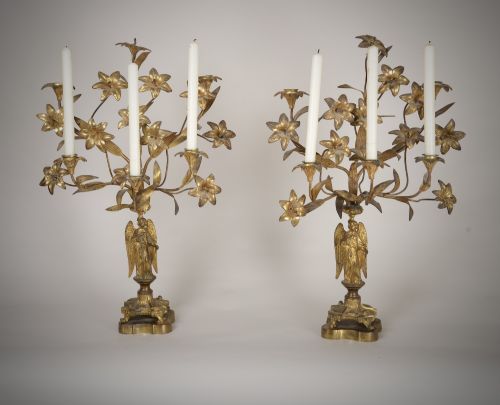
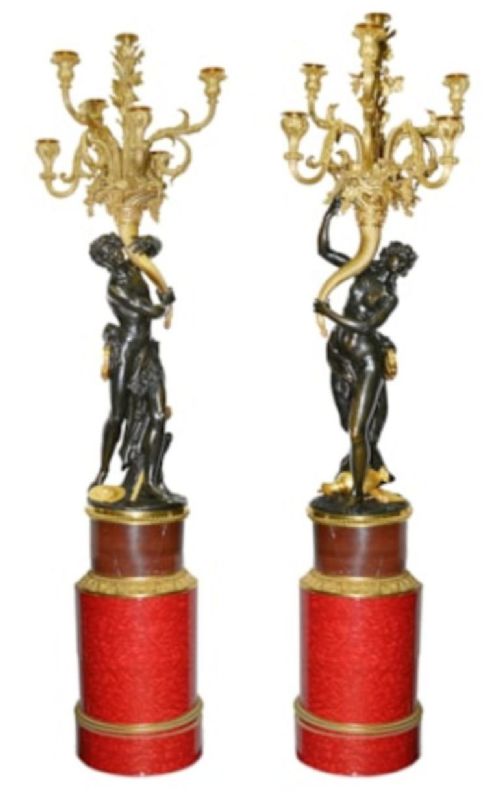
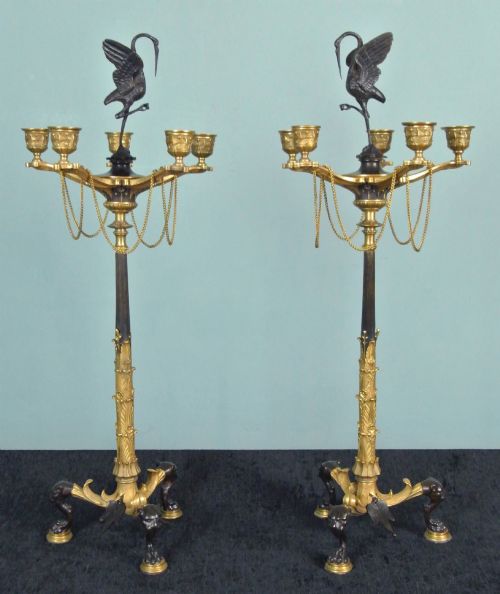
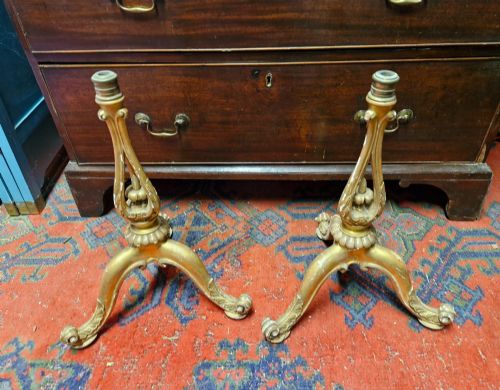
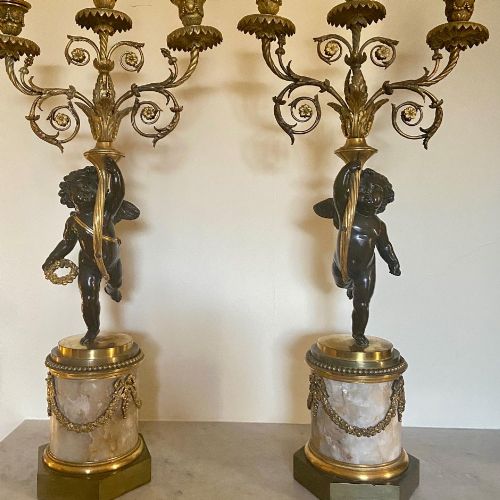
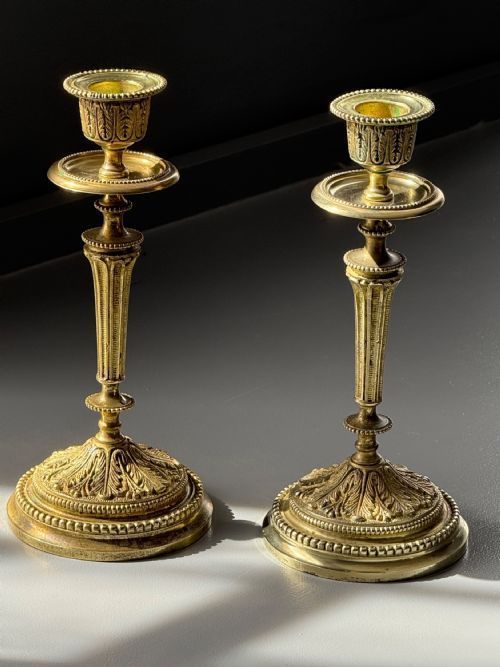
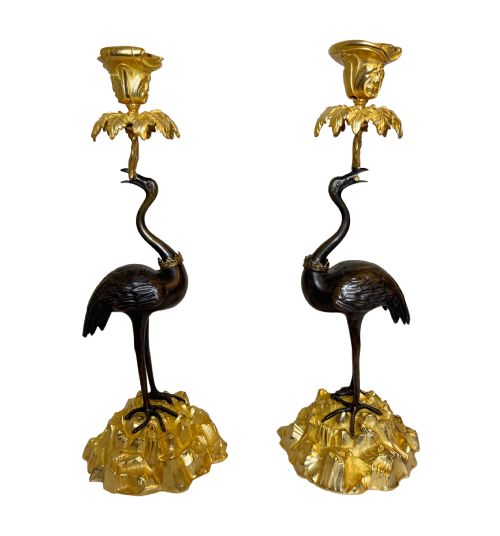
Most examples met on this page are paired sets created in gilt bronze, ormolu, or brass, frequently incorporating marble bases, patinated bronze figures, or champlevé enamel detailing. Forms vary from simple classical columns to ornate sculptural pieces featuring cherubs, caryatids, and animal motifs.
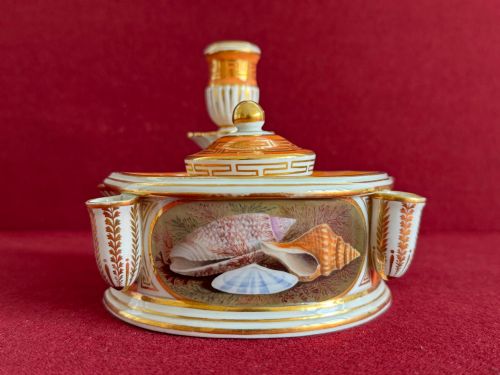
Origin points lean towards continental workshops, particularly French houses working in the neoclassical or revival idioms, alongside English Victorian productions. Alongside standard domestic candlesticks, the listings include specialised forms such as desk accessories, inkstands, and cassolettes.
Materials and construction methods
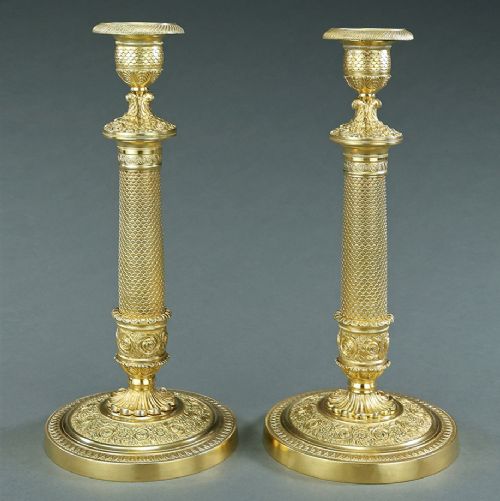
The primary metals used are bronze, brass, and copper alloys finished with fire gilding or gold plating, creating the distinctive ormolu and gilt surfaces seen across the pieces. These metal components are cast, chased, and occasionally combined with patinated bronze elements to create contrast between bright gold tones and dark bronze.
Many candlesticks incorporate mineral supports and decorative accents, utilising white marble, onyx, fluorspar, and cut glass alongside the metalwork. Base elements and structural shafts rely on precise joinery, often mounting heavy cast bronze figures and sconces onto stone plinths.
English and French workshops dominate the listings, spanning Georgian, Regency, Victorian, and Edwardian periods.
Distinctions in craftsmanship
The weight of the casting and the integration of secondary materials such as marble or champlevé enamel distinguish high-end works. Finer pairs demonstrate balanced proportions, secure mounting between disparate elements, and minimal wear to the gold surface.
Mappin & Webb's·Barbedienne·Francois Redmond·Ridgway·Barr, Flight & Barr·Thomas Hope·Maiden Antique·J.C. Klinkosch
The Antique Gilt Candlesticks Glossary
- Ormolu
- Finely chopped high-karat gold amalgamated with mercury and applied to a bronze base, then heated to drive off the mercury. This historical fire-gilding technique produces a durable, rich matte and burnished gold finish.
- Candelabra
- A branched candlestick holding multiple candles on separate arms. These pieces often feature a central shaft flanked by symmetrical sconces.
- Champlevé
- An enamelwork technique where troughs or cells are hollowed out of the metal surface and filled with vitreous enamel paste before firing. It appears frequently on nineteenth-century decorative bases and stems.
- Caryatid
- A sculpted female figure serving as an architectural support taking the place of a column or pillar. They commonly form the main stem of neoclassical candlesticks.
- Pricket
- A sharp metal spike upon which a large candle is impaled rather than dropped into a socket. These are typically found on ecclesiastical or medieval-style altar pieces.
Antique Gilt Candlesticks: Frequently Asked Questions
How do I clean antique ormolu safely?
Dust gently with a soft, dry brush to remove surface particles without abrasive contact.
Avoid commercial metal polishes entirely, as chemical cleaners strip away the thin historic gold layer permanently.
Were these candlesticks originally wired for electricity?
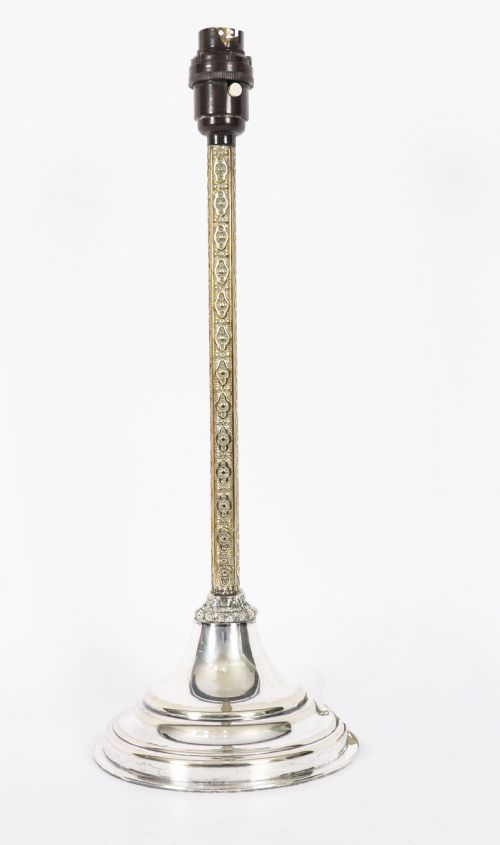
Almost all pieces began life holding wax candles before later conversion into table lamps.
Wiring is typically done without damaging the core structure, allowing some lamps to be reverted if desired.
How can I tell French Empire from Louis XVI style?
Louis XVI pieces display restrained classical symmetry, slender fluted columns, and delicate acanthus leaf motifs.
Empire designs favor heavier military and Egyptian symbols, bold sphinxes, lions' paw feet, and dense patinated contrasts.
Are pairs always matching in antique lighting?
Most surviving sets were cast together as pairs, sharing identical patination, bronze weight, and chasing details.
Slight manual discrepancies can occur in nineteenth-century casting, reflecting hand-finishing work before final assembly.