


Antique German Chest Drawers
These antique german chest drawers bring robust proportions and rich timber figuring into a room, offering both serious storage and bold historic character.
Antique German Chest Drawers
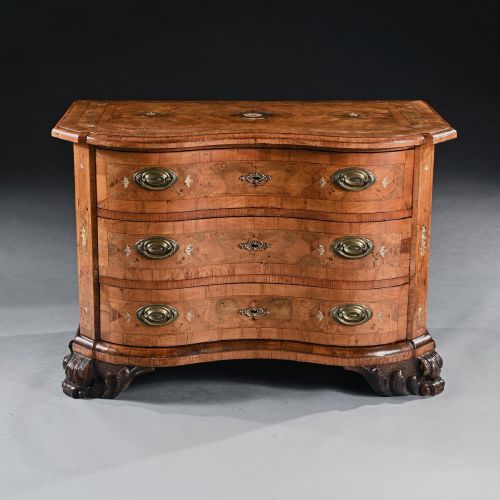
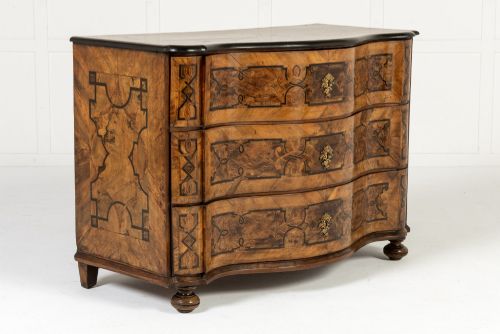
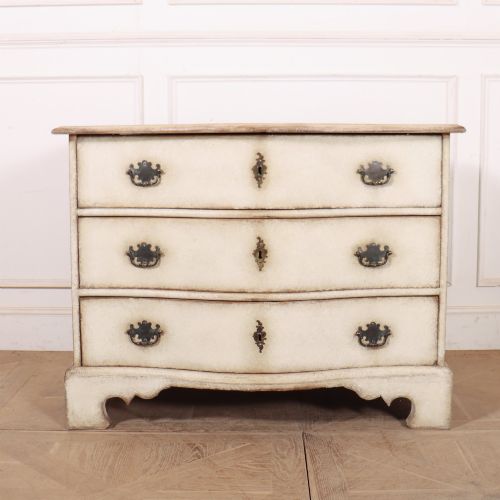
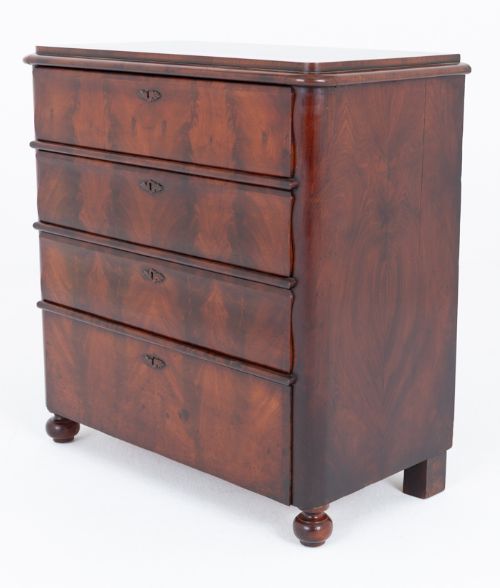
An antique german chest drawers encompasses substantial case furniture ranging from seventeenth-century walnut pieces to nineteenth-century Biedermeier examples. Buyers encounter serpentine commodes alongside straight-lined drawer units and side cabinets, reflecting shifting continental tastes over three centuries.
The selection on this page leans heavily towards eighteenth-century walnut commodes and nineteenth-century Biedermeier designs in mahogany. Regional pieces show distinct variations, from Bavarian burr walnut work to South German baroque outlines.
Most items serve primarily as bedroom or hallway storage, though larger side cabinets and gentlemans robes expand the domestic function. The forms combine architectural presence with functional drawer arrangements suited to daily use.
What varies in quality
The grade of an antique german chest drawers rests on the selection and matching of its wood veneers. Superior examples display continuous grain patterns across drawer fronts, whereas simpler pieces rely on plain timber surfaces.
Carving execution and hardware integration set the finer commodes apart from standard domestic furniture. Crisp serpentine shaping and intact marquetry elevate a piece, while heavier or coarser construction indicates a simpler provincial origin.
The documented forms include commodes, side cabinets, armoires, and gentlemans robes featuring baroque, rococo, and Biedermeier styles.
The Antique German Chest Drawers Glossary
- Commode
- A low chest of drawers or cabinet, typically standing on short legs and originating as a French form adopted across Germany. These pieces often feature serpentine or bombe fronts.
- Biedermeier
- A utilitarian and elegant style dominating Central Europe during the nineteenth century, known for clean architectural lines and unadorned mahogany or fruitwood surfaces.
- Marquetry
- Decorative veneer work forming pictures or geometric patterns using various woods, pewter, or ivory set into the carcase.
- Serpentine
- A front outline curving outward in the centre and inward at the sides, demanding high skill from the cabinetmaker.
- Bombe
- A swollen, bulging outward contour characteristic of baroque and rococo case furniture.
Antique German Chest Drawers: Frequently Asked Questions
How do I date an antique german chest drawers?
Dating relies on timber choice, construction methods, and stylistic cues such as baroque curves or Biedermeier straight lines. Seventeenth and eighteenth-century examples usually feature walnut with marquetry or bold serpentine shaping, while nineteenth-century pieces tend toward mahogany veneers.
Examining internal drawer construction and secondary woods helps confirm the period. Earlier pieces show hand-cut joinery and native fruitwoods, whereas later nineteenth-century items incorporate standardised elements and different internal softwood linings.
Are these chests suitable for daily bedroom use?
These pieces provide deep, practical storage that suits modern bedrooms just as well as historic ones. The generous drawer proportions accommodate modern clothing easily while adding a distinct architectural focal point to the room.
Care should be taken with historical drawer runners and delicate veneer surfaces. Using drawer liners and maintaining stable indoor humidity protects the internal timber and historic finish over time.
What is the difference between a commode and a standard chest?
In this regional context, a commode generally refers to a lower, more decorative chest of drawers often featuring shaped fronts and fine veneer work. Standard chests may present a taller, more utilitarian profile with fewer curved surfaces.
Commodes frequently served reception rooms or grand bedchambers, receiving higher decorative attention. Taller chests and cabinets prioritized capacity over ornamental carving or complex marquetry panels.
How do I care for walnut and mahogany veneers?
Historic timber veneers require protection from direct sunlight and dramatic temperature swings to prevent splitting or lifting. Regular dusting with a dry, soft cloth maintains the finish without introducing moisture.
Applying microcrystalline wax periodically nourishes the wood and preserves the sheen on walnut and flame mahogany surfaces. Avoid silicone-based polishes entirely, as they penetrate open grain and damage historical polishes.