
Antique Genre Scene
An antique genre scene captures everyday life in oil or watercolour, bringing Victorian interiors and rustic village moments directly into your home.
Antique Genre Scene
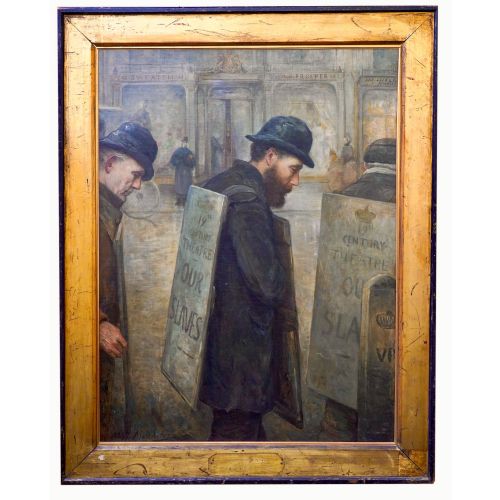
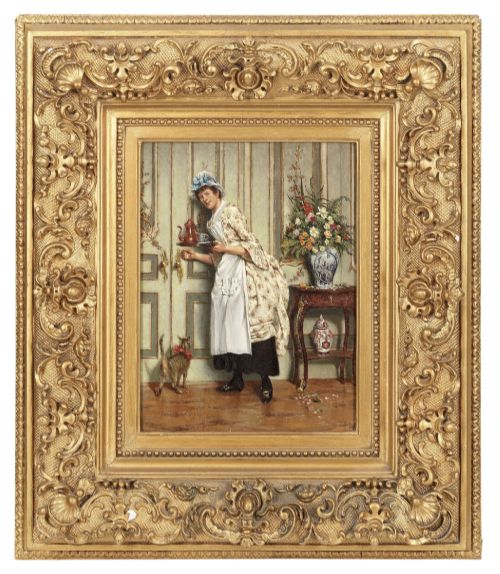
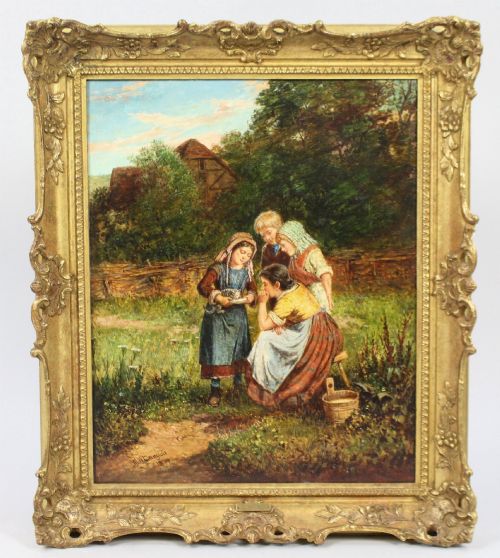
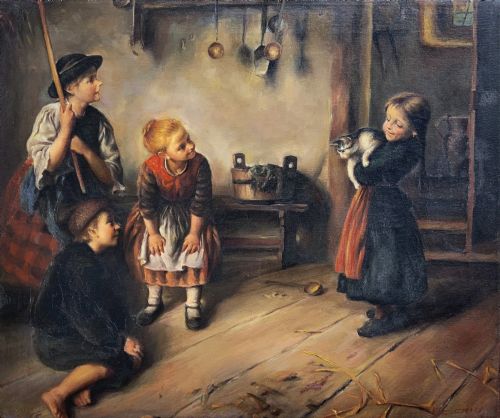
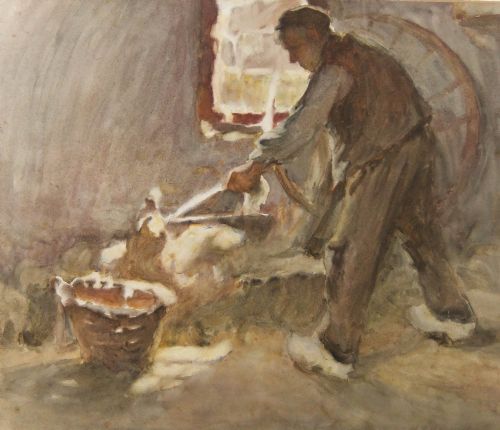
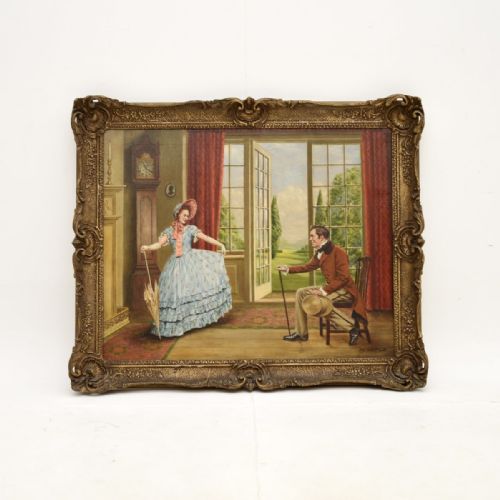
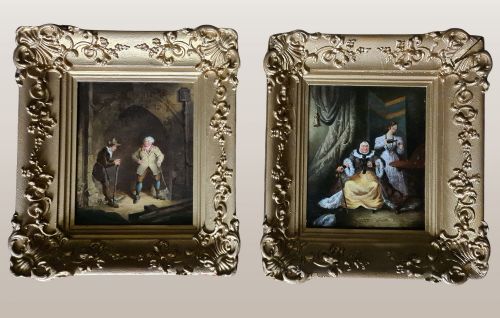
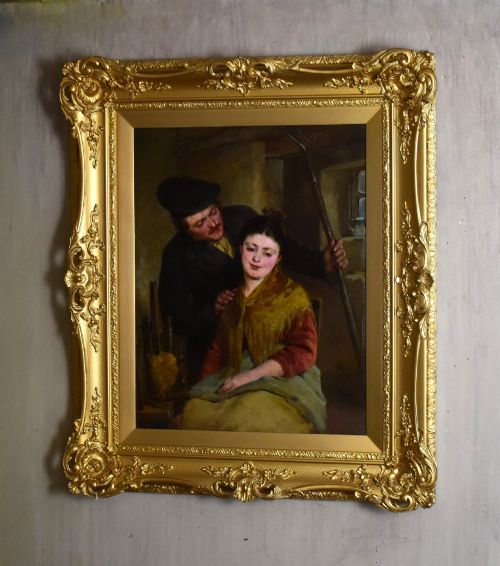
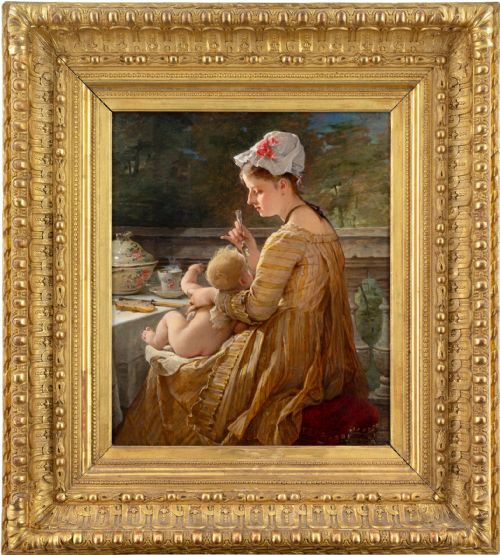
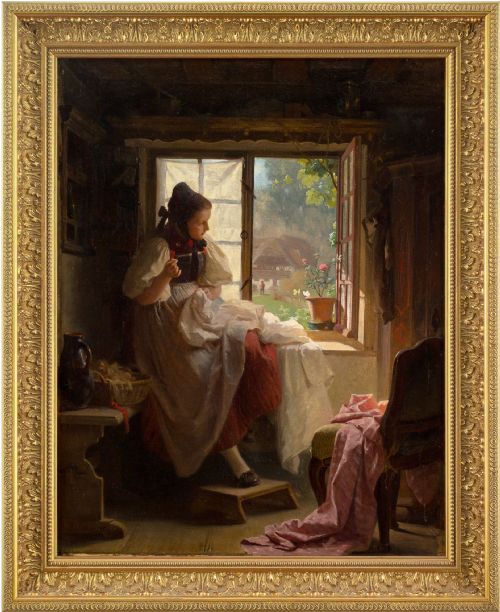
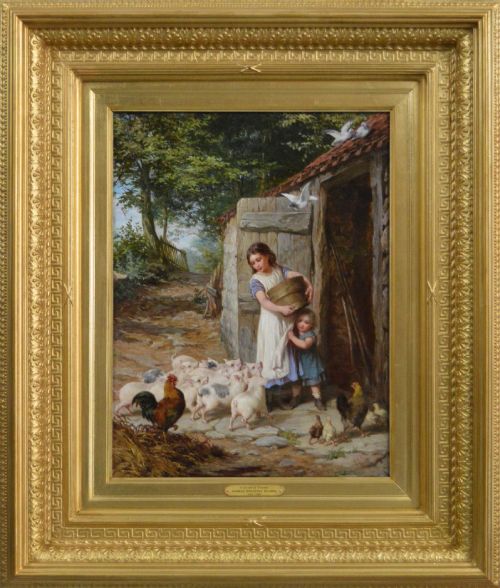
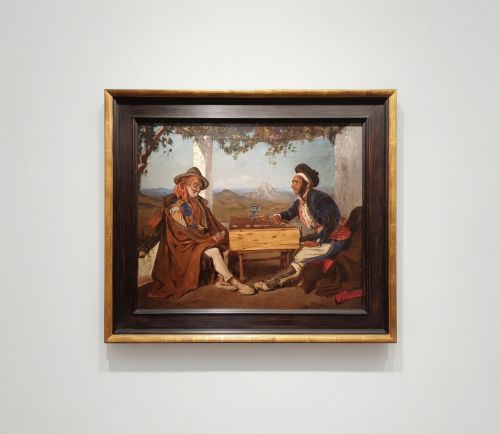
An antique genre scene portrays human figures engaged in ordinary daily activities, from quiet domestic interiors to bustling tavern gatherings and outdoor labour. These artworks range from intimate watercolours of children and tradespeople to monumental oil paintings documenting social history.
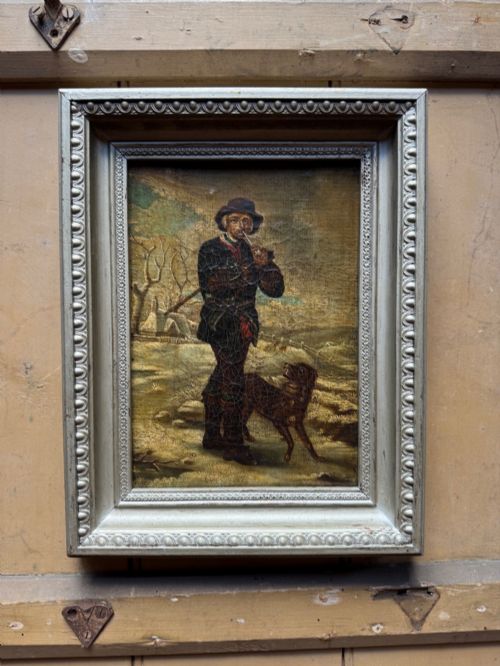
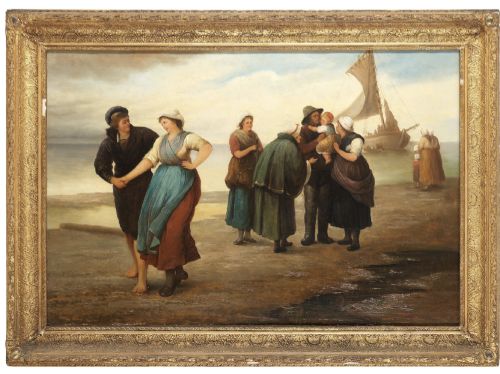
The versions most commonly met on this page date from the nineteenth century, including Victorian social realism and French school pieces. Buyers often encounter framed canvases and watercolours depicting specific narratives, such as mealtimes, blacksmiths at work, or travellers resting by the sea.
Earlier examples stretch back through Flemish and Dutch traditions, focusing on tavern life and smokers on barrels. Later works extend into the early twentieth century, maintaining a steady focus on human character and domestic routine.
Materials and construction
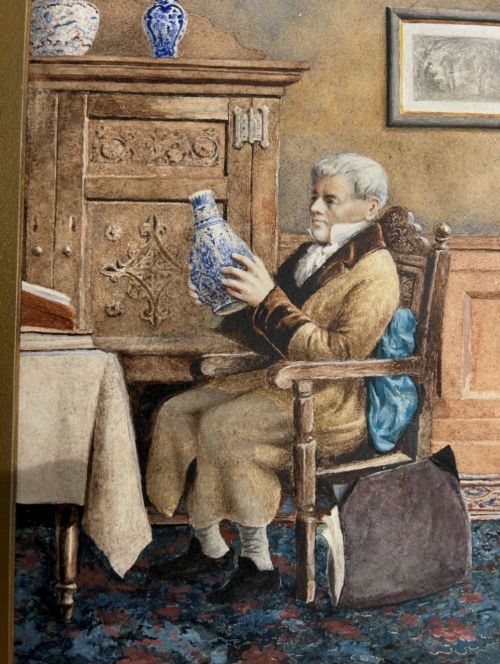
The majority of these pieces utilise oil paint applied to stretched canvas or wooden panels, building up rich layers of pigment and chiaroscuro. Artists also frequently worked in watercolour on paper, capturing lighter narrative details in domestic and rural settings.
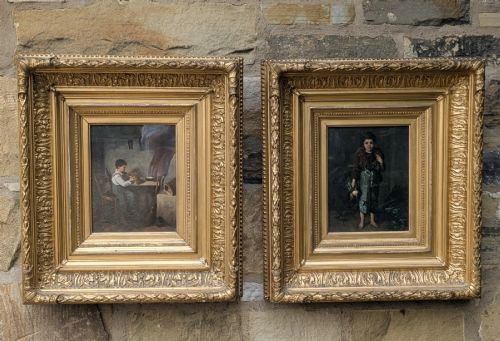
Framing typically involves gilt wood, gesso, and gold leaf mouldings designed to complement the period aesthetic. Solid silver desk boxes and related decorative objects appear occasionally alongside the primary painted works.
Listings feature works spanning the seventeenth through the twentieth centuries, utilising canvas, wood panels, and paper.
Separating the ordinary from the exceptional
Quality rests primarily on the artist's command of anatomy, facial expression, and narrative clarity within the painted scene. Master painters handle light and shadow with precision, lending depth and psychological weight to everyday figures rather than relying on stiff poses.
The integrity of the original canvas, the subtlety of the colour palette, and the preservation of the delicate brushwork set superior examples apart. Contemporary framing and surface cleaning also influence the visual impact of each piece.
Felix Stone Moscheles·Henry Stacy Marks·Stephen Samuel Lewin·Mark William Langlois·Henry Silkstone Hopwood·Alfred Lyndon Grace·Howard Helmick·Adelaïde Salles-Wagner·Max Kaltenmoser·George Augustus Holmes·Joseph H Barnes·David Teniers·Frederick Walker·Louis Charles Verwee·Charles Hunt·Hendrik Valkenberg·Joseph Farquharson·Bernard De Hoog·J C Dollman·Carlo Ferranti·Renato Moretti·Jacob Akkersdijk·Delapoer Downing·Paul Ehrenberg·Godfried Schalcken
The Antique Genre Scene Glossary
- Genre painting
- The pictorial representation of scenes from everyday life, typically involving ordinary people engaged in common activities. This style contrasts sharply with historical, mythological, or portrait painting.
- Chiaroscuro
- An artistic technique using strong contrasts between light and dark to give subjects a three-dimensional volume. It frequently defines the moody interiors found in Dutch and French works.
- Oil on canvas
- A traditional medium where pigmented oil paints are suspended in a drying oil and applied to a woven fabric support. This combination allows for rich blending and enduring depth of colour.
- Social realism
- An artistic movement highlighting the everyday conditions of the working class and poor. Works in this vein often carry an underlying narrative about labour and society.
- Watercolour painting
- A method where water-soluble pigments are applied to paper to create translucent washes of colour. It offers a lighter, more immediate touch compared to heavy oils.
Antique Genre Scene: Frequently Asked Questions
What is an antique genre scene?
An antique genre scene is a painting or watercolour depicting ordinary people during daily tasks or leisure. These works capture domestic interiors, street life, and rural labour rather than formal portraits.
Artists across the nineteenth and earlier centuries used these compositions to document social history and human character. They provide a direct window into past ways of living.
Where should I hang a genre painting?
These works suit sitting rooms, studies, and dining areas where their narrative detail can be appreciated up close. Traditional gilt frames pair well with period interiors and classic wall colours.
Keep the artwork away from direct sunlight and excessive moisture to protect the canvas and pigment. Proper placement ensures the oil or watercolour remains stable for decades.
How do I identify a Victorian genre work?
Victorian pieces frequently feature sentimental domestic moments, children playing, or detailed rural trades. The clothing, furniture, and settings reflect mid to late nineteenth-century British and European life.
Signatures, dates, and stylistic markers like academic realism also help pinpoint the exact era. Many examples carry specific nineteenth-century exhibition records.
Why do some scenes feature tavern interiors?
Tavern interiors stem from long-standing Dutch and Flemish traditions focusing on rustic social gatherings. Painters used these settings to explore human nature, humour, and everyday leisure.
Later European schools revived this subject matter in the nineteenth century, mimicking the dramatic lighting and character studies of earlier masters. These pieces celebrate the relaxed side of historical community life.