


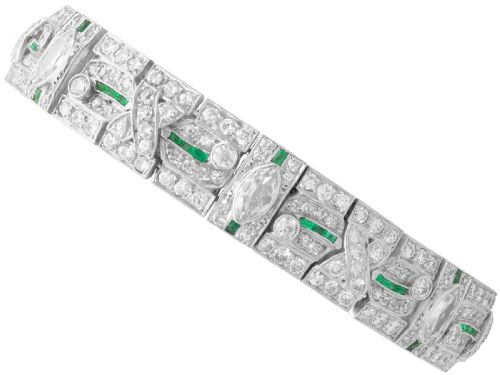


Antique Gemstone Wristlet
These antique gemstone wristlet pieces are wrist ornaments set with diverse stones, offering tangible links to past design eras.
Antique Gemstone Wristlet
An antique gemstone wristlet encompasses flexible bracelets and rigid bangles set with precious and semi-precious stones, dating from the Victorian era through the mid-twentieth century. You are most likely to encounter Edwardian and 1900s pieces featuring cluster and line formations set in gold or platinum.
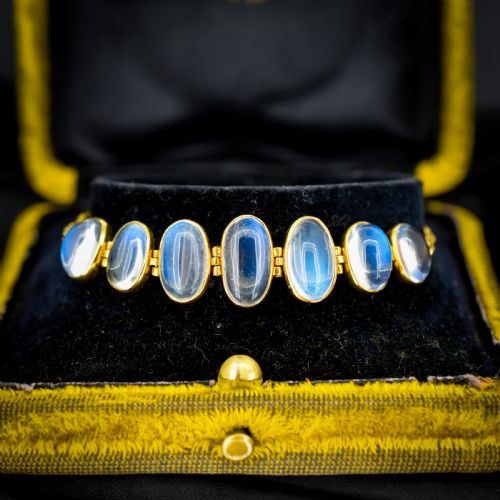
The selection ranges from Victorian moonstone and opal pieces to Art Deco platinum and diamond creations, alongside Edwardian rose gold designs. These items span styles from Belle Époque elegance to Modernist silver work.
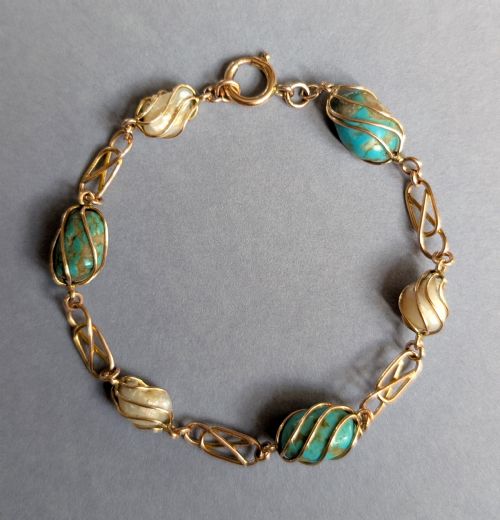
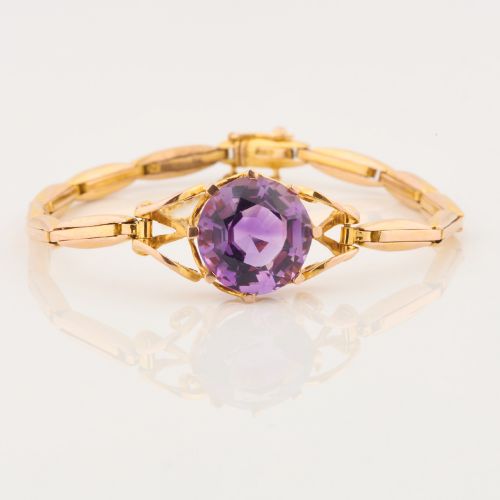
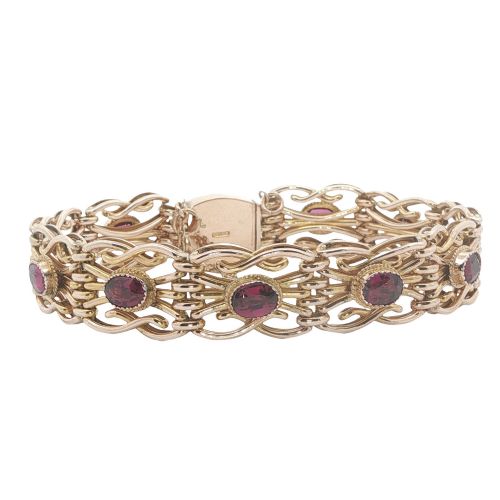
Makers utilised a broad palette of stones, pairing diamonds and sapphires with garnets, turquoise, pearls, and amber. Forms vary from delicate split pearl links to substantial gemstone clusters.
Materials and construction methods
Craftsmen mounted gemstones into metals including 9ct and 18ct yellow and rose gold, platinum, silver, and 15ct or 10ct gold alloys. Settings often involve intricate pierced filigree work that secures stones while minimising visible metal weight.
Workshops combined durable prong and bezel settings with delicate seed pearl stringing and lovers knot motifs. Metal fabrication utilised casting, wire-forming, and hand-pierced openwork techniques suited to each period style.
Some silver bracelets carry personal initials alongside official silver marks, preserving a past owner's quiet secret.
Distinguishing quality across the range
Quality rests in the harmony of stone selection, matching carat weights, and the precision of the metal setting work. Superior pieces display thoughtful stone graduation and balanced colour integration across the wrist.
The Antique Gemstone Wristlet Glossary
- Filigree
- Fine ornamental work of fine wire, usually gold or silver, formed into delicate openwork patterns. This technique appears frequently in pierced settings.
- Graduating
- Arranging stones or links from smaller to larger sizes along the length of the bracelet. This creates a balanced visual progression.
- Split pearl
- A small pearl cut or grown in half and flattened at the back for mounting. These are glued or pegged into metal settings.
- Bangle
- A rigid solid or hollow bracelet that slips over the hand or fastens with a hinge. Unlike flexible wristlets, these maintain a fixed circular shape.
Antique Gemstone Wristlet: Frequently Asked Questions
How do I clean an antique gemstone wristlet?
Clean delicate pieces gently using a soft brush and mild soapy water, avoiding harsh chemical dips that damage pearls, amber, or soft stones like turquoise.
Dry the metal and stones thoroughly with a lint-free cloth before storing them in a padded jewellery box.
Are these bracelets suitable for daily wear?
Many sturdy gold and platinum designs tolerate regular wear if handled with care, though softer stones like opal, turquoise, and pearls require caution.
Delicate Edwardian filigree and seed pearl items benefit from occasional rotation to preserve their structural integrity.
How can I date my gemstone bracelet?
Examine the metal purity marks, stone cuts, and setting styles, noting that Victorian and Edwardian pieces often favour rose gold and softer gems while Art Deco pieces utilise platinum and geometric designs.
Comparing the clasp mechanism and overall construction against known period benchmarks helps confirm the decade of manufacture.
What is the difference between a wristlet and a bangle?
A wristlet is typically a flexible chain or linked bracelet that drapes comfortably around the wrist, whereas a bangle is a rigid, inflexible hoop.
Flexible wristlets often feature multiple articulated gemstone sections while bangles rely on solid metal structures.