


Fine Diamond Bangle
These fine antique diamond bangle options span over half a century of craftsmanship, offering timeless elegance and enduring value.
Fine Diamond Bangle
When you search for a fine antique diamond bangle, you encounter rigid wrist ornaments shaped by distinct stylistic movements from the Victorian era through the mid-twentieth century. These pieces combine precious stones with structured metalwork in bracelet and bangle formats.
The selections available here showcase significant variation in design, ranging from early Victorian and Edwardian iterations to later Art Deco and mid-century creations. The most common forms merge diamonds with pearls, sapphires, rubies, or emeralds set within gold, silver, and platinum.
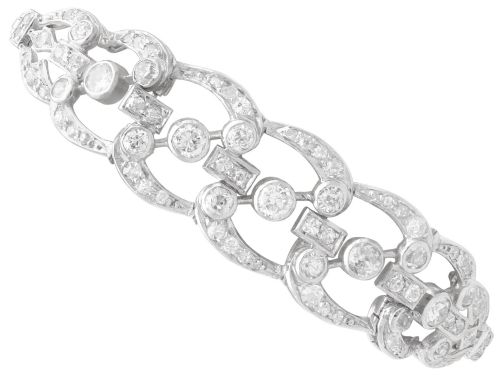
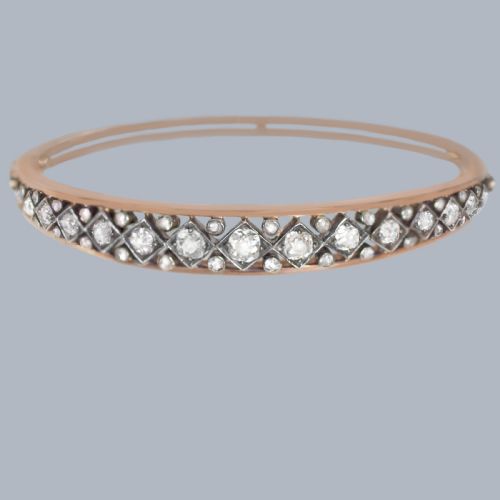
Victorian and Edwardian versions often employ traditional gold and silver settings alongside old mine cut diamonds, whereas later Art Deco pieces favour geometric platinum arrangements. Each period brings distinct characteristics that define its aesthetic appeal.
How they were made
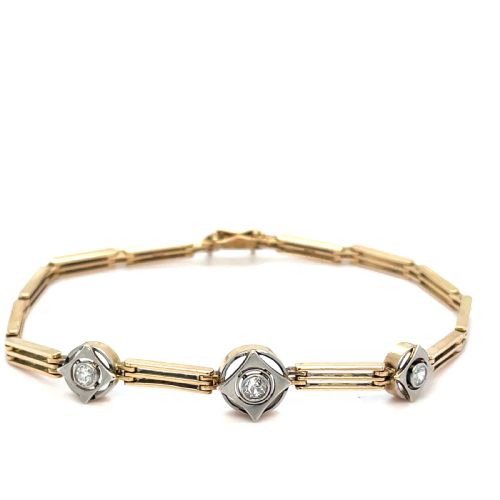
Maker construction relies on combinations of platinum, 15ct gold, 18ct yellow gold, and silver to support the stones securely. Metal selection directly influences the visual tone of the piece, with silver frequently backing older stones to enhance brilliance.
Goldsmiths integrated diamonds alongside pearls, sapphires, emeralds, and rubies using specialised setting techniques suited to each era. Artisans shaped platinum and gold into intricate cross-over, line, and solid bangle structures designed for durability and wearability.
Listings feature periods spanning from Victorian and Edwardian eras through Art Deco to the mid-twentieth century, utilising diamond, platinum, gold, silver, and pearls.
What varies in quality
Quality differences stem from the precision of the stone setting and the structural integrity of the metal band over decades of use. Superior pieces maintain robust hinges, secure clasps, and well-matched gemstones without loose elements.
The overall artistry of the period design, whether intricate Edwardian openwork or geometric Art Deco symmetry, dictates the distinction between standard items and exceptional examples. The weight and purity of the gold, platinum, or silver further establish the tier of the piece.
The Fine Diamond Bangle Glossary
- Old mine cut
- A diamond cut characteristic of the nineteenth century featuring a cushion shape, high crown, and large culet. This traditional facet arrangement produces a distinctive soft sparkle under candlelight.
- Bangle
- A rigid bracelet that slips over the hand or fastens with a hinge and clasp. Unlike flexible line bracelets, a bangle maintains a fixed circular or oval shape on the wrist.
- Platinum
- A dense, durable, and naturally white precious metal favoured in twentieth-century jewellery for secure stone settings. Its strength permits delicate wirework without risking structural failure.
- Cross-over
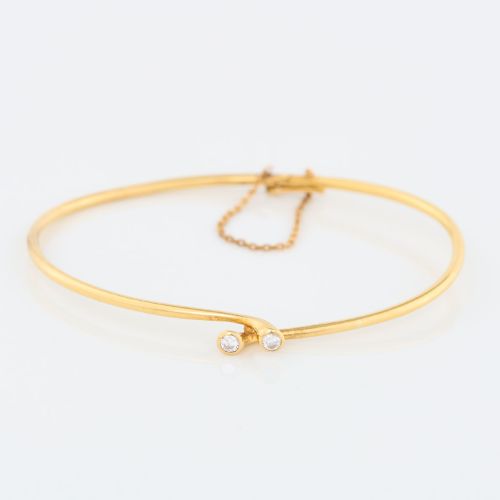
- A design style where two ends of a ring or bracelet twist or sweep past each other, often showcasing paired feature stones. This configuration creates dynamic movement across the wrist.
- Belle Epoque
- A period of refined decorative arts spanning the late nineteenth and early twentieth centuries. Pieces from this era typically feature garland motifs and light platinum work.
Fine Diamond Bangle: Frequently Asked Questions
How do I wear a fine antique diamond bangle safely?
Secure the safety chain if present and avoid wearing the piece during rigorous physical activities to protect the settings.
Store the bangle separately in a lined box to prevent scratching against other jewellery items.
Can I resize a fine antique diamond bangle?
Resizing rigid bangles presents significant challenges due to integrated hinges, safety mechanisms, and continuous stone settings.
Consult a specialist jeweller experienced in antique metalwork before attempting any structural alterations.
How do I clean a fine antique diamond bangle?
Clean the piece gently using warm soapy water and a soft brush to remove everyday oils from the diamond and metal surfaces.
Avoid harsh chemical dips, particularly when pearls or emeralds are present alongside the diamonds.
How can I tell an Edwardian piece from a Victorian one?
Victorian pieces often utilise 15ct gold and silver-topped gold alongside old mine cut diamonds, reflecting heavier, romantic designs.
Edwardian items frequently incorporate platinum and pearls with lighter, lace-like openwork structures.