
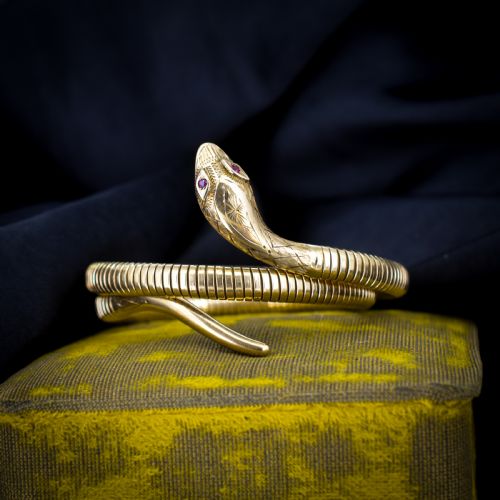


Antique Ruby Bracelet
An antique ruby bracelet brings deep crimson colour and enduring craftsmanship to the wrist through Victorian and Art Deco designs.
Antique Ruby Bracelet
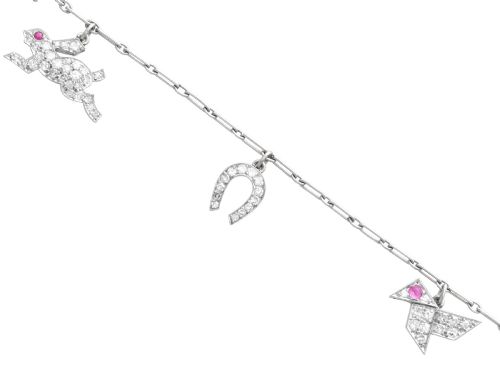
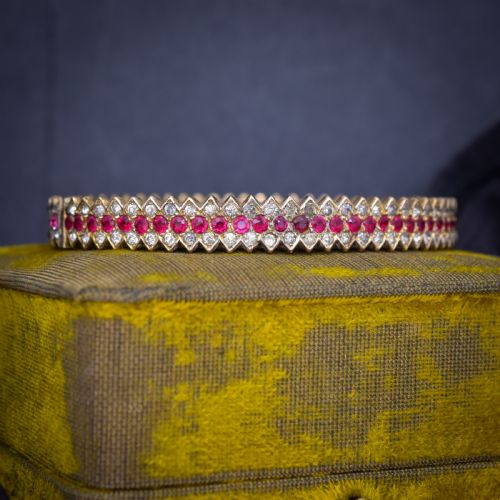
The pieces appearing on this page originate from periods such as the Victorian era, Edwardian period, and the Art Deco years. Common configurations pair rubies with diamonds, sapphires, pearls, and paste glass set in gold of varying carats.
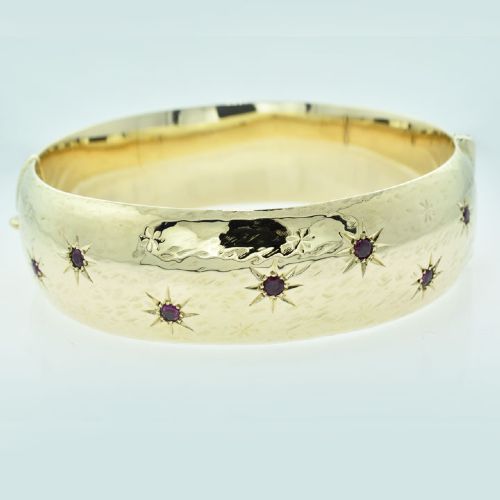
Rigid bangle formats dominate the selection, often featuring safety chains and secure box clasps or hinges. Flexible link bracelets utilise curb links or snake motifs that wrap around the wrist with articulated movement.
Materials and construction methods
Maker workshops utilised 9ct, 15ct, and 18ct gold alongside rose gold, yellow gold, and white gold to house the gemstones. Metalwork techniques combined casting, chasing, and hollow stamping for bangles, while links were individually formed and soldered.
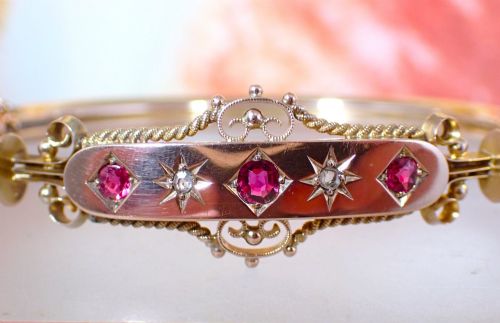
Gemstones were secured using claw settings, star settings, and flush gypsy settings depending on the period style. Paste glass and natural gemstones appear alongside rose cut diamonds and seed pearls to create contrasting textures and colours.
Listings feature yellow gold, rose gold, white gold, and gilt metal alongside platinum.
Distinctions in craftsmanship and design
Quality rests upon the structural integrity of the metalwork, the security of hinges and clasps, and the matching of the stones. Superior pieces display crisp chased detailing on gold and secure stone settings that hold firmly under daily wear.
The artistry of the design elevates certain examples, particularly where gem carters shaped stones specifically for the mount. Hallmark clarity, proportional balance, and the preservation of original clasps or safety chains distinguish finer examples from standard production.
Ilias Lalaounis
The Antique Ruby Bracelet Glossary
- Bangle
- A rigid bracelet that slips over the hand or opens via a hinge to encircle the wrist. Hinged variants often include an integrated safety chain for security.
- Padlock bracelet
- A flexible link chain terminating in a heart shaped padlock clasp. This style gained immense popularity during the Victorian era.
- Rose cut
- An antique diamond cut featuring a flat base and a domed crown with triangular facets arranged in a symmetrical pattern. This cut preceded the modern brilliant cut.
- Snake bracelet
- A piece formed as a coiling serpent symbolising eternity and wisdom. Jewelers frequently set rubies or diamonds into the head or eyes.
Antique Ruby Bracelet: Frequently Asked Questions
How do I secure an antique bangle?
Most rigid pieces use a hinged opening with a tongue and box clasp mechanism, often supplemented by a safety chain. Ensure the snap clicks firmly into place before wearing.
Check that the hinge pin remains straight and the safety chain is securely attached to prevent accidental loss during wear.
Are these rubies treated?
Many antique stones originate from mines in Burma or other historical sources and exhibit natural characteristics typical of their era. Gemstone treatments common in modern stones were largely absent in antique periods.
Certification from a gemological laboratory provides specific confirmation of origin and treatment status where detailed provenance is required.
Can I wear my bracelet daily?
Gold and durable gemstones handle regular wear, but antique settings require more care than modern equivalents. Hollow gold bangles and delicate claw settings need protection from heavy impacts.
Remove jewellery before swimming, gardening, or sleeping to protect fragile settings and antique gold components from undue strain.
How do I date a gold piece?
Hallmarks stamped on the inner band provide the most reliable evidence for dating and metal purity. Assay office marks, date letters, and maker's stamps reveal the specific year of manufacture.
Stylistic indicators such as the heavy chased work of the Victorian era or the geometric lines of Art Deco pieces also help establish the period.