

Antique Garden Pedestals
These antique garden pedestals elevate classical urns, sundials and statuary, bringing architectural dignity to lawns, terraces and borders.
Antique Garden Pedestals
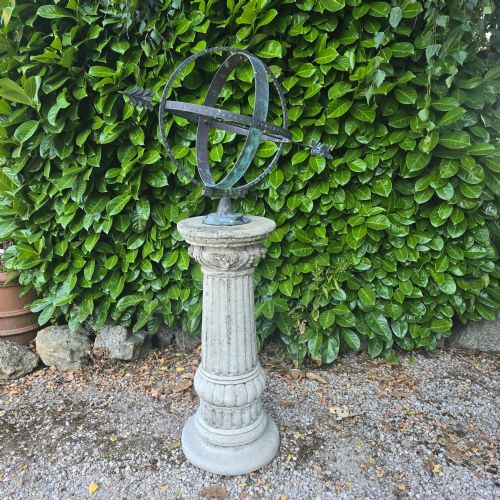
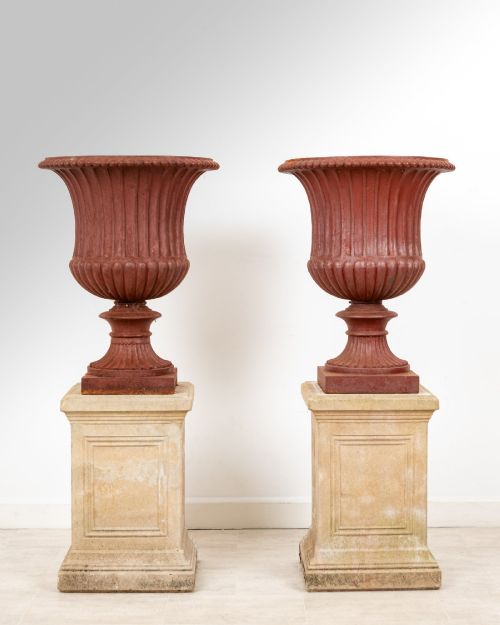
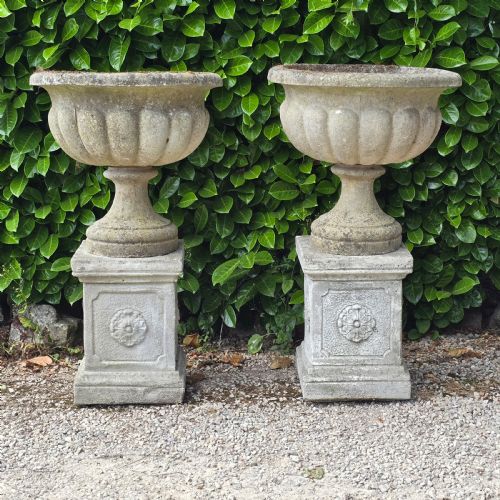
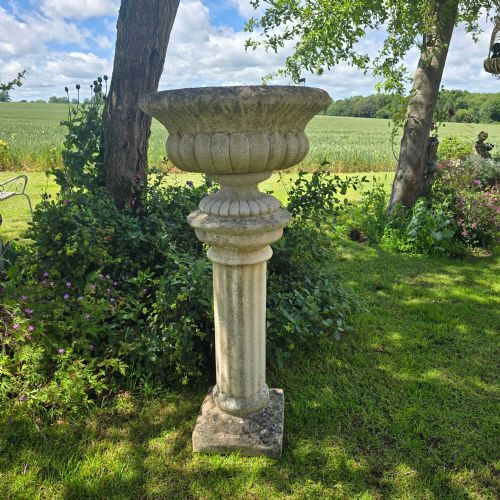
Antique garden pedestals act as the architectural foundations for displaying campana urns, planters, sundials and statuary in outdoor settings. When searching for antique garden pedestals, buyers encounter sturdy vertical supports originating from the nineteenth and early twentieth centuries. These pieces elevate heavy stone and iron vessels to improve sightlines and presence within garden layouts.
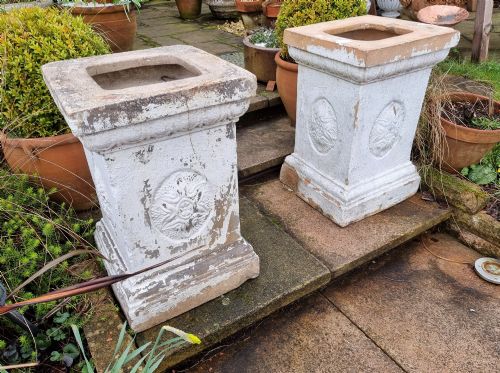
The selections on this page span Victorian designs, Gothic revival plinths and classical revival columns. Materials range from robust cast iron and weathered terracotta to composite stone and reconstituted stone. Most examples were cast or carved to support weighty garden ornaments, often pairing with urns or armillary spheres.
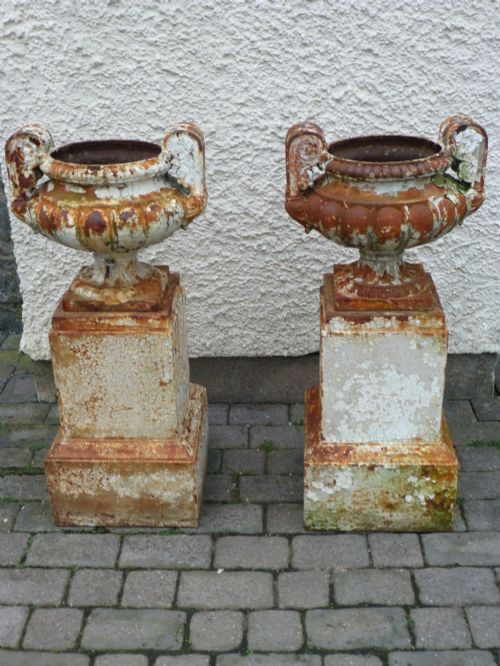
Makers and foundries such as Coalbrookdale, Falkirk Carron, and Andrew Handyside produced iron pedestals and stands during the nineteenth century. Alongside industrial foundry work, stonecarvers and potteries shaped terracotta columns and composite stone plinths. These items served formal estates, conservatories and domestic gardens alike.
How they were made
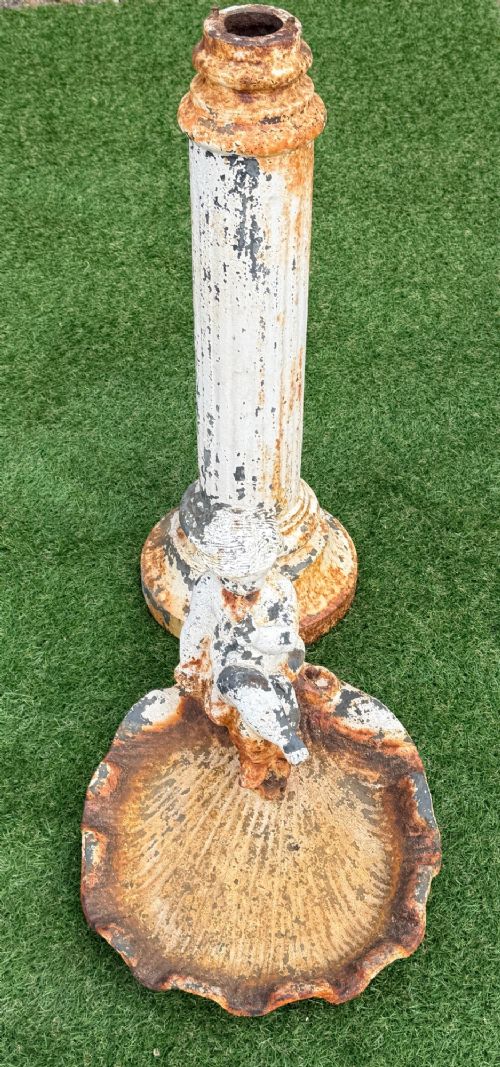
Foundries produced heavy-duty iron pedestals using sand casting techniques, pouring molten metal into moulds to create intricate classical motifs like acanthus leaves and fluting. Iron examples often received protective coats of paint to withstand outdoor exposure while retaining sharp architectural details.
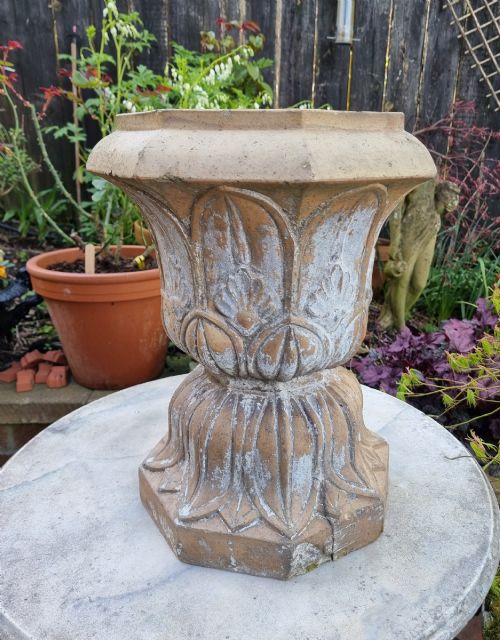
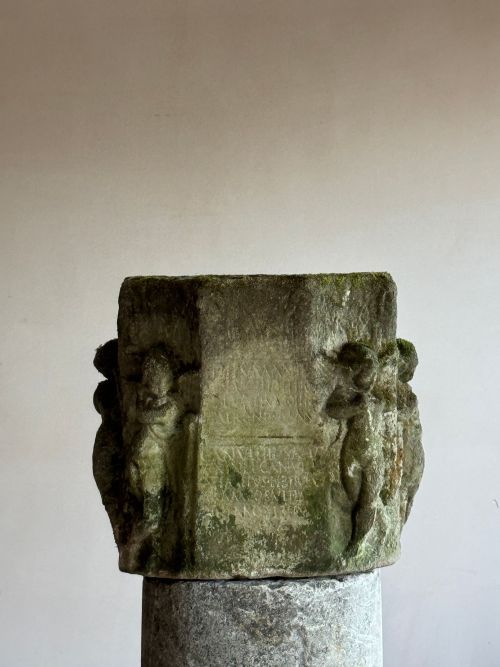
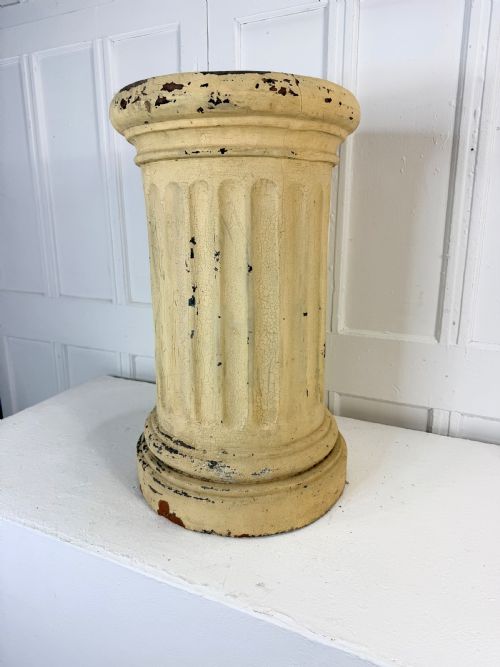
Stone and terracotta pedestals relied on manual carving or compression moulding. Masons shaped sandstone, limestone and white marble into sturdy columns and altars, while potteries fired clay to form durable display columns and terracotta garden pedestals.
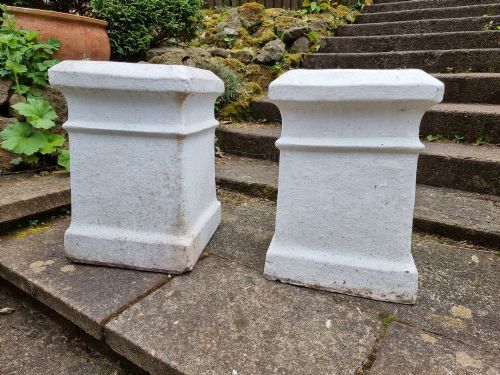
Composite and reconstituted stone introduced moulded mixtures of aggregate and cement into production methods during the nineteenth and early twentieth centuries. This technique allowed workshops to replicate carved stone plinths and Gothic style garden bases with consistency.
The inventory includes Victorian, Regency, Edwardian, and Georgian periods alongside Gothic Revival and Neoclassical styles.
What varies in quality
Quality rests in the crispness of the casting and the structural integrity of the material. Fine iron pedestals display sharp relief work on decorative panels without pitting or distortion from the foundry process, whereas lesser examples show blurred ornament.
The choice of material dictates longevity and weight under heavy urns. Dense natural stone and thick cast iron withstand centuries of weathering better than porous terracotta or degraded composite stone that suffers from frost damage over decades.
Dunfermline Clay Company·Falkirk Carron foundry·Coalbrookdale·Andrew Handyside
The Antique Garden Pedestals Glossary
- Campana urn
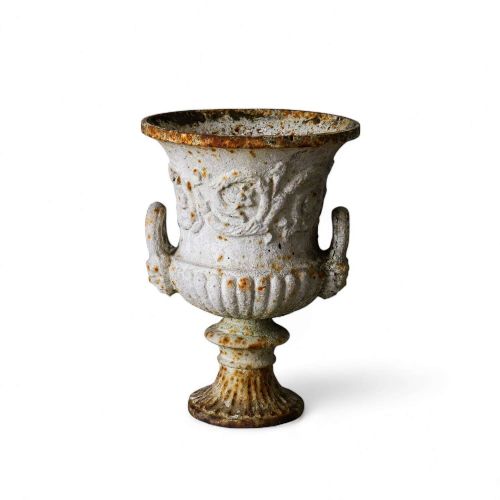
- A bell shaped garden vessel commonly mounted on pedestals or plinths. These classical forms originated in antiquity and gained immense popularity during the Victorian era.
- Plinth
- A heavy rectangular or square base supporting a column, statue or urn. Plinths elevate garden ornaments above ground level to protect them from moisture and soil.
- Terracotta
- Fired unglazed clay exhibiting warm reddish brown tones. Terracotta garden pedestals and urns acquire distinct patination through weathering.
- Armillary sphere
- A model of celestial spheres featuring rings centred on a globe or sundial. These spherical instruments frequently top stone pedestals and garden columns.
- Staddle stone
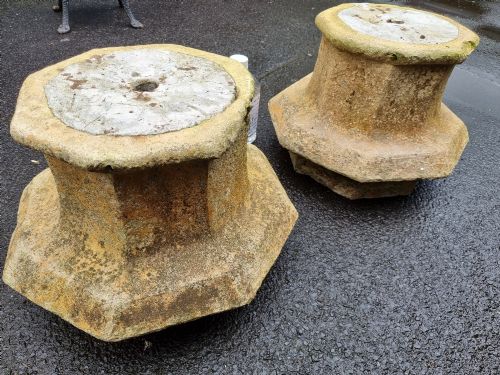
- A mushroom shaped stone block originally used to support granaries and prevent dampness or pests. They are repurposed today as garden pedestals and ornaments.
Antique Garden Pedestals: Frequently Asked Questions
What weights can garden pedestals hold?
Cast iron and stone pedestals easily support heavy stone urns, armillary spheres and large cast iron planters. Their substantial mass prevents tipping in high winds.
Lighter terracotta or composite stone columns suit moderate planters. Weight capacity depends primarily on the base footprint and material density.
Can antique pedestals stay outside in winter?
Cast iron and dense natural stone withstand freezing temperatures well, especially when painted or sealed. Proper drainage holes prevent trapped water from expanding.
Porous terracotta and certain reconstituted stone pedestals require winter protection or indoor storage in unheated conservatories to prevent frost cracking.
How do I secure an urn to a pedestal?
Many period pedestals and matching urns feature locating pins, threaded iron rods or deep socket recesses that lock the top vessel onto the base. Gravity alone secures exceptionally heavy cast iron combinations.
Adhesives are rarely necessary due to the substantial weight of the paired elements. Levelling the ground beneath the pedestal ensures long term stability.
How do I clean weathered stone and iron?
Gentle washing with warm water and a soft bristle brush removes accumulated dirt and organic growth while preserving valuable patination. High pressure washers damage historic stone and strip protective paint from cast iron.
Linseed oil or specialised metal paints protect cast iron surfaces from rust. Natural stone benefits from breathable sealers if placed in damp, shaded garden spots.