


Antique Games Case
An antique games case holds the pastimes of a house, bringing fitted wood, leather and silver to the cards, counters and tiles kept within.
Antique Games Case
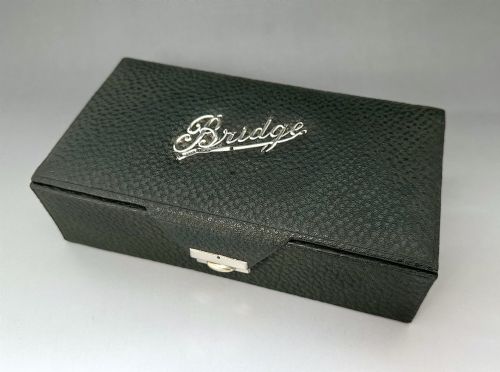
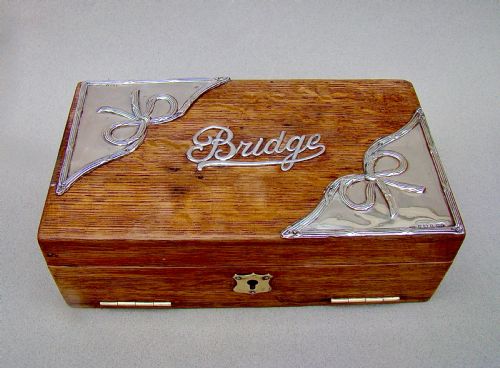
An antique games case covers everything from a polished oak compendium to a silver-mounted bridge box designed to hold playing cards, counters and small sets. The pieces met here span Victorian, Edwardian and later periods, reflecting the parlour habits of nineteenth and twentieth-century households.
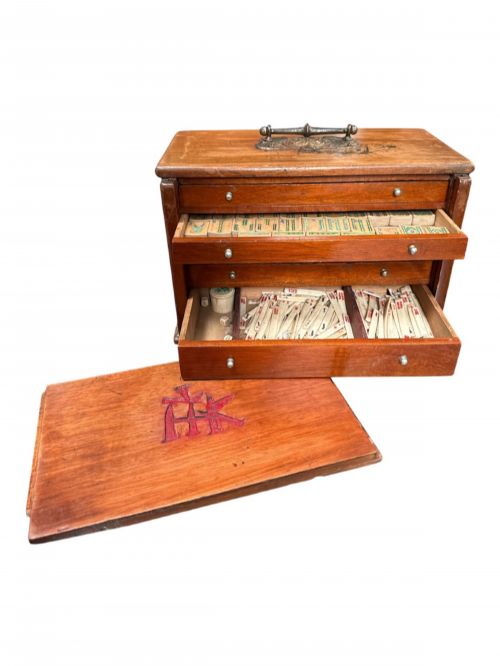
Most examples lean towards fitted wooden boxes, leather bridge cases and compact silver containers for cards or markers. Alongside these, specific pastimes appear through wooden cabinets housing Chinese mahjong tiles and small leather cases built for travelling chess.
Country house vernacular sits alongside fitted town pieces, showing how families gathered for cards, cribbage, patience and parlour games. Each container organises the equipment of a specific pastime, whether built for an English drawing room or sourced from regional workshops.
Materials and construction
Makers built these containers in solid oak, satinwood and leather, often lining the interiors in velvet to protect the contents. Wood selection governed the exterior appearance, from polished oak books to satinwood box constructions.
Metal mounts in sterling silver, silver plate and brass reinforced the corners, edges and hinges while adding decorative escutcheons and plaques. Silversmiths stamped hallmarks onto mounts, securing cards and markers inside fitted trays and compartments.
Listings feature oak, satinwood, leather and sterling silver applied to card boxes, compendiums and mahjong cabinets across the Victorian and Edwardian eras.
Distinctions in quality
Quality rests in the interior arrangement and the precision of the fitted compartments holding the cards, counters or tiles. Superior pieces maintain original dividers, lifting trays and complete sets of markers without replacement elements.
Material choice and mount execution separate standard containers from finer productions, particularly where silversmith work or detailed boxwood and bone components are involved. The weight of the timber, the finish of the leather and the snugness of the lid closure define the grade of the piece.
A. Wilcox·Levi & Salaman
The Antique Games Case Glossary
- Bridge box
- A container specifically proportioned to hold two packs of playing cards and scoring pads for bridge. These often feature silver mounts or leather outer coverings.
- Compendium
- A multi-game box housing boards, pieces and counters for several pastimes within a single fitted oak or walnut case. They open to reveal tiered trays and compartments.
- Ecarte
- A card game popular in the nineteenth century, requiring dedicated boxes often fashioned in satinwood or fine veneers to house the specific packs used.
- Cribbage box
- A small box containing a sliding cribbage board and pegs, usually fashioned in silver or timber for parlour card play.
- Patience box
- A specialised container designed for single-player card games, keeping smaller decks and markers organised in a compact footprint.
Antique Games Case: Frequently Asked Questions
What fits inside an antique games case?
These containers hold playing cards, cribbage pegs, chess sets, dominoes and counters within fitted interior trays and velvet-lined compartments.
Different boxes serve specific pastimes, ranging from single card packs to multi-game compendiums.
How do I date an antique games case?
Silver mounts carry hallmarks that give exact assay office years, while timber choices and construction styles point to Victorian, Edwardian or later decades.
Fitted interiors and trade labels inside the lid also help narrow down the period of manufacture.
Are the game pieces usually original?
Many retain their matching bone, wood or ivory components, though counters and cards are occasionally matched later to complete an empty set.
Checking whether the lifting trays and internal dividers match the age of the outer case clarifies originality.
How should I care for leather and wood cases?
Keep wooden and leather boxes away from direct sunlight and dramatic humidity shifts to protect the structural joints and velvet linings.
Gentle dusting maintains the polish on silver mounts and timber surfaces without disturbing historical patination.