


Antique Furniture with Press
Antique furniture with press brings together heavy timber storage and integrated linen compartments, built for households requiring serious domestic organisation.
Antique Furniture with Press
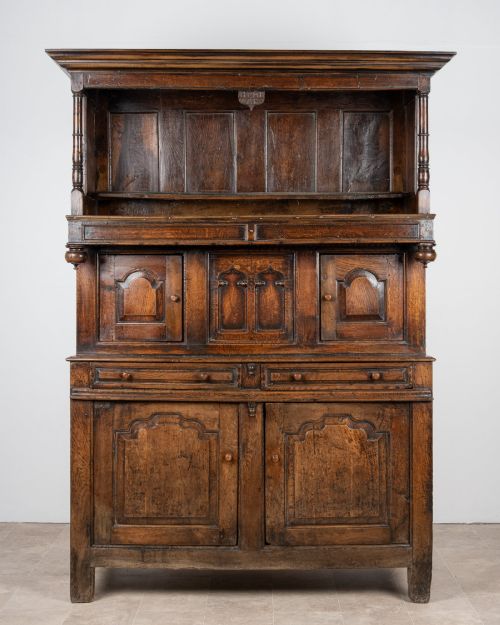
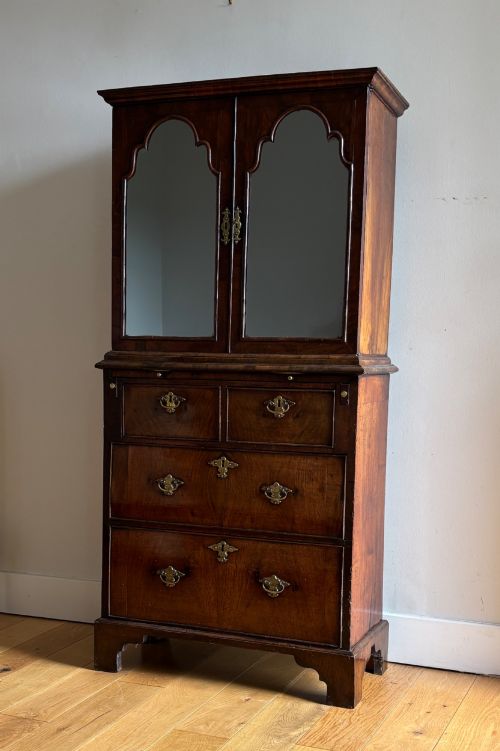
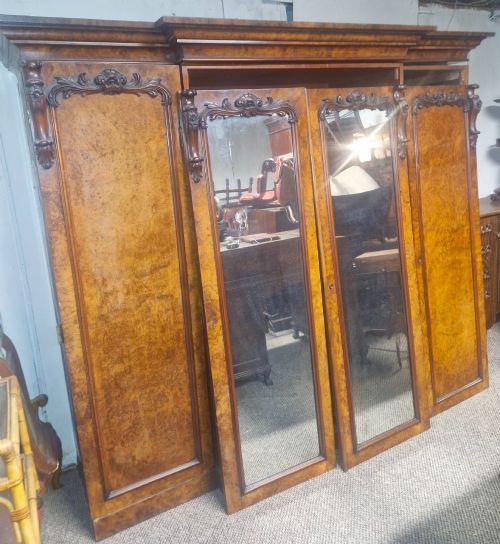
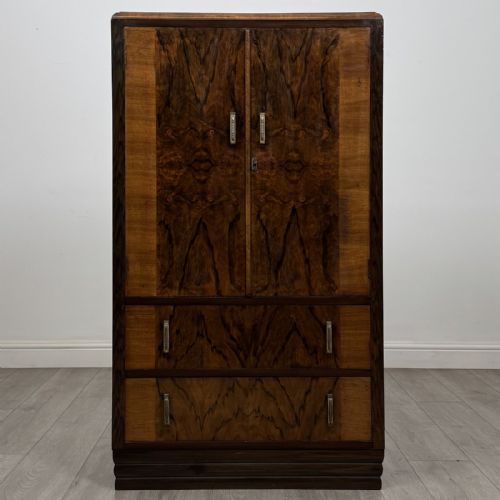
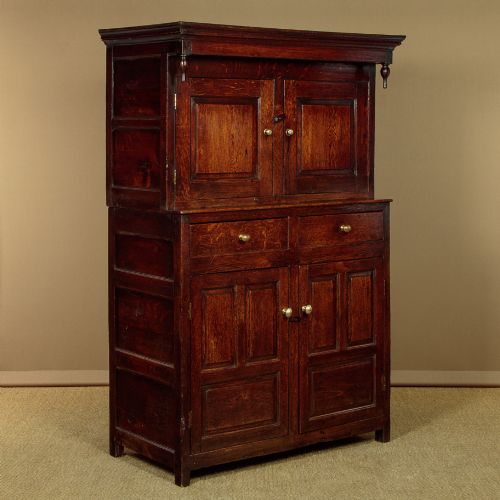
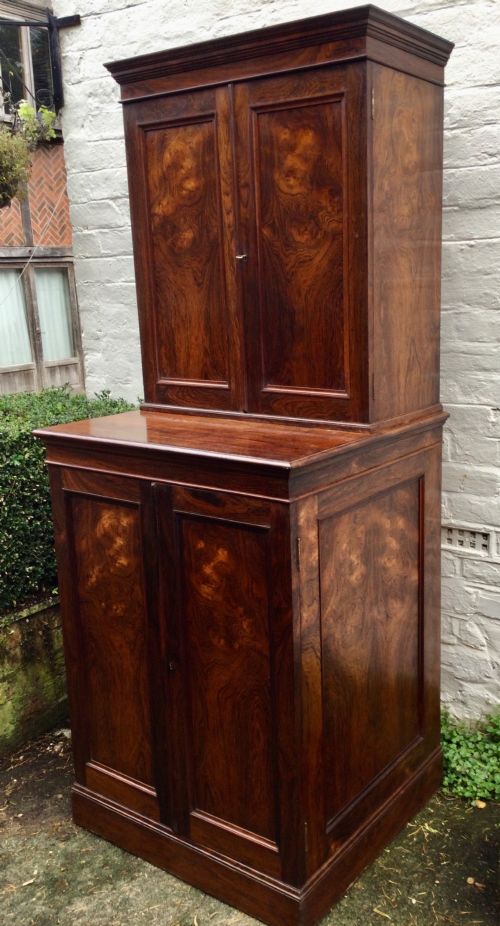
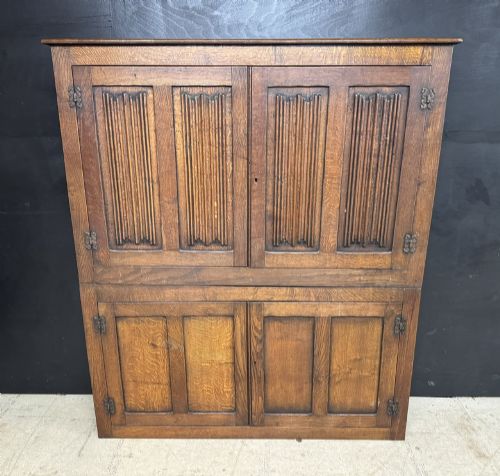
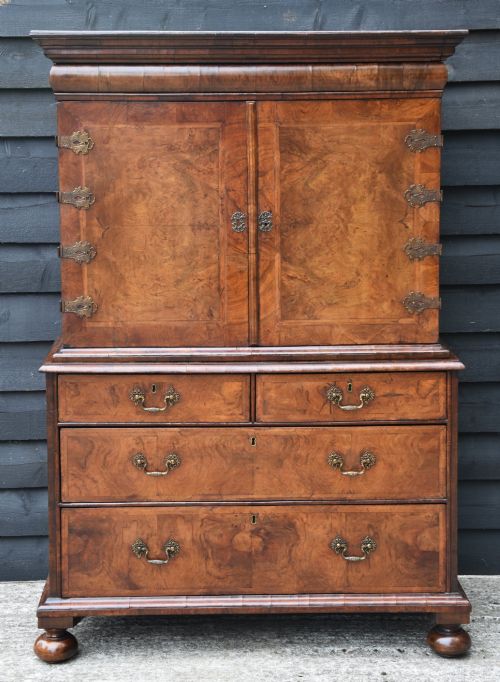
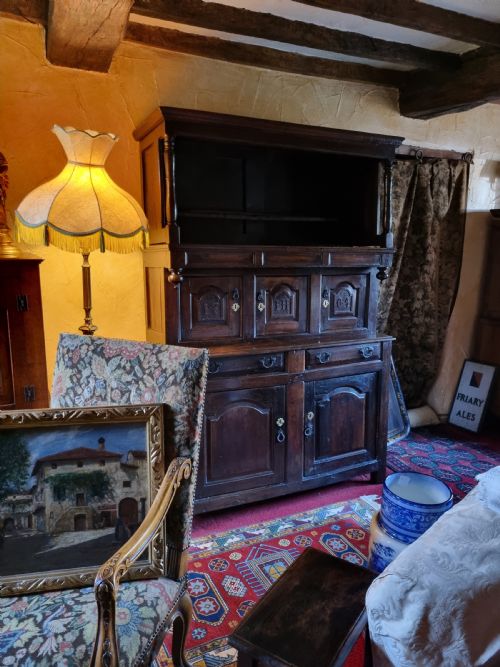
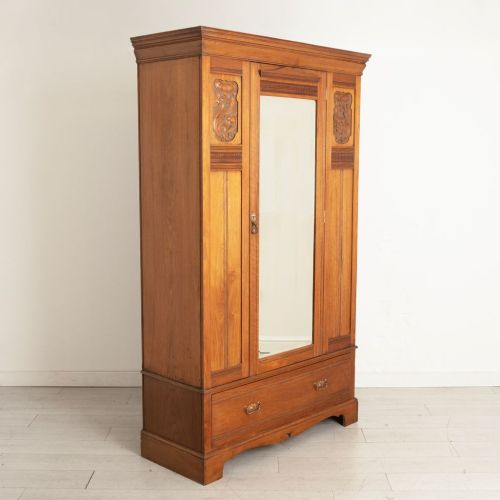
When searching for antique furniture with press, buyers encounter a robust category spanning centuries of domestic storage, primarily taking the form of linen presses, wardrobes with internal sliding trays, court cupboards, and compactums. These pieces combine enclosed hanging or shelving space with specialised sliding compartments designed originally to keep household textiles flat.
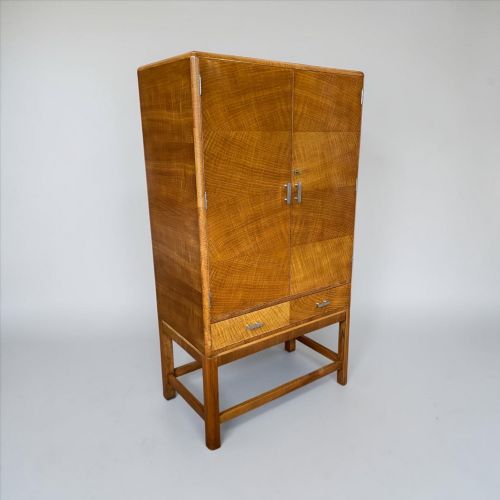
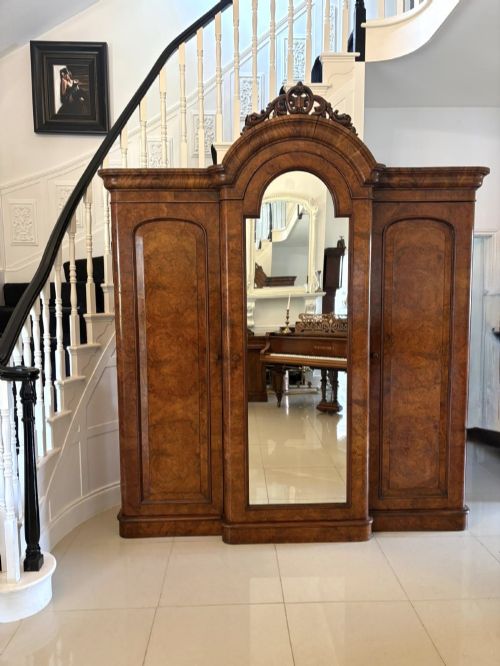
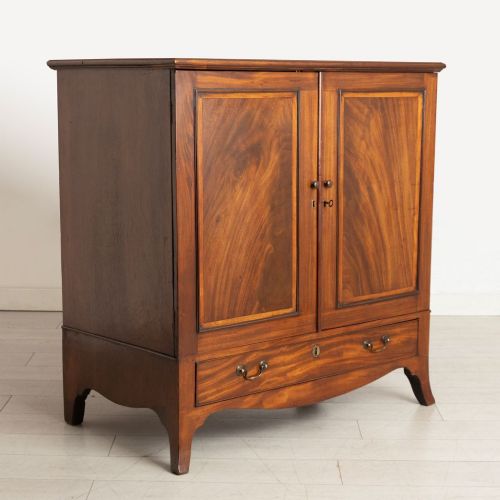
The versions most commonly met on this page range from generous Georgian mahogany and oak examples to Victorian burr walnut and satinbirch pieces, alongside regional vernacular items like Welsh bread and cheese cupboards. Forms shift from formal 18th-century cabinet-on-chest configurations to practical Edwardian wardrobes and specialised bedroom units.
Origins stretch from English country houses and Scottish workshops to Dutch and French makers, utilising distinct regional construction methods and timber choices. Buyers find everything from miniature mahogany display cabinets to large triple wardrobes equipped with lower drawers and upper press sections.
Assessing Quality and Execution
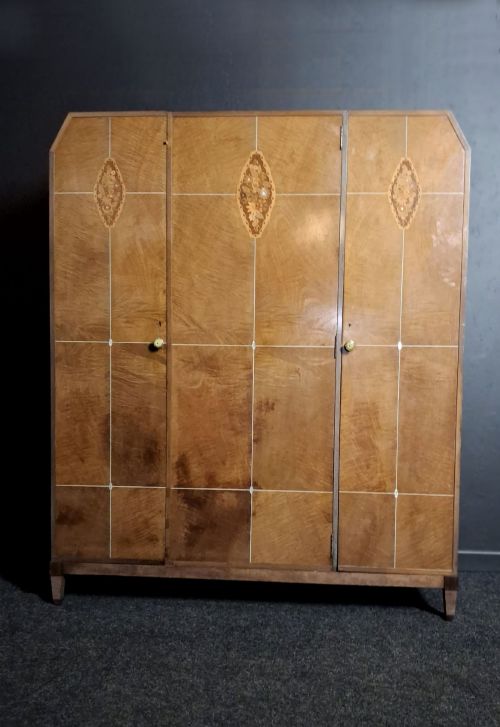
Quality rests upon the selection of timber figure, such as the richness of burr walnut or the depth of mahogany grain, and the precision of inlaid decoration. Finer examples display meticulous marquetry and harmonious proportions between the upper press and lower chest.
Internal execution distinguishes standard utility items from superior cabinetwork, visible in the smooth operation of sliding press trays, hand-cut dovetailing in drawers, and the integration of maker stamps or signatures.
Antique Furniture with Press Retail Price Guide 2026
Typical asking prices for furniture with press among the pieces listed under this phrase on Sellingantiques today, from the lower quarter to the upper quarter. They describe what is for sale here now, not the wider market.
Listings feature pieces spanning from the 17th century through the Edwardian era, utilising oak, mahogany, walnut, and pine.
Johnston’s of London·Heals·Harris Lebus·Whytock & Reid of Edinburgh
The Antique Furniture with Press Glossary
- Linen Press
- A tall piece of furniture featuring an upper section with sliding trays for storing textiles and a lower section with drawers. This form evolved to keep flat linens smooth before the widespread use of domestic irons.
- Compactum
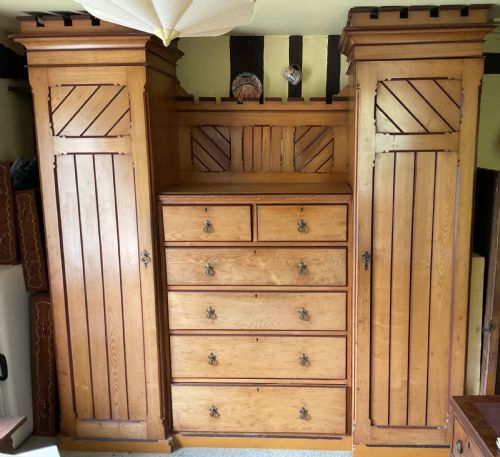
- A multi-functional wardrobe combining hanging space, drawers, and shelving within a single unit. These efficient storage items became particularly popular around the turn of the twentieth century.
- Marquetry
- The art of applying decorative veneer pieces to a structure to form intricate pictorial designs. Floral motifs and geometric patterns frequently appear on continental European cabinets.
- Court Cupboard
- An early form of enclosed storage furniture featuring stacked recessed tiers, typically constructed from solid oak. These sturdy pieces date back to the seventeenth and eighteenth centuries.
Antique Furniture with Press: Frequently Asked Questions
What is a press in antique furniture?
A press refers to an enclosed cupboard section containing sliding trays or shelves originally designed for flattening and storing household linen.
Over time, the term became attached to various combination wardrobes and cabinet-on-chest forms that incorporate this specific internal storage arrangement.
How do I date an oak press cupboard?
Dating relies on observing construction characteristics, timber selection, and hardware styles across different periods. Eighteenth-century examples often display pegged panel construction and hand-carved details, while later Victorian versions incorporate machine-cut dovetails and standardised brass fittings.
Regional vernacular pieces may retain traditional joinery methods that persist past standard stylistic dates.
Can these large wardrobes be dismantled for moving?
Many larger Victorian and Edwardian wardrobes and press units were specifically constructed to dismantle into modular sections for ease of transport.
Buyers should check individual listings to confirm whether a particular piece separates into a cornice, base, and main carcass.
What is the difference between a wardrobe and a press?
A traditional wardrobe focuses primarily on vertical hanging space for garments behind full-length doors.
A press specifically integrates horizontal sliding trays or shelves within the upper cabinet, supplemented by lower drawer storage.