

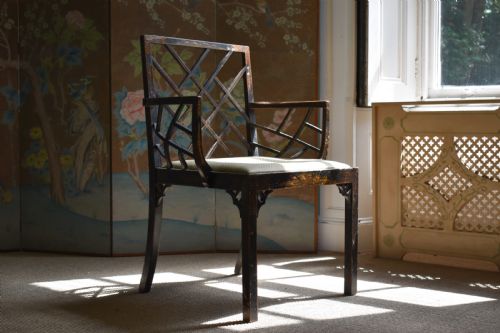
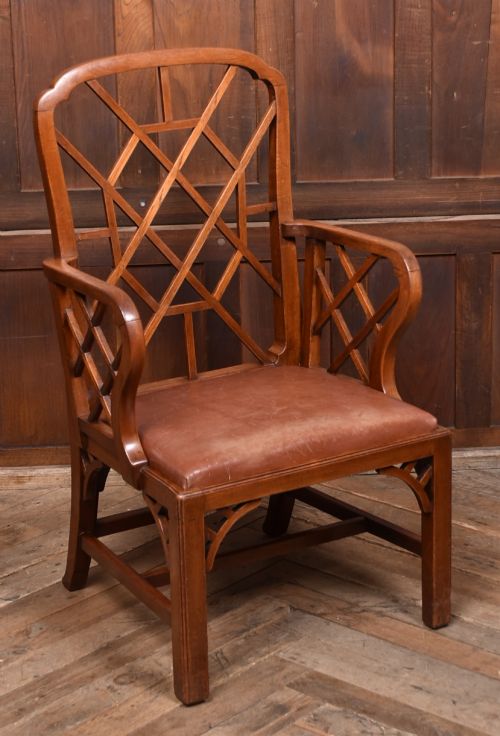


Antique Fretwork Armchairs
Antique fretwork armchairs are timber seating pieces defined by pierced splats, offering homeowners solid period character.
Antique Fretwork Armchairs
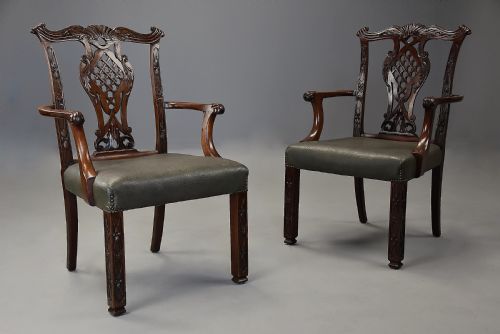
When you search for antique fretwork armchairs, you are looking at substantial seating pieces defined by pierced wooden splats and intricate openwork backrests. These items originate from several eras, including the eighteenth and nineteenth centuries, alongside Edwardian revivals.
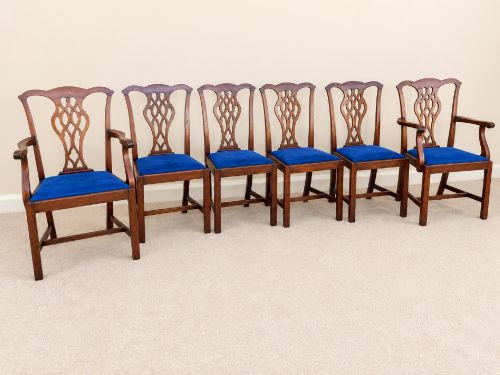
The versions you are most likely to encounter on this page span the Georgian and Chippendale styles, constructed primarily in mahogany. Examples range from open armchairs and library chairs to specific forms like Chinese Chippendale models and Cockpen chairs.
Makers drew on various aesthetic traditions, producing pieces that combine structural timber frames with decorative pierced designs. The selection includes dining chairs and elbow chairs influenced by historical cabinet-making patterns.
How they were made
Makers constructed these chairs predominantly using mahogany, shaping the timber for structural frames and intricate pierced back splats. Ebonised wood and lacquer also appear across specific revival and Chinoiserie pieces.
Craftsmen applied surface decoration through hand carving, piercing, and inlay work to create the characteristic openwork patterns. Upholstery fabrics, damask, leather, and brass details were incorporated into seats and supportive elements.
Antique Fretwork Armchairs Retail Price Guide 2026
Typical asking prices for fretwork armchairs among the pieces listed under this phrase on Sellingantiques today, from the lower quarter to the upper quarter. They describe what is for sale here now, not the wider market.
Periods represented span the Georgian era, the nineteenth century, Regency, and 1920 Edwardian revivals.
What varies in quality
The distinction between standard examples and the finest pieces lies in the crispness and depth of the hand-carved fretwork. Superior items display meticulous attention to detail in the pierced splats and joinery.
Material selection significantly influences overall quality, with dense, well-figured mahogany commanding greater appreciation than simpler secondary timbers. The integrity of the original frame construction and surviving decorative surfaces also dictate the standing of a piece.
Thomas Chippendale·Robert Manwaring
The Antique Fretwork Armchairs Glossary
- Fretwork
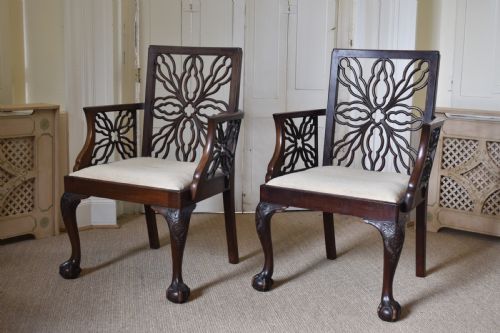
- Ornamental perforated or cut-out woodwork used primarily on chair backs and rails. This technique creates intricate geometric or oriental-inspired patterns.
- Cockpen chair
- A lattice-back armchair featuring a square grid pattern inspired by Chinese designs. These pieces often appear in eighteenth-century and Edwardian interpretations.
- Gainsborough armchair
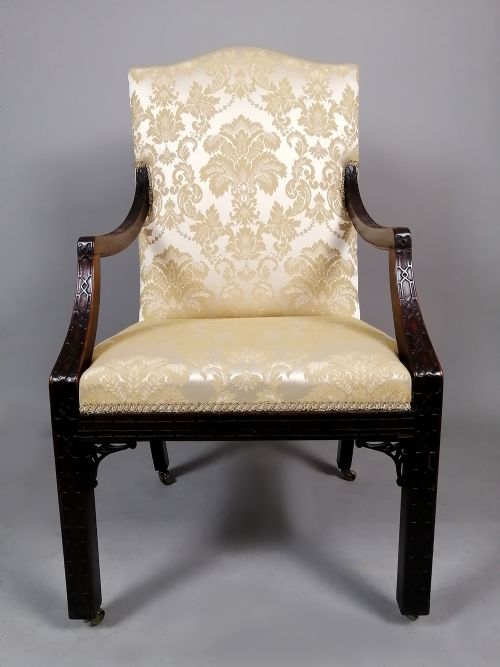
- A wide, upholstered seat with open arms supported on a mahogany frame. The style originated in the mid-eighteenth century.
- Chinoiserie
- European interpretation of Chinese and East Asian artistic traditions. This style manifests in lacquer finishes and fretwork patterns.
- Splat
- The vertical central strip of wood in a chair back. In these pieces, the splat is pierced and carved with fretwork designs.
Antique Fretwork Armchairs: Frequently Asked Questions
What is a fretwork armchair?
A fretwork armchair is a wooden seating piece featuring pierced, decorative patterns cut directly into the back splat or rails. These designs draw on Georgian and Chinese Chippendale influences.
Such chairs function as both practical seating and decorative focal points within a room. Their openwork construction creates a lighter visual appearance while maintaining a sturdy timber frame.
How do I identify a Chippendale style chair?
Chippendale style chairs typically feature characteristic carved mahogany frames, ornate pierced splats, and cabriole or straight legs. The proportions reflect eighteenth-century cabinet-making traditions.
Many examples on the market are later revivals from the nineteenth and early twentieth centuries. Examining the timber grain, joinery methods, and carving depth helps determine the period of manufacture.
Where were these chairs used historically?
Historically, these armchairs served in libraries, parlours, and formal dining rooms as seating for family members and guests. Library chairs and elbow chairs provided comfort during reading or writing.
More elaborate models were positioned visibly in reception rooms to demonstrate the owner's taste. Simpler dining chairs accompanied large tables for daily meals.
How should I care for antique mahogany chairs?
Caring for antique mahogany involves keeping chairs away from direct heat sources and fluctuating humidity. This prevents the timber and glued joints from drying out and splitting.
Routine maintenance requires gentle dusting with a soft cloth rather than modern chemical polishes. Preserving the upholstery fabric or leather involves standard textile care appropriate to the specific material.