







Antique French Writing Set
An antique french writing set brings sculptural brass, marble and porcelain to a desk, holding inkwells and pens with nineteenth-century weight.
Antique French Writing Set
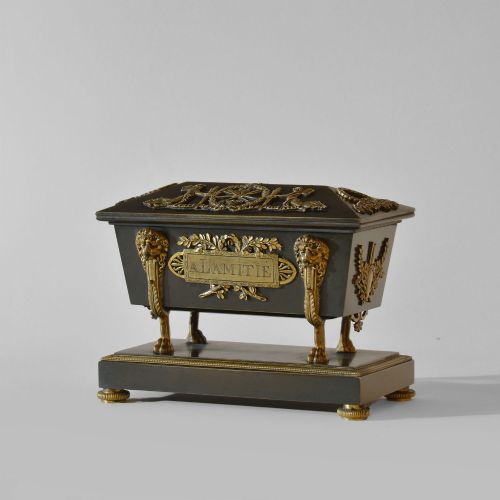
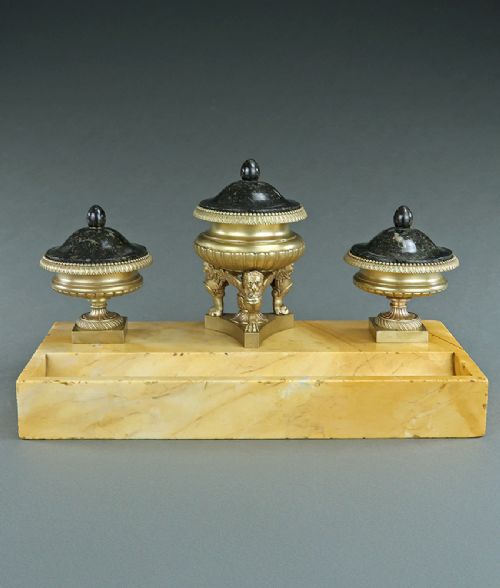
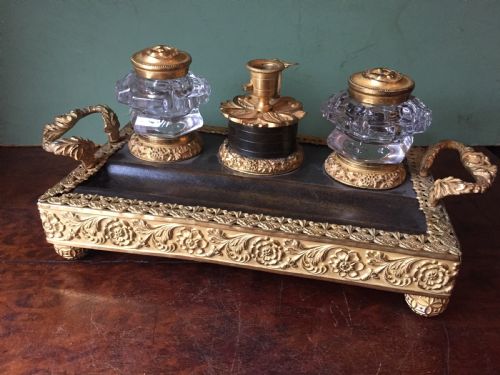
An antique french writing set is a collection of desk accessories designed for correspondence, most commonly encountered here as inkstands and inkwells mounted on marble or cast metal bases.
The objects span the eighteenth to the early twentieth centuries, drawing heavily on nineteenth-century French Empire, Napoleon III and Neoclassical styles.
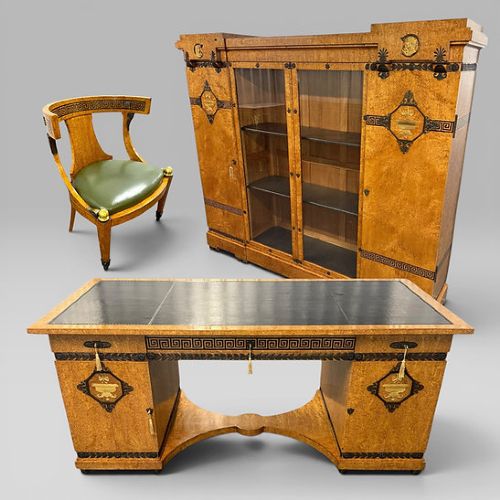
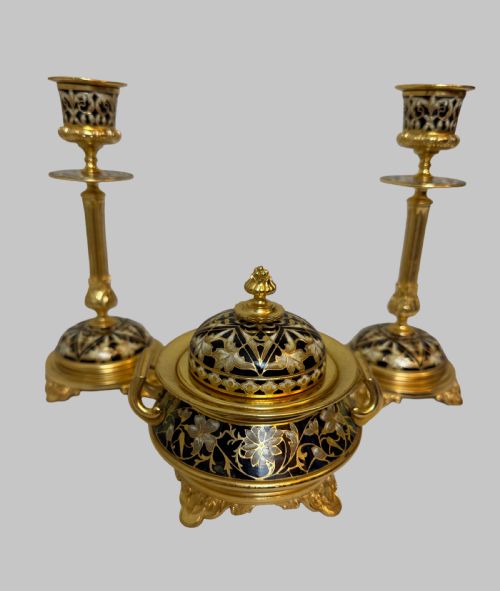
Beyond standalone inkwells, these sets frequently include matching candlesticks, letter holders and desk clocks that transform a workspace into a coordinated ensemble.
What varies in quality
Quality depends upon the crispness of the bronze or brass casting and the depth of the gilding, where heavier chasing and defined details separate superior pieces from standard production.
The choice of structural materials marks the hierarchy, with dense natural marble and genuine tortoiseshell outranking simpler wooden or plain brass foundations.
Antique French Writing Set Retail Price Guide 2026
Typical asking prices for french writing set among the pieces listed under this phrase on Sellingantiques today, from the lower quarter to the upper quarter. They describe what is for sale here now, not the wider market.
Listings demonstrate a strong reliance on nineteenth-century production dates, utilising materials such as Sienna marble, ormolu, tortoiseshell and hand-painted porcelain.
Mercier Frères·Albert Marionnet·Jules Dalou
The Antique French Writing Set Glossary
- Encrier
- A French inkstand or inkwell container designed to hold writing materials on a desk. This term frequently appears in descriptions of nineteenth-century marble and bronze pieces.
- Ormolu
- Gilded bronze produced by applying a finely ground high-carat gold mercury amalgam to a bronze object. The technique creates a warm, rich metallic lustre characteristic of luxury French desk sets.
- Boulle work
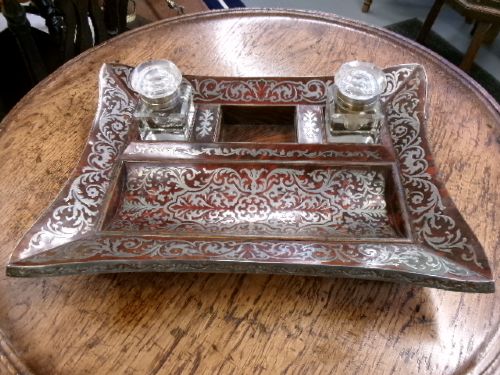
- A form of marquetry consisting of tortoiseshell and brass inlaid in contrasting patterns. It is named after the master cabinetmaker André-Charles Boulle and decorates refined nineteenth-century desk stands.
- Champlevé
- An enamelling technique where troughs are dug into a metal surface and filled with vitreous enamel before firing. Pieces utilising this method display vibrant coloured patterns across inkstands and candlesticks.
- Empire style
- A neoclassical design movement spanning the early nineteenth century characterised by martial motifs and classical symmetry. This aesthetic heavily influences the bronze and marble inkstands of the period.
Antique French Writing Set: Frequently Asked Questions
What is included in an antique writing set?
These sets typically centre on an inkstand equipped with one or two glass or ceramic inkwells for holding liquid ink.
Depending on the scale of the ensemble, they may also incorporate matching candlestands, pen trays, letter racks or small desk clocks.
How do I date a French inkstand?
Dating relies on identifying the prevailing design style, such as the classical symmetry of the Empire period or the organic curves of later Art Nouveau.
Material combinations also offer clues, as specific marbles and enamel techniques gained popularity during distinct decades of the nineteenth century.
Are these inkwells still usable today?
Many inkstands retain their original glass or ceramic internal ink inserts, making them physically capable of holding ink.
Buyers often choose to use them for modern fountain pens or simply display them as decorative historical objects on a working desk.
How should I clean marble and ormolu?
Ormolu mounts require gentle dusting with a soft, dry cloth to protect the delicate gilt surface from abrasion and moisture.
Marble bases can be wiped down with a barely damp cloth followed immediately by dry buffing, avoiding acidic household cleaners entirely.