
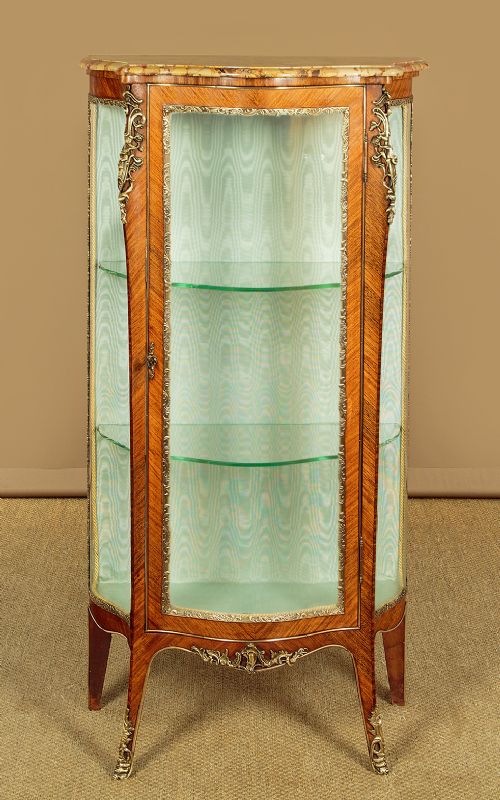
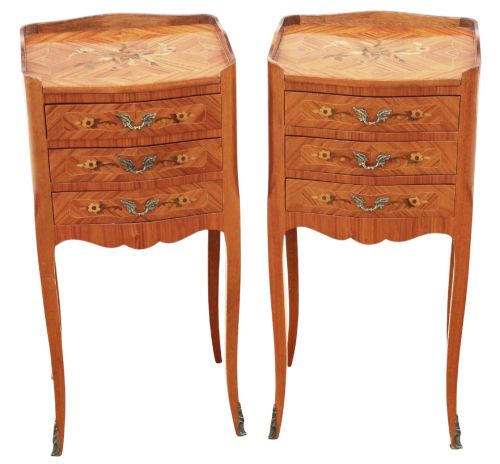
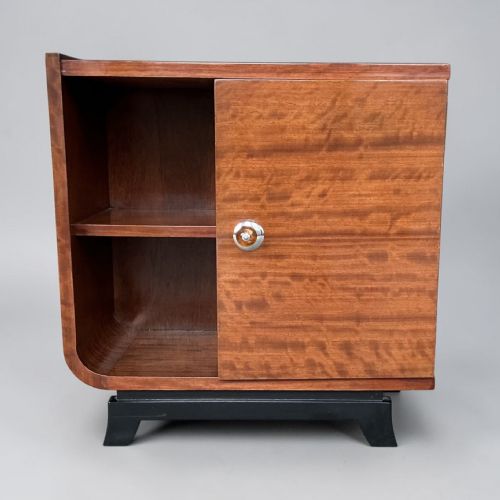
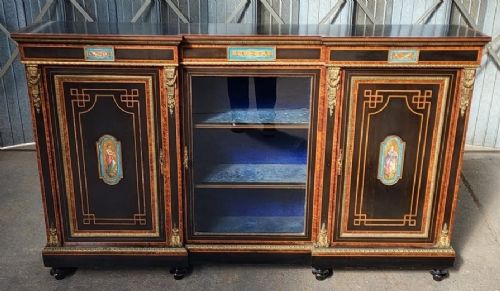

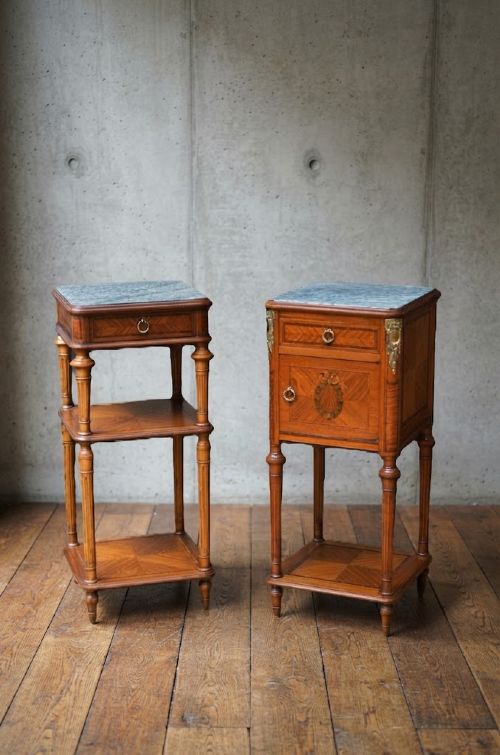
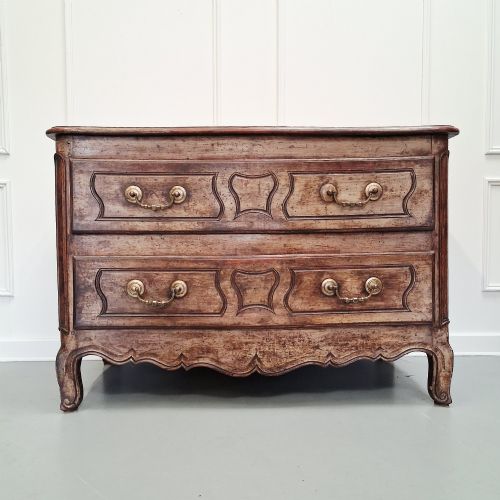
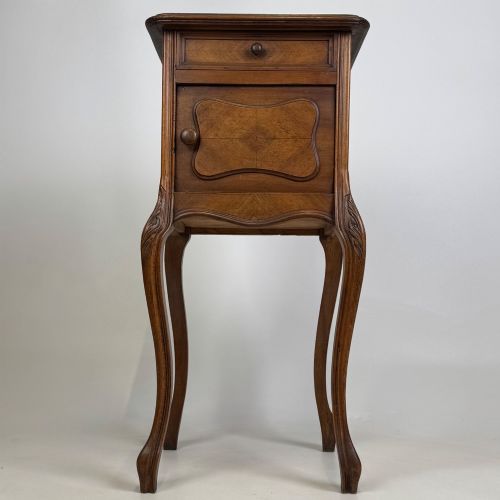
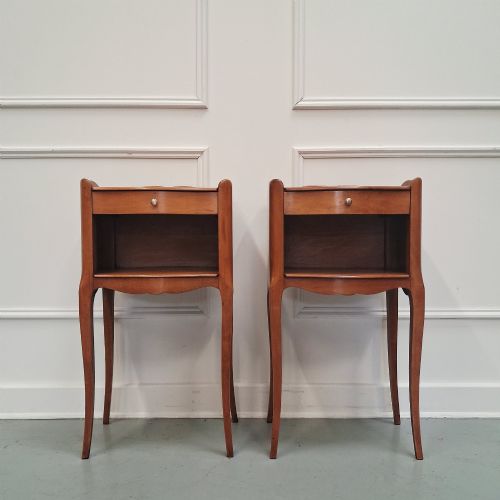
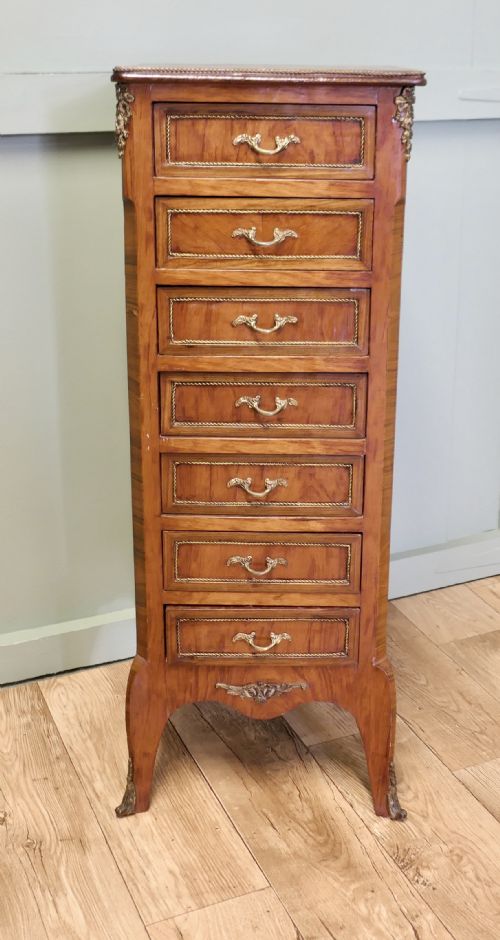
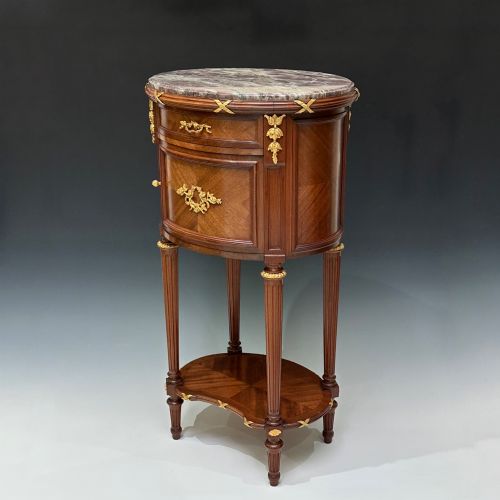
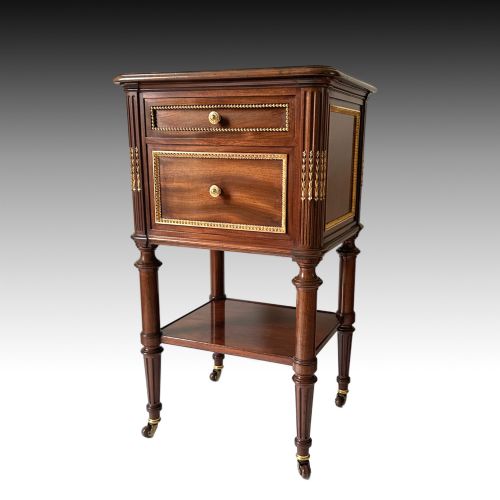
Antique French Side Cabinet
An antique french side cabinet brings continental elegance to a room, offering practical storage topped with polished marble and fine timber.
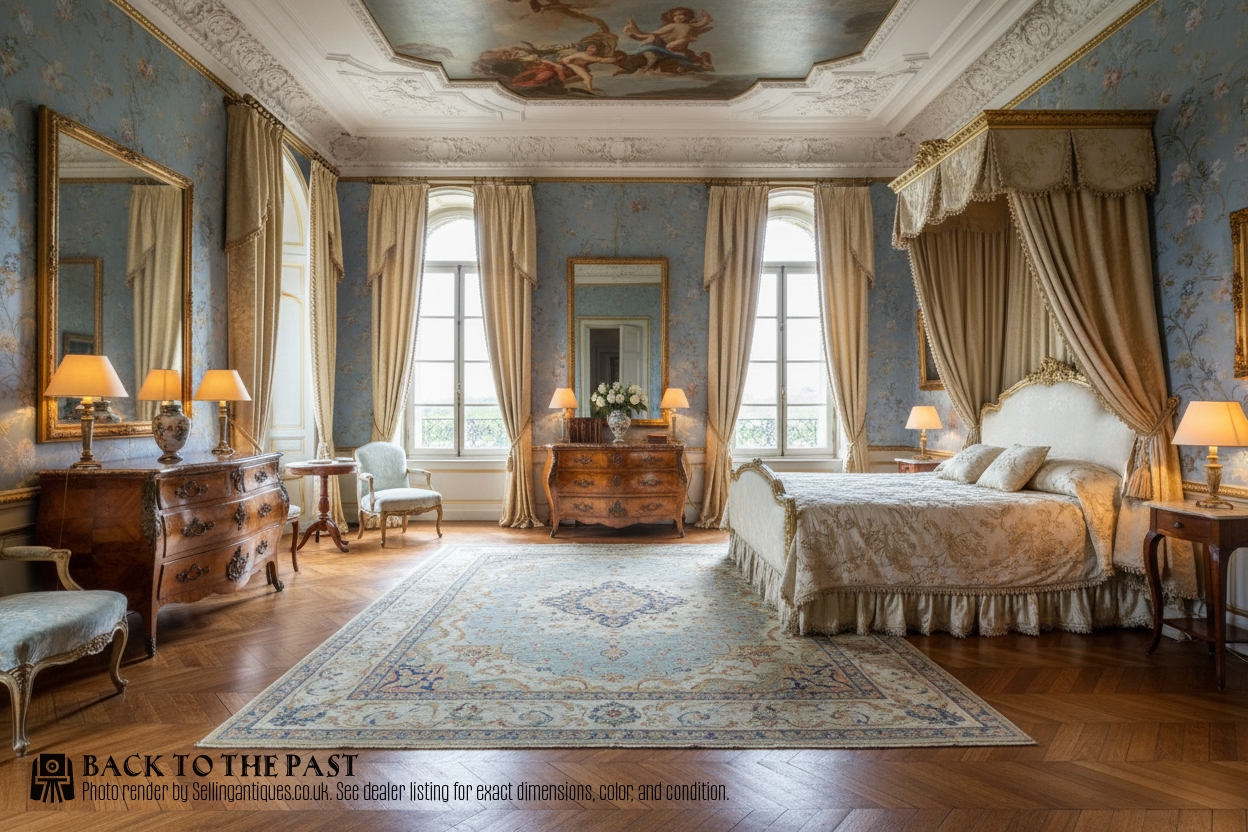
Forms and Origins
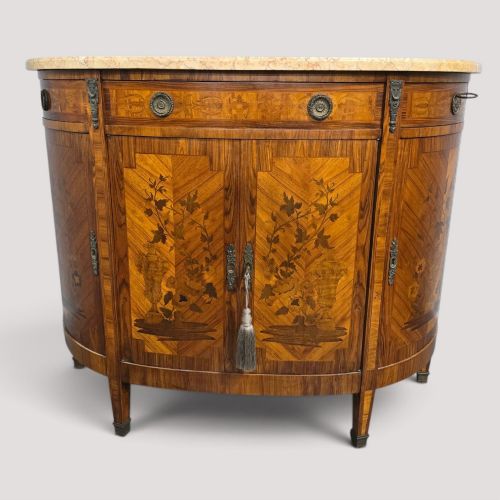
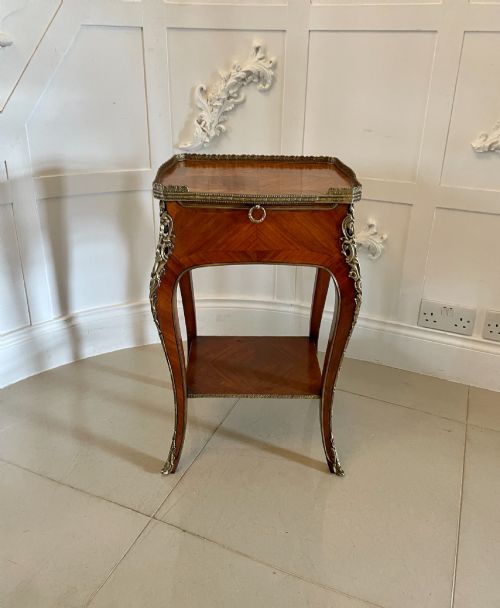
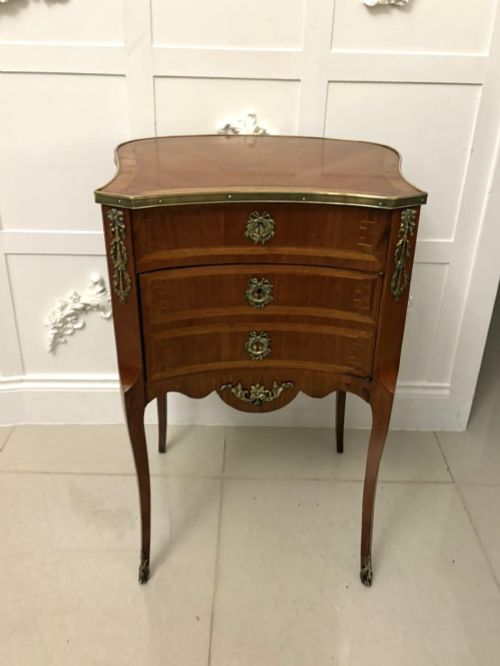
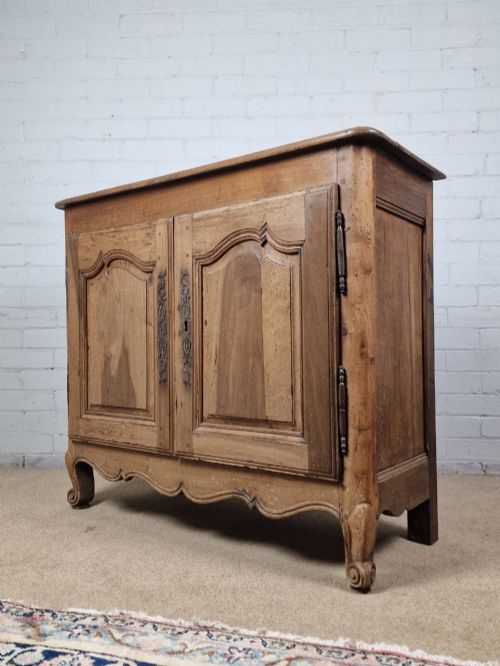
An antique french side cabinet encompasses commodes, credenzas, and bedside cupboards originating from workshops across the continent. These pieces emerge in styles ranging from early eighteenth-century provincial work to later revival designs.
Buyers frequently encounter bedside tables and marble-topped chests spanning the eighteenth, nineteenth, and early twentieth centuries. The selection includes compact walnut cabinets alongside larger oak buffets and kingwood credenzas.
Forms follow classical continental lines, incorporating serpentine fronts and enclosed shelving suited to domestic storage. Each piece reflects the specific period aesthetic, from straightforward provincial utility to elaborate Louis XV revival ornamentation.
Materials and Construction
Cabinet makers built these pieces using regional timbers including walnut, oak, cherrywood, mahogany, and exotic veneers like kingwood and rosewood. Solid carcases receive decorative marquetry and parquetry patterns arranged across drawer fronts and door panels.
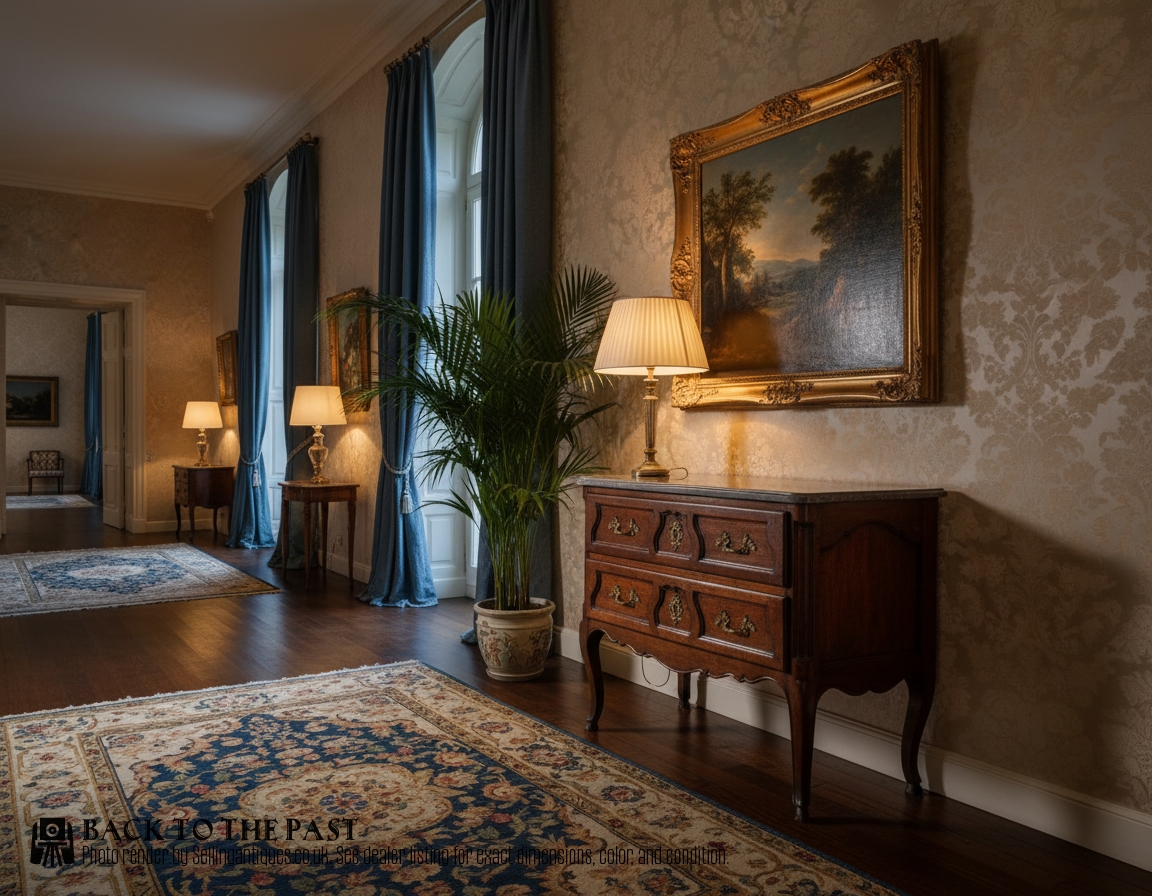
Surfaces frequently feature fitted marble slabs secured to the upper carcase, accompanied by cast brass or ormolu mounts. Painted finishes and specialised chinoiserie decoration appear on select pieces from specific eras.
Retail Price Guide 2026
Typical UK retail prices for french side cabinet, calculated from the Sellingantiques database of over a million retail prices indexed since 2003. This retail price guide relies exclusively on Sellingantiques data; no external sources or auction records are used, so the figures do not describe the wider market.
Listings feature walnut, oak, kingwood, mahogany, and cherrywood timbers alongside marble, brass, and hand-painted finishes.
Standards of Execution
Quality rests in the precision of the timber matching and the crispness of the bronze or brass mounts. Superior pieces display harmonious grain patterns across inlaid surfaces and substantial marble tops with well-finished edges.
Construction integrity shows in the joinery of the internal drawers and the original fit of the hardware. The distinction between standard and finer examples lies in the depth of hand-carving and the integration of decorative elements.
Mercier Frères
The Antique French Side Cabinet Glossary
- Ormolu
- Gilded bronze mounts applied to furniture for decorative accent. These cast elements frame panels and highlight structural corners.
- Marquetry
- Veneers arranged in pictorial or geometric patterns across furniture surfaces. Craftsmen cut different timbers together to form intricate motifs.
- Commode
- A low chest of drawers functioning as a side cabinet. The form evolved through the eighteenth century with varied leg configurations.
- Kingwood
- A dense Brazilian timber utilised for decorative cabinet veneers. It displays contrasting dark and light striped grain patterns.
- Credenza
- An enclosed side cabinet designed for display and storage. The form incorporates cupboard doors and occasionally open shelving.
Frequently Asked Questions
Where did people place these cabinets?
These cabinets served multiple domestic roles, functioning as bedside tables, hallway storage, or salon serving pieces. Their versatile dimensions allowed them to fit against parlour walls or flanking sleeping quarters.
Larger buffet versions occupied dining spaces for storing tableware, while smaller commodes provided surface space for lighting and decorative items.
How do I identify a revival piece?
Revival pieces emulate earlier eighteenth-century aesthetics, particularly Louis XV and Louis XVI designs, through standardised construction methods and characteristic decorative mounts. Examining the interior timber and secondary woods helps clarify the manufacturing era.
Makers working in the nineteenth and early twentieth centuries adopted historical vocabularies while utilising contemporary workshop tools and standardised hardware fixings.
What maintenance do marble tops need?
Marble surfaces require gentle cleaning with mild, non-acidic soap and water to preserve the polished finish. Avoid harsh chemical cleaners that can etch or dull the stone over time.
Periodic wiping keeps dust from settling into natural fissures, and coasters protect the porous material from staining by liquids.
Are the brass mounts original?
Original brass and ormolu mounts fit snugly against the timber contours, showing consistent wear and oxidation matching the age of the carcase. The fixing pins or screws typically correspond to period manufacturing techniques.
Replacements often sit differently on the wood surface, lacking the integrated patination found on mounts exposed to light and air for generations.