
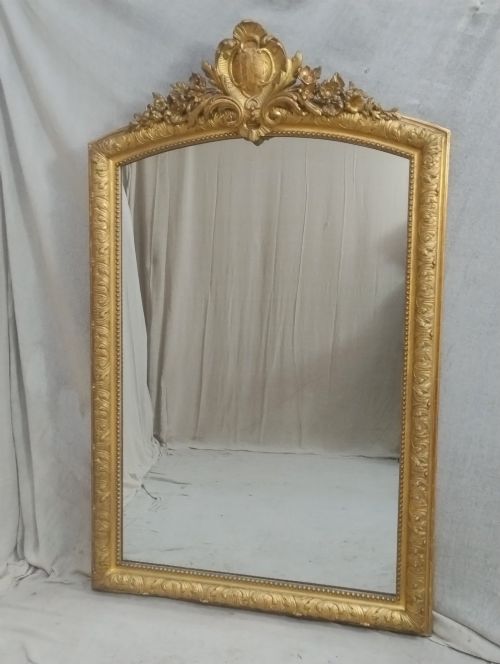
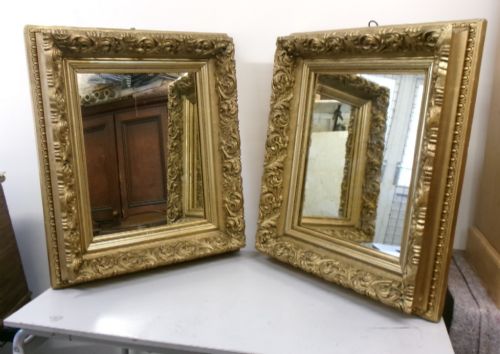


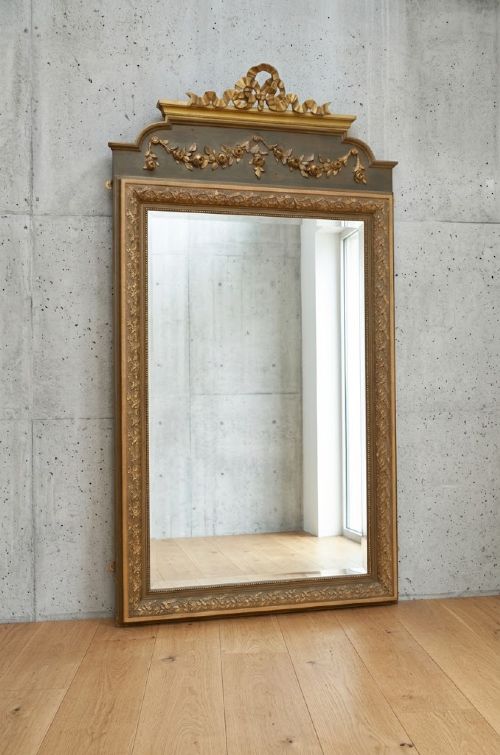
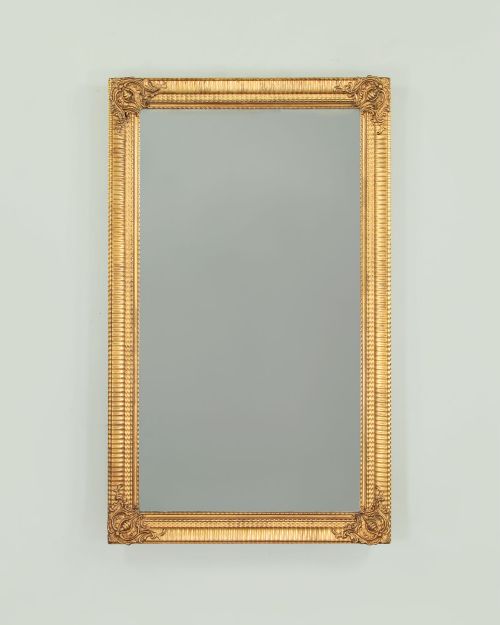
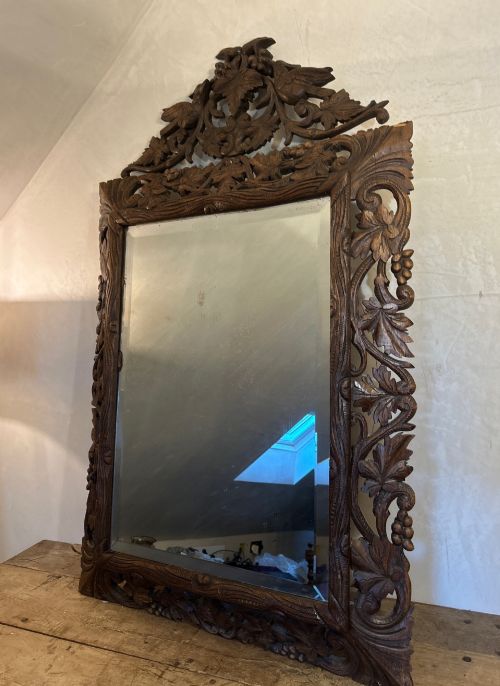
Antique French Overmantel
These antique french overmantel pieces are large mirrors designed to sit above fireplace openings, bringing scale and historical character to a room.
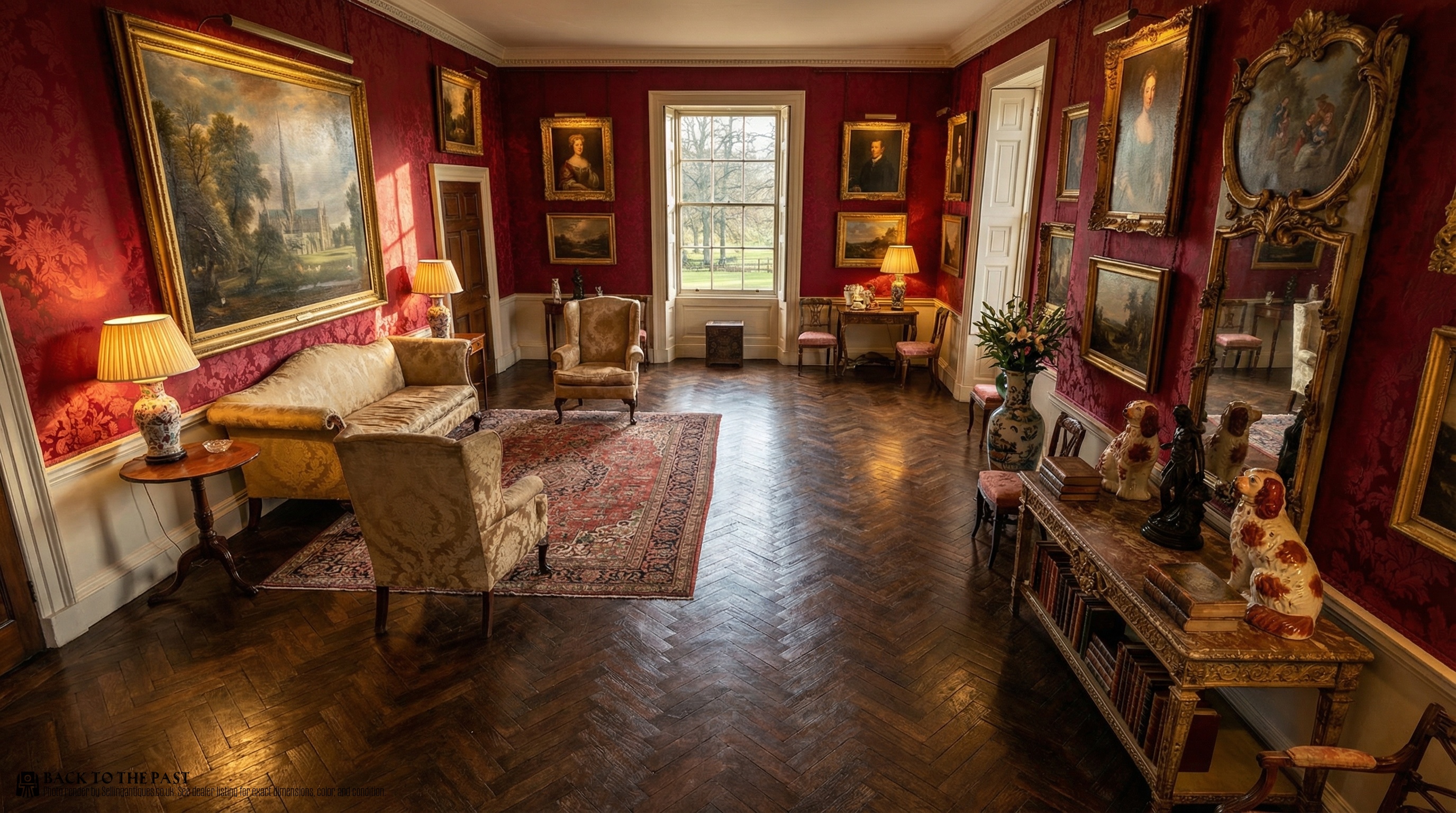
What They Are
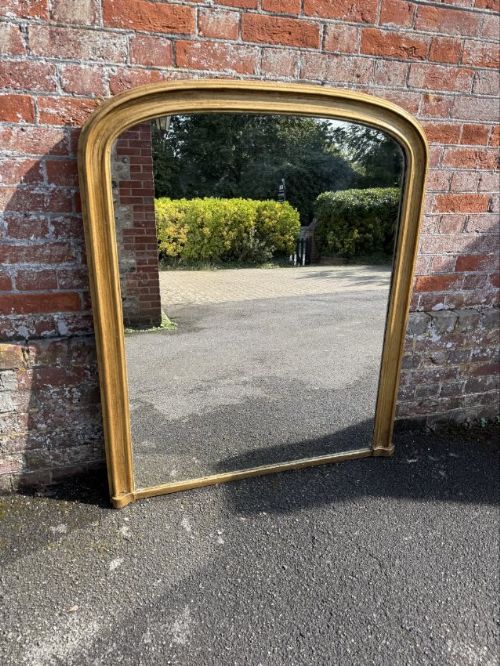
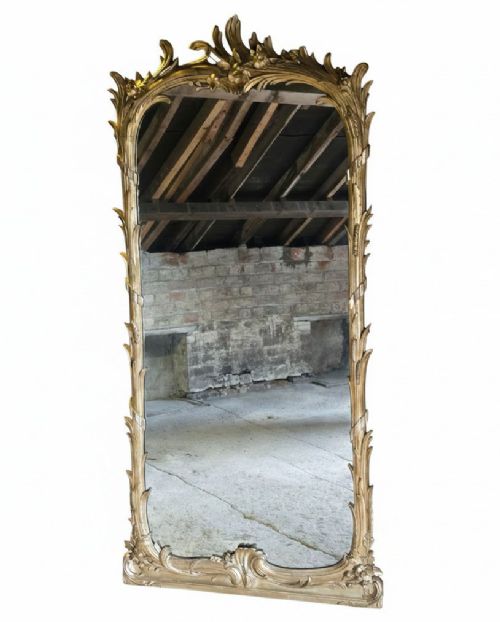
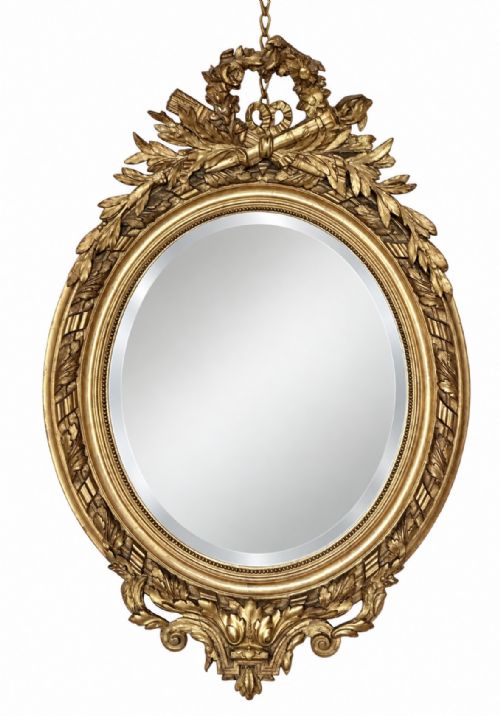
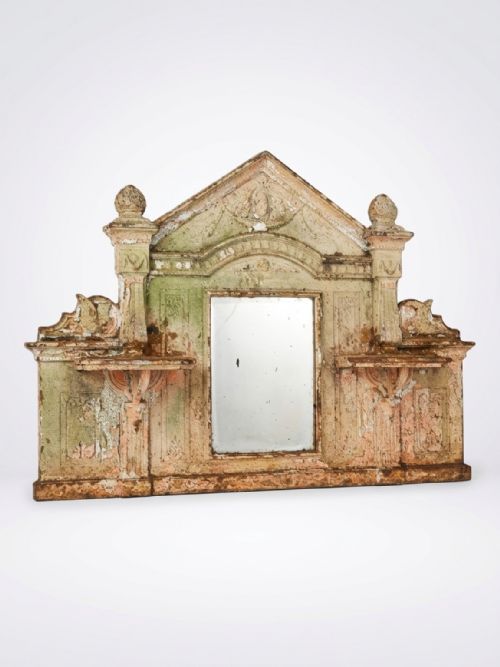
An antique french overmantel is a large wall mirror designed specifically to hang above a mantelpiece. These pieces originate primarily from the eighteenth and nineteenth centuries, spanning periods such as the Second Empire and the reign of Louis Philippe.
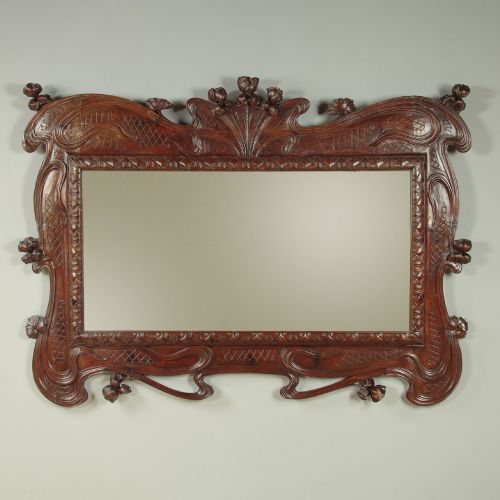
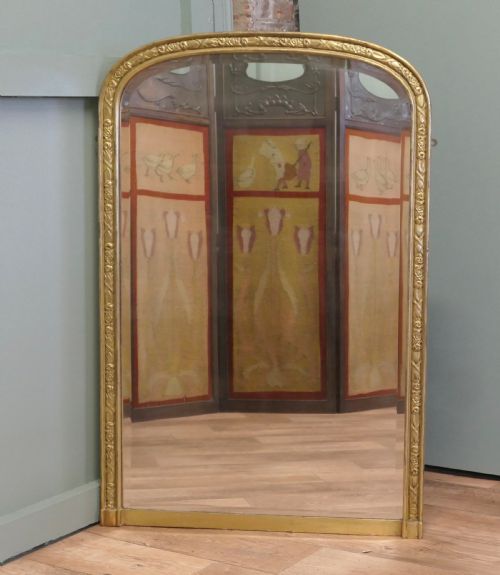
The form appears as rectangular, arched, or trumeau formats, often functioning as leaner mirrors as well as wall-mounted fixtures. They serve to reflect light and anchor the architectural proportions of a chimney breast.
How They Were Made
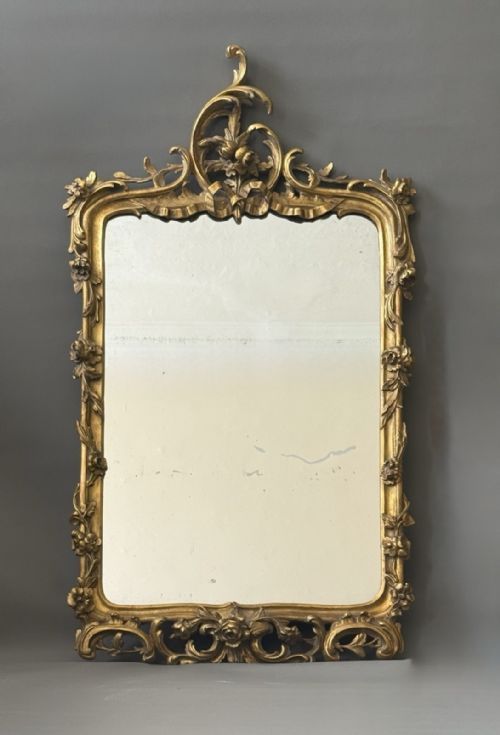
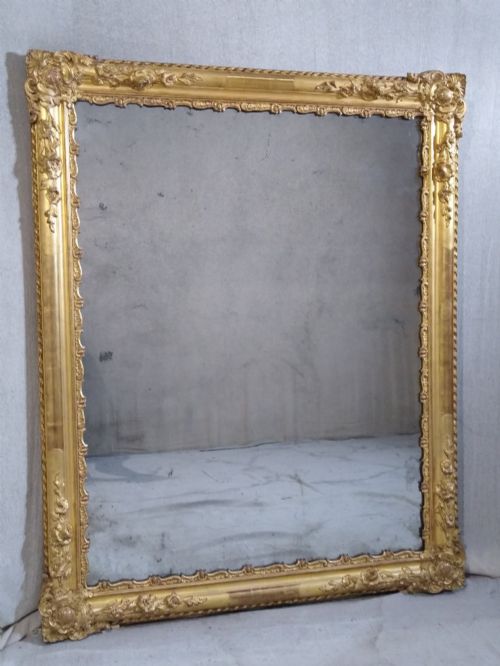
The frames rely on carved wood, gesso, and composition materials built into substantial structures. Artisans applied layers of gold leaf, paint, or parcel-gilt to finish the wood surface.
Mirrors utilise glass elements, occasionally featuring mercury glass or foxed plates showing age spots. Large panels require sturdy wooden backings to support the weight of the glass.
Retail Price Guide 2026
Typical UK retail prices for french overmantel, calculated from the Sellingantiques database of over a million retail prices indexed since 2003. This retail price guide relies exclusively on Sellingantiques data; no external sources or auction records are used, so the figures do not describe the wider market.
Several mirrors carry centuries of fireplace smoke patina trapped neatly within the carved gesso crevices.
What Varies in Quality
Depth and crispness of the wood and gesso carving separate standard examples from finer work. The delicacy of applied ornament and the originality of the gilding determine visual impact.
Condition of the silvering and glass plate contributes significantly to the integrity of the piece. Hand-applied paint and original mercury glass mirror plates indicate higher period authenticity.
The Antique French Overmantel Glossary
- Trumeau
- A decorative wall mirror or panel featuring painted scenes or carvings above the glass plate. These pieces often integrate directly into interior wall panelling.
- Gesso
- A plaster-like mixture applied to wood frames to provide a smooth base for gilding or painting. Artisans mould this material into relief ornaments.
- Mercury glass
- A double-walled glass blown type popular in older mirrors, created by pouring a silvering mixture between glass layers. This technique yields a distinct mottled reflection.
- Foxing
- Age-related spots and oxidation within the mirror glass plate. This process darkens the silvering over decades.
- Giltwood
- Timber coated with thin gold leaf applied over a prepared ground. It provides a warm, reflective metallic surface.
Frequently Asked Questions
Where should an overmantel mirror hang?
These mirrors traditionally sit directly above a fireplace mantelpiece to anchor the hearth. They also function as leaner mirrors placed on the floor against a wall.
Their scale allows them to reflect natural light deeply into a room, making them suitable for principal reception spaces.
How do I identify a Louis Philippe mirror?
Louis Philippe overmantel pieces typically feature simple, elegant lines with rounded upper corners and minimal carving. The frames often show subtle moulding rather than heavy rococo scrolls.
This style emerged during the mid-nineteenth century and prioritised understated architectural presence.
What is foxed glass?
Foxed glass refers to the natural degradation of the silver backing inside older mirror plates. Chemical changes over time create dark patches and soft, speckled areas within the reflection.
Collectors appreciate this characteristic because it confirms the age of the glass.
Are these mirrors heavy?
The substantial wood frames, gesso layers, and thick glass plates make these pieces remarkably heavy. Proper wall fixings into masonry or structural studs are essential for safe hanging.
Many period examples were designed simply to lean against the wall rather than hang from a single hook.