
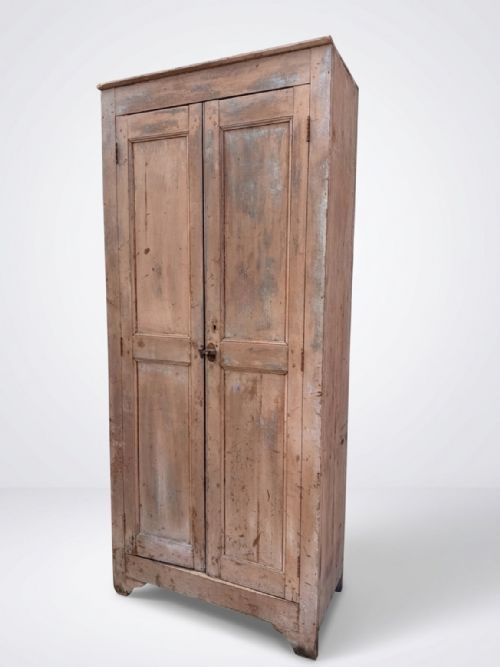
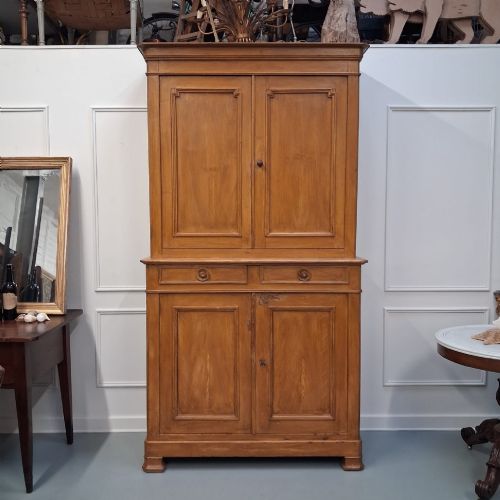
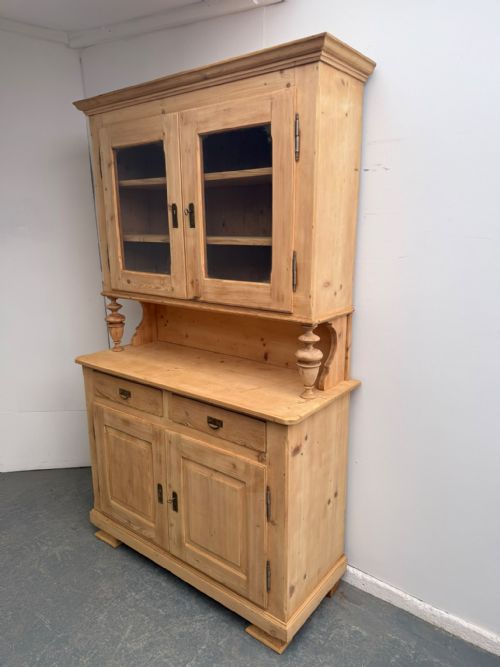
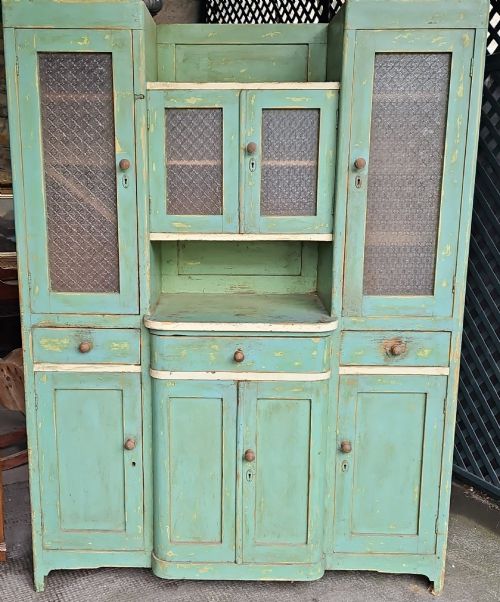


Antique French Larder Cupboard
An antique French larder cupboard brings genuine rustic utility and regional character to a modern kitchen, offering substantial storage built for daily provisions.
Antique French Larder Cupboard
When you search for an antique French larder cupboard, you encounter substantial utilitarian furniture designed to store food, linen, and household provisions across rural provinces. The pieces available span the eighteenth century, the nineteenth century, and the Edwardian period, reflecting centuries of domestic storage traditions.
You are most likely to meet pine kitchen cabinets, painted food cupboards, and housekeepers cupboards originating from French provincial settings. These utilitarian forms range from simple rustic country designs to carved chestnut food cupboards and wide storage pieces.
Regional variations appear across mountain cupboards and Normandie larder cupboards, showing how local workshops adapted standard storage needs to specific domestic spaces. The object types include linen presses, kitchen dressers, and storage cupboards that served the daily running of a historic household.
How they were made
Construction relies primarily on solid pine and chestnut timbers, selected for local availability and practical strength in provincial workshops. Carpenters joined these heavy woods using traditional methods suited to hardworking domestic furniture that needed to endure daily use.
Surfaces frequently show historical painted finishes or waxed treatments applied over the base timber, while hardware utilises iron and brass for hinges, latches, and escutcheons. Glazed doors incorporate textured glass panes where ventilation and visibility of contents were required inside the kitchen or food storage areas.
Some nineteenth century food cupboards still carry the faint aroma of stored herbs and dry provisions after two hundred years.
What varies in quality
Quality rests in the integrity of the original timber construction and the degree of structural survival across centuries of kitchen use. Pieces retaining their early or original painted surfaces carry greater historical completeness than those stripped or repeatedly refinished.
The sophistication of regional joinery and carving distinguishes standard utility pieces from finer provincial commissions, such as those executed in chestnut during the early nineteenth century. Proportions, original iron or brass hardware, and intact glass elements further separate ordinary storage from exceptional regional examples.
The Antique French Larder Cupboard Glossary
- Pine
- A softwood commonly used for provincial furniture construction throughout the nineteenth century. It takes paint and wax finishes readily.
- Housekeepers cupboard
- A large storage cabinet traditionally used for linens, dry goods, and household provisions in a domestic setting.
- Provincial
- Describing items made in the regions outside major capital cities, often displaying local traditions and materials.
- Escutcheon
- A protective plate surrounding a keyhole, frequently made of brass or iron on these cupboard doors.
- Linen press
- A tall cabinet designed specifically for storing folded household textiles and garments, often featuring internal shelving.
Antique French Larder Cupboard: Frequently Asked Questions
What is an antique French larder cupboard?
These are heavy wooden storage units built in rural France to hold food, utensils, and household textiles. They reflect regional craft traditions spanning the eighteenth and nineteenth centuries.
Most examples are constructed from solid pine or chestnut, often featuring painted finishes and iron or brass hardware designed for daily domestic utility.
How were larder cupboards used originally?
Families utilised these cabinets in kitchens and pantries to protect perishable foods, dry goods, and household provisions from pests and dust. The enclosed shelving kept provisions organised before modern refrigeration.
Larger variants also functioned as housekeepers cupboards, holding heavy household linens and equipment required for running a traditional home.
How do I style a larder cupboard today?
These large storage pieces serve as focal points in modern kitchens, dining rooms, or hallways, providing substantial concealed storage for tableware and provisions. Their painted or waxed wood finishes complement both traditional and contemporary interiors.
Allowing adequate wall space lets the proportions of regional pieces, such as Normandie or mountain cupboards, stand out effectively within a room.
How can I tell the period of a cupboard?
Dating relies on observing construction techniques, timber choices, and hardware styles that align with documented periods like the eighteenth century, Victorian era, or Edwardian times. Hand-cut elements and early regional forms indicate older provincial origins.
Surface treatments, such as original painted layers or historic wax patination, provide further clues to the age and working history of the cabinet.