

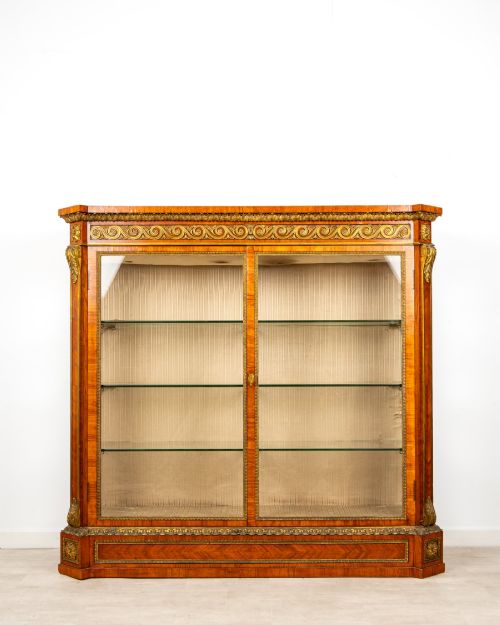
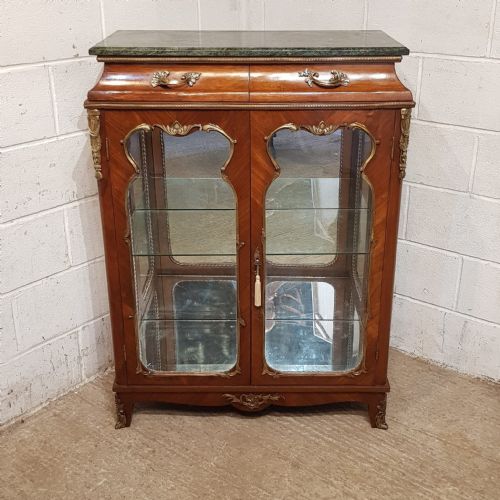
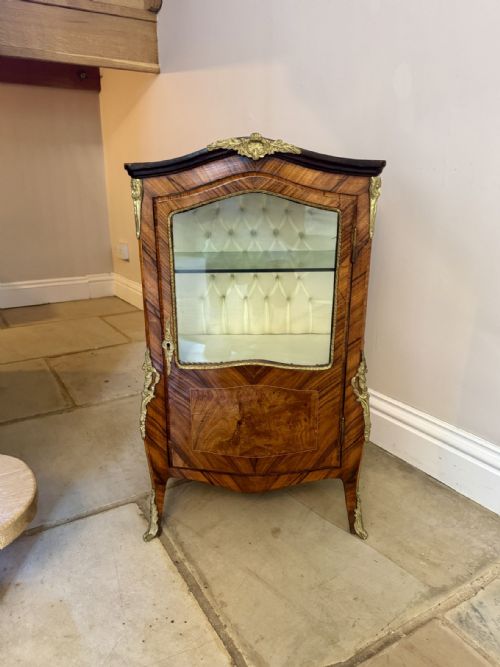
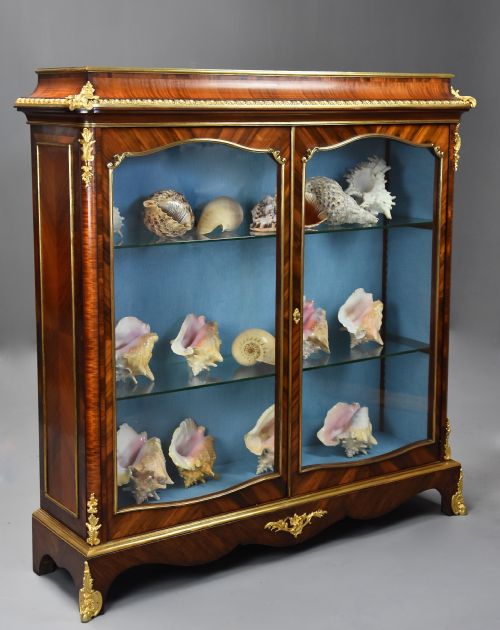
Antique French China Vitrine
An antique french china vitrine brings together glass, gilt bronze and fine timbers to showcase precious porcelain.
Antique French China Vitrine
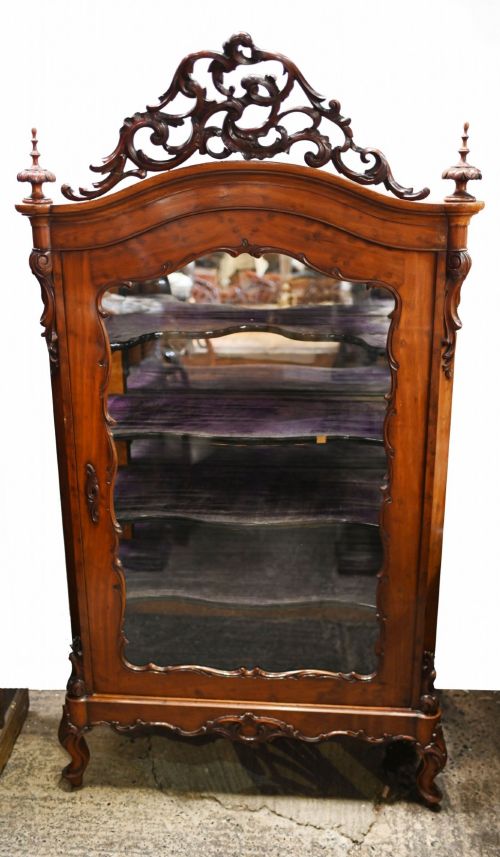
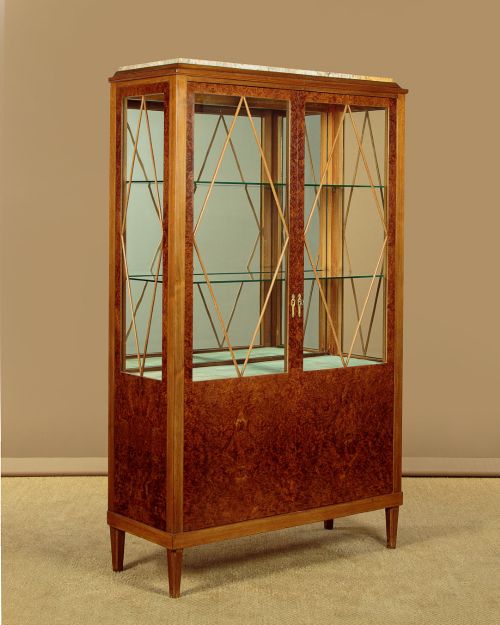
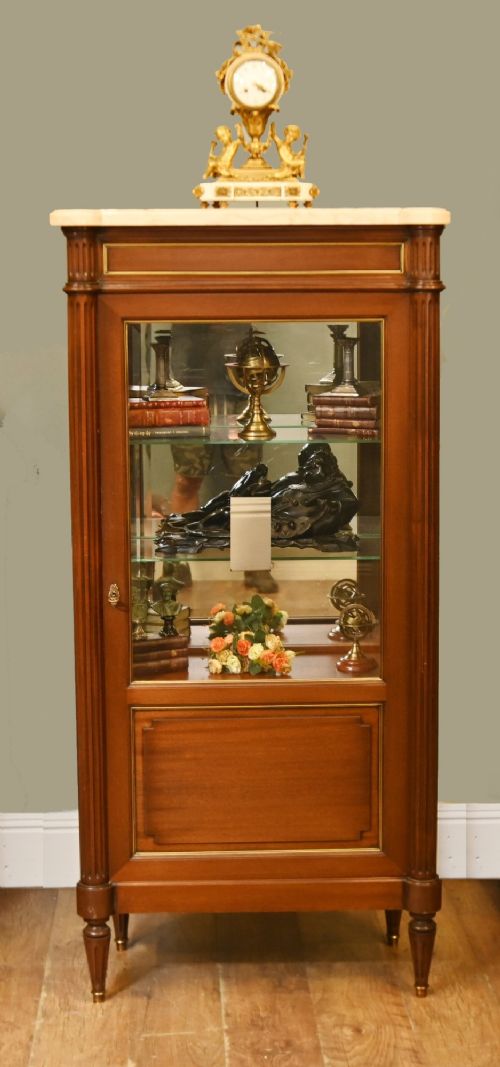
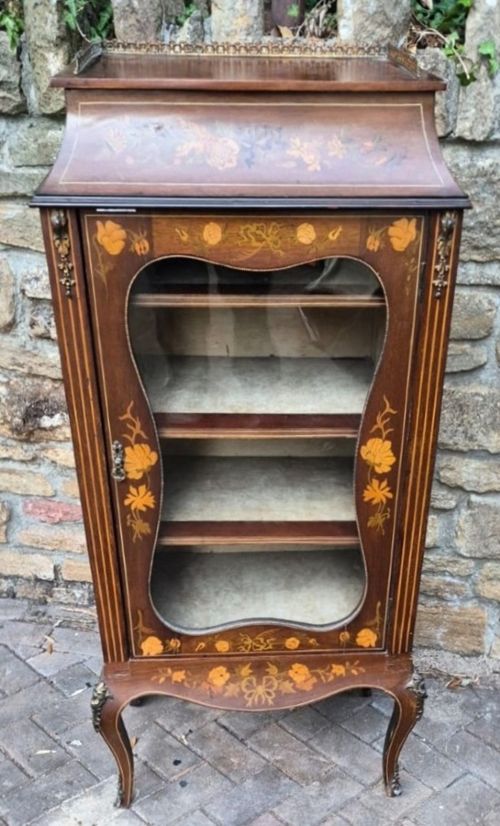
An antique french china vitrine serves as a glazed enclosure designed to display ceramics, glassware and cabinet pieces within a room. These cabinets combine timber carcasses with large glass panels to protect delicate objects while keeping them visible from multiple angles.
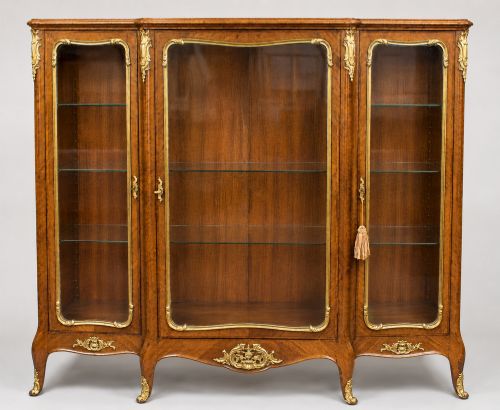
Most examples encountered here date from the nineteenth century and the Edwardian era, spanning revivals of Louis styles alongside provincial forms. The configuration typically involves glazed doors, sometimes accompanied by lower wooden cupboards or serpentine glass sides.
The form developed to meet a growing nineteenth-century desire for domestic display, utilising imported exotic woods and gilt metal mounts to signal refinement. Buyers select these cabinets to anchor a formal interior while providing secure storage for collections.
What varies in quality
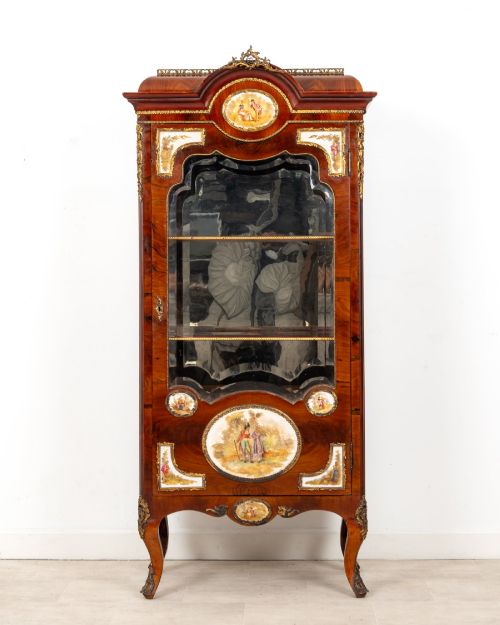
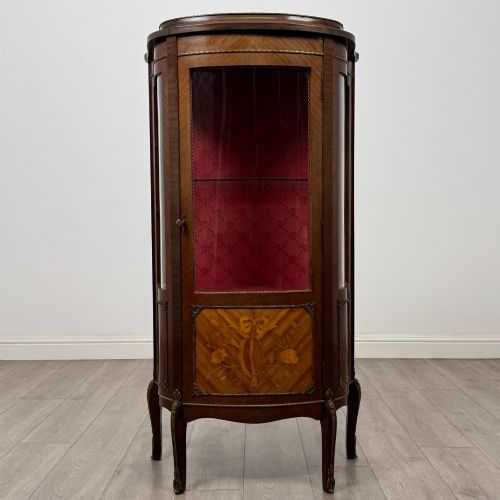
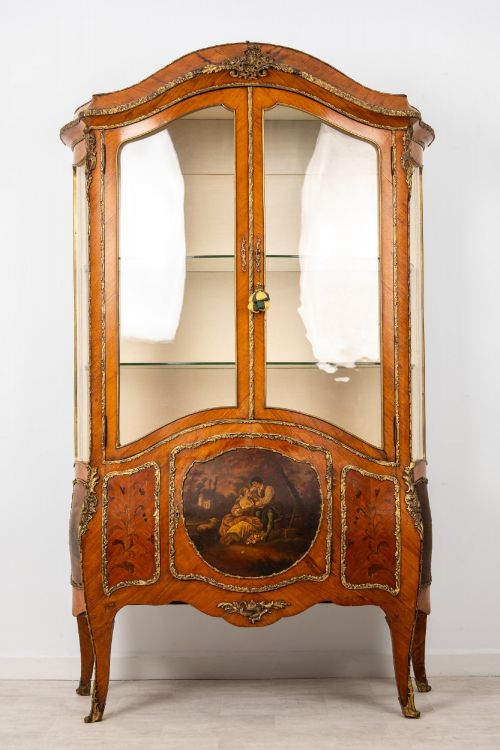
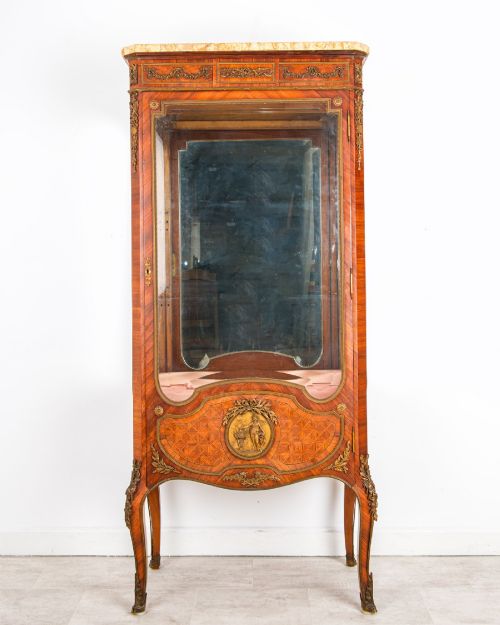
The distinction between standard production and exceptional work rests on the handling of timber veneers, the crispness of the cast ormolu mounts and the integration of painted decoration. Superior pieces employ finely matched kingwood or mahogany veneers arranged in deliberate parquetry or marquetry patterns rather than simple uniform sheets.
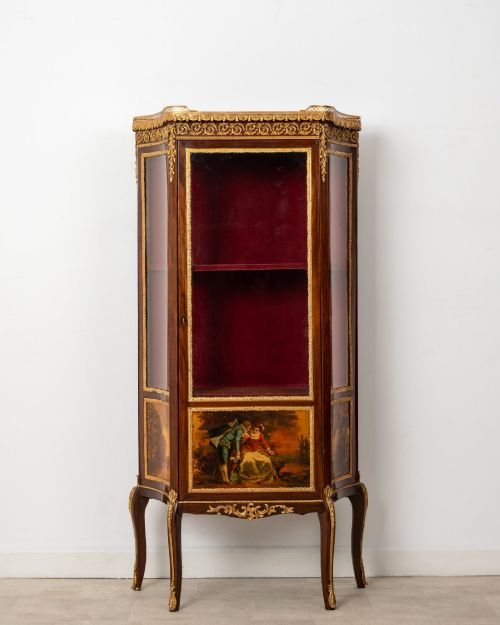
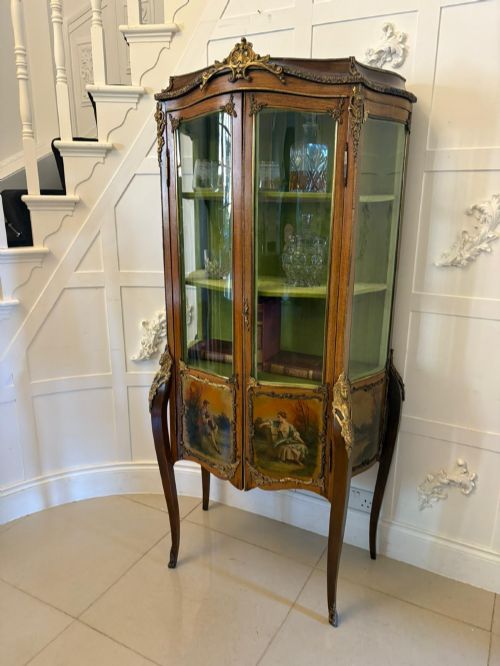
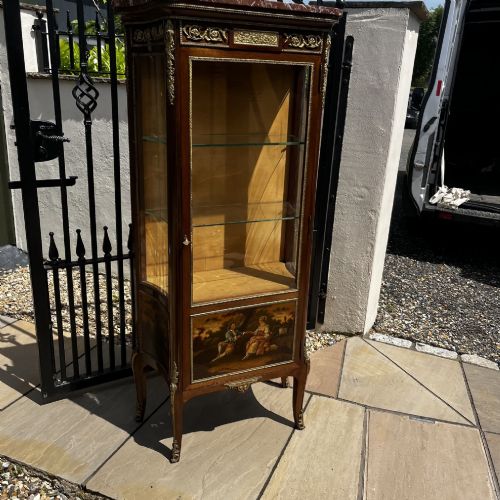
Mount quality separates baseline cabinets from masterworks, with finely chased gilt bronze showing sharp relief and secure fixing points rather than flat, repetitive casting. The inclusion of signed maker plaques, curved concave glass panels and hand-painted Vernis Martin scenes elevates the standing of an individual vitrine.
Antique French China Vitrine Retail Price Guide 2026
Typical asking prices for french china vitrine among the pieces listed under this phrase on Sellingantiques today, from the lower quarter to the upper quarter. They describe what is for sale here now, not the wider market.
Listings span the nineteenth century through the Edwardian era, incorporating styles from Louis XV Revival to Directoire alongside regional French Provincial forms.
François Linke·Paul Sormani·G. Durand·H. J. Hatfield & Sons
The Antique French China Vitrine Glossary
- Vitrine
- A glazed cabinet or display case designed specifically for showing porcelain, curiosities and small decorative objects. The term derives from the French word for glass.
- Ormolu
- Gilded bronze mounts applied to furniture to decorate and protect prominent edges. The process involves coating bronze in a mercury and gold amalgam before heating.
- Vernis Martin
- A simulated Japanese lacquer technique developed in eighteenth-century France by the Martin brothers. The method uses multiple resin layers to achieve a translucent, polished finish over painted scenes.
- Kingwood
- A dense, richly figured timber imported from South America featuring dark violet-brown tones with lighter golden streaks. Cabinetmakers favored it for contrasting geometric veneers.
- Marquetry
- The art of applying thin slices of various woods to a structural surface to create pictorial or geometric designs. Craftsmen cut contrasting timbers together to ensure tight joints.
Antique French China Vitrine: Frequently Asked Questions
What is an antique french china vitrine used for?
These cabinets were originally built to display valuable porcelain services, decorative ceramics and small collectibles protected from dust. The glazed panels allowed owners to showcase their possessions to visitors in formal reception rooms.
Today, they serve the same function in domestic settings, housing collections of glassware, figurines or silver. Their slender proportions make them suitable for corners or wall spaces where a heavy bookcase would overwhelm the room.
How do I tell different periods apart?
Nineteenth-century examples frequently lean towards opulent Louis XV or Louis XVI revivals, featuring heavy ormolu mounts, kingwood veneers and curved serpentine glass. The later Edwardian period often introduced lighter satinwood inlay and simpler mahogany frames.
Examining the internal construction, drawer linings and screw types helps confirm the age of the piece. Earlier nineteenth-century carcasses rely on hand-cut joints and heavier timber framing compared to later transitional pieces.
How do I live with one?
Placing a cabinet away from direct sunlight protects both the timber veneers and any delicate painted panels from fading. Ensuring the floor is level prevents the tall glazed doors from binding in their frames.
Internal glass shelves require careful loading to avoid weight imbalances, particularly in older cabinets with adjustable brackets. Regular dusting with a dry microfiber cloth preserves the polished finish of the wood and metal mounts.
Are the glass panels original?
Many surviving cabinets retain their original float or cylinder glass, which often exhibits subtle surface ripples, minor bubbles or slight thickness variations. These imperfections indicate age and traditional glass-making methods.
Replacement glass is sometimes fitted if an original panel suffered damage over the decades. Inspecting the putty or glazing beads around the frame can reveal whether the glass has been re-secured recently.