

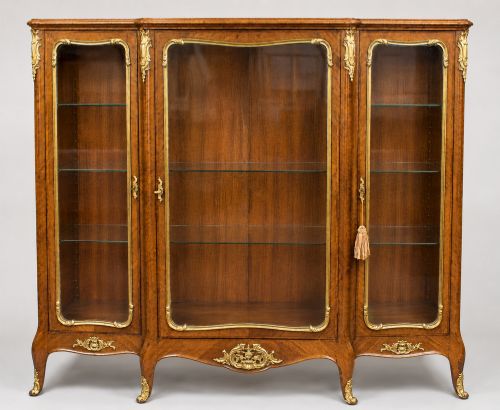
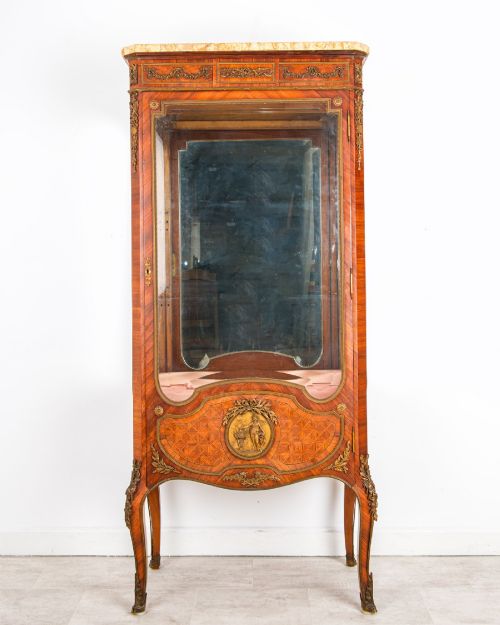
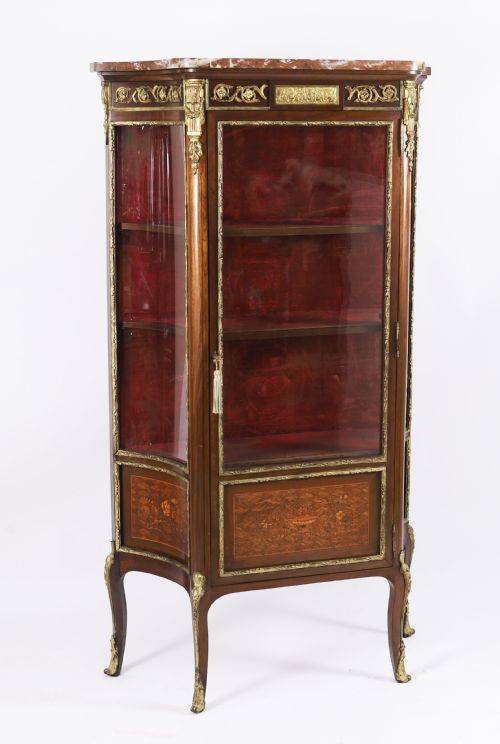


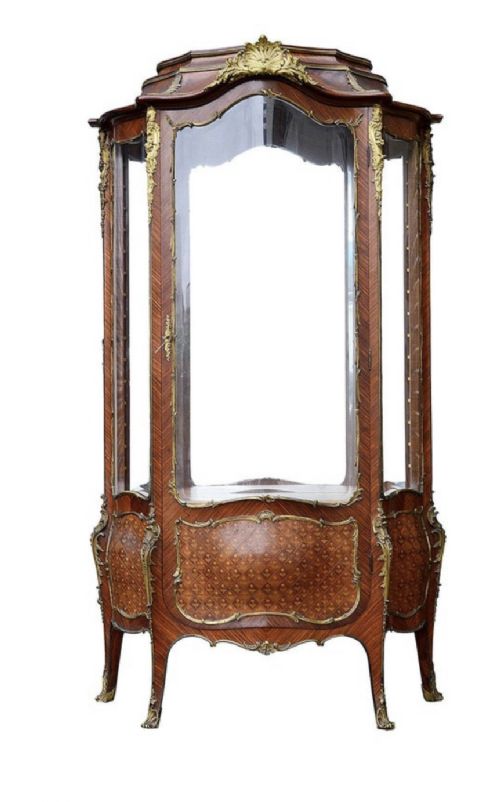


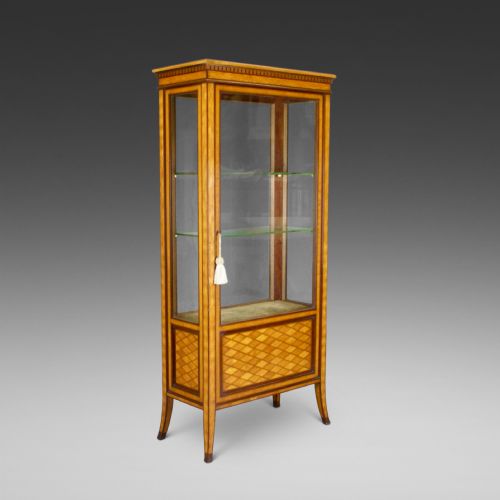
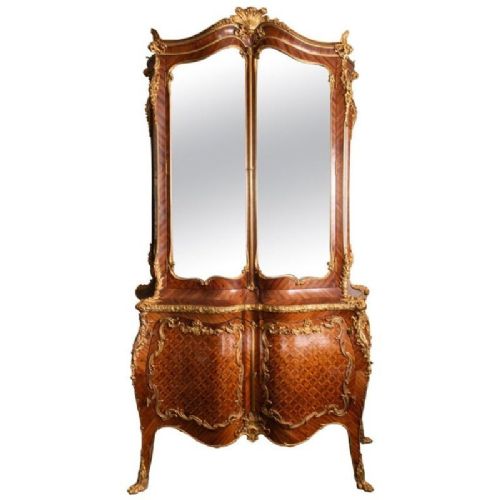

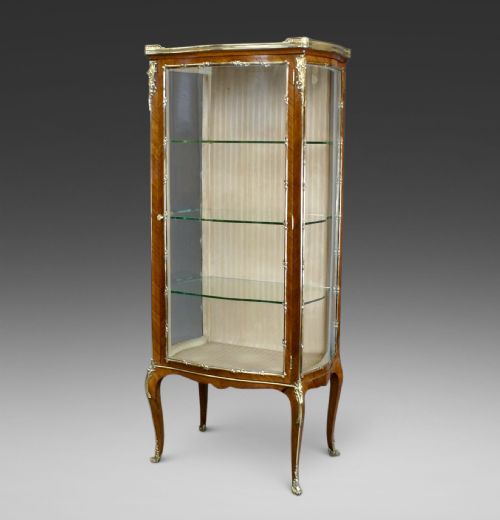
Parquetry Curio Display Cabinet
A parquetry curio display cabinet brings geometric wood patterning and glazed shelving together to showcase prized possessions with French revival elegance.
Parquetry Curio Display Cabinet
A parquetry curio display cabinet serves as an ornate receptacle for precious objects, drawing heavily on French cabinet-making traditions. Buyers seeking a parquetry curio display cabinet encounter nineteenth-century Victorian and Edwardian examples, predominantly styled in Louis XV and Louis XVI revivals.
These display cabinets combine glass glazing with intricate wood veneers arranged in geometric patterns. Most items originate from nineteenth-century workshops, alongside Edwardian interpretations featuring mahogany and satinwood.
The typical form relies on glazed doors and sides to illuminate interior shelves, framed by decorative mounts and shaped wooden carcases. Formats range from serpentine fronts to marble-topped vitrines designed for grand drawing rooms.
How they were made
Craftsmen built these cabinets using supportive carcases of mahogany or pine, overlaid with finely sliced kingwood and satinwood veneers arranged in geometric parquetry patterns. Ormolu and gilt-bronze mounts were then cast, chased and applied to corners, legs and framing edges.
Marble slabs were fitted to the tops of specific luxury pieces, while glass panes were secured within timber door frames to protect the interior. Structural joints relied on traditional cabinet-making methods concealed beneath decorative veneers and metalwork.
Parquetry Curio Display Cabinet Retail Price Guide 2026
Typical asking prices for parquetry curio display cabinet among the pieces listed under this phrase on Sellingantiques today, from the lower quarter to the upper quarter. They describe what is for sale here now, not the wider market.
Many cabinets conceal their keys behind hinged ormolu mounts, keeping the delicate glass doors securely locked during lively nineteenth-century gatherings.
What varies in quality
Quality rests upon the precision of the parquetry inlay and the weight and crispness of the ormolu mounts. Finer pieces demonstrate seamless veneer alignment across curved serpentine fronts and meticulous hand-chasing on the gilt bronze.
The choice of primary timbers and marble tops also dictates the tier of the piece, with dense kingwood and heavy veined marble marking higher workshop standards. Cabinets carrying workshop attributions or signatures display superior mastery in their joinery and overall proportions.
Maison Krieger·Francois Linke·Gouffel
The Parquetry Curio Display Cabinet Glossary
- Parquetry
- Wood veneers arranged in geometric patterns such as cubes or chequers. This technique decorates flat and curved surfaces on high-status furniture.
- Ormolu
- Gilded bronze mounts applied as decorative ornaments. Makers cast and chased these metal fittings to accent corners and framing.
- Vitrine
- A glass-fronted cabinet designed for displaying porcelain and curiosities. The term derives from the French word for glass.
- Kingwood
- A dense, richly figured timber native to Brazil used extensively for decorative veneers. Its distinct grain patterns suit intricate inlay work.
- Serpentine
- A gently undulating curved shape resembling a snake. This contour softens the front profile of cabinets and commodes.
Parquetry Curio Display Cabinet: Frequently Asked Questions
What is a parquetry curio display cabinet?
A parquetry curio display cabinet is an ornate glass-fronted piece of furniture decorated with geometric wood veneers. These cabinets were designed to showcase valuable porcelain and decorative objects.
Originating largely from nineteenth-century French revival movements, they combine glazed panels with decorative bronze mounts and polished timber surfaces.
Where should I place a vitrine cabinet?
These cabinets suit principal reception rooms or drawing spaces where natural light can pass through their glass panels. Positioning them away from direct sunlight protects delicate interior items and polished wood veneers.
Ensure the floor is level, as heavy marble tops and timber carcases require stable support to keep doors properly aligned.
How do I care for kingwood and ormolu?
Maintain kingwood surfaces by dusting with a soft, dry cloth and applying traditional wax sparingly when the timber appears dry. Avoid commercial silicone polishes that damage antique finishes.
Clean ormolu mounts gently with a dry brush, taking care not to scratch the gilt surface or let cleaning agents touch the surrounding wood.