


Antique French Brooch
An antique french brooch brings centuries of European design to a lapel, offering miniature sculptures set in gold, silver and precious stones.
Antique French Brooch
When you search for an antique french brooch, you encounter pieces that span the nineteenth century into the art deco decades of the twentieth. These items range from delicate floral sprays and convertible pendant necklaces to geometric dress clips and figural designs.
The most common examples on this page date from the Victorian era and the early twentieth century, featuring distinct regional styles such as art nouveau and belle epoque. Makers utilised local motifs like the fleur-de-lys and natural subjects including insects and birds.
Materials and construction
Goldsmiths combined eighteen-carat yellow gold, silver, and platinum to build the structural mounts for these jewels. Silver was frequently layered over gold in earlier pieces to enhance the brilliance of mounted diamonds.
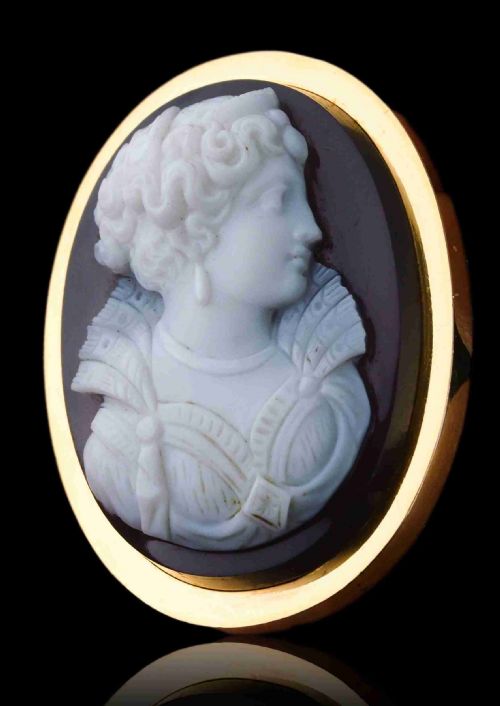
Gemstone selection involved diamonds, rubies, emeralds, garnets, amethysts, and natural pearls, complemented by hardstones like agate and chalcedony. Vitreous enamel and hand-painted Limoges porcelain added permanent colour to floral and portrait subjects.
A tiny gold fly set with labradorite and diamonds waits quietly on a pin, ready to perch on a velvet lapel.
What distinguishes finer examples
The standard of work depends upon the precision of the stone setting and the delicacy of the metal wirework. Hand-carved hardstone cameos and detailed Limoges enamel portraits show greater artistic investment than mass-produced stamped mounts.
The integration of convertible mechanisms, such as detachable bails for pendants or secure double-clip frames, demonstrates higher technical capability. Preservation of original components and untouched precious metal patinas maintain the integrity of the piece.
Cartier Paris·Rene Lalique·Paillette
The Antique French Brooch Glossary
- Agate
- A cryptocrystalline variety of silica, chiefly quartz, displaying banded patterns used frequently in carved cameo brooches.
- Belle Epoque
- A period of design spanning the late nineteenth and early twentieth centuries characterised by garland-style platinum and diamond work.
- Limoges Enamel
- Painted enamel work originating from the French city of Limoges, often depicting miniature portraits or scenic subjects.
- Paste
- Hand-cut glass used to imitate gemstones in historical jewellery, mounted in silver or gold settings.
- Cartouche
- An ornamental tablet or oval frame design, often seen in triple cartouche enamel configurations.
Antique French Brooch: Frequently Asked Questions
How do I wear an antique brooch today?
Pin these pieces securely through heavier fabrics on coat lapels, scarves, or structured knitwear to support the weight of gold and gemstones.
For convertible items with pendant loops, suspend the piece from a chain when you prefer not to pin it directly to clothing.
How do I tell Victorian from art deco pieces?
Victorian examples tend to feature yellow gold, natural pearls, hardstone cameos, and romantic floral or acanthus leaf motifs.
Art deco items display geometric platinum and white metal settings, sharp symmetry, and calibrated rubies, onyx, or diamonds.
What are paste stones?
Paste refers to high-quality lead glass that artisans cut and polished by hand to imitate diamonds and coloured gemstones.
Historical paste pieces were valued as fine jewellery in their own right rather than mere imitations, often set in solid silver and gold.